Located at 2-23 Hashibacho in Kanazawa's Ishikawa prefecture, 天麩羅 小料亭 天花 occupies a quiet address in a city that treats dining as a form of cultural practice. The restaurant's focus on tempura within a small-restaurant format places it in a local tradition of disciplined, ingredient-led cooking that Kanazawa has cultivated for generations. Reservation planning and advance research are advised before visiting.
Pearl is the En Primeur Club membership app — saves, bookings, and concierge access live there. Same editors, same standards.
- Address
- 2-23 Hashibacho, Kanazawa, Ishikawa 920-0911, Japan
- Phone
- +81762242467
- Website
- r001105.gorp.jp
- Directions
- Get directions
 Saves & bookings on Pearl
Kanazawa's Tempura Tradition and the Small-Restaurant Format
Kanazawa has operated for decades as one of Japan's most self-contained food cities. Geographically sheltered from Tokyo's gravitational pull and historically nourished by the wealth of the Kaga domain, the city developed a dining culture that prioritised craft over scale and seasonal intelligence over novelty. That culture still shapes how restaurants here position themselves: small, disciplined, and deeply tied to a local ingredient calendar that puts Noto Peninsula seafood, Kaga vegetables, and mountain-foraged produce at the centre of the table. Within that broader context, tempura as a format carries its own logic. Unlike kaiseki, which sequences the meal across many small courses and multiple cooking techniques, tempura concentrates the cook's judgement into a single repeated act performed in real time, in front of the guest. The oil temperature, the batter weight, the resting moment before service — every variable lands in the same few seconds, and the diner is watching. It is one of the more exposed formats in Japanese cooking.
天麩羅 小料亭 天花, located at 2-23 Hashibacho in Kanazawa, operates within this format as a 小料亭, a term that describes a small, intimate restaurant carrying the codes of a traditional Japanese dining establishment without the full ceremonial apparatus of a ryotei. The distinction matters in Kanazawa, where the 料亭 category is taken seriously as a social institution. A 小料亭 occupies a more accessible register while still maintaining the pacing, attentiveness, and spatial quietude that define the city's upper-tier dining culture. For visitors arriving from cities where tempura tends toward either fast-casual efficiency or high-price counter spectacle, the format here reads differently: slower, more considered, and oriented around the meal as a practised ritual rather than a performance.
The Rhythm of a Tempura Meal at This Scale
Tempura eaten in a small-restaurant setting follows a different clock than the same dish eaten in a large venue. At counters of limited capacity, the sequence of ingredients is paced to the cook's reading of the guest rather than to a fixed interval. In Kanazawa specifically, the broader kaiseki influence on local dining means that even non-kaiseki formats tend to absorb some of that meal's structural logic: a progression from lighter, more delicate ingredients toward richer ones, with attention to colour, texture, and seasonal provenance at each stage.
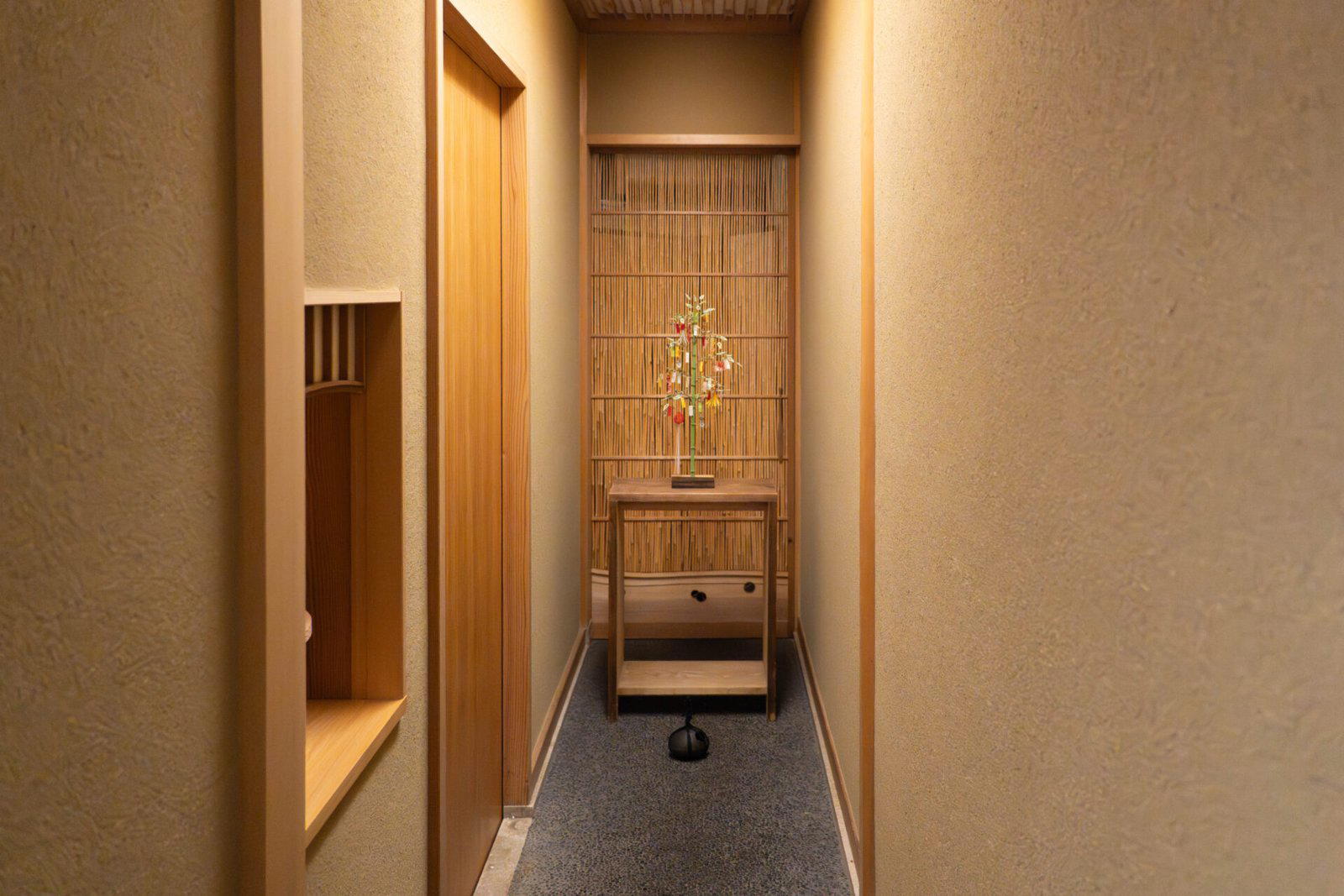
The 小料亭 format at 天花 reinforces this rhythm. The room's scale — and Hashibacho's position in a quiet part of central Kanazawa, creates a physical environment that signals deceleration before the meal begins. Streets in this part of the city are narrow enough to change the walking pace, and the transition from Kanazawa's busier districts around Omicho Market or Higashi Chaya takes only minutes but feels more significant. That physical shift primes the kind of attention that tempura at this level requires from the diner: an awareness of sequence, an openness to pace, and a willingness to eat on the kitchen's terms rather than the guest's schedule.
For diners arriving from other high-calibre Japanese restaurants covered on EP Club, including Gion Sasaki in Kyoto or Harutaka in Tokyo, the Kanazawa 小料亭 register will feel familiar in its commitment to ritual pacing, but distinct in its regional ingredient emphasis and the comparative absence of the capital-city pressure that shapes dining rooms in those cities. Closer regional comparisons include HAJIME in Osaka and Goh in Fukuoka, both of which operate within formats that use restraint as a deliberate editorial statement about Japanese cooking.
Kanazawa's Broader Dining Ecosystem
Understanding where 天花 sits requires some orientation within Kanazawa's dining tier structure. The city supports a range of formats that span from casual to deeply formal, and the tempura category has historically occupied a middle tier: more specialised than everyday eating, less ceremonially weighted than full kaiseki or the city's traditional 料亭 culture. Local peers in the kaiseki tradition include Dokkan and venues like Zeniya and Kataori, which operate at the formal end of Kanazawa dining. At the more accessible and casual end, places like Go! Go! Curry (ゴーゴーカレー) reflect the city's comfort with its own comfort-food heritage. 天花 occupies a position between those poles, and the 小料亭 designation is the clearest indicator of where that position falls.
Kanazawa's craft culture extends beyond the kitchen into its artisan industries, which reinforces the city's general orientation toward patience and material specificity. Hakuichi represents that gold-leaf tradition, and Amanatto Kawamura anchors the city's wagashi culture. The dining room at a tempura 小料亭 exists within that same civic sensibility: craft at human scale, executed with accumulated skill rather than structural spectacle. For visitors building a broader itinerary, our full Kanazawa restaurants guide maps the city's dining by neighbourhood and format.
Regional comparisons across Japan's secondary cities are useful here. 三本松 川尻制 in Nanao and 湖畔荘 in Takashima both operate within the logic of regional Japanese cooking that prioritises local ingredient provenance over national recognition. 夕仙山乃 in Sapporo and 鳥羽屋 in Nishikawa Machi reflect similar principles in their respective cities. Internationally, formats that concentrate technical skill into a single repeated act at small scale, comparable in philosophy if not in cuisine, include Le Bernardin in New York City and Atomix in New York City, both of which use deliberate pacing and course structure as primary design tools. The Budoonomori Les Tonnelles (French) and akordu in Nara occupy a similar middle position in their respective cities, where European-influenced technique operates within a Japanese regional-ingredient framework. Birdland in Sakai demonstrates that single-focus formats at small scale can develop significant local authority independently of national or international award recognition.
Planning Your Visit
天麩羅 小料亭 天花 is located at 2-23 Hashibacho, Kanazawa, Ishikawa 920-0911. Hashibacho is within walking distance of the Higashi Chaya district and the Asano River, placing it in a part of the city where the older Kanazawa street grid remains largely intact. For visitors arriving by Shinkansen at Kanazawa Station, the address is accessible by taxi in under ten minutes or by local bus. Restaurant formats at this scale in Japan sometimes operate reservation-only or with limited walk-in availability, particularly on weekends and during peak autumn and spring seasons when Kanazawa's visitor numbers increase significantly. Arriving without a reservation and expecting immediate seating is a risk worth planning against, especially given the 小料亭 format's inherently limited capacity.
What It’s Closest To
| Venue | Cuisine | Awards |
|---|---|---|
| å¤©éº©ç¾ å°éåº å¤©éThis venue — the venue you are viewing | This venue | Not listed |
| Kataori | Kaiseki | Kaiseki |
| Respiracion | Innovative Spanish | Innovative Spanish |
| Sushi Kibatani | Chinese | Chinese |
| Zeniya | Kaiseki | Kaiseki |
| Hamagurizaka Maekawa | Yakitori | Yakitori |
Continue exploring
More in Kanazawa
Restaurants in Kanazawa
Browse all →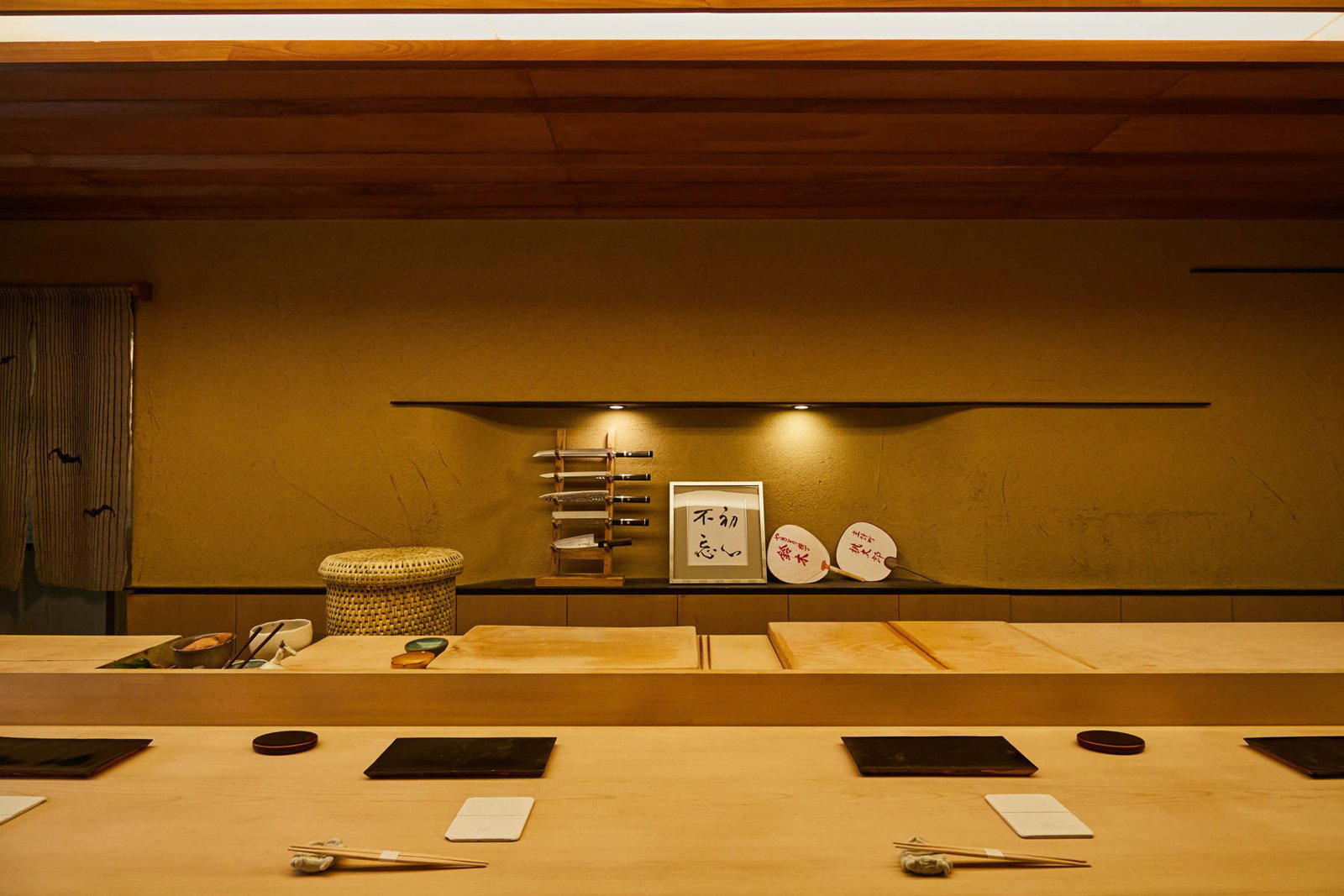
Bars in Kanazawa
Browse all →
Hotels in Kanazawa
Browse all →

Wineries in Kanazawa
Browse all →
At a Glance
- Elegant
- Intimate
- Classic
- Group Dining
- Special Occasion
- Standalone
- Sake Program
- Local Sourcing
Know Before You Go
- Getting there
- 2-23 Hashibacho, Kanazawa, Ishikawa 920-0911, Japan