Ruby Emma Hotel & Bar
Ruby Emma Hotel & Bar occupies a residential address on Amstelvlietstraat in Amsterdam's east, positioning it outside the canal-belt hotel cluster that defines most of the city's accommodation map. Where properties like the Andaz Amsterdam Prinsengracht or the Conservatorium trade on central proximity, Ruby Emma operates in a quieter register, drawing guests who prefer neighbourhood texture over landmark convenience.
Pearl is the En Primeur Club membership app — saves, bookings, and concierge access live there. Same editors, same standards.
- Address
- Amstelvlietstraat 4, 1096 GG Amsterdam, Netherlands
- Phone
- +31 20 245 7280
- Website
- ruby-hotels.com
- Directions
- Get directions
 Saves & bookings on Pearl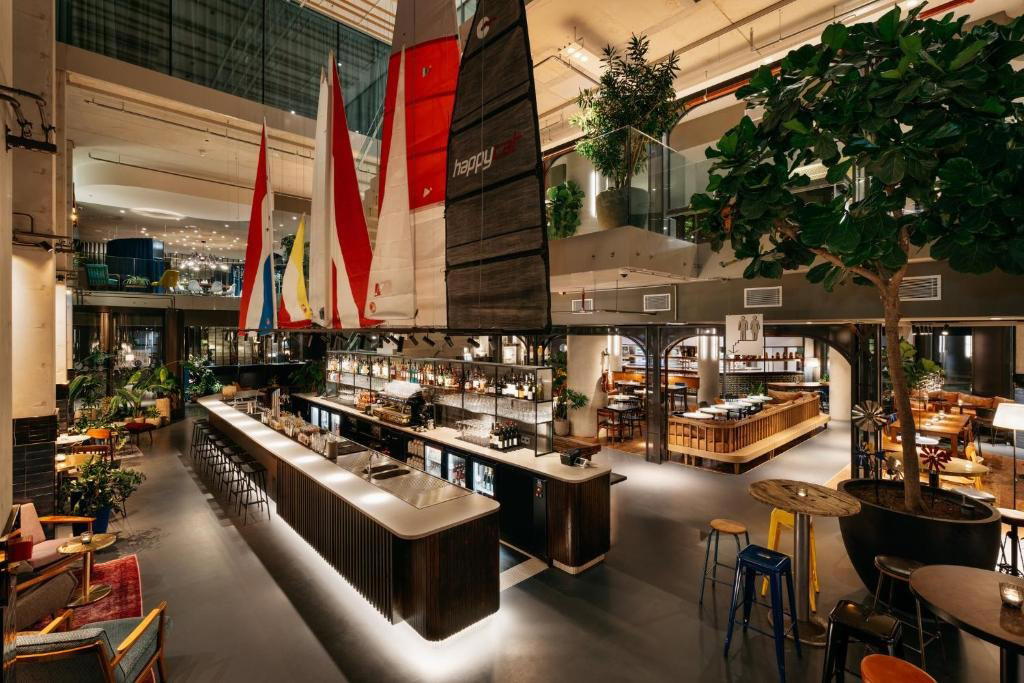
East Amsterdam's Quieter Accommodation Register
Amsterdam's hotel market has long concentrated its premium inventory in the canal belt, the Museumplein corridor, and the older grachtenpanden conversions that make addresses like Prinsengracht or Keizersgracht so legible to international visitors. Properties such as Andaz Amsterdam Prinsengracht, Conservatorium, and De L'Europe Amsterdam anchor the city's most visible hospitality tier. Ruby Emma Hotel & Bar is a 4-star hotel in Amsterdam at Amstelvlietstraat 4, 1096 GG.
That geography is not incidental. A growing segment of Amsterdam visitors actively seeks accommodation that distributes them away from the Damrak-to-Leidseplein axis, where foot traffic and pricing pressures compress the experience of the city into a narrower band. East Amsterdam, with its mix of 1970s urban planning, waterfront renewal at NDSM and the IJburg fringes, and the denser residential pockets around Amstel and Watergraafsmeer, offers a different entry point. Ruby Emma's Amstelvlietstraat address puts guests within the orbit of that alternative geography.
The Bar as Neighbourhood Anchor
Hotels that carry a bar designation in their name are making an implicit editorial statement: the drinking and hospitality space is not an amenity bolted onto rooms but a programme in its own right. This pattern has become more pronounced across European boutique hospitality, where the bar function often generates the local footfall, the press attention, and the repeat visits that a rooms-only property cannot sustain. In Amsterdam specifically, the neighbourhood bar tradition runs deep, from the brown café (bruine kroeg) format that has defined Dutch drinking culture for centuries to the more recent cocktail-forward programmes that have emerged in the Jordaan, De Pijp, and the eastern districts.
A hotel bar at an address like Amstelvlietstraat has the potential to serve two constituencies simultaneously: guests using it as a base, and local residents for whom it becomes a regular evening anchor. That dual function, when executed with discipline around sourcing, service tempo, and programme identity, places a property in a different competitive conversation to those that treat food and drink as a departmental afterthought. For context on how Amsterdam's broader hotel scene approaches this balance, Canal House and Breitner House both operate in the boutique register where bar and common-space identity carry significant weight.
Ingredient Sourcing and the Dutch Food Context
The Netherlands occupies a paradoxical position in European food culture. It is one of the world's largest agricultural exporters, with horticulture, dairy, and protein production operating at industrial scale, yet its domestic restaurant culture has historically underplayed that abundance in favour of simplicity and utility. The shift over the past decade has been significant: a generation of Dutch chefs and hospitality operators has reoriented around provenance, with Noord-Holland's coastal fisheries, Zeeland's shellfish beds, Frisian dairy, and the market gardens of the Westland all finding more deliberate placement on menus and in bar programmes across the country.
For a hotel bar in Amsterdam's eastern districts, sourcing decisions carry particular signal value. Properties that build programmes around Dutch producers, whether that means local gin distilleries (Amsterdam has developed a credible neo-jenever scene), regional bitters and liqueurs, or food offers rooted in seasonal Dutch produce, position themselves differently to those running generic hotel bar formats. The ingredient sourcing angle is where the character of a place like Ruby Emma would most legibly separate itself from the international hotel bar template. This context matters for guests deciding between a canal-belt address with international brand familiarity and a neighbourhood property where the food and drink programme might reflect the city more directly.
For reference on how the Dutch accommodation market handles the spectrum from heritage grandeur to design-led independence, De Pijp Boutique Hotel and Décor Canal House both represent the independent boutique position in neighbourhoods that have developed strong local food identities.
Placing Ruby Emma in the Amsterdam Accommodation Map
Amsterdam's accommodation offer has diversified substantially since the city's tourism infrastructure expanded through the 2010s. The historic canal properties, represented by Conscious Hotel Amsterdam City (The Tire Station) at the sustainability-conscious end and by the larger luxury flagships toward the upper bracket, coexist with a newer generation of address-specific boutique properties that trade on neighbourhood positioning rather than proximity to major sights.
Ruby Emma sits within that newer generation. Its Amstelvlietstraat address, east of the Amstel river, is not within immediate walking distance of the Rijksmuseum or the Anne Frank House, but it is well-connected by Amsterdam's tram and metro network, which makes the central city accessible without requiring central accommodation. For guests whose primary interest is in the city's food scene, eastern Amsterdam's proximity to the Foodhallen, the markets along Albert Cuypstraat, and the producer-focused restaurants scattered through the Indische Buurt and Watergraafsmeer represents a genuine operational advantage.
Travellers planning a Netherlands itinerary that extends beyond Amsterdam will find useful context in nearby options: citizenM Schiphol Airport handles transit stays efficiently, Inntel Hotels Amsterdam Zaandam offers a design-forward option in the Zaan region, and Posthoorn in Monnickendam covers the quieter waterland fringe. Further afield, citizenM Rotterdam and De Librije in Zwolle anchor the broader Dutch hotel picture, while Château Neercanne in Maastricht and Château St. Gerlach in Valkenburg aan de Geul represent the southern Limburg heritage property category. For those planning around coastal access, Grand Hotel Huis ter Duin in Noordwijk aan Zee covers the North Sea dune strip. Properties like Bij Jef in Den Hoorn, Central Park Voorburg, De Plesman Hotel The Hague, Landgoed Hotel Het Roode Koper in Leuvenum, and 2L de Blend Hotel in Utrecht extend the regional picture across the Randstad and beyond.
For readers comparing Amsterdam against major international hotel markets, The Fifth Avenue Hotel in New York City, Aman New York, and Aman Venice represent the upper end of the international boutique-luxury bracket that Amsterdam's own top tier, including properties like Conservatorium, positions itself against. Ruby Emma operates in a different register to all of those, but the comparison helps calibrate where neighbourhood-anchored Amsterdam properties fit within the wider European hotel conversation.
Planning Your Stay
Ruby Emma Hotel & Bar is located at Amstelvlietstraat 4, 1096 GG Amsterdam. The postcode places the hotel in Amsterdam's eastern residential zone, accessible via the city's integrated public transport network. Guests prioritising neighbourhood immersion over central-landmark proximity will find the positioning consistent with how eastern Amsterdam has developed as a more locally-oriented alternative to the canal belt.
The Essentials
Comparable venues nearby, for context on price, style, and recognition.
| Venue | Price | Notes |
|---|---|---|
| Ruby Emma Hotel & BarThis venue — the venue you are viewing | $$$ | Not listed |
| Esthéréa | $$$ | Spuistraat Zuid, Family-owned luxury boutique in preserved 17th-century canal houses |
| Leonardo Eden Hotel Amsterdam City Center | $$$ | Rembrandtpleinbuurt, Modern hotel in historic industrial building |
| Hotel Roemer | $$$ | Vondelparkbuurt Oost, Historic townhouse boutique with modern interiors |
| Hotel Mercier | $$$ | Elandsgrachtbuurt, Historic boutique hotel with modern design in Jordaan district |
| Conscious Hotel Amsterdam City (The Tire Station) | $$ | Vondelparkbuurt West, Eco-sexy sustainable design in a repurposed historic tire station. |
Continue exploring
More in Amsterdam
Hotels in Amsterdam
Browse all →
Bars in Amsterdam
Browse all →
Restaurants in Amsterdam
Browse all →
Wineries in Amsterdam
Browse all →
At a Glance
- Modern
- Trendy
- Cozy
- Business Trip
- Weekend Escape
- Terrace
- Wi Fi
- Bar
- Fitness Center
- Concierge
- EV Charging
- Waterfront
- Street Scene
- Wi Fi
- Bar
- Fitness Center
- Concierge
- EV Charging
Cozy lounge with colorful vintage sofas, warm lighting, and a modern, inviting atmosphere.