Wynand Fockink
One of Amsterdam's oldest jenever houses, Wynand Fockink has operated from Pijlsteeg 31 since 1679, pouring traditional Dutch spirits from a tasting room that has changed little in three centuries.
Pearl is the En Primeur Club membership app — saves, bookings, and concierge access live there. Same editors, same standards.
- Address
- Pijlsteeg 31, 1012 HH Amsterdam
- Phone
- +31 20 639 2695
- Website
- wynand-fockink.nl
- Directions
- Get directions
 Saves & bookings on Pearl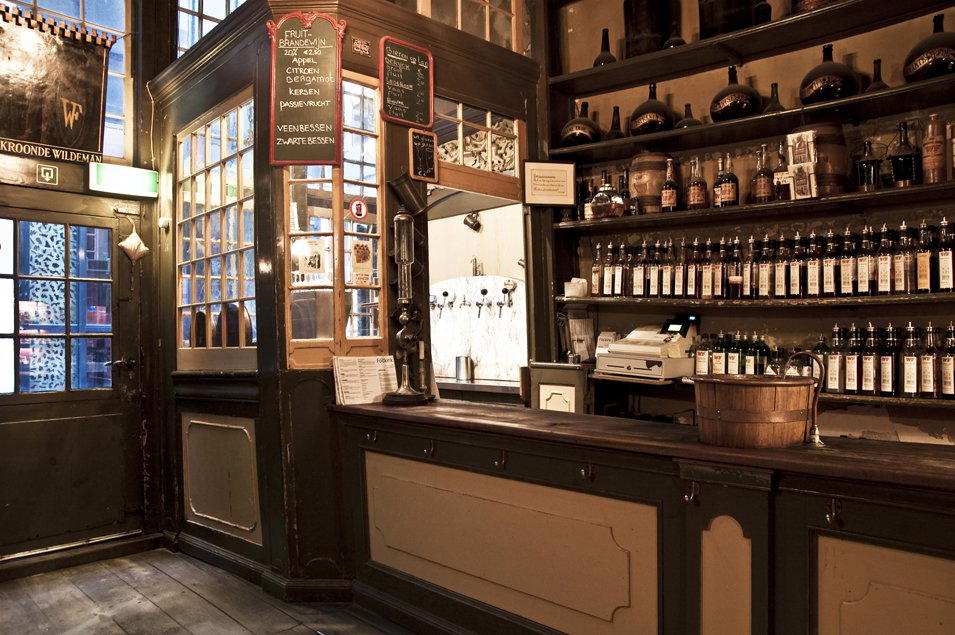
Three Centuries in a Single Room
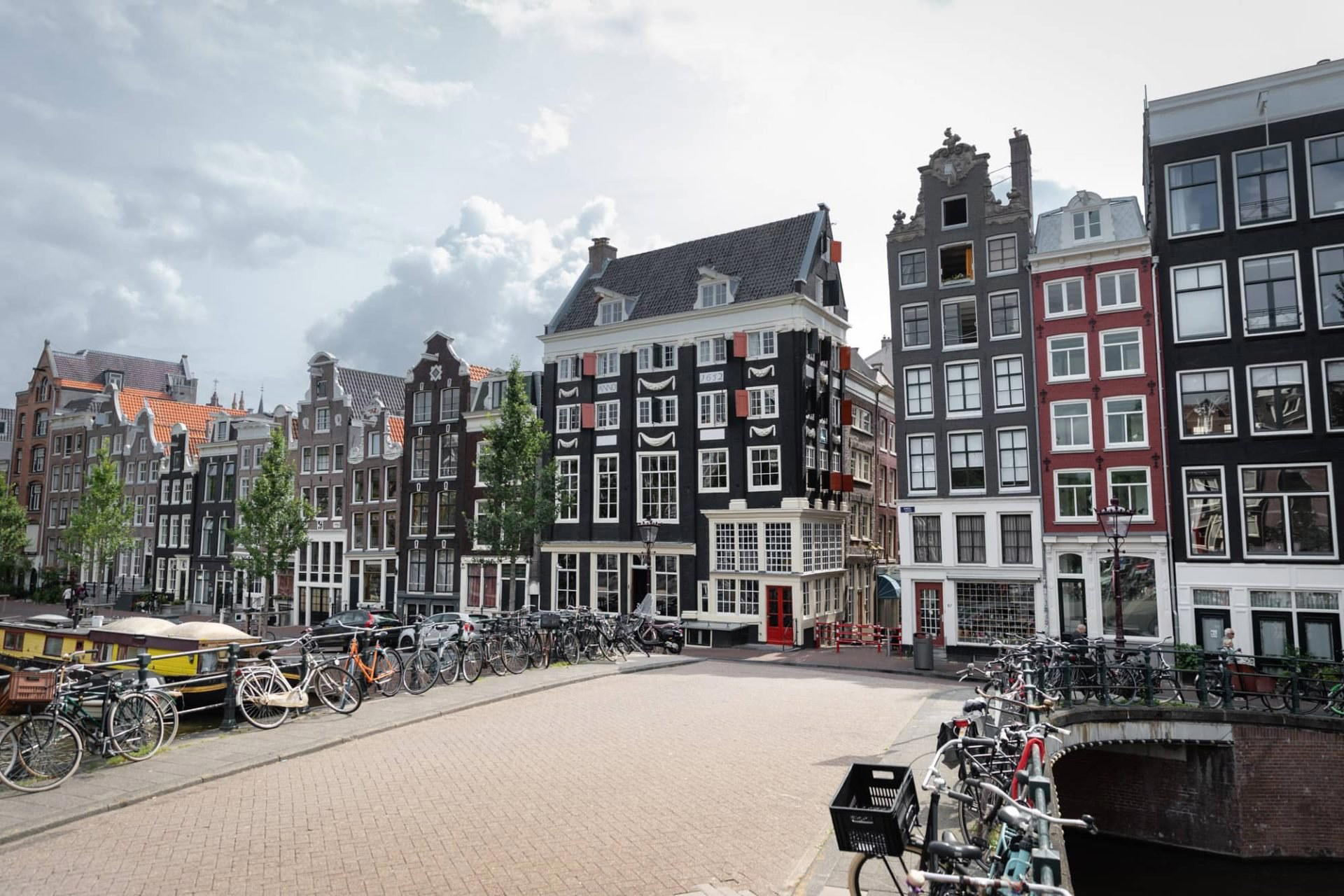
Amsterdam's Pijlsteeg is barely wide enough for two people to pass comfortably, which is the point. The alley runs off the Damrak tourist corridor but operates in an entirely different register, and at number 31 the low-slung door to Wynand Fockink has been opening onto the same small tasting room since 1679. The walls are lined floor to ceiling with hand-labelled stone crocks and bottles, the bar is worn smooth from use, and the custom is to fill a tulip glass so full that the first sip must be taken with hands behind the back, leaning forward over the counter. This is not theatre staged for visitors. It is simply how Dutch jenever has been served here for generations.
Understanding Wynand Fockink requires understanding where jenever sits in the wider story of European spirits. Gin's precursor and still a distinct category under EU regulations, jenever divides into two main styles: jonge, the lighter post-war industrial style that made export volumes possible, and oude, the malt-wine-based style that predates the industrial shift and carries the grain character, roundness, and residual sweetness associated with traditional Dutch distilling.
The Dutch Spirits Tradition Wynand Fockink Represents
The tradition of the proeflokaal, or tasting house, is a distinctly Dutch institution. Historically attached to distilleries as a place where merchants could sample before buying, these rooms survived long after large-scale production moved out of city centres. Amsterdam once had dozens; now the count of genuinely historic operating examples is significantly smaller. The character of a proeflokaal is defined less by its menu range and more by the depth of its house selection and the continuity of its practice. On both counts, the winery holds a position that few comparable addresses in the city can match.
The range typically includes both house-distilled jenevers and a wide catalogue of traditional fruit and herbal likeuren, the sweet liqueurs that were historically served alongside or in place of spirits at Dutch social occasions. Some of these recipes date back centuries and carry names that read like a register of Dutch mercantile history: references to trade routes, colonial-era botanicals, and seasonal ingredients that would have been standard in seventeenth-century Amsterdam warehouses. This historical dimension is not incidental to the experience at the winery. It is the experience.
For a comparative frame, the other significant names in Dutch heritage distilling include Bols, which traces its Amsterdam roots to 1575 but now operates on a larger commercial scale, and Nolet Distillery in Schiedam, which represents the Schiedam production tradition that at one point made that city the spirits capital of the world. Van Kleef in The Hague offers a comparable tasting-house format further south. The winery's distinction within this set is its combination of historic address, continued tasting-room operation, and the depth of its in-house spirits catalogue, all of which place it inside the upper tier of this niche category.
What to Drink and Why It Matters
The selection at the winery is extensive enough to require some orientation. Visitors who approach it as they would a gin bar will miss the point. The house jenevers reward tasting in sequence from youngest to oldest style: starting with a jonge to establish a baseline, then moving to korenwijn, the highest-malt-wine jenever category, which sits closest in character to a lightly aged grain whisky. The fruit and herbal liqueurs occupy a separate register and are worth treating as a distinct category, several of which are served from hand-decorated stone bottles that have been in continuous production here.
The ritual filling of the tulip glass to the brim is worth attempting at least once. It is the single most immediately legible signal that this tasting house operates according to its own conventions, not the conventions of the broader Amsterdam tourist circuit. The practice also, practically speaking, confirms quality in the liquid: a well-made, balanced jenever or likeur holds its composure when served at full pour. Off-spirits do not.
Placing Wynand Fockink in the Amsterdam Context
Amsterdam's eating and drinking scene has expanded significantly over the past decade, with new-format cocktail bars, natural wine venues, and international restaurant openings absorbing much of the critical attention. Within that expansion, historic Dutch spirits houses occupy a distinct and somewhat counter-programmatic role. They are not beneficiaries of trend cycles. Their appeal rests on continuity, depth, and the specificity of a tradition that no amount of contemporary bar programming can replicate.
The address at Pijlsteeg 31 sits within walking distance of the Nieuwe Kerk, the Royal Palace, and the main hotel corridor around the Dam, which makes the physical logistics direct. The tasting room is small, and the experience is self-directed in the sense that there is no guided format, no fixed flight, and no reservation system in the conventional sense. Visitors select from the menu and are served at the bar or at the small standing tables. This format means the venue absorbs a certain number of walk-in visitors naturally, though peak tourist periods compress the space considerably. For the considered visitor, mid-morning on a weekday or early afternoon before the dinner-hour crowds build offers a materially different experience than the same visit on a Saturday afternoon in high summer.
Planning Your Visit
The winery is located at Pijlsteeg 31, 1012 HH Amsterdam, steps from the Damrak and easily reached from Amsterdam Centraal on foot. The tasting room is walk-in friendly. The drinks selection spans traditional Dutch jenevers at multiple age expressions and a catalogue of historic likeuren, and the standing-at-the-bar service style is part of the format, not a compromise.
Visitors with a deeper interest in European heritage spirits more broadly may find context in the wider EP Club spirits archive, which covers producers including Aberlour in Aberlour, Achaia Clauss in Patras, and All Saints Estate in Rutherglen, among others in the Accendo Cellars, Adelaida Vineyards, Adelsheim Vineyard, Alban Vineyards, Albert Boxler, Aldo Conterno, Alexander Valley Vineyards, and Alpha Omega Winery sections of the platform.
Booking and Cost Snapshot
Comparable venues nearby, for context on price, style, and recognition.
Continue exploring
More in Amsterdam
Wineries in Amsterdam
Browse all →
Bars in Amsterdam
Browse all →
Restaurants in Amsterdam
Browse all →
At a Glance
- Historic
- Cozy
- Intimate
- Well Known
- Solo Exploration
- Wine Education
- Historic Building
- Street Scene
- Fortified
- Guided Tasting
Dimly lit, dusty wooden interior with old casks evoking 17th-century Amsterdam, cramped and atmospheric with no chairs or music.