Grand Hotel Huis ter Duin

Grand Hotel Huis ter Duin occupies one of the Dutch coast's most recognisable positions, a 254-room seafront property on Noordwijk aan Zee's Koningin Astrid Boulevard. The hotel represents the larger-scale end of the Dutch coastal hospitality spectrum, where scale and seafront access define the offer rather than boutique minimalism. For the North Sea coast, it remains the reference point against which smaller properties in the region are measured.
Pearl is the En Primeur Club membership app — saves, bookings, and concierge access live there. Same editors, same standards.
- Address
- Kon. Astrid Boulevard 5, 2202 BK Noordwijk
- Phone
- +31 71 361 9220
- Website
- huisterduin.com
- Directions
- Get directions
 Saves & bookings on Pearl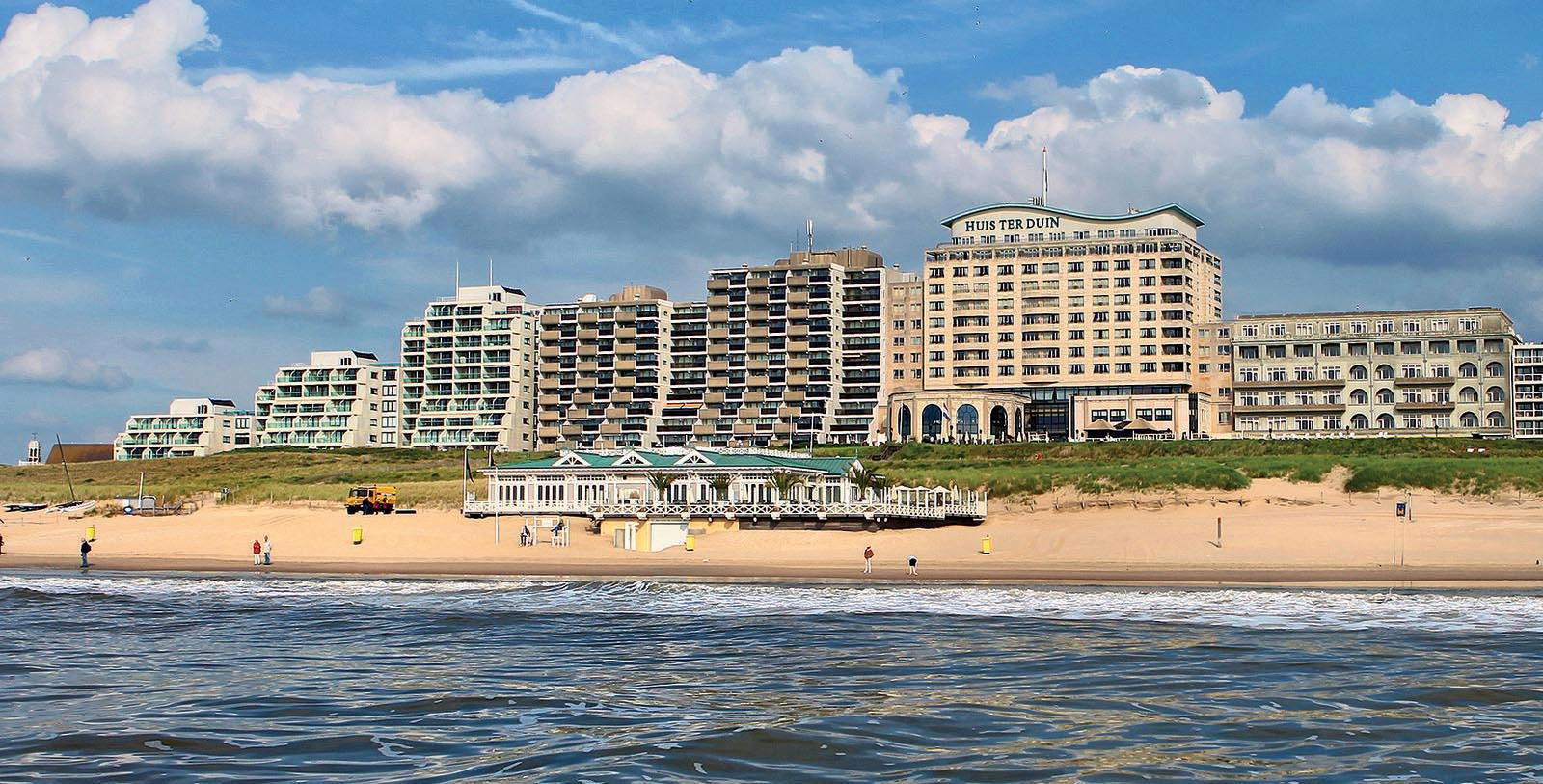
The North Sea Coast as Architecture's Context
Grand Hotel Huis ter Duin is a 5-star hotel in Noordwijk, with 254 rooms and a nightly rate starting at about $250. The Dutch coastline north of The Hague operates on different terms than the interior. Here, hotels are not hidden behind dunes or tucked into village streets. They face the sea directly, and the scale of that exposure is part of the proposition. Grand Hotel Huis ter Duin, sitting on Koningin Astrid Boulevard in Noordwijk aan Zee, belongs to this tradition of coastal-frontal architecture, where the building's relationship to the waterline is the primary design statement. At 254 rooms, it sits at the upper end of the North Sea coastal hotel spectrum in the Netherlands, a scale that places it in a different competitive category than the smaller, design-led properties appearing in Dutch hospitality over the past decade.
That distinction matters. The Netherlands has developed two parallel tracks in premium accommodation: the boutique conversions found inland in cities and country estates, such as Weeshuis Gouda or Landgoed Hotel Het Roode Koper, and the larger, full-service seafront properties that serve a different function entirely. Huis ter Duin belongs to the second track, where scale enables a breadth of facilities, event capacity, and seafront coverage that smaller properties cannot offer. The choice between these two models is less about quality than about what a stay is for.
What the Facade Signals
Approaching from the boulevard, the hotel presents as the dominant built form on this stretch of coastline. The architecture reads as classic European grand hotel: substantial volume, formal massing, and a position that commands rather than recedes. This is a deliberate posture. Grand hotels of this generation and scale in northern Europe were designed to be seen from the beach as much as from the street, functioning as landmarks in flat, open terrain where the built horizon is otherwise low. On the North Sea coast, that visual weight carries differently than in an Alpine or Mediterranean context. The light shifts quickly, the horizon is wide, and the hotel's presence anchors the townscape against an otherwise unbroken skyline.
For travellers comparing this to, say, Badrutt's Palace Hotel in St. Moritz or Aman Venice, the comparison illuminates a category difference rather than a hierarchy. Those properties trade on specific site narratives. Huis ter Duin trades on coastal access and scale, delivering a seafront position that smaller properties in the region cannot match.
Room Scale and Configuration
A 254-room hotel on the Dutch coast operates at a scale that shapes every aspect of the guest experience, from the size of the lobby to the variety of room configurations available. At this count, the property can support multiple dining formats, meeting and event infrastructure, and a spread of room categories from standard seafront to suite-level with terrace access. Sea-facing rooms at properties of this type typically command a premium over courtyard or boulevard-facing categories, and the spread of positions across a building of this footprint means that not all sea views are equal. Higher floors and corner positions generally provide the clearest sightlines across the North Sea, a point worth considering at the time of booking.
Travellers used to the smaller key counts of properties like Hotel 717 in Amsterdam or Bij Jef in Den Hoorn will find the experience here is calibrated differently. The intimacy of an eight-room canal house is not the point. What the scale of Huis ter Duin enables is logistical reliability: the kind of full-service infrastructure, consistent staffing ratios, and amenity depth that larger groups, families, and conference delegates require, and that boutique properties structurally cannot deliver at competitive price-per-room ratios.
Noordwijk aan Zee as a Destination
Noordwijk has a specific place in the Dutch leisure map. It is close enough to The Hague and Amsterdam to function as a short-break or weekend destination for urban residents, and far enough from both to operate as a genuine coastal retreat. The town has historically drawn a mix of domestic tourists, international conference traffic tied to the European Space Research and Technology Centre (ESTEC) located nearby, and a growing segment of travellers extending a visit to The Hague or the bulb fields in spring season. For those interested in the broader South Holland coastal circuit, Noordwijk connects naturally with The Hague's dining and cultural offer, and the city's proximity makes it a practicable base. Properties such as De Plesman Hotel The Hague serve a different function in that circuit, positioned for urban access rather than seafront immersion.
Spring timing, specifically late March through early May when the Keukenhof gardens are open and the bulb fields around Lisse and Hillegom are in full colour, represents the period of highest demand across this coastal corridor. Booking well in advance during that window is advisable. The shoulder seasons of September and October offer the North Sea at its most dramatic in terms of light and weather, with the additional advantage of significantly lower occupancy than summer months.
Placing Huis ter Duin in the Wider Dutch Hotel Context
The Netherlands has seen considerable investment in hotel design and repositioning over the past decade. Urban properties like citizenM Rotterdam and Inntel Hotels Amsterdam Zaandam have pushed formal and conceptual ambition into the mid-market. At the country estate end, Château St. Gerlach and Château Neercanne have established a luxury-heritage tier in the south. Kazerne in Eindhoven and De Blend in Utrecht occupy a design-forward independent niche. Huis ter Duin does not compete directly with any of these. It occupies a distinct position: the large-format, full-service seafront hotel, a category with few direct Dutch comparators at the same coastal address quality.
For travellers who have stayed at Op Oost in Oosterend on the Wadden islands or Mooirivier in Dalfsen, the shift in scale and setting here is significant. The comparison is less useful as a quality reference than as a format reference: what you are choosing is the seafront-grand-hotel experience, a format that has its own logic and its own appropriate uses. For international travellers more familiar with properties in the Aman or Bvlgari tier, the positioning here is deliberately different: less about architectural singularity, more about seafront scale and reliable service infrastructure on a coastline that has little competition at this room count.
Comparable Venues
Comparable venues nearby, for context on price, style, and recognition.
| Venue | Cuisine | Price | Awards | Notes |
|---|---|---|---|---|
| Grand Hotel Huis ter DuinThis venue — the venue you are viewing | Sophisticated seaside resort hotel offering modern comforts with tasteful furnishings; set high on the dunes with warm color décor and spacious contemporary design. | $$$$ | 5-Star | Not listed |
| Alexander Hotel | Coastal luxury resort with beach club. | $$$ | 4-Star | Noordwijk aan Zee |
| Vesper | Sophisticated seaside boutique hotel built in 1904 with modern expansions. | $$$$ | 4-Star | Noordwijk aan Zee |
| Conservatorium | Well-known heritage building reimagined as Amsterdam's luxury living room in the Museum Quarter. | $$$$ | 5-Star | Oosterdokseiland |
| De Durgerdam | 17th-century fisherman's inn transformed into luxury boutique with modern addition | $$$$ | 5-Star | Durgerdam |
| op Oost | Boutique Hotel & Restaurant het Kook Atelier | Eco-conscious boutique hideaway rooted in nature and tranquility | $$$$ | 5-Star | Oosterend |
Recognition history
Dated appearances from independent guides and award organizations, with the underlying list record or original source where available.
Preferred Hotels L.V.X. Collection
Preferred Hotels
Continue exploring
More in Noordwijk aan Zee
Hotels in Noordwijk aan Zee
Browse all →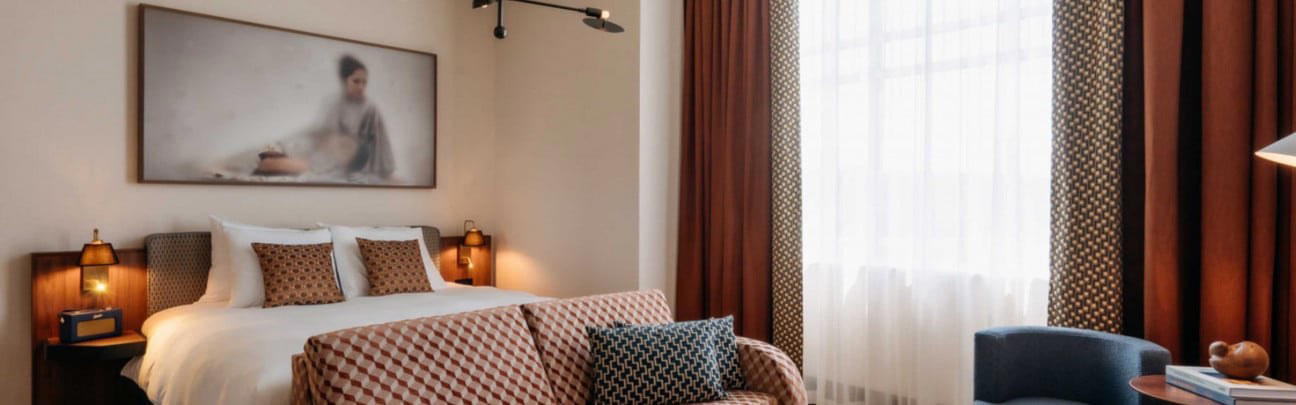
Bars in Noordwijk aan Zee
Browse all →
Restaurants in Noordwijk aan Zee
Browse all →
Wineries in Noordwijk aan Zee
Browse all →
At a Glance
- Elegant
- Romantic
- Sophisticated
- Scenic
- Romantic Getaway
- Anniversary
- Wellness Retreat
- Family Vacation
- Beachfront
- Destination Spa
- Historic Building
- Panoramic View
- Terrace
- Garden
- Wi Fi
- Pool
- Spa
- Fitness Center
- Room Service
- Concierge
- Business Center
- Beach Access
- Sauna
- Restaurant
- Bar
- Waterfront
- Wi Fi
- Pool
- Spa
- Fitness Center
- Room Service
- Concierge
- Business Center
- Beach Access
- Sauna
- Restaurant
- Bar
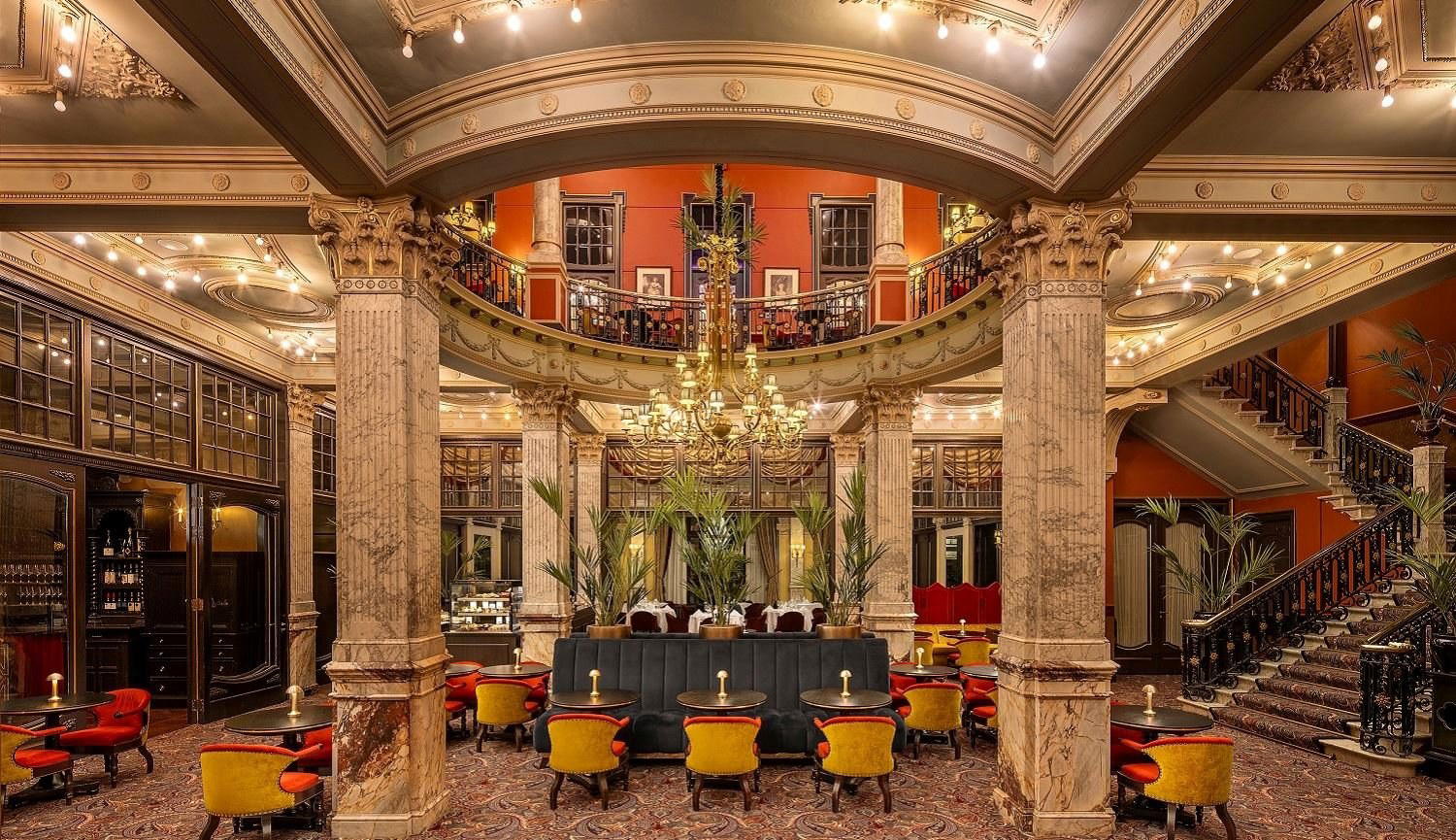
Warm, elegant interiors with classical luxury aesthetic; spacious, well-appointed public areas with welcoming atmosphere; natural light from expansive sea-view windows; refined yet comfortable ambiance blending timeless grandeur with modern sophistication.