Central Park Voorburg


A designated national monument set on the grounds of an 18th-century country estate just outside The Hague, Central Park Voorburg occupies a stately white manor house called Vreugd & Rust, Dutch for Peace & Rest. Fourteen individually designed rooms combine period architecture with contemporary finishes, while a traditional restaurant and elegant bar make it a considered choice for special occasions in the southern Randstad.
Pearl is the En Primeur Club membership app — saves, bookings, and concierge access live there. Same editors, same standards.
- Address
- Oosteinde 14, 2271 EH Voorburg
- Phone
- +31 70 387 2081
- Website
- centralparkvoorburg.com
- Directions
- Get directions
 Saves & bookings on Pearl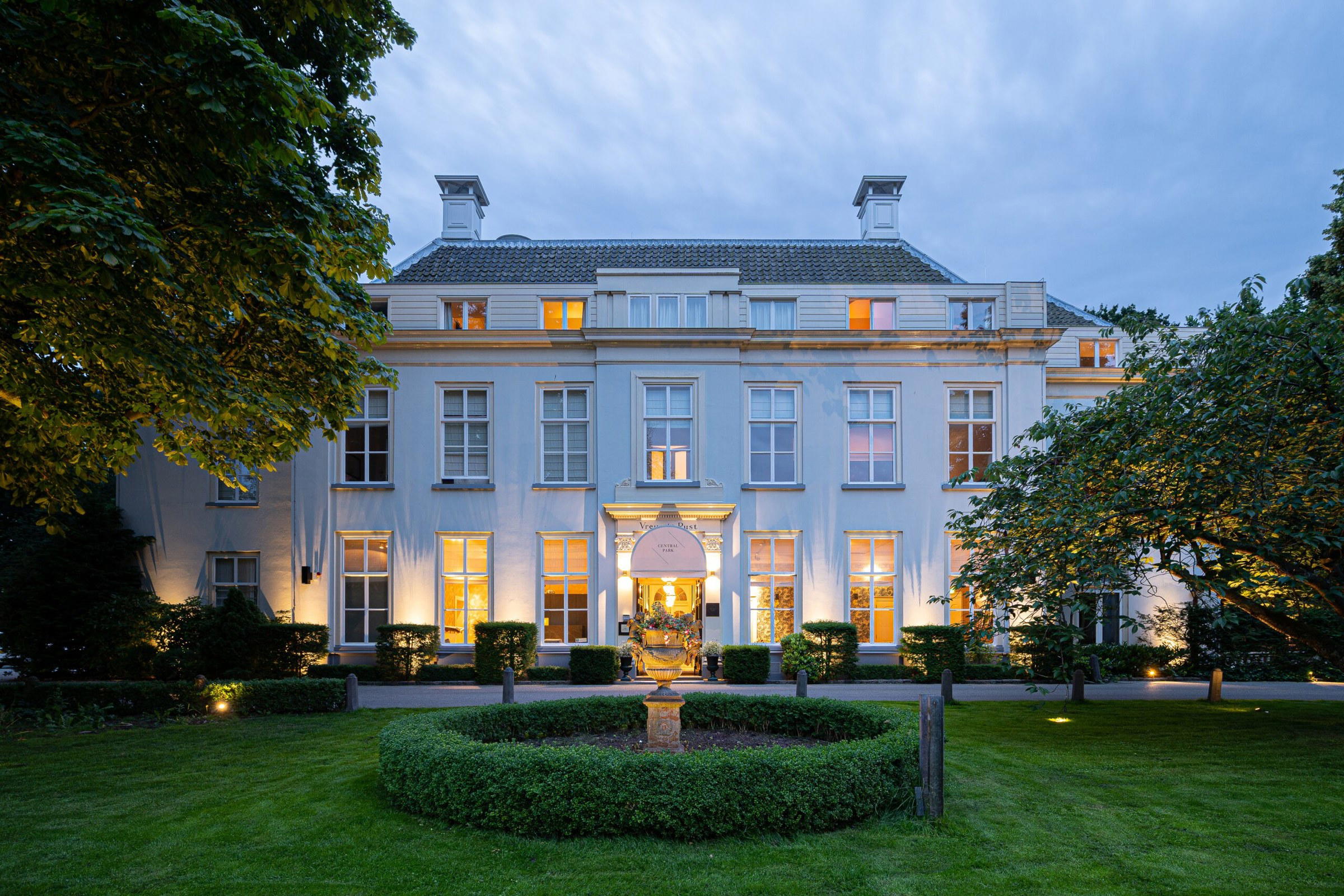
Where Protected Architecture Meets Considered Contemporary Design
Approaching Voorburg from The Hague, a short train or tram ride through the suburban fringe of the Randstad, the landscape shifts from urban density to something quieter and more composed. Voorburg itself sits between the political capital and Delft, carrying the particular character of a Dutch suburb that has never quite been absorbed: residential, tree-lined, historically layered. Central Park Voorburg occupies a country estate called Vreugd & Rust on Oosteinde 14, and the name alone signals what this address is trying to be. Vreugd & Rust translates directly as Peace & Rest, and the surrounding green space shares the designation. For a property within easy reach of one of Europe's busiest diplomatic cities, it is a considered geographic argument for staying slightly outside the centre.
The Architecture of Vreugd & Rust
The building is a designated national monument, which means its exterior and foundational structure are protected under Dutch heritage law, a classification that shapes everything from the whitewashed facade and tiled roof to the interior's surviving 18th-century details. The rococo staircase is not decorative in the boutique-hotel sense; it is original. The stucco ceilings are not reproduction. This is a farm and homestead with a documented history stretching back three centuries, and the physical evidence of that age is present at ground level in ways that most period-referencing hotels can only approximate.
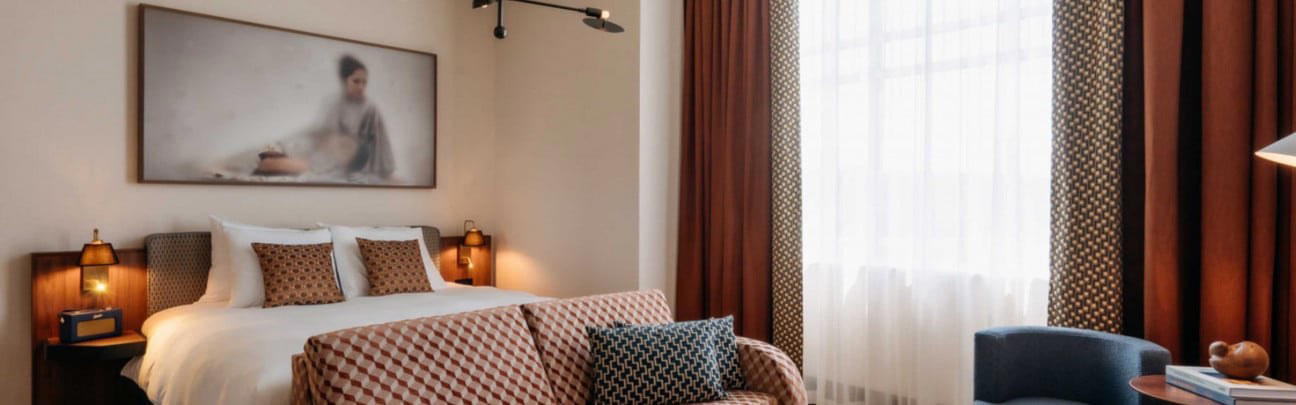
What makes the interior more interesting than direct heritage preservation is the decision to layer contemporary finishes over the historical shell. Geometric wallpaper, patterned carpets, and metallic finishes occupy rooms where rustic wooden beams still carry structural weight. Hästens beds sit beneath stucco ceilings. The juxtaposition is not accidental, it reflects a specific positioning within the Dutch boutique hotel category, where properties like this one differentiate themselves from both the corporate Hague hotel market and the canal-house conversion model common in Amsterdam.
Room Character and the Logic of 14 Keys
At 14 rooms, Central Park Voorburg operates at a scale that places it firmly in the small independent segment of Dutch hospitality, closer in footprint to Posthoorn in Monnickendam or Bij Jef in Den Hoorn than to anything in the Hague's central hotel stock. That scale is a practical constraint imposed partly by the monument designation, but it functions as a positioning tool as well. Properties at this key count cannot compete on amenity volume or conference infrastructure; they compete on atmosphere, specificity, and service ratio.
The rooms are described as light-filled with generous natural light, a quality more variable in Dutch historic buildings than the phrase suggests, given the country's reliance on north-facing facades and narrow window proportions in older construction. The suites on the upper levels carry more of the design intervention: plush velvet, varnished wood, and metallic accents that push the aesthetic toward something more contemporary than the ground floor would suggest. The lower level, by contrast, is deliberately traditional in tone, which creates a vertical division within the property that reflects two different guest experiences under the same roof. Guests seeking the more avant-garde register of the property should request upper-floor accommodation; those drawn to the estate's historical character will find it most intact on the ground floor.
The Restaurant and Bar at Ground Level
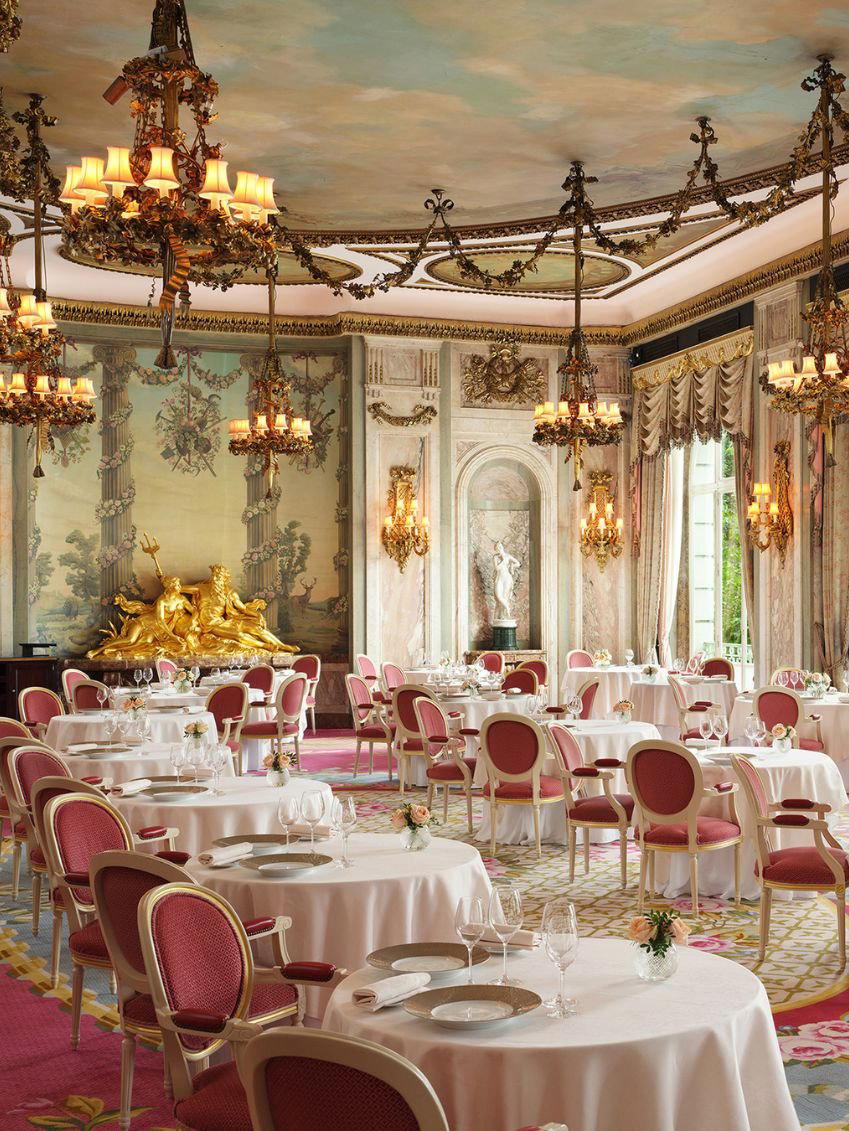
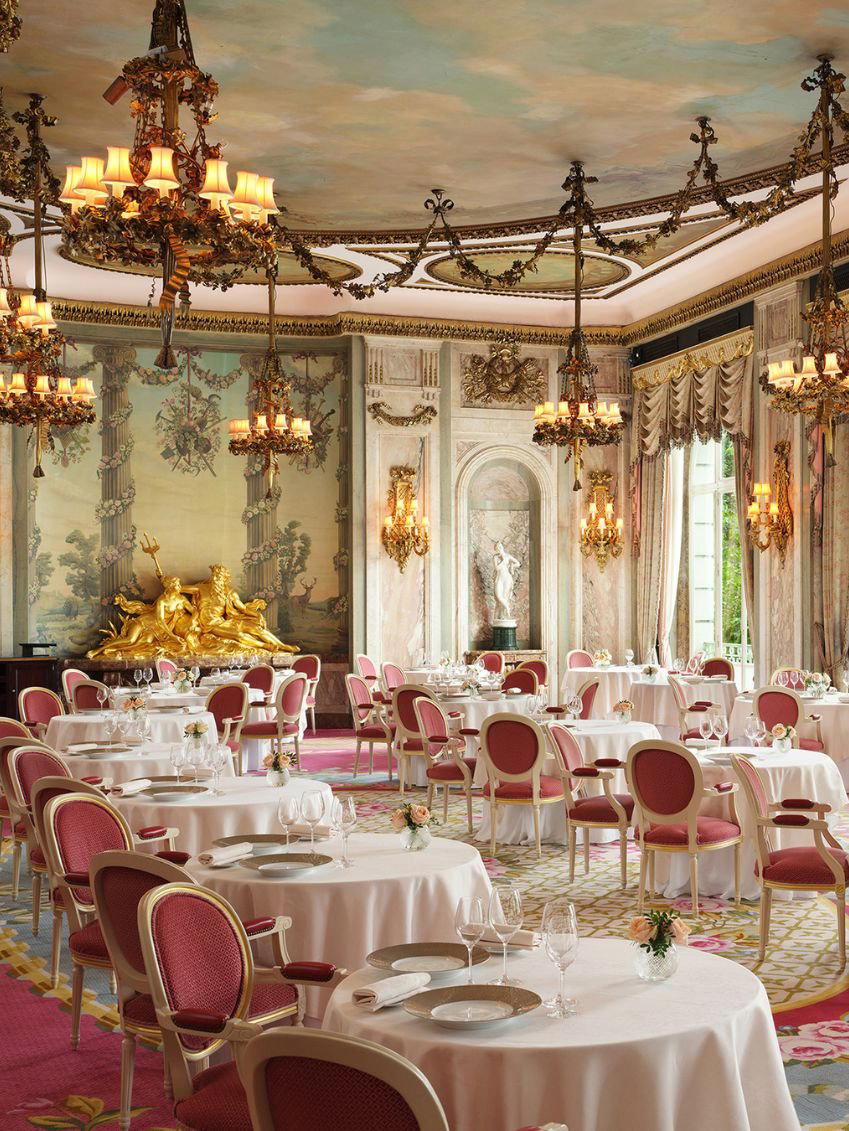
The ground-floor restaurant occupies one historically intact part of the building, with ornate chandeliers, wood-plank flooring, and views across the surrounding gardens. The atmosphere is described as sophisticated and traditional, which positions it within a specific Dutch dining register: formal enough for special occasions, rooted enough in its setting to avoid the studied minimalism of contemporary Dutch fine dining. Breakfast is served here, and the room doubles as the primary restaurant for guests and, presumably, local diners. The bar is described as elegant and suited to the same occasion-driven use case.
In the Dutch market, estate hotels of this type frequently position their restaurants as destination venues for the surrounding area, drawing local residents for anniversaries and celebrations independently of the hotel's room occupancy. The chandeliers and garden views are doing specific work in that context.
Positioning Within the Randstad Hotel Market
Randstad, the conurbation spanning Amsterdam, Rotterdam, The Hague, and Utrecht, supports a wide range of hotel formats, from the design-led urban properties like Hotel 717 in Amsterdam and citizenM Rotterdam to the high-volume transit options clustered around Schiphol Airport. Central Park Voorburg occupies a different segment entirely: the country estate category, where the argument for staying is atmospheric and architectural rather than locational convenience. Guests choosing this property over something like De Plesman Hotel The Hague are trading central Hague access for the particular quality of waking up in a national monument surrounded by green space. That is a deliberate trade-off, and the property makes no effort to disguise it.
Within the broader Dutch estate hotel category, comparisons extend outward to properties like Landgoed Hotel Het Roode Koper in Leuvenum and Mooirivier in Dalfsen, both of which occupy similarly intimate scales on protected grounds. What separates Vreugd & Rust is its proximity to a major European city: the Hague is within direct commuting distance, which means the property can serve both the weekend-escape guest and the business traveller seeking respite from the city's hotel stock.
Planning Your Stay
Rates at the hotel start from approximately $196 per night, with an average closer to $227, which positions the property at the mid-upper tier of the Hague area's independent hotel market, above standard business hotels but below the price points commanded by the largest international properties in the city centre. The address is Oosteinde 14, 2271 EH Voorburg.
For those comparing estate-style boutique properties across the Netherlands and further afield, the EP Club collection includes Weeshuis Gouda, Kazerne in Eindhoven, 2L de Blend Hotel in Utrecht, and at the international end of the historic-property spectrum, Aman Venice and Castello di Reschio in Umbria.
At-a-Glance Comparison
Comparable venues nearby, for context on price, style, and recognition.
| Venue | Cuisine | Price | Awards | Notes |
|---|---|---|---|---|
| Central Park VoorburgThis venue — the venue you are viewing | Luxury boutique hotel in a restored 18th-century country house, member of Relais & Châteaux with emphasis on personalization and refined hospitality. | $$$$ | Michelin 1 Key | Not listed |
| Château St. Gerlach | Historic luxury estate hotel blending 15th-century monastery architecture with contemporary comfort and refined hospitality. | $$$$ | Michelin 1 Key | Valkenburg aan de Geul |
| De Plesman Hotel The Hague | Historic property renovated with modern comforts and original antiques. | $$$ | Michelin 1 Key | near Madurodam |
| Landgoed Hotel Het Roode Koper | Historic country house estate with classical English gardens | $$$$ | Michelin 1 Key | Leuvenum |
| Van Oys Maastricht Retreat | Restored medieval château estate blending historic charm with modern eco-luxury | $$$$ | Michelin 1 Key | Eijsden-Margraten |
| The Dylan Amsterdam | Historic boutique hotel blending 17th-century architecture with contemporary luxury in Amsterdam's canal belt. | $$$$ | Michelin 1 Key | Felix Meritisbuurt |
Recognition history
Dated appearances from independent guides and award organizations, with the underlying list record or original source where available.
Relais Chateaux Award
Relais Chateaux
Michelin 1 Key
Michelin
Relais Chateaux Award
Relais Chateaux
Continue exploring
More in Voorburg
Hotels in Voorburg
Browse all →
Bars in Voorburg
Browse all →
Restaurants in Voorburg
Browse all →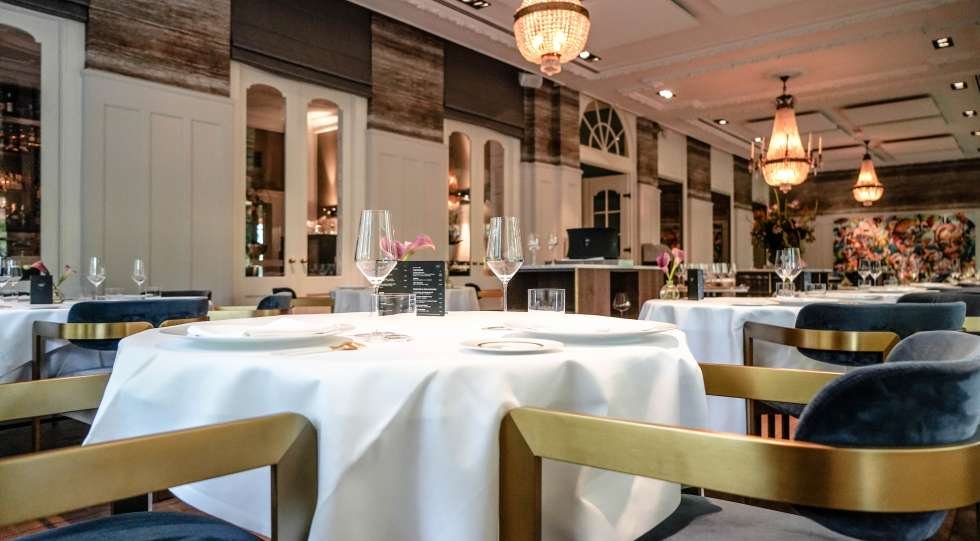
Wineries in Voorburg
Browse all →
At a Glance
- Romantic
- Quiet
- Elegant
- Sophisticated
- Classic
- Romantic Getaway
- Anniversary
- Business Trip
- Weekend Escape
- Historic Building
- Garden
- Terrace
- Panoramic View
- Wi Fi
- Room Service
- Restaurant
- Bar
- Bicycle Rental
- Tennis Court
- Concierge
- Free Parking
- Garden
- Wi Fi
- Room Service
- Restaurant
- Bar
- Bicycle Rental
- Tennis Court
- Concierge
- Free Parking
Serene and refined with soft natural light, hushed conversation, and early morning calm; white tablecloths and elegant service create an intimate fine-dining atmosphere.