Badcuyp

Star Wine List
Our verdict
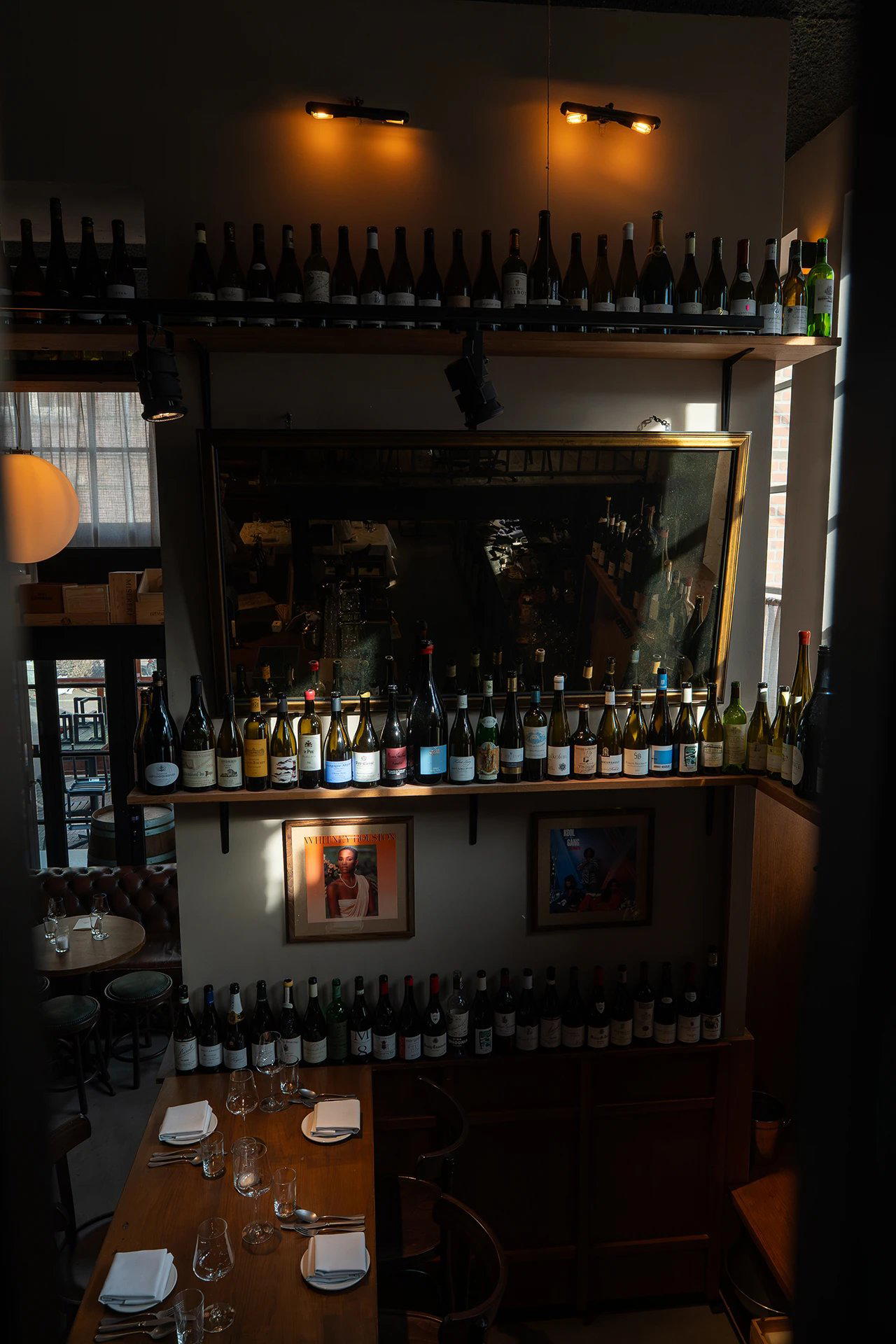
On a quiet De Pijp street corner, Badcuyp occupies the kind of address that rewards those who pay attention to neighbourhood rhythms rather than guidebook rankings. The atmosphere skews local and unhurried, drawing a clientele that returns not out of occasion but out of habit. For visitors, that regulars-first character is the clearest signal of what to expect.

Pearl is the En Primeur Club membership app, where members save venues, book tables and use the concierge.
The menu
What to order
- Whole turbot
- Sweetbreads
- Beef tartare
- Oysters
- Rabbit bitterballen
De Pijp and the Neighbourhood Restaurant That Earns Loyalty
Amsterdam's De Pijp district has always operated on a different register from the canal-belt institution circuit. Where Canalside dining rooms like Ciel Bleu or Vinkeles attract destination diners who plan months ahead, De Pijp sustains a parallel ecosystem of places that earn loyalty through repetition rather than occasion. Eerste Sweelinckstraat, running just off the Albert Cuyp market, is the kind of street where that dynamic plays out at street level: Saturday morning market stalls two minutes from Saturday evening dinner tables. Badcuyp, at number 10, sits inside that rhythm.
The neighbourhood context matters because it shapes the clientele, and the clientele shapes the experience. In a district this dense with residents, the regulars are not anomalies; they are the baseline. For a visitor, that means reading the room slightly differently than you would at a tasting-menu counter. The metrics that apply to Amsterdam's creative fine dining tier, the Michelin recognition, the tasting-menu architecture, the wine list depth, are not necessarily the metrics that apply here. What De Pijp rewards is a different kind of attention.
What Keeps Regulars Coming Back
Across Amsterdam's mid-range neighbourhood dining scene, venues like Bistro de la Mer operating in a comparable bracket, the places that hold a loyal local following share a few structural traits: consistency over novelty, a format that accommodates different group sizes without friction, and a price point that allows for weeknight visits rather than just anniversary dinners. Regulars at neighbourhood restaurants rarely articulate what keeps them returning in programmatic terms. They return because the decision requires no deliberation.
Badcuyp's address in De Pijp places it within walking distance of some of the city's densest residential blocks, which means its regulars are likely drawn from the immediate catchment rather than from across the city. That geography tends to produce a particular kind of loyalty: not the loyalty of the converted food enthusiast making a pilgrimage, but the loyalty of someone who has simply learned, over time, that this is the right answer for a Tuesday. The absence of detailed booking infrastructure in public channels suggests the model leans on familiarity over formality.
Amsterdam's Neighbourhood Dining in Context
To understand where Badcuyp sits in Amsterdam's broader restaurant ecology, it helps to map the city's categories with some precision. At the top of the market, venues like Spectrum and Flore occupy the creative fine dining tier, with tasting menus, Michelin recognition, and advance booking requirements. One tier down, the organic and farm-to-table cohort, De Kas being the obvious reference point, operates on a more accessible price register but still carries strong editorial visibility and a destination-dining character. Below that sits a less-documented layer of neighbourhood restaurants that sustain themselves through local patronage rather than through press coverage or award cycles.
The Netherlands has a notable concentration of recognised fine dining outside Amsterdam: De Librije in Zwolle, Inter Scaldes in Kruiningen, and a cluster of regional operators including De Nieuwe Winkel in Nijmegen, De Lindenhof in Giethoorn, Tribeca in Heeze, De Groene Lantaarn in Staphorst, Brut172 in Reijmerstok, De Lindehof in Nuenen, De Bokkedoorns in Overveen, and De Treeswijkhoeve in Waalre. That regional depth means Amsterdam's neighbourhood restaurants are not competing for the destination-dining visitor in the way their counterparts in cities with thinner fine dining scenes might be. They compete for the local, which is a harder, slower competition to win, and a more durable one to sustain.
Internationally, the neighbourhood restaurant model has its own serious practitioners. Le Bernardin in New York City occupies the formal end of what neighbourhood loyalty can look like when the neighbourhood is Midtown; Lazy Bear in San Francisco represents the communal-table interpretation of the same impulse. Badcuyp operates in neither register, but the underlying dynamic, repeat visitors who have absorbed the format and return because of it, is consistent across the category.
Planning Your Visit
Badcuyp is at Eerste Sweelinckstraat 10, 1073 CM Amsterdam, directly in De Pijp and within a short walk of the Albert Cuyp market. The address is accessible by tram to Ferdinand Bolstraat or by bike along the city's southern ring of cycle routes, which is the mode most regulars will use. Contact and booking details are not publicly listed in standard directories, so the practical approach for first-time visitors is to arrive in person during service hours or check current status through neighbourhood channels. That approach, while slightly less convenient than an online booking system, is itself a reasonable proxy for what kind of operation this is: one that expects a degree of local knowledge from its guests. For broader Amsterdam dining context, the EP Club Amsterdam restaurants guide maps the full range from Michelin-level creative dining to mid-market neighbourhood options.
Frequently asked questions
What should I eat at Badcuyp?
Do they take walk-ins at Badcuyp?
What's the standout thing about Badcuyp?
Can Badcuyp accommodate dietary restrictions?
Is Badcuyp connected to the Albert Cuyp market?
Side-by-Side Snapshot
Comparable venues nearby, for context on price, style, and recognition.
| Venue | Cuisine | Price | Awards | Notes |
|---|---|---|---|---|
| BadcuypThis venue (the venue you are viewing) | European Open-Fire Grill with Natural Wine | $50–100 | Star Wine List | Not listed |
| Dèsa | Authentic Indonesian Rijsttafel | $20–30 | Not listed | Sarphatiparkbuurt |
| Salmuera | Latin American Steakhouse | $50–100 | Not listed | Bloemgrachtbuurt |
| KAIA | Contemporary Greek | Not listed | Not listed | Scheldebuurt West |
| MOMO | Modern Asian Fusion | $50–100 | Not listed | Leidsebuurt Zuidoost |
| Prins & Aap | French-Dutch Gastropub | $50–100 | Not listed | Felix Meritisbuurt |
Recognition history
Dated appearances from independent guides and award organizations, with the underlying list record or original source where available.
Star Wine List
Star Wine List
Continue exploring
More in Amsterdam
Restaurants in Amsterdam
All restaurants in Amsterdam →
Bars in Amsterdam
All bars in Amsterdam →
Hotels in Amsterdam
All hotels in Amsterdam →
Wineries in Amsterdam
All wineries in Amsterdam →
Badcuyp
The wine
- Wine program
- Deep wine list
- Extensive wine list
- Sommelier-led
- Natural wine
Details
- Lively
- Trendy
- Warm
- Whimsical
- Date Night
- Group Dining
- Casual Hangout
- After Work
- Open Kitchen
- Standalone
- Extensive Wine List
- Natural Wine
- Sommelier Led
- Farm To Table
- Local Sourcing
- A La Carte
- Small Plates
- Natural Wine
- Small European Growers
- Allergy Accommodating
Current opening hours
- Monday
- 5:30 PM–12 AM
- Tuesday
- 5:30 PM–12 AM
- Wednesday
- Closed
- Thursday
- 5:30 PM–12 AM
- Friday
- 5:30 PM–12 AM
- Saturday
- 5:30 PM–12 AM
- Sunday
- Closed
Hours can change for holidays and private events. Hours as of .
Warm, lively, and playful atmosphere with a young, energetic vibe that attracts Amsterdam food lovers from diverse backgrounds.