Our verdict
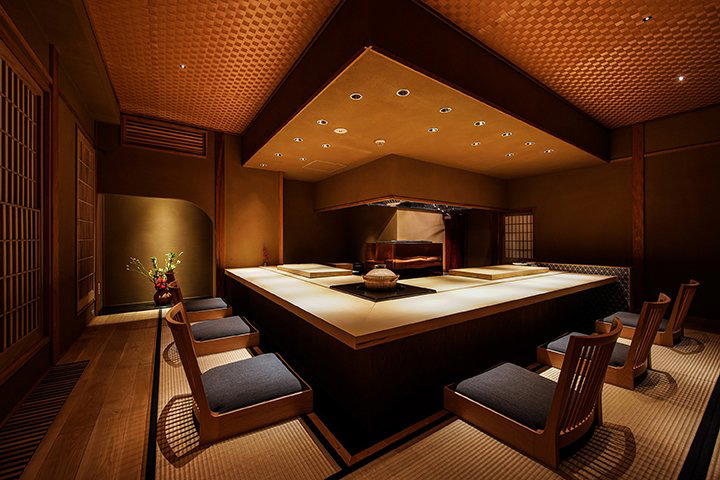
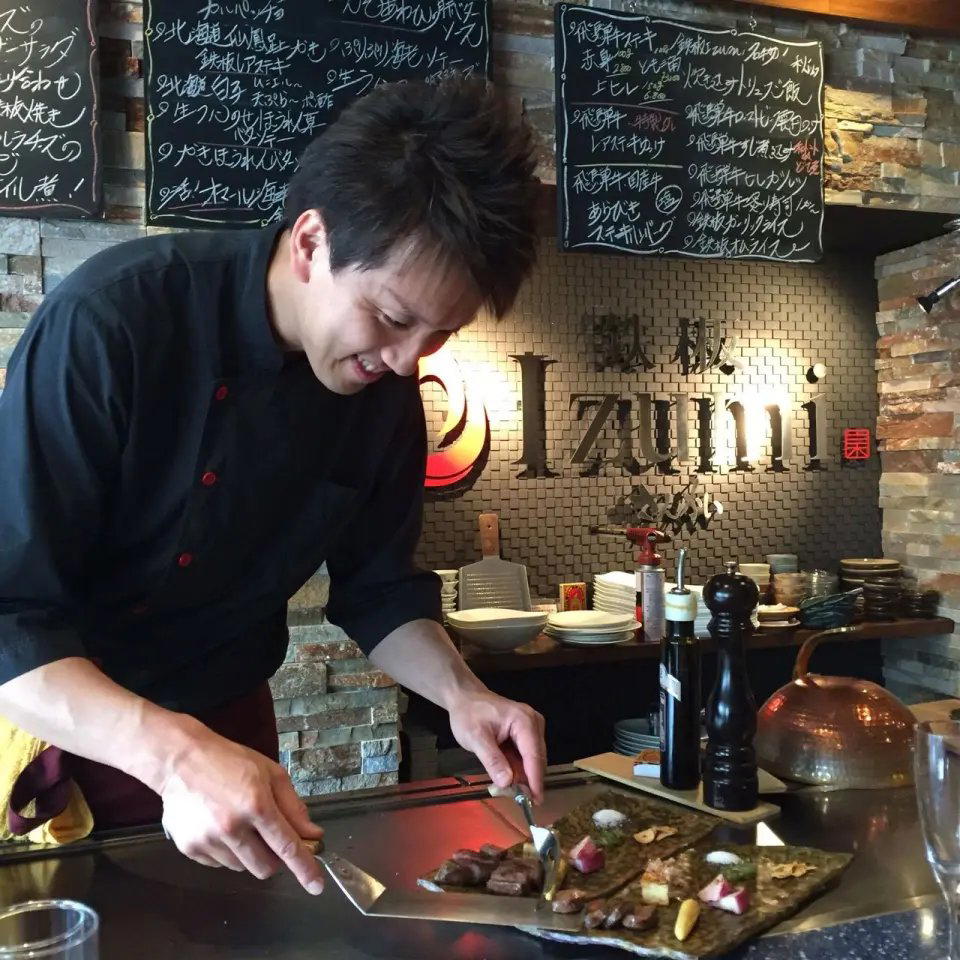
A teppan counter in Nagoya's Higashi Ward, Teppan Izumi ~Sankai~ represents the quieter, more disciplined end of the city's teppanyaki scene. The format places the cooking surface at the center of the dining experience, where the interplay between heat control, timing, and service rhythm defines the meal. Situated in the Izumi district, it draws a local crowd that values craft over spectacle.

Pearl is the En Primeur Club membership app, where members save venues, book tables and use the concierge.
Where Nagoya's Teppan Tradition Gets Serious
Higashi Ward's Izumi district sits at a remove from Nagoya's more trafficked dining corridors near Sakae and Nishiki. That distance is not a liability. In Japanese dining culture, some of the more considered cooking happens away from the tourist circuit, in neighbourhoods where the clientele is predominantly local and repeat. Teppan Izumi ~Sankai~ occupies this kind of position: a teppan counter in a city that has its own strong culinary identity, drawing on Aichi Prefecture's agricultural and livestock traditions without performing for an outside audience.
Teppanyaki as a format rewards coherence between the people behind the counter and those managing the room. The iron griddle is theatre by nature, but the better counters in Japan have moved past the visual drama toward something more measured: precise heat management, careful sequencing, and a front-of-house rhythm that keeps the pacing from feeling rushed or stalled. Whether that discipline is present here, local dining patterns in the Izumi area suggest a venue shaped more by neighbourhood regulars than by passing trade, which tends to favour consistency over spectacle.
The Teppan Counter as a Collaborative Format
The teppan counter format, when it works, is one of the more collaborative dining structures in Japanese cuisine. Unlike an omakase sushi bar, where the itamae operates with near-total authority, teppan cooking involves visible real-time coordination. The cook managing the griddle, whoever is running drinks and pacing, and the floor staff reading the table's tempo all have to operate as a single system. Gaps in that coordination show immediately: proteins land at the wrong temperature, the next course arrives before the current one is finished, or the drink pairing falls out of sync with the food's progression.
This dynamic places teppanyaki closer to a French brigade model than most Japanese formats acknowledge. For reference, counters at the level of Le Bernardin in New York City or the tasting menu programs at Atomix in New York City demonstrate how front-of-house coordination can be as technically demanding as the cooking itself. At a counter in a residential neighbourhood like Izumi, that ambition is expressed differently, but the underlying requirement for team synchronisation remains constant.
Japan's regional dining scene has produced strong examples of this collaborative format outside the obvious capitals. HAJIME in Osaka and Gion Sasaki in Kyoto each demonstrate, in their respective formats, how the relationship between kitchen and floor defines the character of a meal as much as any single dish. Further afield, Goh in Fukuoka and Harutaka in Tokyo show how that coordination scales across different cuisine types and price points.
Nagoya's Culinary Identity and Where Teppan Fits
Nagoya occupies a specific position in Japan's dining hierarchy. It is not a city that competes with Tokyo or Kyoto for critical attention, but its food culture is genuine and internally consistent, rooted in Aichi's agricultural output and a set of local specialities, from miso-braised dishes to eel preparations, that resist easy replication elsewhere. The city's restaurant scene reflects this: a strong local dining culture with less pressure to perform for external validators.
Within that context, teppanyaki sits alongside a range of cooking traditions. Nagoya's dining options span from the long-established eel house tradition, exemplified by Atsuta Horaiken (あつた蓬莱軒 本店), to Italian formats at Bacio and cucina Wada, and the French-inflected work at Chez Kobe. Sushi is represented at Cucina Italiana Gallura. The diversity of the local scene means that teppanyaki counters compete not just against each other but against a wide range of formats for the same dining occasions. See our full Nagoya restaurants guide for a broader orientation to the city's dining character.
Across Japan's smaller cities and regional towns, quieter equivalents of Teppan Izumi ~Sankai~ hold significant local standing without attracting national press. Venues like 一本杉 川嶋製 in Nanao, 夕佳亭山乃 in Sapporo, 湖畔荘彦 in Takashima, and 旅羽屋 in Nishikawa Machi each represent the kind of regionally embedded dining that rewards a traveller willing to look beyond prefectural capitals. Birdland in Sakai and akordu in Nara provide similar reference points for the value of regional specificity.
Approaching a Visit
Teppan counters in Japanese residential neighbourhoods rarely operate with the walk-in flexibility of casual dining. The format, with its live cooking and sequenced service, generally requires a reservation, and at smaller counters this is particularly true: seat counts tend to be low, meaning even modest demand fills sittings quickly. Given that Teppan Izumi ~Sankai~ is located in Izumi-cho, Higashi Ward, which sits north of Nagoya's central Sakae district, the most practical approach from central Nagoya is by subway or taxi. Planning the visit in advance, both in terms of booking and travel time, makes the experience smoother.
Dress expectations at this type of counter typically fall somewhere between smart casual and business casual in Japanese terms: not formal, but not the kind of register one would bring to a ramen shop. The teppan format itself is relatively relaxed in structure, and the neighbourhood setting reinforces that, but the attention to craft at the cooking level is usually reflected in a corresponding attention to how guests present themselves.
The Peer Group Question
What the address and format suggest is a venue aimed at the local professional and repeat-diner market rather than at destination-dining tourists. That positioning, common to teppan counters outside Japan's top-tier hotel dining circuits, tends to produce a different kind of experience from the flagship counters at Michelin-tracked establishments: less theatrical, more regular in its rhythms, and shaped significantly by whether the team dynamic on any given evening is firing cleanly.
For those arriving from other Japanese dining contexts, calibrating expectations to this neighbourhood positioning produces a more satisfying read of the experience. The comparison points are less the celebrated teppan rooms inside Tokyo or Osaka luxury hotels and more the quietly serious neighbourhood counters that sustain local dining culture across Japan's mid-sized cities.
Planning the Visit
- Location: Izumi 1-chome, Higashi Ward, Nagoya, Aichi 461-0001. Access from central Nagoya via subway to nearby stations or taxi.
- Reservations: Given the counter format, advance booking is advisable.
- Format: Teppan counter; expect a sequenced, cook-in-front-of-you format with limited seating.
- Dress: Smart casual consistent with Japanese neighbourhood dining norms.
Frequently asked questions
Does Teppan Izumi ~Sankai~ work for a family meal?
The counter format at Teppan Izumi ~Sankai~ in Nagoya's Higashi Ward suits adults and older teenagers comfortable with a structured, live-cooking setting. Very young children tend to conflict with the pace and intimacy of a teppan counter, where seating is fixed and the cook's timing governs the meal. It is a format that rewards focused attention rather than flexible family logistics.
Is Teppan Izumi ~Sankai~ formal or casual?
Teppan Izumi ~Sankai~ occupies a middle register common to serious neighbourhood counters in Japan: the cooking is precise and the setting attentive, but the Izumi district address in Higashi Ward places it outside Nagoya's more ceremonial dining corridors. Dress neatly, but the atmosphere is unlikely to demand the same register as a city-centre kaiseki room.
What makes Teppan Izumi ~Sankai~ different from Nagoya's central teppan venues?
The Izumi address in Higashi Ward positions Teppan Izumi ~Sankai~ away from the concentrated dining strips around Sakae, which shapes both the clientele and the atmosphere: it draws a neighbourhood-local crowd rather than visitors working through a city-centre list. That separation from Nagoya's more trafficked corridors is consistent with a counter format that prioritises repeat, committed diners over passing trade.
What should I order at Teppan Izumi ~Sankai~?
At a teppan counter of this format in Nagoya, the counter chef typically sequences protein and vegetable courses across the iron plate, with the day's selection driving the menu. Following the chef's lead rather than requesting substitutions is standard practice at counters of this type.
Where do I go for Teppan Izumi ~Sankai~?
Teppan Izumi ~Sankai~ is located at Japan, 〒461-0001 Aichi, Nagoya, Higashi Ward, Izumi, 1 Chome−10−25 シェモア泉 3A, Nagoya.
Do I need a reservation for Teppan Izumi ~Sankai~?
Teppan counters in residential Nagoya neighbourhoods like Izumi in Higashi Ward rarely accommodate walk-ins: the live-cooking format means seat count is fixed and each service is timed to the number of covers. Securing a reservation in advance is the reliable approach, and for counters of this type, doing so several weeks out is standard practice.
Comparable Spots, Quickly
Comparable venues nearby, for context on price, style, and recognition.
| Venue | Cuisine | Price | Awards | Notes |
|---|---|---|---|---|
| Teppan Izumi ~Sankai~This venue (the venue you are viewing) | Teppanyaki Steakhouse | Not listed | Not listed | Not listed |
| まねき寿司 | Traditional Japanese Sushi | $500+ | Not listed | Nishi |
| Tatsufumi Shiten | Traditional Sushi Omakase Counter | $100–150 | Tabelog 100 #5 | Higashi |
| Yadorigi | Casual Edomae Sushi Counter | $100–150 | Tabelog 100 #93 | Kita |
| Shoya Meieki | Yakiniku (Japanese BBQ) | $30–50 | Tabelog 100 #54 | Nakamura |
| Ningyocho Imahan Nagoya middorandosukuea ten | Traditional Japanese Sukiyaki & Shabu-Shabu | Not listed | Tabelog 100 #89 | Nakamura |