1 Michelin Star
Our verdict
A Michelin-starred kaiseki counter in Minami-Aoyama, Tenoshima draws its identity from Teshima island, where the chef's father was born. Underused fish species, sardine-broth nyumen, and bozushi shaped by Kyoto's Kikunoi tradition anchor a menu that connects regional Japanese fishing culture to the capital's dining table. Priced at ¥¥¥, it sits below Tokyo's top-tier kaiseki bracket while punching into serious critical territory.

Pearl is the En Primeur Club membership app — saves, bookings, and concierge access live there. Same editors, same standards.
The menu
What to order
- Mackerel with Carrot Sauce
- Deep Fried Grouper
- Pressed sushi
What Keeps Regulars Coming Back to Tenoshima
There is a particular kind of Tokyo kaiseki regular who is not chasing the three-star rooms of Roppongi or the white-tablecloth gravity of the city's most decorated counters. They are looking for something more specific: a kitchen with a traceable point of view, a menu that rewards repeat visits because the story behind it is coherent enough to deepen over time. Tenoshima, on the second floor of a modest building in Minami-Aoyama's 1-chome, holds that kind of loyalty.
The venue's Michelin star, awarded in 2024, places it in a tier of Japanese restaurants that have cleared critical scrutiny without necessarily courting the visibility of the city's more recognizable names. Among comparable Minami-Aoyama and adjacent-neighbourhood counters, the ¥¥¥ price position is notably accessible for starred kaiseki in Tokyo, where the upper bracket (¥¥¥¥ houses such as Kagurazaka Ishikawa or Azabu Kadowaki) routinely demands a significant premium. That gap in pricing tends to attract guests who already know what they want from a kaiseki meal and are specifically interested in what this kitchen does differently from the mainstream.
A Kitchen Built Around Teshima
The organizing principle at Tenoshima is not seasonal rotation in the generic sense but something more pointed: a sustained focus on the ingredients and techniques rooted in Teshima, the Seto Inland Sea island where the chef's father was born. That origin is not decorative. It shapes sourcing decisions, dictates which fish species arrive in the kitchen, and explains the presence of dishes that would look unusual in a more conventional kaiseki setting.
Nyumen, a savoury noodle soup prepared with dried sardine broth, is the clearest expression of this. Sardine-based dashi is not the prestige base of high kaiseki, where kombu and bonito tend to dominate. Its appearance on a starred menu is a statement about what the kitchen values: regional flavour memory over canonical hierarchy. For regulars, this dish functions as a kind of returning reference point, a taste that anchors the meal to a specific geography rather than to the abstracted elegance of the form.
The deliberate use of underused fish species extends that logic. In a Tokyo dining scene where the supply chain tilts heavily toward premium, well-recognized varieties, sourcing overlooked species serves a dual purpose: it supports the livelihoods of small-scale fishermen working Seto Inland Sea waters, and it produces flavour profiles that guests at more conventional counters simply do not encounter. For the returning diner, this means the menu holds genuine novelty even across multiple visits, because the fish itself shifts with what is available and what the kitchen chooses to champion.
The Kyoto Thread
Tenoshima's menu is not purely Teshima-facing. The bozushi, a pressed or box-style sushi with deep roots in Kansai tradition, reflects the chef's time at Kikunoi in Kyoto, one of the most technically demanding kaiseki kitchens in Japan. That training lineage matters for context. Kikunoi operates across multiple Michelin-starred locations and is understood within Japanese culinary circles as a serious school of classical technique. The bozushi at Tenoshima is not a nostalgia piece but a structural element that connects the kitchen's island-focused identity to a rigorous continental Japanese tradition.
This dual inheritance, Teshima's fishing culture and Kyoto's kaiseki formalism, gives the menu a range that rewards the guest who has eaten here before. On a first visit, the sardine broth and underused fish read as curiosities. On a return visit, they read as a coherent argument about where Japanese cuisine's next productive territory might lie: not in further refinement of already-refined ingredients, but in the recovery and reframing of overlooked ones. For a peer comparison on how other kitchens are approaching similar questions from different angles, Myojaku and Jingumae Higuchi both operate within this broader Tokyo movement toward specificity of provenance.
The Minami-Aoyama Context
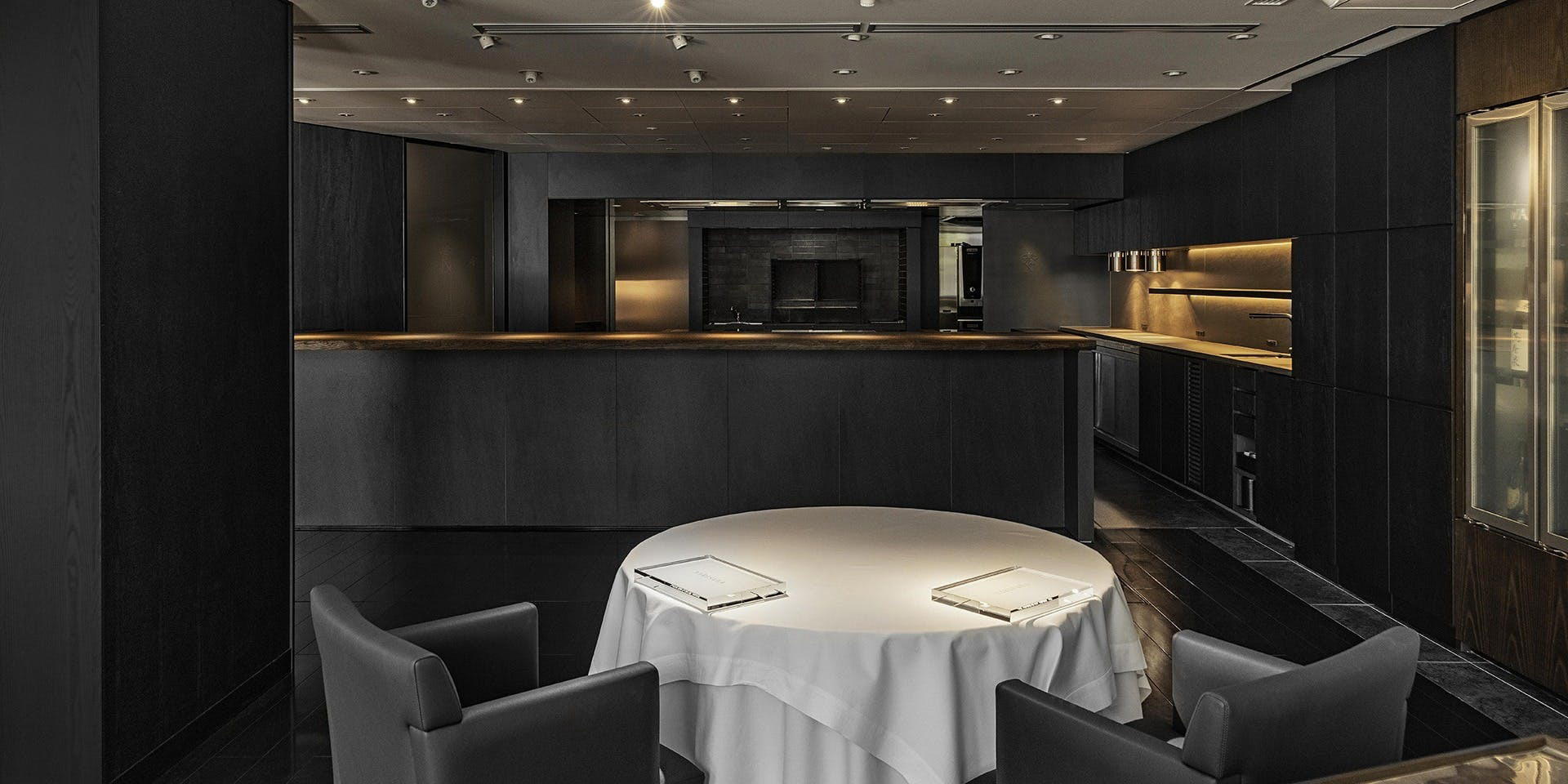
The address in Minami-Aoyama's 1-chome places Tenoshima at the quieter, residential edge of a neighbourhood more commonly associated with design galleries, fashion flagships, and a handful of serious restaurants that rely on the area's reputation for a certain kind of considered taste. The second-floor location in a low-profile building follows a pattern common to Tokyo's mid-tier starred restaurants: minimal street presence, no signage competition, guests who already know they are going there. This format self-selects for a clientele that arrived via recommendation or research rather than foot traffic, which tends to produce a room with a shared register of seriousness.
Minami-Aoyama sits within easy reach of Omotesando and the broader Minato-ku dining axis, where counters range from affordable to some of the city's most expensive seats. Tenoshima's ¥¥¥ positioning makes it a rational entry point for guests who want to understand what a starred kaiseki meal built around a specific regional identity feels like, without committing to the ¥¥¥¥ tier where rooms like Ginza Fukuju operate. For those planning a broader trip through Japan's kaiseki tradition, the comparable starred rooms at Gion Sasaki in Kyoto, Isshisoden Nakamura in Kyoto, and Kashiwaya Osaka Senriyama offer useful points of reference for how the form adapts to different cities and culinary inheritances. Further afield, HAJIME in Osaka, akordu in Nara, and Goh in Fukuoka each represent how regional Japanese cooking is being reframed at the serious end of the market.
Planning a Visit
Tenoshima's Michelin recognition and relatively contained seating format mean that advance booking is advisable, particularly for weekend evenings. Tokyo's starred kaiseki counters at this price tier fill quickly once word circulates through the city's food-literate networks, and a room that attracts regulars by design tends to have less open inventory than larger restaurants. No phone number or website is listed in public records at time of writing, so approach booking through a hotel concierge, a specialist reservation service, or by visiting in person to arrange directly. The address, 1 Chome-3-21 Minami-Aoyama, Minato City (second floor), is the reliable anchor point. For broader trip planning across the city, our full Tokyo restaurants guide, Tokyo hotels guide, Tokyo bars guide, Tokyo wineries guide, and Tokyo experiences guide cover the wider picture. Those extending the journey beyond the capital will find 1000 in Yokohama and 6 in Okinawa worth noting for their own distinct regional approaches.
Frequently asked questions
Is Tenoshima expensive?
Pricing at Tenoshima is listed as ¥¥¥.
Does Tenoshima have a Michelin star or similar recognition?
Tenoshima has received recognition including: Tenoshima is named after Teshima, the island where the chef’s father was born. As he wields his skills in the kitchen, he remains conscious of ingredients and techniques deeply rooted on the island. Nyumen, a savoury noodle soup, is prepare….
What do regulars order at Tenoshima?
The nyumen, a savoury noodle soup prepared with dried sardine broth, functions as a signature of the kitchen's Teshima identity. The bozushi, a pressed sushi rooted in Kansai tradition, is the other anchor dish, reflecting the chef's training at Kyoto's Kikunoi. Both appear on the kaiseki menu and represent the kitchen's two primary reference points.
What cuisine category does Tenoshima fall under?
Where exactly is Tenoshima?
Tenoshima is located at Japan, 〒107-0062 Tokyo, Minato City, Minamiaoyama, 1 Chome−3−21 南青山 1-55ビル 2階, Tokyo.
Should I book Tenoshima in advance?
Yes. Tenoshima holds a Michelin star as of 2024 and operates in a contained format on the second floor of a Minami-Aoyama building. That combination keeps demand ahead of capacity, particularly on weekend evenings. Booking several weeks ahead is the practical baseline.
What's the defining dish or idea at Tenoshima?
The kitchen's organising logic is Teshima, the Seto Inland Sea island where the chef's father was born. This shows up in a deliberate focus on underused fish species from that fishing community and in the dried sardine broth that anchors the nyumen. Bozushi, learned at Kikunoi in Kyoto, adds a second tradition to the menu, making the cooking less a single-region document and more a personal culinary record.
A Pricing-First Comparison
| Venue | Cuisine | Price | Awards | Notes |
|---|---|---|---|---|
| TenoshimaThis venue — the venue you are viewing | Modern Japanese Kaiseki | $150–200 | 1 Michelin Star | Not listed |
| Harutaka | Edo-Style Omakase Sushi | $200–300 | 3 Michelin Stars · World's 50 Best #76 | Sushi |
| RyuGin | Modern Kaiseki | $500+ | 3 Michelin Stars · World's 50 Best #41 | Kaiseki, Japanese |
| L'Effervescence | Modern French with Japanese Influences | $200–300 | 3 Michelin Stars · World's 50 Best #69 | French |
| HOMMAGE | Modern French with Japanese Influences | $150–200 | 2 Michelin Stars · World's 50 Best #78 | Innovtive French, French |
| MAZ | Innovative Peruvian-Japanese Fusion | $150–200 | 2 Michelin Stars · World's 50 Best #28 | Innovative |
Recognition history
Dated appearances from independent guides and award organizations, with the underlying list record or original source where available.
Michelin 1 Star
Michelin
Full recognition history (2 entries)
Michelin 1 Star
Michelin