Our verdict
A Nishi-Azabu address that positions itself within Tokyo's upper tier of destination dining, Teyandei operates in one of the city's most competitive neighbourhoods for serious restaurants. The room, the kitchen, and the floor work as a coordinated unit, placing it in conversation with peers like RyuGin and L'Effervescence rather than the broader casual dining market.

Pearl is the En Primeur Club membership app — saves, bookings, and concierge access live there. Same editors, same standards.
- Address
- 2 Chome-20-1 Nishiazabu, Minato City, Tokyo 106-0031, Japan
- Phone
- +81 3 3407 8127
- Hours
- Daily 5–11:30 PM
- Website
- teyandei.com
- Directions
- Get directions
Nishi-Azabu and the Density Problem
The stretch of Nishi-Azabu between Roppongi and Hiroo has quietly accumulated one of the highest concentrations of serious restaurants in Tokyo, which is itself the most restaurant-dense city on earth. This creates a particular kind of pressure: to survive here at the upper end of the market, a room must offer something beyond competent cooking. The competition is not the neighbourhood izakaya. It is RyuGin, L'Effervescence, and a cohort of destination restaurants whose reputations extend well beyond the city. Teyandei sits at 2 Chome-20-1 Nishiazabu, Minato City, inside this competitive geography, and the address alone signals something about its ambitions.
For international visitors, the neighbourhood is accessible from Roppongi Station on the Hibiya and Oedo lines, or from Hiroo on the Hibiya line, placing it within a ten-to-fifteen-minute walk of either hub. That proximity to Roppongi makes Nishi-Azabu a logical extension of an evening that starts at one of the area's art spaces or gallery bars before arriving at a table where the cooking is the main event.
What Coordinated Service Looks Like at This Level
In Tokyo's top-tier restaurants, the division of labour between kitchen, floor, and wine or beverage program has become increasingly deliberate. The post-pandemic period accelerated this in Japan, as many small restaurants rebuilt their teams with a clearer sense of what each role contributes to the overall experience. At venues operating in the ¥¥¥¥ tier, where peers include the kaiseki precision of RyuGin and the French-informed rigour of Sézanne, the floor is not a support function. It is an active part of how the meal communicates itself.
Teyandei's positioning in Nishi-Azabu places it inside this dynamic. The restaurants that endure in this part of the city tend to be those where front-of-house knowledge matches kitchen ambition, where the person explaining a dish has actually engaged with why it was made that way. This is less common than it sounds. Many restaurants at this price point have technically skilled kitchens and relatively thin floor teams. The ones that generate sustained word-of-mouth are those where the collaboration between cooking and service creates a coherent reading of the meal, rather than two separate performances happening in the same room.
This is the model that venues like Crony in Tokyo and, further afield, Lazy Bear in San Francisco have refined: the kitchen and floor as a single communicative unit. The beverage program, when it functions as an extension of that logic rather than a parallel offering, adds another layer. In Tokyo specifically, the interaction between Japanese sake curation, natural wine lists, and Western-trained sommeliers has produced some genuinely interesting hybrid beverage identities at restaurants that do not fit cleanly into either the kaiseki or the European fine dining category.
Tokyo's Mid-to-Upper Dining Tier: Where Teyandei Positions
The ¥¥¥¥ segment in Tokyo is not monolithic. Within it, there are restaurants defined primarily by ingredient sourcing, others by technique lineage, and others still by the experience format itself. Harutaka competes on the purity of its sushi execution. L'Effervescence on the coherence of its French seasonal philosophy. Crony on its hybrid innovative positioning. Each occupies a distinct sub-niche despite sharing a broad price bracket.
Nishi-Azabu restaurants that sustain themselves in this segment tend to have built a local base alongside their international following, which matters in a city where the most critically recognised tables often fill from domestic reservation systems months in advance. The booking infrastructure in Tokyo, particularly for smaller rooms, tends to favour those who can operate within Japanese-language reservation channels or who have established relationships with concierge services at the city's major hotels. For visitors without those connections, planning at least six to eight weeks ahead is a practical baseline for serious restaurants in this part of the city, with some counters requiring considerably more lead time.
Japan's broader restaurant geography reinforces why Tokyo tables at this level are hard to access. The country has produced a remarkable density of high-calibre cooking outside the capital, from HAJIME in Osaka to Gion Sasaki in Kyoto, Goh in Fukuoka, and smaller regional addresses like akordu in Nara and Abon in Ashiya. This national depth means the pool of serious diners circulating through Tokyo's leading rooms includes both domestic travellers and international visitors, sustaining demand that keeps reservations competitive year-round.
The Nishi-Azabu Room
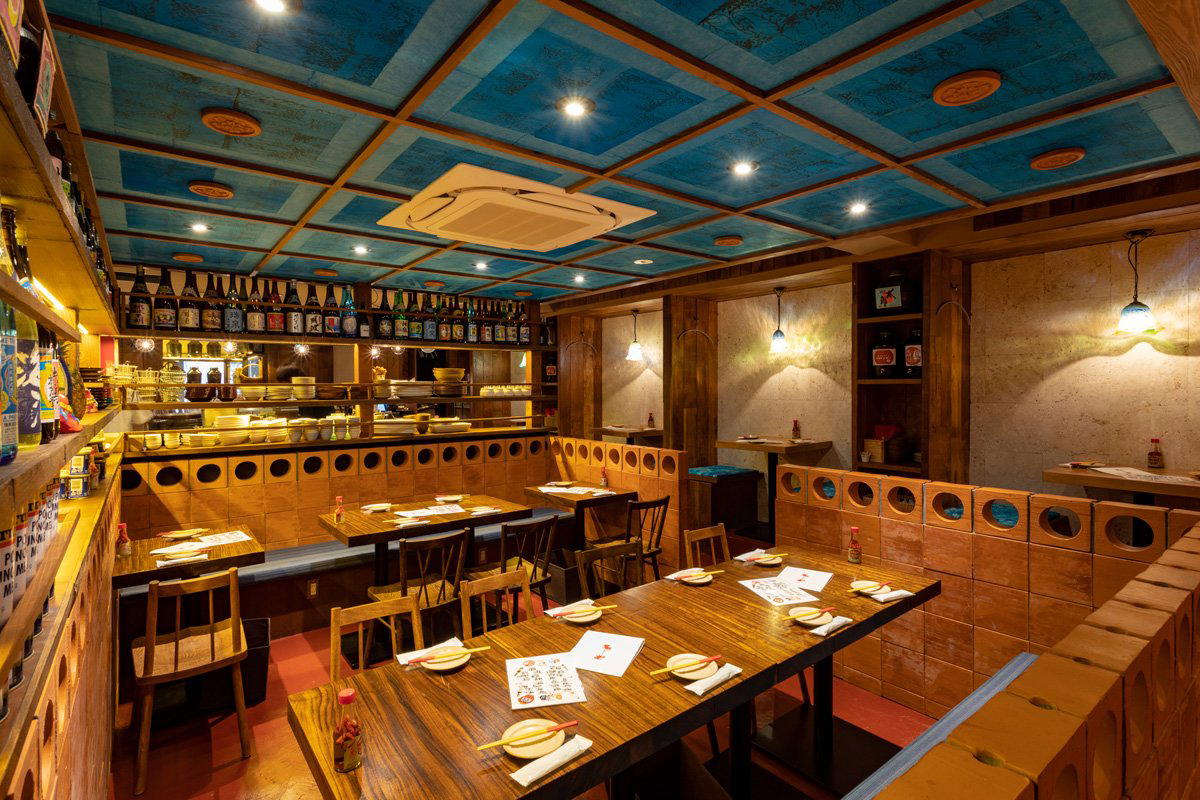
The physical character of Nishi-Azabu restaurants in the upper tier tends toward restraint. The neighbourhood's residential density and the generally smaller footprints of its dining rooms create a different atmosphere from the larger formal rooms in Ginza or Marunouchi. The result is often more intimate, with sound levels that allow actual conversation, lighting calibrated to the food rather than the room's appearance on a social feed, and a sense that the evening belongs to the people at the table rather than to the restaurant's broader brand.
This kind of environmental discretion is not accidental. It is part of how Nishi-Azabu's serious restaurants distinguish themselves from the more visible, higher-traffic dining zones in Tokyo. The clientele that gravitates to this neighbourhood for dinner is generally not there for spectacle. They come for cooking, for service that does not require performance, and for wine or beverage programs selected with the menu in mind rather than assembled for list length. It is a context in which Teyandei operates, and the broader scene around it sets the standard against which it will be measured by regulars and critics alike.
For those building a Tokyo itinerary around serious eating, Nishi-Azabu rewards a half-evening of exploration before or after dinner. The surrounding streets contain bars and smaller venues that occupy a different register, and the proximity to Roppongi's cultural institutions means an evening can move between several modes without much transit. Our full Tokyo restaurants guide maps the city's dining geography across neighbourhoods and price points, with coverage extending to the destinations in the wider Japan network.
Frequently asked questions
What's the address for Teyandei?
Teyandei is located at 2 Chome-20-1 Nishiazabu, Minato City, Tokyo 106-0031, Japan, Tokyo.
Is Teyandei suitable for a business dinner in Tokyo?
Teyandei's location in Nishi-Azabu, Minato City places it in one of Tokyo's most concentrated clusters of upper-tier restaurants, a neighbourhood that has become a default setting for serious professional dining in the city. The area's general character, low-profile room formats and deliberate service structures, aligns with the expectations most Tokyo business diners bring to the ¥¥¥¥ segment. Confirming private dining availability or table configuration directly with the venue is advisable before booking for a group.
What dish is Teyandei famous for?
Teyandei's signature dishes are not publicly itemised on a menu released for press or booking platforms, which is consistent with how several Nishi-Azabu restaurants in the ¥¥¥¥ tier operate. The body of editorial coverage around the restaurant positions it within a segment defined more by sourcing precision and kitchen discipline than by a single headline dish.
Do they take walk-ins at Teyandei?
Walk-in policy at Teyandei has not been confirmed through publicly available booking channels or press documentation. Restaurants operating at this address tier in Nishi-Azabu, Tokyo typically run on reservation-only schedules given the neighbourhood's demand-to-seat ratio. Contacting the venue directly before arrival is the practical approach.
Side-by-Side Snapshot
| Venue | Cuisine | Price | Awards | Notes |
|---|---|---|---|---|
| TeyandeiThis venue — the venue you are viewing | Creative Okinawan Izakaya | $30–50 | Not listed | Not listed |
| Harutaka | Edo-Style Omakase Sushi | $200–300 | 3 Michelin Stars · World's 50 Best #76 | Sushi |
| L'Effervescence | Modern French with Japanese Influences | $200–300 | 3 Michelin Stars · World's 50 Best #69 | French |
| RyuGin | Modern Kaiseki | $500+ | 3 Michelin Stars · World's 50 Best #41 | Kaiseki, Japanese |
| Crony | Modern French with Japanese Influences | $150–200 | 2 Michelin Stars · World's 50 Best #34 | Innovative, French |
| Den | Modern Japanese Kaiseki | $150–200 | 2 Michelin Stars · World's 50 Best #51 | Innovative, Japanese |