Michelin Plate
Our verdict
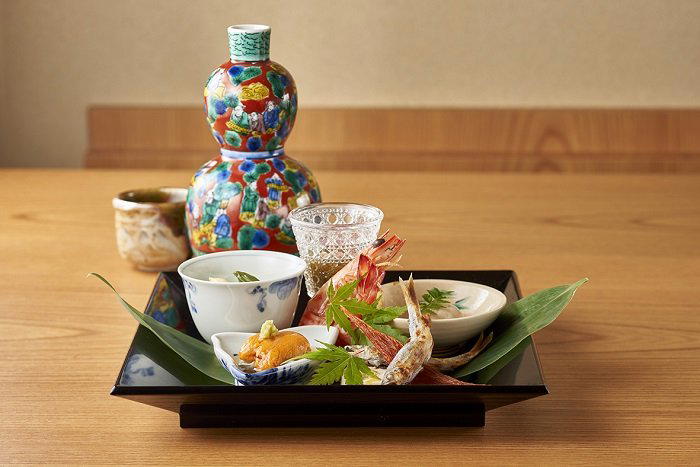
A Michelin Plate-recognised Japanese restaurant in Nakagyo Ward, Takehisa practises old-school preservation and simmering techniques, unripe plum in sugar syrup, herring with eggplant, sweetfish salt-grilled over live charcoal. Seasonal garnishes of mountain-foraged leaves mark each dish to its moment in the year. Priced at ¥¥¥, it occupies a quieter, more technically patient tier of Kyoto dining.

Pearl is the En Primeur Club membership app, where members save venues, book tables and use the concierge.
The menu
What to order
- Sweetfish grill
- Chestnut rice
- Seasonal tempura
Where Patience Is the Technique
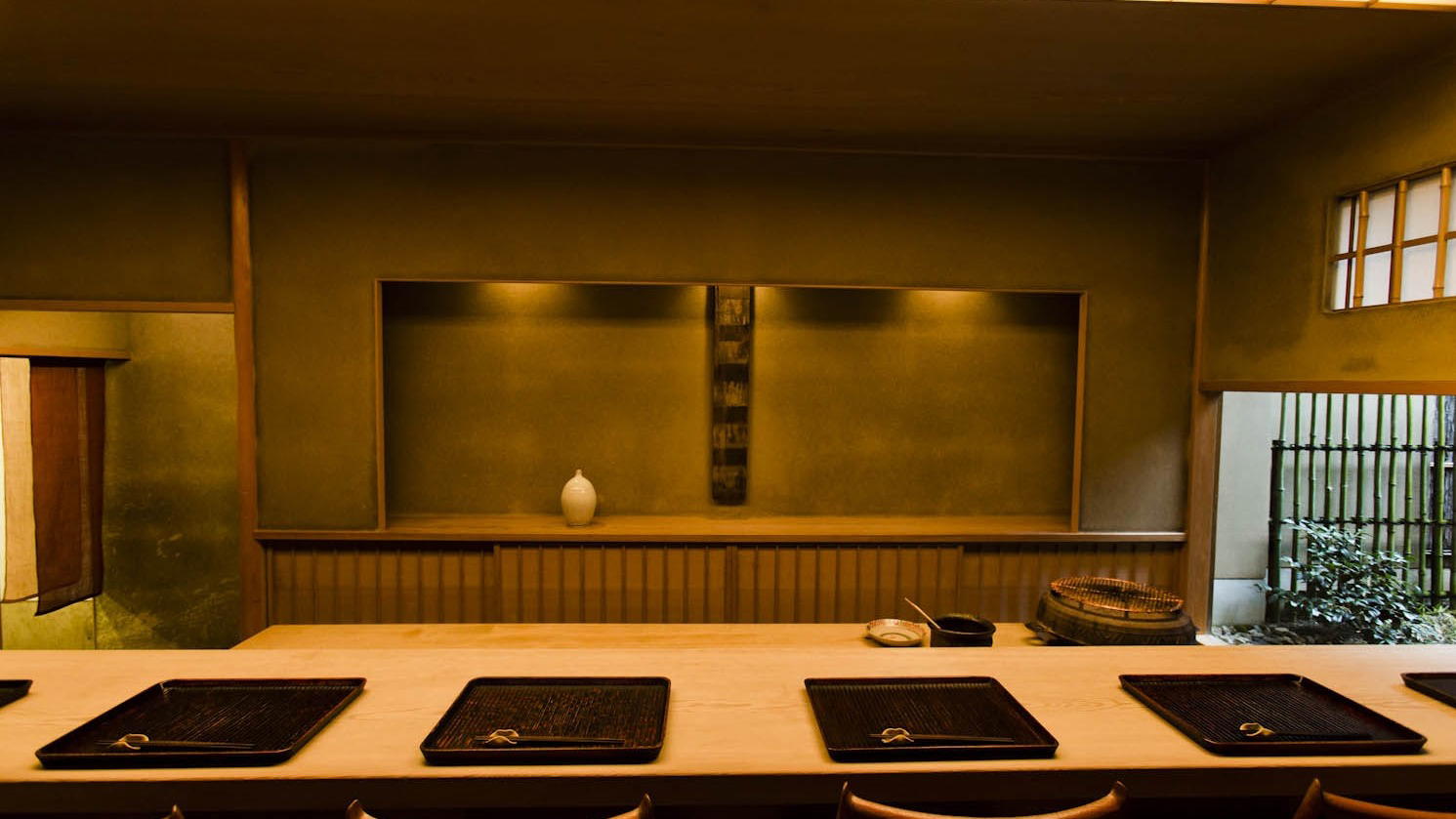
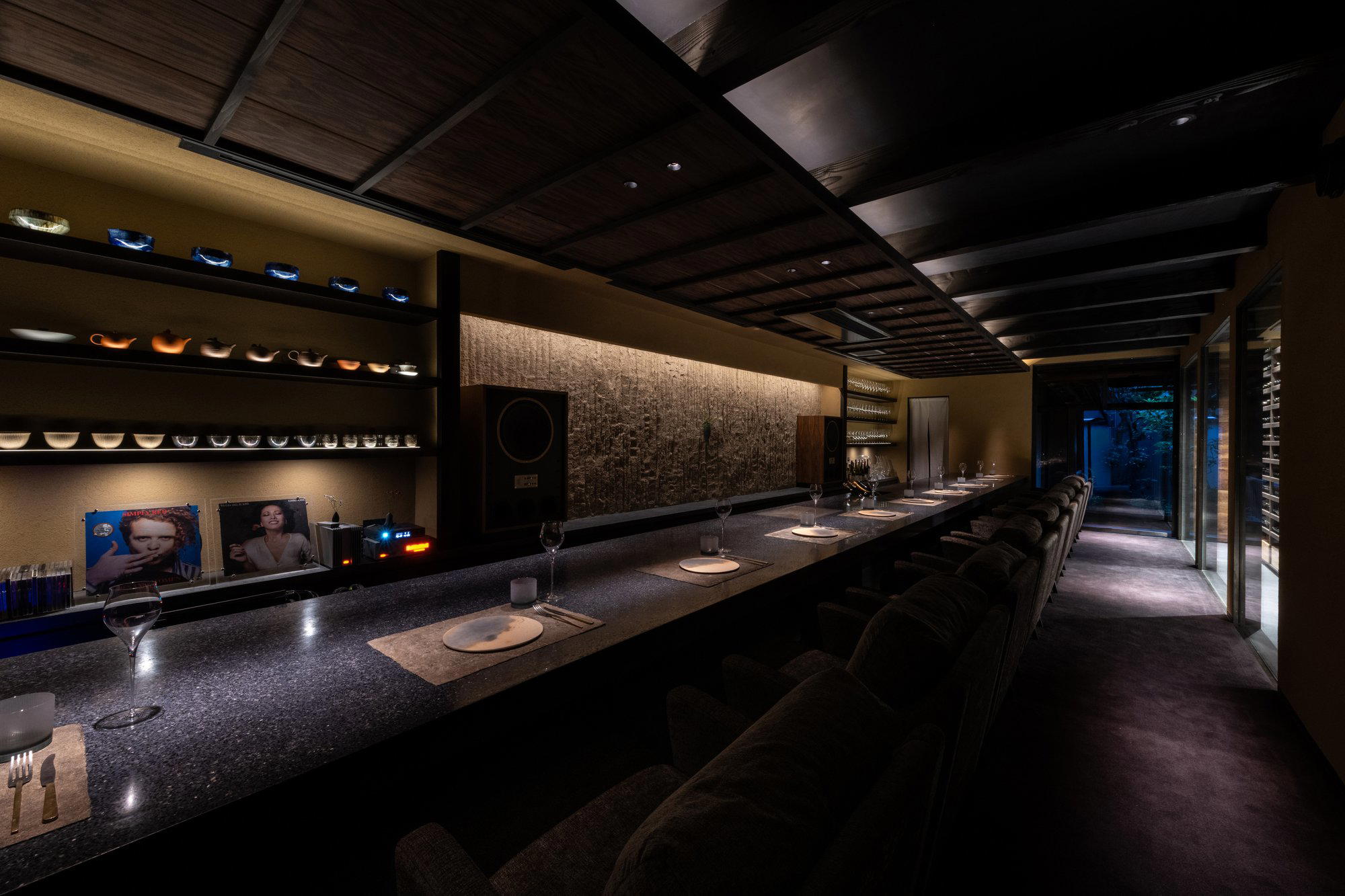
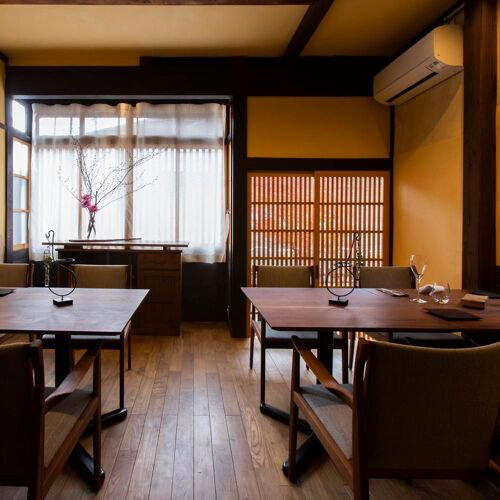
Nakagyo Ward sits between the temple corridors of northern Kyoto and the Gion entertainment district to the south, a ward of machiya townhouses and narrow lanes that resists easy categorisation. Dining here tends toward the understated: smaller rooms, shorter menus, kitchens where the emphasis falls on preparation rather than presentation theatre. Takehisa, on Takeyacho, belongs to that register. The address offers little in the way of spectacle on approach, which is, in Kyoto terms, a form of editorial statement in itself.
Technique as a Critical Signal
The Michelin Plate recognition Takehisa has held across both 2024 and 2025 signals inclusion in the guide's broad field of notice without the starred ranking that defines the city's most decorated kaiseki rooms. That bracket, below the starred tier occupied by ¥¥¥¥ kaiseki institutions like Gion Sasaki and Ifuki, but above casual izakaya dining, is where technically serious cooking often operates without the accompanying reservation scarcity or price premium. At ¥¥¥, Takehisa prices against peers who take the craft equally seriously while remaining accessible by the standards of serious Kyoto dining.
Across Japan, the Michelin Plate designation has come to function as a reliable indicator of kitchen discipline: it marks restaurants where inspectors found cooking worth noting, even when the full sensory or service architecture did not yet warrant a star. In a city where the starred roster is dominated by formal kaiseki, places like Kikunoi Roan and Isshisoden Nakamura, the Plate tier carves out room for cooking that answers to different criteria. Takehisa's consistent inclusion across consecutive years suggests the kitchen is not a provisional entry but a stable reference point within that cohort.
Old-School Techniques in a City That Invented Them
What distinguishes the cooking here is a commitment to methods that require time rather than skill theatre. Simmered dishes, nimono, are among the oldest and most demanding expressions of Japanese home and professional cooking. Unripe plum simmered in sugar syrup, herring braised with eggplant: these are preparations where the quality of the outcome is determined hours or days before the dish reaches the table. There is no tableside finish, no sauce applied at service. The labour is invisible by design.
That commitment places Takehisa within a broader current in Japanese cooking that has gathered force in recent years: a revaluation of preserving, simmering, and fermentation-adjacent techniques at a time when the dining conversation had drifted toward raw-focused omakase formats and western-influenced tasting menus. The same current appears in very different registers elsewhere in the country, at Azabu Kadowaki in Tokyo, where the approach to Japanese classics carries similar weight, or at Myojaku, another Michelin-noted Tokyo address where technique precedes spectacle. In Kyoto, where this tradition is oldest, the gesture carries particular resonance.
The Seasonal Architecture of the Menu
The seasonal logic at Takehisa is expressed through specific, concrete choices rather than menu language about local provenance. Edible wild plants in tempura batter, sweetfish salt-grilled at the peak of its summer season, chestnuts worked into takikomi-gohan (rice cooked together with ingredients in a single pot): these are dishes whose timing is non-negotiable. Move them out of season and the ingredient either doesn't exist or isn't worth cooking.
The garnishing practice is equally instructive. Leaves collected from the mountains appear on dishes as seasonal markers, not decoration in the florist's sense, but a form of temporal annotation. In kaiseki tradition, the concept of shun (seasonal peak) governs what appears on the menu; here that principle extends to the plate itself, where foliage from the surrounding hills provides a direct material connection to the season's current moment. It is a low-key gesture that communicates precisely within the language Kyoto's dining tradition has built over centuries.
This approach aligns Takehisa with a cluster of Kyoto restaurants that treat seasonal specificity as the primary editorial frame. Compare it with Gion Matayoshi or Kenninji Gion Maruyama, where the kaiseki format enforces a similar seasonal discipline, and the underlying commitment is the same even where the price tier and formality differ. Kodaiji Jugyuan operates in comparable territory, using the natural range of Higashiyama as a contextual frame for its menu. Takehisa's version of this is quieter and less location-dramatic, but the seasonal seriousness is equivalent.
Kyoto in the Broader Regional Frame
Kyoto's dining reputation is built on kaiseki and its derivatives, but the city also sustains a lower-profile tier of technically focused Japanese cooking that receives less international attention than its starred counterparts. That tier is where Takehisa operates, and it is a tier that rewards visitors willing to move past the most heavily promoted addresses. For those building a broader Kansai itinerary, the contrast is instructive: HAJIME in Osaka represents the avant-garde end of the regional spectrum, while akordu in Nara applies European structure to local ingredients. Takehisa sits at a different coordinate entirely, older in method, quieter in register, rooted in preservation and patience rather than innovation.
Further afield, the seasonal Japanese cooking conversation extends to addresses like Harutaka in Tokyo, Goh in Fukuoka, 1000 in Yokohama, and 6 in Okinawa, a spread that illustrates how differently the Japanese seasonal imperative manifests across the archipelago. Takehisa's Kyoto version is among the more austere and traditional expressions in that national conversation.
Planning Your Visit
The restaurant is located in Nakagyo Ward at Takeyacho, Kyoto 604-0865. Price range: ¥¥¥, mid-range by serious Kyoto dining standards, comfortably below the ¥¥¥¥ tier of the city's formal kaiseki institutions. Recognition: Michelin Plate, 2024 and 2025. Reservations: Timing: The menu's seasonal logic means the experience will differ materially between visits in spring, summer, and autumn, sweetfish appears in summer, chestnuts in autumn, wild mountain plants in spring and early summer.
For broader context on eating and drinking in the city, see our full Kyoto restaurants guide, our full Kyoto bars guide, our full Kyoto hotels guide, our full Kyoto wineries guide, and our full Kyoto experiences guide.
Frequently asked questions
What awards or recognition does Takehisa have?
Takehisa has received recognition including: Takehisa prizes old-school techniques above all. Simmered items such as unripe plum simmered in sugar syrup and herring with eggplant are labours of patient love. Ingredients are prepared to bring out their natural flavours: edible wild pla….
Where is Takehisa in Kyoto?
Takehisa is located at Takeyacho, Nakagyo Ward, Kyoto, 604-0865, Japan, Kyoto.
What's the must-try dish at Takehisa?
The simmered dishes are the clearest expression of what the kitchen does: nimono like herring with eggplant and unripe plum simmered in sugar syrup are prepared over long, patient timelines that few restaurants maintain at this price point (¥¥¥). Salt-grilled sweetfish and wild plant tempura follow the same seasonal logic, with mountain-foraged leaves used as garnishes. If the kitchen is signalling anything through its Michelin Plate recognition in both 2024 and 2025, it is that these labour-intensive preparations are the reason to book.
What cuisine category does Takehisa fall under?
A Pricing-First Comparison
Comparable options at a glance, pulled from our tracked venues.
| Venue | Cuisine | Price | Awards | Notes |
|---|---|---|---|---|
| TakehisaThis venue (the venue you are viewing) | Kyoto Kappo Kaiseki | $100–150 | Michelin Plate | Not listed |
| Gion Sasaki | Modern Kaiseki | $300–500 | 3 Michelin Stars · La Liste Top Restaurants | Kaiseki, Japanese |
| cenci | Innovative Italian-Japanese Fusion | $100–150 | 1 Michelin Star · World's 50 Best #76 | Italian |
| Ifuki | Sumibi Kappo Kaiseki | $200–300 | 2 Michelin Stars · La Liste Top Restaurants | Kaiseki |
| Kyokaiseki Kichisen | Kyoto Kaiseki | $200–300 | 2 Michelin Stars · La Liste Top Restaurants | Japanese |
| Kyo Seika | Modern Chinese Fine Dining | $150–200 | 1 Michelin Star · Tabelog Bronze #216 | Chinese |
Recognition history
Dated appearances from independent guides and award organizations, with the underlying list record or original source where available.
Michelin Plate
Michelin
Full recognition history (3 entries)
Michelin Plate
Michelin
Michelin Plate
Michelin