


1 Michelin Star · Tabelog Bronze #449
Our verdict
Kyoto’s Italian dining has moved beyond regional imitation into a quieter, ingredient-led form shaped by the city’s own pace. TAKAYAMA belongs to that serious creative tier, with Michelin recognition, Tabelog Bronze status, and a small counter-driven format that reads closer to Kyoto kaiseki discipline than trattoria comfort.

Pearl is the En Primeur Club membership app, where members save venues, book tables and use the concierge.
The menu
What to order
- Sea urchin dishes
- Tomato
- Sakaeya beef strip loin
- Risotto
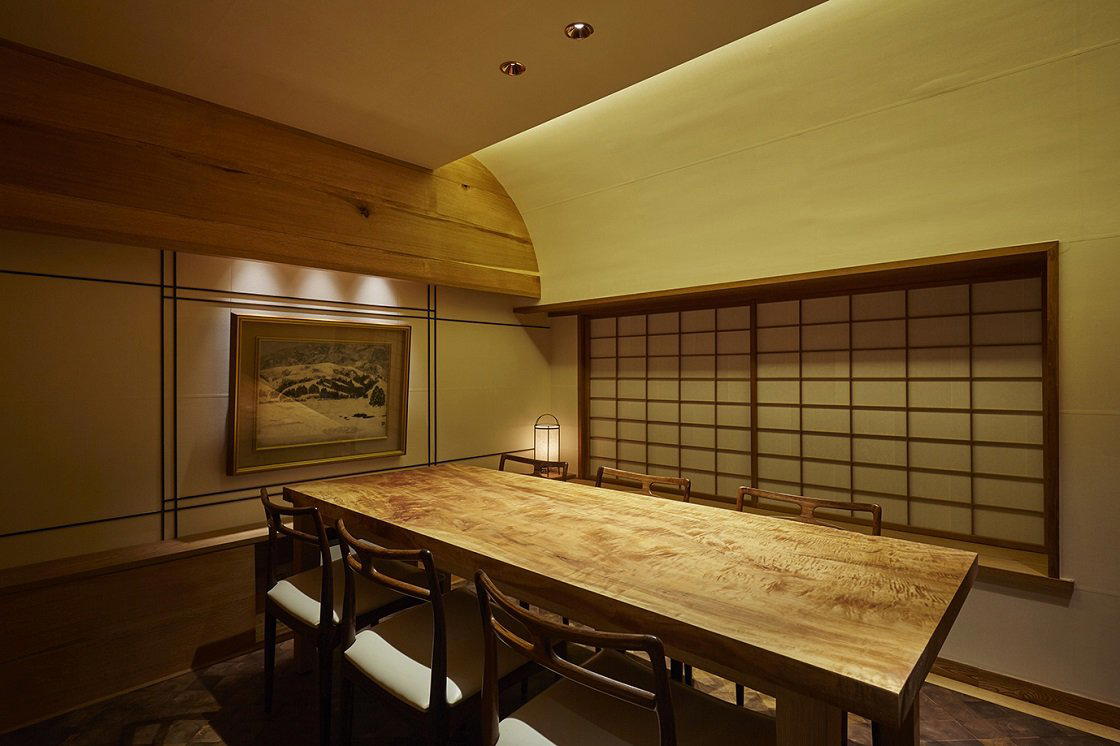
Arriving at GOOD NATURE STATION shifts the mood from central Kyoto retail into a composed dining register: polished surfaces, hotel-restaurant calm, and the sense that the meal will run on timing, not spontaneity. In Kyoto, serious Italian cooking often succeeds by accepting the city’s discipline. The point is not to recreate Rome, Tuscany, Naples, or Milan dish by dish, but to use Italian structure as a frame for Kyoto’s exacting treatment of vegetables, fish, pacing, and seasonality.
TAKAYAMA sits in that hybrid territory. The kitchen is identified as innovative, creative, and Italian, but its peers are less rustic osterie than the small-format, course-led restaurants that have become Kyoto’s preferred language for high-end Western cooking. A Michelin one-star citation in 2024, The Tabelog Award Bronze in 2025 and 2026, and selection for Tabelog 100 Innovative / Creative cuisine in 2025 place it in a narrow band where Italian technique is judged against Japanese precision, not nostalgia for the peninsula.
Italian grammar, Kyoto cadence
The useful reading separates Italian regional identity from Italian technique. Roman cooking is direct and salty; Tuscan cooking leans on grill, beans, bread, and olive oil; Neapolitan cooking is shaped by tomato, dough, and coastal abundance; Milanese tradition carries butter, rice, veal, and northern restraint. Kyoto’s Italian rooms rarely reproduce those identities wholesale. The city extracts the grammar: pasta as sequencing, sauces as concentration, wine as structural partner, and the course menu as an argument about balance.
That clarifies TAKAYAMA’s category. The prix fixe format of many small dishes aligns with Kyoto’s taste for progression and intervals, closer to kappo and kaiseki than to the generosity of a Florentine table. Vegetables, fish, and vegetarian options signal a kitchen working in the city’s lighter register, while the wine focus keeps the experience anchored to Italian and European dining habits. Chef Tadashi Takayama’s modern Italian training is a credential, not the whole story; the larger point is Kyoto’s ability to absorb foreign culinary systems without flattening them into fusion shorthand.
Within Kyoto’s Italian field, comparison helps. DODICI, Bini, and other Kyoto Italian addresses share the citywide conversation about restraint, produce, and formality. The difference is the degree to which the meal behaves like a controlled tasting sequence rather than a menu of Italian comforts. Readers can also place it beside BOCCA del VINO, cenci, and Etto, each offering a different answer to the same question: how much Kyoto should an Italian restaurant in Kyoto allow into the room?
A small-room format with award-level expectations
Kyoto rewards quiet confidence over theatrical excess. A 12-seat room changes the social contract: pacing becomes visible, lateness has consequences, and the counter is not merely a seat type but part of the meal’s control system. In this format, a course of many small dishes depends on synchronised service and a diner willing to submit to the sequence. This is not for a loose, extended family meal built around shared plates; it is for diners who want a measured, contemporary reading of Italian technique through Kyoto’s small-portion intelligence.
The recognition profile supports that view. Tabelog’s Bronze award is not casual crowd approval; in Japan’s restaurant culture, it signals sustained attention from serious diners. The 2025 Tabelog 100 Innovative / Creative cuisine selection places the kitchen within a national category where Italian labels often overlap with broader modern cooking. The Michelin star adds international shorthand, but the more interesting signal is how Japanese awards classify the restaurant: not merely Italian, but innovative and creative. That distinction matters.
For travelers building a Kyoto dining itinerary, TAKAYAMA is strongest as a counterpoint to the city’s Japanese formal dining, not as a substitute for a neighborhood trattoria. A kaiseki reservation explains hierarchy, season, and ceremony through Japanese form. This room shows how those same Kyoto instincts can shape an imported cuisine. The better comparison is with other disciplined, limited-seat formats across the city, not with casual pasta houses or pizza specialists.
How to place it in a Kyoto itinerary
The restaurant sits near Kyoto Kawaramachi, making it logistically easier than many destination dining rooms in temple districts or residential pockets. That centrality should not be mistaken for informality. The room is non-smoking, private rooms are not part of the format, and the set course runs for about three hours. Credit cards are accepted; electronic money and QR payments are not. Parking is tied to GOOD NATURE STATION, not the adjacent Takashimaya parking lot, a small detail that matters in a city where taxis and rail often make more sense than driving.
Reservations are the correct assumption, and the service model is not forgiving of lateness. That is not a quirk; it is the operational reality of a small counter-led course menu. Diners who want flexibility should choose another night for wandering Pontocho or grazing around Nishiki. Diners who want a tightly sequenced Italian meal filtered through Kyoto’s precision will understand why the rules exist.
For broader planning, use Our full Kyoto restaurants guide to balance this reservation with Japanese, French, and contemporary counters, and pair the meal with stays from Our full Kyoto hotels guide. Drink-focused evenings belong in Our full Kyoto bars guide, while wider regional planning can run through Our full Kyoto experiences guide and Our full Kyoto wineries guide. For contrast beyond Kyoto, compare the Italian frame with 112 Eatery, Italian in Minneapolis or 8 1/2 Otto e Mezzo Bombana (Hong Kong), Italian in Hong Kong; for a wider read on Japan’s dining range, branch to -Grilled beef Sukiyaki- KAMAKURA TANUKIAN 鎌倉 たぬき庵 in Kamakura. 鮪と炭火焼き うお炭 秋葉原店 in Tokyo.cafe in Osaka.know in Kumamoto, (Shoku) Vietnam in Kawasaki, and [Curry Senmon Ten] Maruyama Kyoju. in Sapporo.
Frequently asked questions
Is TAKAYAMA okay with children?
TAKAYAMA is not presented as family-oriented, and the room has 12 seats with reservation-only service. At the ¥30,000–¥39,999 level in Kyoto, it reads as an adult dining room rather than a casual family stop.
How would you describe the vibe at TAKAYAMA?
The setting is compact and controlled: 12 seats, counter seating, and a course that takes about three hours. Add the hotel-restaurant location at GOOD NATURE STATION and Tabelog Bronze recognition for 2025 and 2026, and the tone is quiet, serious, and measured.
What should I expect cuisine-wise at TAKAYAMA?
TAKAYAMA serves Italian cuisine.
What is TAKAYAMA known for?
TAKAYAMA is primarily known for Italian in Kyoto.
Side-by-Side Snapshot
Comparable venues by cuisine and price in the same metro.
| Venue | Cuisine | Price | Awards | Notes |
|---|---|---|---|---|
| TAKAYAMAThis venue (the venue you are viewing) | Modern Italian-Japanese Creative Fine Dining | $200–300 | 1 Michelin Star · Tabelog Bronze #449 | Not listed |
| Vena | Seasonal Italian Fine Dining | $200–300 | 1 Michelin Star · Star Wine List | Nakagyō |
| Jean-Georges at The Shinmonzen | Contemporary French-Asian Fusion | $150–200 | 1 Michelin Star | Higashiyama |
| Kyoboshi | Kyoto-Style Tempura Omakase | $100–150 | 1 Michelin Star · Tabelog Bronze #218 | Higashiyama |
| Tokuha Motonari | Traditional Kyoto Kaiseki with Genshiyaki | $200–300 | 2 Michelin Stars · Tabelog Gold #35 | Kamigyō |
| Kenya | Modern Japanese Kaiseki | $200–300 | 1 Michelin Star · Tabelog Bronze #173 | Sakyō |
Recognition history
Dated appearances from independent guides and award organizations, with the underlying list record or original source where available.
Michelin 1 Star
Michelin
Opinionated About Dining Top Restaurants in Japan Recommended
Opinionated About Dining
Tabelog Bronze #449
Tabelog
Full recognition history (6 entries)
Tabelog 100 #17 · No. 17
Tabelog · Tabelog 100 - Innovative / Creative cuisine - 2025
Tabelog Bronze
Tabelog
Michelin 1 Star
Michelin
Continue exploring
More in Kyoto
Restaurants in Kyoto
All restaurants in Kyoto →
Bars in Kyoto
All bars in Kyoto →
Hotels in Kyoto
All hotels in Kyoto →

Wineries in Kyoto
Browse all →
Details
- Elegant
- Modern
- Minimalist
- Intimate
- Sophisticated
- Date Night
- Special Occasion
- Chefs Counter
- Open Kitchen
- Extensive Wine List
- Sake Program
- Local Sourcing
- Prix Fixe
- Wine
- Sake
- Vegetarian Friendly
- Allergy Accommodating
Current opening hours
- Monday
- Closed
- Tuesday
- 12–10 PM
- Wednesday
- 12–10 PM
- Thursday
- 12–10 PM
- Friday
- 12–10 PM
- Saturday
- 12–10 PM
- Sunday
- 12–10 PM
Hours can change for holidays and private events. Hours as of .
Refined all-white minimalist space resembling a gallery or chapel, with bright colorful cuisine contrasting the white interior and semicircular counter overlooking the open kitchen.