

1 Michelin Star · Tabelog Bronze #405
Our verdict
The chef's-choice course runs to the rhythm of the kitchen, not the guest, with a fish-forward menu built on produce from the Sanin Coast and Kyoto spring water. Reservation-only, dress code enforced, and seats booked through TableCheck.

Pearl is the En Primeur Club membership app — saves, bookings, and concierge access live there. Same editors, same standards.
- Address
- Japan, 〒604-0021 Kyoto, Nakagyo Ward, Takoyakushicho, 287IDO2F
- Phone
- +81 70-6437-8605
- Hours
- Mon–Tue ClosedWed–Fri 6–11 PMSat–Sun 12–11 PM
- Website
- ido-kyoto.com
- Directions
- Get directions
- Booking
- Book on TableCheck
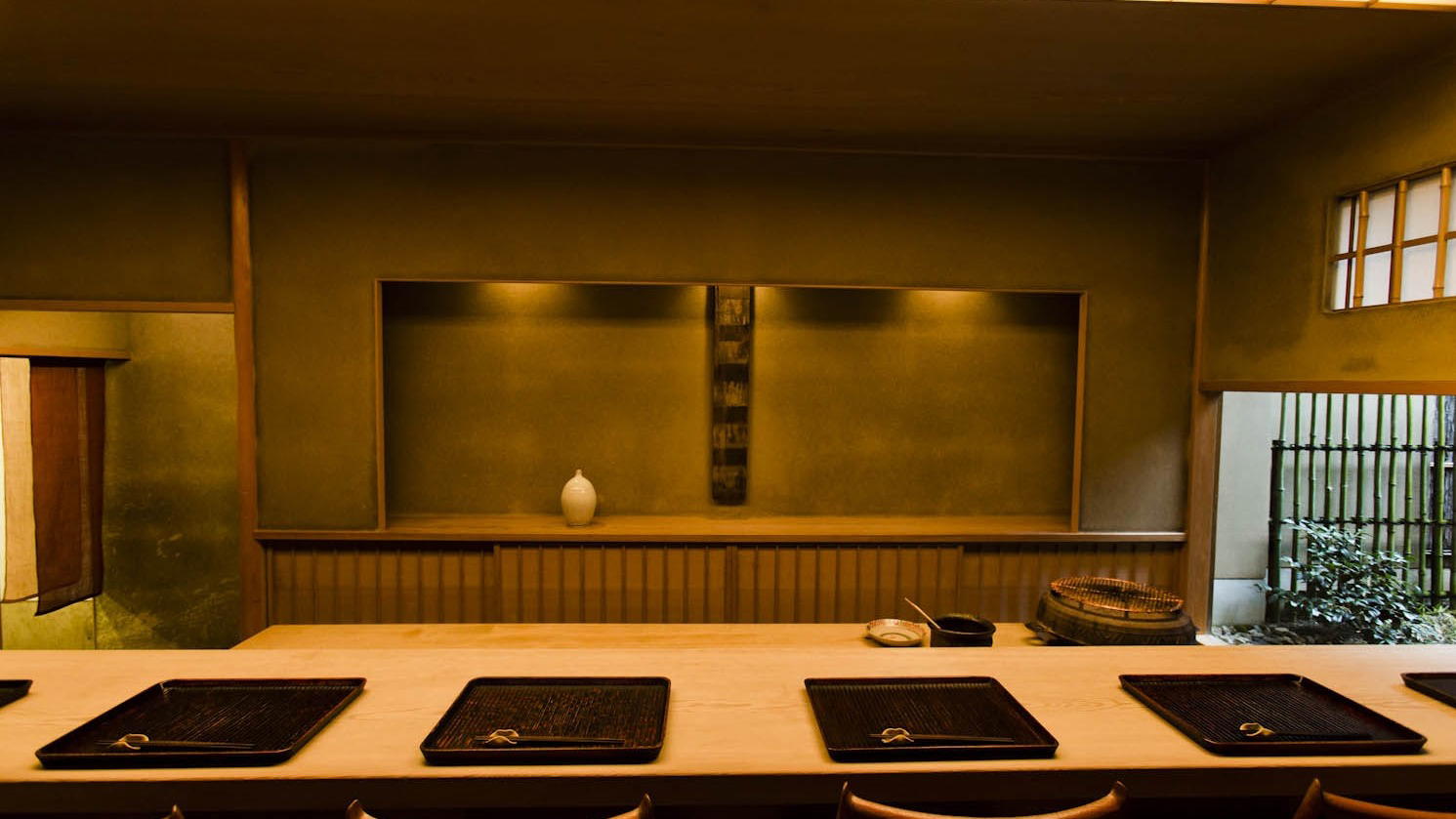
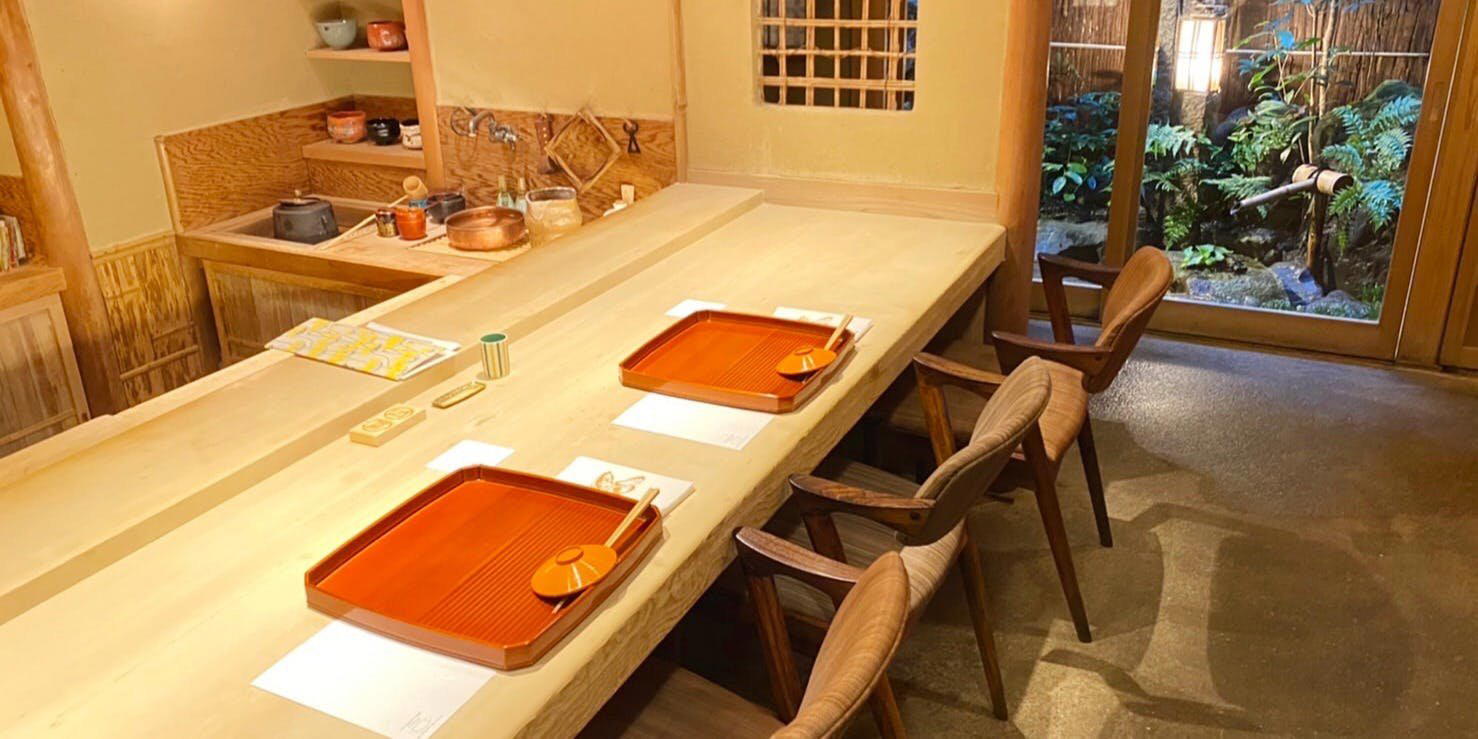
A White Room in the Middle of Kyoto
The counter-only format has become one of the dominant structures for serious dining in Kyoto, and the logic behind it is direct: in a city where ingredients carry cultural weight, a chef-facing table removes the distance between kitchen decisions and the guest's plate. The white interior, described in the restaurant's own material as speaking of "immaculate purity," signals something deliberate: a format where the food does the work and the room asks nothing of you except attention.
Positioned three minutes on foot from Karasuma Oike Station, the address places shiro within easy reach of Kyoto's central business and cultural district, yet the second-floor location and the lack of walk-in dining give it a remove from the street-level tourism circuits. Tabelog's own category tag for the location is "Hideout" — an accurate description of how the room functions within the neighbourhood, even if the awards it has accumulated since opening have made it considerably less obscure.
From Opening to Recognition: A Compressed Timeline
The speed at which shiro entered the awards conversation is worth marking. The restaurant opened on 14 August 2024. The Tabelog Award 2026 followed with a Bronze designation, placing shiro at rank 405 nationally with a Tabelog score of 4.27. A Michelin Plate recognition in 2024 added an international credential to a domestic one, all before the restaurant had completed its first full year of operation.
This pattern is not unique to shiro, Kyoto has a record of accelerating recognition for counter-format restaurants with clear conceptual positioning, but the timeline here is compressed even by that standard. The acceleration at shiro reflects both the strength of its positioning and the increasingly efficient feedback loops that Tabelog's review infrastructure creates for new openings.
Across the broader Kansai region, the pattern of Italian-inflected precision cooking drawing serious recognition appears at venues like HAJIME in Osaka, where ingredient-led tasting menus operate at a higher price tier, and at akordu in Nara, where European technique is applied to local produce in a similarly small-format setting. shiro enters this conversation from a distinct angle, the Shimane provenance of its ingredients is specific and traceable, and that specificity is part of the editorial point the restaurant makes.
The Ingredient Logic: Shimane via Kyoto
The conceptual engine at shiro is a sourcing decision rather than a technique decision. Seafood comes from former classmates of the chef now working in the fishing industry; fruit for dessert courses arrives from farmers with a direct relationship to the kitchen. Kyoto spring water shapes the cooking environment.
The fish-forward emphasis in the kitchen's stated priorities aligns with the Shimane supply chain: the Sanin Coast produces a different register of seafood than the Pacific-facing fisheries that supply most of Kyoto's kaiseki kitchens, and that difference is what gives the menu its specific character. Whether visitors familiar with Kyoto's kaiseki tradition or with Italian cooking in its Italian context will find this synthesis persuasive is ultimately the question shiro asks. The 4.27 Tabelog score suggests the answer is broadly yes, though the restaurant's rigid no-substitution policy means the answer has to be arrived at on the kitchen's terms. Harutaka in Tokyo builds its reputation on single-origin seafood sourcing; Goh in Fukuoka applies local provenance logic to a similarly compact format. The difference at shiro is that the sourcing travels a geographic and conceptual distance: Shimane ingredients processed through an Italian grammar in a Kyoto room.
Format and Conditions: What the Restaurant Requires of You
The operational structure at shiro is among the stricter in Kyoto's mid-to-high tier. All sittings begin simultaneously. Lateness risks losing dishes from the sequence. The two-hour window is recommended, and the kitchen acknowledges it may not accommodate those who prefer a slower pace. No menu substitutions are offered based on dislikes. Reservations are only available to guests aged 13 and over. Extremely casual attire is not permitted, and guests are asked to refrain from wearing perfume.
These conditions are worth reading not as hospitality friction but as format design. The simultaneous-start policy in particular is a statement about how the course is meant to function, as a unified experience across all eight seats rather than a series of individual meals running on staggered timelines. At this price point (JPY 20,000–29,999 per person before the 10% service charge), the format is a considered one, and the conditions signal clearly what kind of evening the kitchen is constructing.
Private use of the full space is available for groups of up to 20 people, which expands the counter's functional capacity for events while preserving the standard eight-seat format for regular service. Credit cards are accepted (VISA, Mastercard, JCB, AMEX); electronic money and QR code payments are not. Bookings are made through TableCheck via the restaurant's website at ido-kyoto.com/shiro.
Where shiro Sits in Kyoto's Italian Conversation
Kyoto's Italian restaurant scene occupies an unusual position nationally. The city has no native Italian culinary tradition, yet it has produced a cluster of well-regarded Italian and Italian-adjacent restaurants that have found critical traction precisely because the kaiseki discipline, attention to ingredient quality, seasonal timing, composed coursework, translates directly into the Italian tasting-menu format. shiro joins a cohort that includes cenci at a comparable price tier and, at the higher end, Gion Sasaki and Ifuki (both kaiseki at ¥¥¥¥), which represent the direction the market tends to pull serious diners in the city.
shiro's dual Tabelog recognition in its opening year positions it toward the recognised end of that group. Internationally, the format has structural relatives at César, Contemporary in New York City and Jungsik, Contemporary in Seoul, both counter-influenced tasting operations where European frameworks are applied to local ingredient logic in culturally specific ways. The comparison is instructive: what distinguishes shiro is not the hybrid concept itself but the specificity of the sourcing geography it has built around that concept.
For readers planning a broader Kyoto trip, our full Kyoto restaurants guide covers the range of counter formats and price tiers across the city. Additional planning resources include our full Kyoto hotels guide, our full Kyoto bars guide, our full Kyoto wineries guide, and our full Kyoto experiences guide.enprimeurclub.com/restaurants/1000-yokohama-restaurant">1000 in Yokohama and 6 in Okinawa represent the format applied to different regional ingredient traditions.
Planning Your Visit
shiro operates Wednesday through Friday for dinner (18:00–21:00), and Saturday through Sunday for both lunch (12:00–14:30) and dinner (18:00–21:00). The restaurant is closed Monday and Tuesday. Reservations are through TableCheck at ido-kyoto.com/shiro. Budget JPY 20,000–29,999 per person plus a 10% service charge. Dress code applies; no perfume.
What dish is shiro famous for?
shiro does not publish a single signature dish; the format is a chef's-choice course with no guest modifications permitted. The kitchen's stated focus is fish, supplied primarily from Hamada on the Sanin Coast in Shimane Prefecture, prepared through an Italian-inflected framework using Kyoto spring water. The restaurant holds a Michelin Plate (2024), a Tabelog Bronze (2026), and inclusion in the Tabelog Italian WEST "Tabelog 100" for 2025, credentials that establish the course as a whole rather than any individual plate as the basis of its recognition within Kyoto's contemporary dining scene.
Cuisine and Credentials
Comparable venues nearby, for context on price, style, and recognition.
| Venue | Cuisine | Price | Awards | Notes |
|---|---|---|---|---|
| shiroThis venue — the venue you are viewing | Modern Italian-Japanese Omakase | $100–150 | 1 Michelin Star · Tabelog Bronze #405 | Not listed |
| Kyoboshi | Kyoto-Style Tempura Omakase | $100–150 | 1 Michelin Star · Tabelog Bronze #218 | Higashiyama |
| Shimogamo Saryo | Kyoto Tea Kaiseki | $150–200 | Michelin Plate | Sakyō |
| Nakamitsu | Modern Japanese Omakase | $150–200 | 1 Michelin Star | Nakagyō |
| Kikunoi Sushi Ao | Kyoto-Style Sushi Omakase with Kaiseki | $300–500 | 1 Michelin Star | Higashiyama |
| SEN | Kaiseki | $150–200 | 1 Michelin Star · Tabelog Bronze #395 | Shimogyō |
Recognition history
Dated appearances from independent guides and award organizations, with the underlying list record or original source where available.
Michelin 1 Star
Michelin
Tabelog Bronze #405
Tabelog
Full recognition history (4 entries)
Tabelog 100 #22 · No. 22
Tabelog · Tabelog 100 - Italian - WEST - 2025
Michelin Plate
Michelin
Continue exploring
More in Kyoto
Restaurants in Kyoto
Browse all →
Bars in Kyoto
Browse all →

Hotels in Kyoto
Browse all →
Wineries in Kyoto
Browse all →
Details
- Minimalist
- Elegant
- Quiet
- Sophisticated
- Special Occasion
- Date Night
- Chefs Counter
- Sake Program
- Local Sourcing
- Omakase
- Counter Dining
Current opening hours
- Monday
- Closed
- Tuesday
- Closed
- Wednesday
- 6–11 PM
- Thursday
- 6–11 PM
- Friday
- 6–11 PM
- Saturday
- 12–11 PM
- Sunday
- 12–11 PM
Hours can change for holidays and private events. Last verified .
Crisp white interiors with generous negative space create a refreshing, pure, and quiet atmosphere.