

middle places Kyoto’s contemporary French conversation north of the central dining corridors, near Kitaoji and the Kamo River. The draw is cultural rather than theatrical: a compact 10-seat, reservation-only format, Tabelog Award 2026 Bronze recognition, a 2025 Michelin Plate, and prix fixe cooking that folds French technique into Kyoto seasonality without turning the meal into a museum piece.
Pearl is the En Primeur Club membership app — saves, bookings, and concierge access live there. Same editors, same standards.
- Address
- 5-3 Shimogamo Kamikawaracho, Sakyo Ward, Kyoto, 606-0812, Japan
- Phone
- +81 75-744-0572
- Website
- middle.co.jp
- Directions
- Get directions
 Saves & bookings on Pearl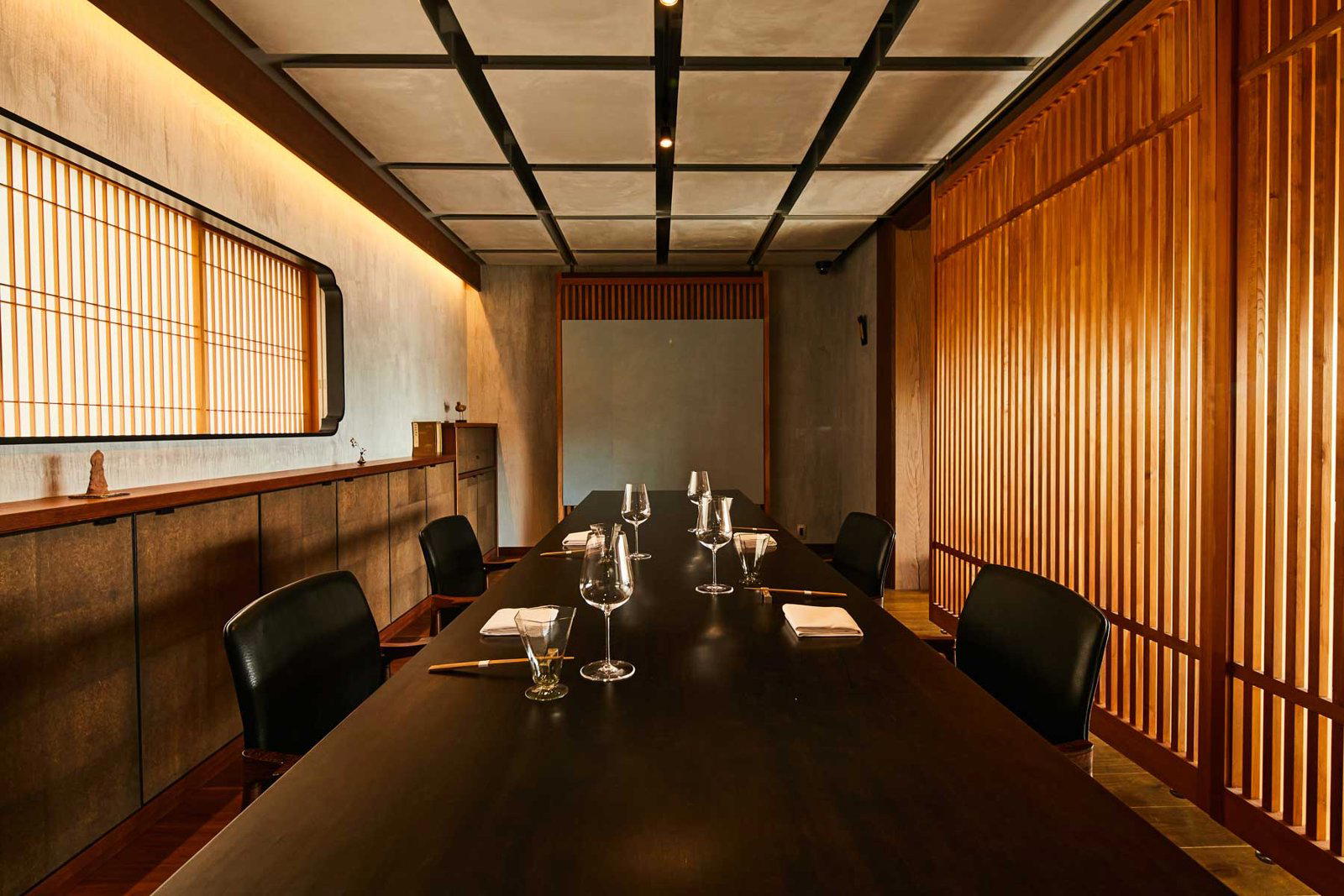
North of Kyoto’s more photographed dining streets, the mood changes around Kitaoji. The Kamo River slows the city’s pace, the botanical garden sits nearby, and the restaurant scene feels less performative than Gion or downtown Kawaramachi. In this quieter northern pocket, contemporary dining has room to breathe: fewer lantern-lit clichés, more chefs working between Kyoto produce, French structure, and the city’s seasonal restraint.
That context matters at middle. Kyoto has never lacked formal cuisine, but its newer contemporary rooms increasingly work beyond the old kaiseki-versus-Western fine-dining binary. French technique becomes a language rather than a costume: sauces, charcoal, fish, meat, vegetables, and plating discipline can sit beside Japanese timing and seasonal composition without forcing one label. The recognition places it clearly: Tabelog Award 2026 Bronze, selection for Tabelog French WEST “Tabelog 100” 2025, and a 2025 Michelin Plate. These are not decorative badges; in Kyoto, they mark a serious competitive tier where small rooms and precise prix fixe formats carry the argument.
Kyoto French, stripped of hotel-room formality
The city’s French dining has several personalities: the grand hotel version, polished and international; the salon-like counter version, paced like a Japanese meal; and the contemporary Kyoto version, which treats French cooking as a framework for local rhythm rather than imported ceremony. middle belongs to the third category. Its public description points to prix fixe menus that blur Western and Japanese gastronomy, with carefully prepared sauces and fish and meat grilled over charcoal. It also notes Middle Eastern and South American influences, separating this Kyoto French from older textbook cuisine.
The result is not fusion in the lazy sense. Kyoto has long absorbed outside techniques and re-edited them through season, proportion, and restraint. The better contemporary rooms understand that a sauce can carry as much cultural intent as dashi; charcoal can read as French, Japanese, or neither depending on use. That is where this address earns attention. It is not competing with kaiseki on kaiseki’s terms, or importing Parisian grammar into Sakyo Ward. It occupies a middle ground Kyoto now does particularly well: precise, intimate, and less interested in spectacle than calibration.
Within Kyoto’s contemporary bracket, comparison helps. Raiz, MASHIRO, and shiro occupy the same broad ¥¥¥ contemporary conversation, while COPPIE sits at a slightly lower price band. Kyoen gives another Kyoto reference point for a tighter itinerary. These rooms are not interchangeable; Kyoto’s serious contemporary dining now has enough density that reservations can be chosen by mood, format, and degree of French influence rather than cuisine label alone.
A small-room format that rewards focus
A 10-seat room changes the social contract. In larger restaurants, atmosphere can carry weak pacing; here, every course must justify its place. Small capacity also suits Kyoto’s contemporary French mood, where the meal depends on timing, temperature, and the conversation between sauce and seasonal produce more than volume or showmanship. The format asks for attention, making it better for a quiet night than a loud one.
The chef background, where relevant, reads as cultural context rather than biography. The public Michelin note places the chef’s inspiration in Paris, French training in Osaka, and Japanese cuisine study in Kyoto. That sequence explains the grammar: French foundations, Kansai technical discipline, and Kyoto seasonal expectations. It also explains why charcoal grilling and carefully built sauces can feel connected to place.
Price shapes the experience. With lunch and dinner both listed in the JPY 20,000 to JPY 29,999 band, this is not a casual contemporary address tucked into a neighbourhood evening. It sits in the planned-meal tier, where reservation, limited seats, and recognition point to an intentional dining slot. That band places it closer to Kyoto’s serious small restaurants than everyday bistros, even though the cooking language is French rather than strictly Japanese.
How to place it in a Kyoto itinerary
The northern location is part of the appeal. Sakyo Ward and Kitaoji give the meal a different frame from central Kyoto: calmer streets, river proximity, and dinner slightly removed from the tourist corridor. For travellers, it is a strong counterweight to temple-heavy days or Gion evenings. It also fits a broader Kyoto plan that separates dining, drinking, hotels, and cultural time instead of compressing everything into the same few blocks.
For a wider city read, start with Our full Kyoto restaurants guide, then cross-check the stay through Our full Kyoto hotels guide. Kyoto’s after-dinner scene is quieter than Tokyo’s, but Our full Kyoto bars guide separates serious cocktail rooms from hotel lounges. The city’s drinks culture also extends beyond bars, where Our full Kyoto wineries guide and Our full Kyoto experiences guide can round out a slower itinerary.
Readers comparing contemporary dining across Japan and beyond can use the wider EP Club index as calibration, not a shopping list. A charcoal-led meal in Tokyo such as. 鮪と炭火焼き うお炭 秋葉原店 in Tokyo, a casual urban listing like.cafe in Osaka, or a regional room such as.know in Kumamoto sit in different registers. The contrast sharpens what Kyoto does well: discipline over volume, season over novelty, and small rooms with narrow margins for error.
The same calibration works internationally. [maki:'dan] im Ritter, Contemporary in Durbach and [w]einklang, Contemporary in Nuremberg show how contemporary cooking changes when terroir, wine culture, and European regional identity lead. Back in Japan, references as different as -Grilled beef Sukiyaki- KAMAKURA TANUKIAN 鎌倉 たぬき庵 in Kamakura, (Shoku) Vietnam in Kawasaki, and [Curry Senmon Ten] Maruyama Kyoju. in Sapporo underline the same point: cuisine labels matter only when they explain format, context, and intent. middle is compelling because its label, French, is only the beginning.
Budget Reality Check
Comparable venues by cuisine and price in the same metro.
| Venue | Cuisine | Price | Awards | Notes |
|---|---|---|---|---|
| middleThis venue — the venue you are viewing | Contemporary | $$$ | Michelin Plate | Not listed |
| Benoit | Higashiyama, Modern French Bistro | $$$ | Michelin Plate | Not listed |
| L'aparté | Not listed | $$$$ | Michelin Plate | Shimogyō, Modern French with Japanese Ingredients |
| Pontocho Masuda | Nakagyō, Kyoto-style Obanzai | $$$ | Michelin Plate | Not listed |
| Ajiro | Ukyō, Shojin Ryori Temple Cuisine | $$$ | Michelin Plate | Not listed |
| Grill French | Nakagyō, Kyoto Yoshoku Grill French | $$$ | Not listed | Not listed |
Recognition history
Dated appearances from independent guides and award organizations, with the underlying list record or original source where available.
Michelin Plate
Michelin
Tabelog Bronze #268
Tabelog
Michelin Plate
Michelin
Tabelog 100 #99 · No. 99
Tabelog · Tabelog 100 - French - WEST - 2025
Michelin Plate
Michelin
Continue exploring
More in Kyoto
Restaurants in Kyoto
Browse all →
Bars in Kyoto
Browse all →
Hotels in Kyoto
Browse all →
Wineries in Kyoto
Browse all →
At a Glance
- Modern
- Elegant
- Minimalist
- Sophisticated
- Date Night
- Special Occasion
- Open Kitchen
- Chefs Counter
- Local Sourcing
Unpretentious interior with beautiful views; minimalist design that emphasizes the food and cooking process.