
Michelin Plate
Our verdict
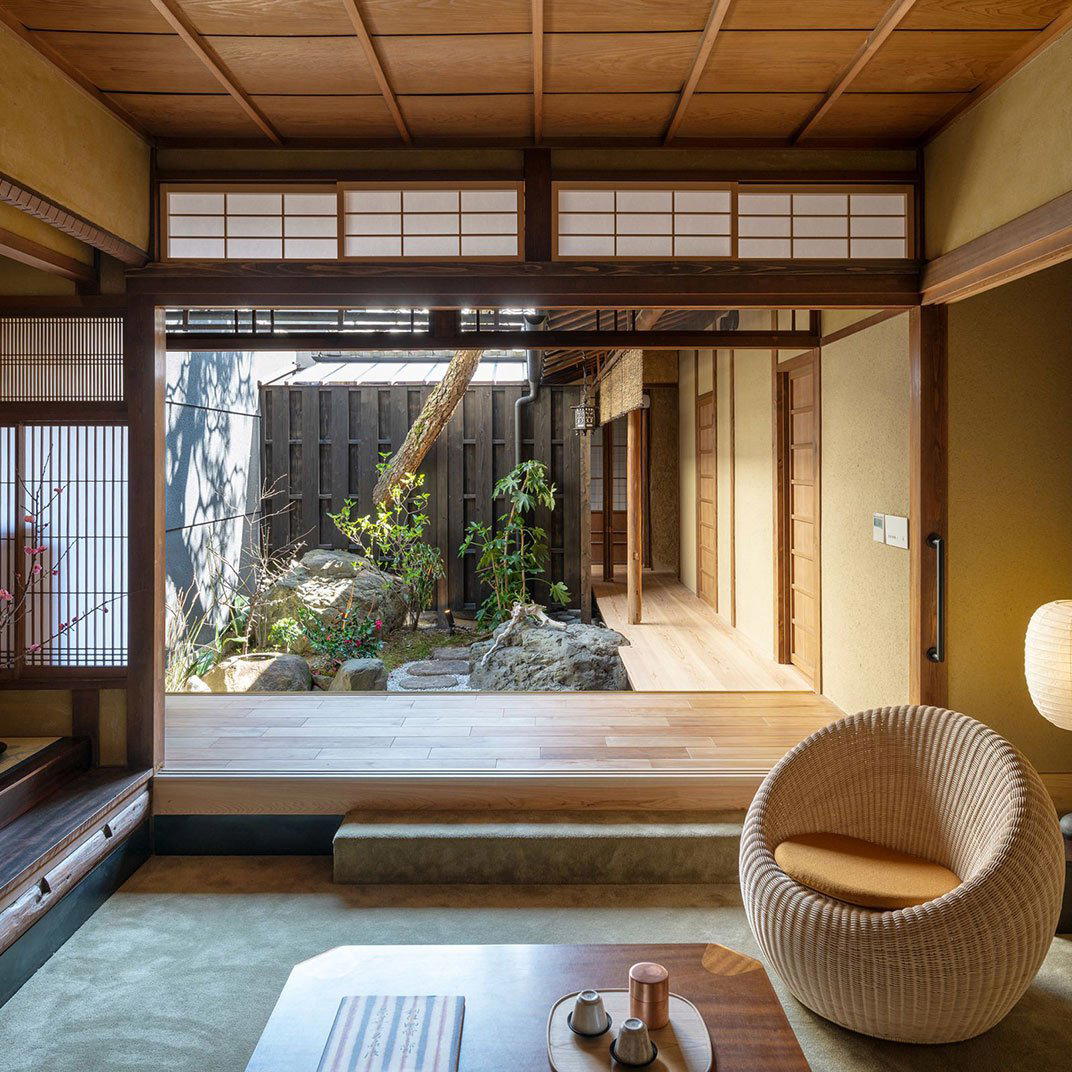
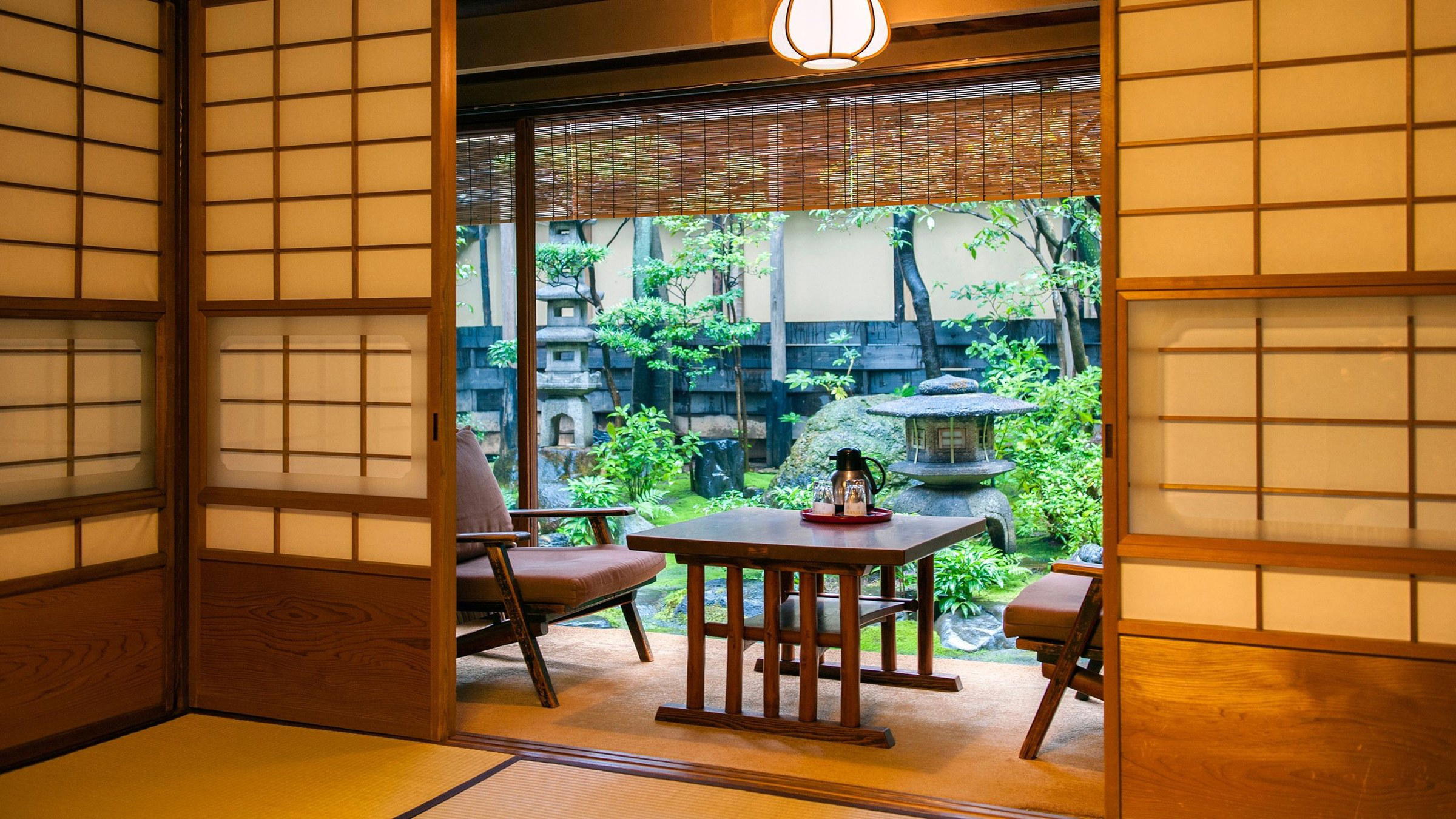
A 19th-century teahouse turned kaiseki restaurant on the approach to Shimogamo Shrine, Shimogamo Saryo holds a 2025 Michelin Plate and operates around the principle of dosan-doho: Kyoto ingredients prepared the Kyoto way. Private rooms and the main dining hall both overlook the Takano River and the Hiei Range, making the setting as considered as the cooking.

Pearl is the En Primeur Club membership app, where members save venues, book tables and use the concierge.
Where the Shrine Path Meets the Table
The approach to Shimogamo Shrine along the Tadasu no Mori forest corridor is one of Kyoto's more quietly dramatic walks: a canopied path that narrows the city down to gravel, trees, and the sound of the Mitarashi stream. Shimogamo Saryo has occupied a position on that approach since the late 19th century, when it operated as a water-wheel teahouse serving visitors to the shrine. The architecture and garden carry that history without performing it, the teahouse bones are visible in the craftsmanship of the accoutrements and the proportions of the space, but the building functions now as a full-service restaurant with a dining hall, private rooms, and upper-floor views over the Takano River toward the Hiei Range. That combination of sacred adjacency and cultivated calm places Shimogamo Saryo in a particular niche within Kyoto's dining geography: restaurants where the setting is inseparable from what you're eating, and where arriving is already part of the experience.
Kyoto Cooking in Its Own Terms
Kyoto cuisine has two broad registers. One is the formal kaiseki tradition of Gion and Higashiyama, where restaurants like Gion Matayoshi, Kikunoi Roan, and Isshisoden Nakamura operate at the highest levels of seasonal precision and ceremonial form. The other is a more grounded expression rooted in local produce and long-standing technique, less concerned with star accumulation and more with continuity. Shimogamo Saryo sits in the second register, priced at ¥¥¥ rather than the ¥¥¥¥ tier occupied by the likes of Gion Sasaki or Kyokaiseki Kichisen, and organised around a principle the kitchen calls dosan-doho: local ingredients, prepared the local way. That phrase may sound simple, but in Kyoto it carries real weight. The city's produce culture, Kyo-yasai heritage vegetables, river fish, tofu made from Kyoto water, is specific enough that the phrase is a genuine editorial position, not a marketing slogan.
The Arc of the Meal
Multi-course Japanese dining is structured as a progression of temperature, texture, and weight, and Kyoto's tradition adds a seasonal dimension that shifts dramatically across the year. Spring means bamboo shoots and young greens; summer brings river fish and cold preparations designed to lower the body temperature in the Kyoto heat; autumn moves toward mushrooms, chestnuts, and warming broth; winter produces the slow, deliberate courses built around root vegetables and preserved ingredients. At Shimogamo Saryo, this seasonal rhythm is refracted through the dosan-doho lens, meaning the ingredients are sourced from the Kyoto basin and prepared with techniques that have evolved within the city rather than imported from external influence.
The early courses in a meal like this tend to be light and precise: small compositional pieces designed to calibrate the palate and signal the season. Broths arrive clear and fragrant. Seasonal garnishes appear in combinations that reward attention. By the middle courses, the weight increases, simmered preparations, grilled proteins, rice cooked in the traditional donabe style. The final courses close the arc with pickles, miso soup, and the particular kind of quietness that marks the end of a well-paced Japanese meal. The private rooms on the upper floor, with their outlook over the Takano River, are designed for exactly this kind of unhurried progression. They remove the ambient noise of a shared dining room and allow the sequencing of courses to register at its intended pace. Restaurants that operate in historically significant spaces tend to use that history either as scenery or as substance; Shimogamo Saryo's commitment to dosan-doho suggests the latter, the setting and the cooking are expressions of the same argument about place.
For a contrasting approach to multi-course Japanese dining in the Kansai region, HAJIME in Osaka represents the progressive end of the spectrum, while akordu in Nara draws on a different regional tradition entirely. Within Kyoto, Kenninji Gion Maruyama and Kodaiji Jugyuan both operate in heritage settings where the surroundings shape the tone of the meal in comparable ways.
Recognition and Peer Position
The 2025 Michelin Plate places Shimogamo Saryo in the recognised tier without the starred pressure that tends to formalise service and pricing upward. The Michelin Plate, in Kyoto's context, identifies restaurants with consistent quality in their category, it is a signal that the cooking meets a defined standard without implying the elaborate architecture of a starred experience. That positions Shimogamo Saryo as a serious address for traditional Kyoto cooking at a price point that remains accessible relative to the ¥¥¥¥ operators in the city. For comparison, Myojaku in Tokyo and Azabu Kadowaki represent how traditional Japanese formats at similar recognition levels perform in a different urban context.
Sakyo Ward and the Northern Dining Geography
Shimogamo Saryo's location in Sakyo Ward puts it north of the central tourist circuit. Most visitors to Kyoto concentrate on Gion, Higashiyama, and the southern temple clusters, which means Sakyo's restaurant culture operates at a different register: quieter, less reliant on foot traffic, and more dependent on deliberate choice. The shrine corridor setting gives Shimogamo Saryo a natural draw that most neighbourhood restaurants lack, but the address still requires intention to reach. That self-selection shapes the room. Visitors who make it to this part of Sakyo Ward tend to be there for the shrine or the river path, and the restaurant's position at the junction of those two draws means it functions as a natural pause rather than a destination requiring separate justification. For the full range of Kyoto dining, drinking, and accommodation options, see our full Kyoto restaurants guide, our full Kyoto bars guide, our full Kyoto hotels guide, our full Kyoto wineries guide, and our full Kyoto experiences guide. For Japanese dining in other cities, Harutaka in Tokyo, Goh in Fukuoka, 1000 in Yokohama, and 6 in Okinawa each represent distinct regional approaches to the same broad tradition.
Planning Your Visit
Address: 62 Shimogamo Miyakawacho, Sakyo Ward, Kyoto 606-0801. Cuisine: Traditional Kyoto Japanese, organised around the dosan-doho philosophy of local sourcing and local technique. Price range: ¥¥¥, mid-tier relative to Kyoto's kaiseki operators. Recognition:Reservations: Booking in advance is advisable given the private room format and the location's combined shrine-visitor and dining audience. Getting there: Shimogamo Shrine is accessible by bus from central Kyoto; the restaurant sits on the shrine approach in Sakyo Ward. When to go: The seasonal nature of Kyoto cuisine means each quarter offers a distinct menu arc; spring and autumn are the most attended periods across Kyoto's dining circuit, so booking lead time increases accordingly.
Frequently asked questions
Is Shimogamo Saryo more mid-range or high-end?
Pricing at Shimogamo Saryo is listed as ¥¥¥.
What part of town is Shimogamo Saryo in?
Shimogamo Saryo is located at 62 Shimogamo Miyakawacho, Sakyo Ward, Kyoto, 606-0801, Japan, Kyoto.
Budget and Context
| Venue | Cuisine | Price | Awards |
|---|---|---|---|
| Shimogamo SaryoThis venue (the venue you are viewing) | Kyoto Tea Kaiseki | $150–200 | Michelin Plate |
| Gion Sasaki | Modern Kaiseki | $300–500 | 3 Michelin Stars · La Liste Top Restaurants |
| cenci | Innovative Italian-Japanese Fusion | $100–150 | 1 Michelin Star · World's 50 Best #76 |
| Ifuki | Sumibi Kappo Kaiseki | $200–300 | 2 Michelin Stars · La Liste Top Restaurants |
| Kyokaiseki Kichisen | Kyoto Kaiseki | $200–300 | 2 Michelin Stars · La Liste Top Restaurants |
| Kyo Seika | Modern Chinese Fine Dining | $150–200 | 1 Michelin Star · Tabelog Bronze #216 |
Recognition history
Dated appearances from independent guides and award organizations, with the underlying list record or original source where available.
Michelin Plate
Michelin
Full recognition history (2 entries)
Michelin Plate
Michelin
Continue exploring
More in Kyoto
Restaurants in Kyoto
All restaurants in Kyoto →
Bars in Kyoto
All bars in Kyoto →

Hotels in Kyoto
All hotels in Kyoto →
Wineries in Kyoto
Browse all →
Details
- Elegant
- Classic
- Intimate
- Sophisticated
- Scenic
- Special Occasion
- Date Night
- Business Dinner
- Family
- Celebration
- Garden
- Private Dining
- Historic Building
- Sake Program
- Extensive Wine List
- Garden
- Street Scene
- Tasting Menu
- Set Menu
- Vegetarian Friendly
Current opening hours
- Monday
- 11:30 AM–3 PM, 5–9 PM
- Tuesday
- Closed
- Wednesday
- 11:30 AM–3 PM, 5–9 PM
- Thursday
- 11:30 AM–3 PM, 5–9 PM
- Friday
- 11:30 AM–3 PM, 5–9 PM
- Saturday
- 11:30 AM–3 PM, 5–9 PM
- Sunday
- 11:30 AM–3 PM, 5–9 PM
Hours can change for holidays and private events. Hours as of .
Peaceful and sophisticated atmosphere in traditional Japanese house with garden views, private tatami rooms, and serene hospitality.