


An eight-seat counter in Gion's Hanamikoji district, Kyoboshi has held Tabelog Bronze recognition every year from 2017 through 2026 and appears in the Tabelog Tempura 100 for 2022, 2023, and 2025. Dinner runs JPY 15,000 to 19,999, reservations are mandatory, and the format is counter-only, six evenings a week under chef Toshinori Sakakibara.
Pearl is the En Primeur Club membership app — saves, bookings, and concierge access live there. Same editors, same standards.
- Address
- Gionmachi Kitagawa, Higashiyama Ward, Kyoto, 605-0073, Japan
- Phone
- +81 75-551-2303
- Website
- tableall.com
- Directions
- Get directions
 Saves & bookings on Pearl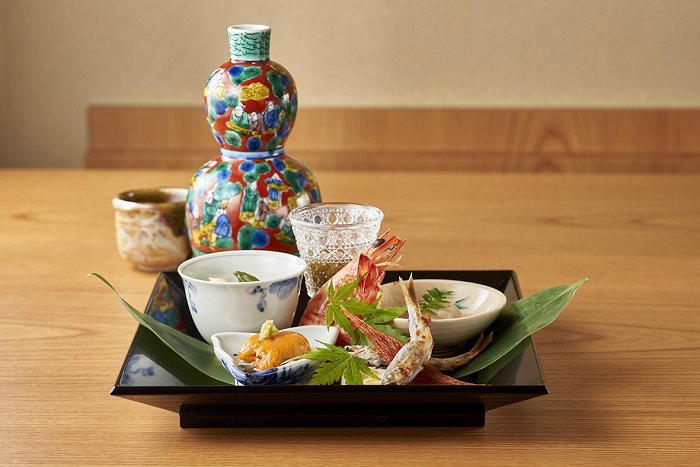
Gion After Dark: The Tempura Counter as Quiet Discipline
Hanamikoji at dusk moves at a different pace than Shinjuku at noon. The stone-paved lane that threads through Higashiyama Ward narrows the peripheral vision, cuts the ambient noise, and slows the walk. It is the kind of approach that conditions you before you arrive anywhere. Kyoboshi is a Michelin-starred Kyoto-Style Tempura Omakase restaurant on Gionmachi Kitagawa, in Kyoto's Higashiyama Ward, with dinner around JPY 15,000 to 19,999. The city outside operates on foot and bicycle. Nothing about the approach suggests speed.
That contrast with Tokyo's tempura culture is not incidental. In the capital, the dominant tempura counter format tends toward theatrical efficiency: high-turnover kaiseki-adjacent menus, sleek Ginza addresses, and a pacing calibrated to get guests in and through in ninety minutes. Kyoto's premium counter culture moves differently. It prioritises repetition over novelty, craft legibility over spectacle, and a relationship with ingredients that assumes the diner has time to notice what is in front of them. Kyoboshi, is one of the clearest expressions of that preference.
What the Award Record Actually Says
Kyoboshi has held Tabelog Bronze continuously from 2017 through 2026. Kyoboshi has held Bronze continuously from 2017 through 2026, a run that signals durability rather than a single strong year. Alongside that, the counter has been selected for the Tabelog Tempura 100 in 2022, 2023, and 2025: a category-specific list that benchmarks the counter not just against Kyoto's broader fine-dining field but against the specialised tempura category nationally. Its Tabelog score of 3.89 places it in the competitive upper range of that category.
For a single-format, eight-seat counter in a secondary tempura city (Tokyo dominates the category in volume terms), that sustained national positioning is a meaningful data point. The counter competes on quality signals against a much larger pool of Tokyo venues by operating at a fraction of the scale.
Compared to its Gion neighbours, Kyoboshi occupies a different price tier and format from the kaiseki houses that define the neighbourhood's highest register. Gion Sasaki runs at ¥¥¥¥ with three Michelin stars; Ifuki sits at ¥¥¥¥ with two. Kyoboshi at ¥¥¥ and JPY 15,000 to 19,999 per dinner sits below that ceiling while operating within the same geography and the same expectation of precision craft. It is a counter where the cooking form itself carries the weight that tablecloths and sake pairings carry elsewhere on the same street.
The Kyoto Approach to Tempura
Japan's tempura tradition has a clear Tokyo-Kyoto divide, though it is less discussed than the same divide in kaiseki or ramen. Tokyo's leading tempura counters, working in the lineage of Edo-style preparation, lean toward sesame oil, darker batters, and a pace that moves through seafood courses quickly. The Kyoto approach, less codified but recognisable, tends toward lighter oils, thinner batters, and a structure that integrates seasonal vegetables with more deliberate sequencing. The ingredient becomes the text; the batter is punctuation.
At Kyoboshi, the structure follows an alternating logic: main ingredients move between seafood and vegetables, with shrimp serving as a recurring structural element through the sequence. The first shrimp is served rare, the second at a more fully cooked register, so that the same ingredient anchors two different moments in the progression. That internal variation within a single ingredient type is characteristic of the kind of disciplined menu thinking that Kyoto's counter culture has historically prized. It is less about adding courses and more about deepening what is already there.
The oil used at Kyoboshi is a proprietary blend, passed through the family in a single line from father to one son. Whether or not that transmission story is commercially embellished, the underlying point matters: the flavour identity of a tempura counter lives substantially in its frying medium, and differentiation at that level requires long-term commitment to a fixed formula. Crushed handmade salt, used at service, further reinforces the counter's preference for ingredient-forward outcomes over sauce complexity.
Counter Format and What It Demands
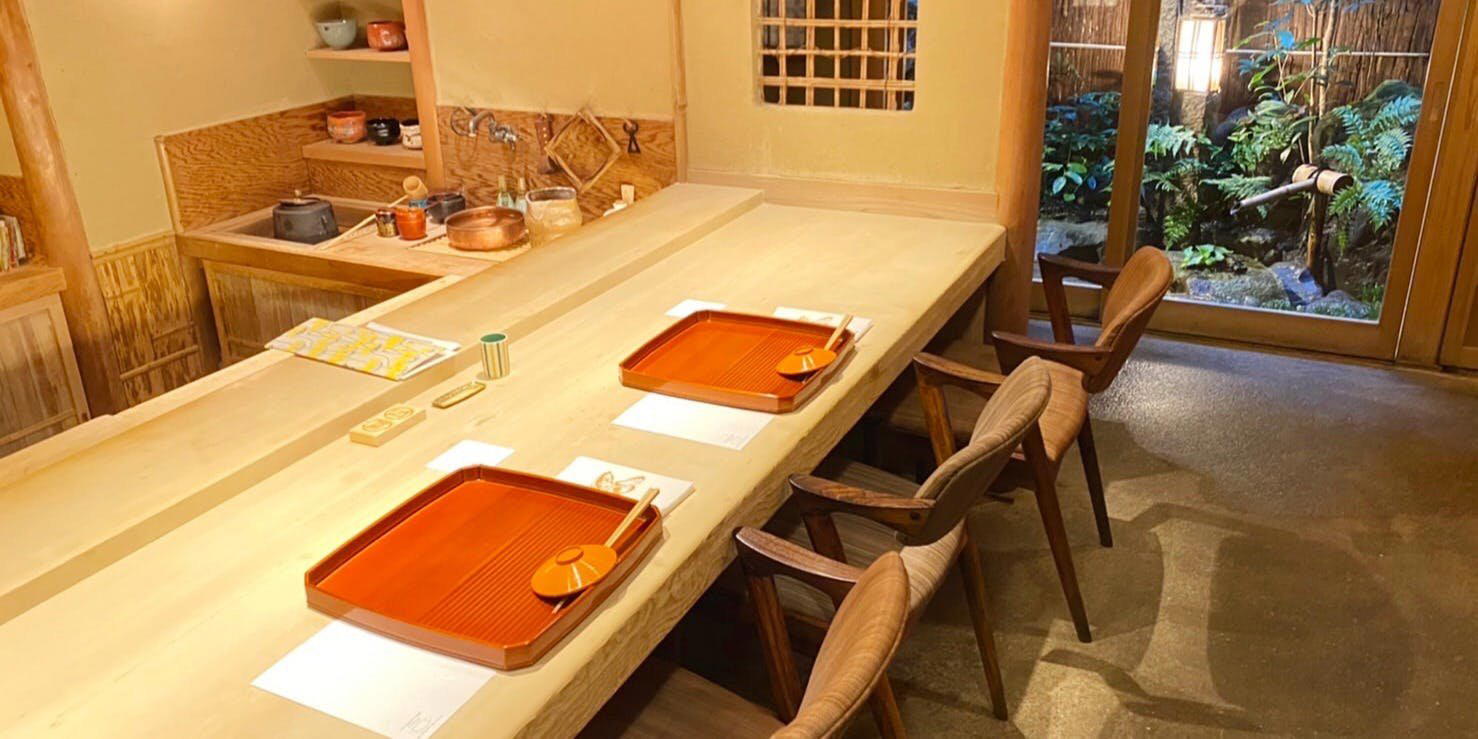
Eight seats. All counter. The entire operation at any given service functions as a single cohesive experience, with the chef pacing each course to the full table rather than to individual turns. The restaurant takes reservations only and serves dinner Monday through Saturday, 6 to 8 PM.
That policy is operationally rational for a counter that cannot absorb empty seats, but it also communicates the terms clearly. A booking at Kyoboshi is a commitment, not a tentative plan.
Drink options are sake and shochu. Credit cards are accepted; electronic money and QR payments are not. The counter is non-smoking throughout. There is no parking. The address puts the restaurant within walking distance of Gion-Shijo Station on the Keihan Main Line.
Where This Counter Fits in Kyoto's Tempura Field
Kyoto does not have the tempura counter density of Tokyo or even Osaka, which makes the handful of nationally recognised counters here more legible in terms of their positioning. Tenjaku and Miyagawacho Tensho operate in the same city and category, while Tempura Matsu represents a different register of the tradition. Gion Senryu works the same neighbourhood geography. For diners building a Kyoto itinerary around Japanese culinary craft rather than kaiseki specifically, these counters form a coherent peer group worth comparing directly rather than treating as interchangeable entries on a list.
Beyond Kyoto, the tempura format at this price and commitment level appears at Numata in Osaka and, across borders, at Mudan Tempura in Taipei, which has absorbed the Japanese counter model into a different ingredient context. The comparison is useful for understanding how portable the format is, and how much of what distinguishes a counter like Kyoboshi is place-specific rather than reproducible.
Kyoto's broader fine-dining field extends well beyond tempura. Enyuan Kobayashi works Chinese-influenced fare at the same ¥¥¥ tier. For readers planning around multiple cities, comparable benchmark counters appear at Harutaka in Tokyo, HAJIME in Osaka, akordu in Nara, Goh in Fukuoka, 1000 in Yokohama, and 6 in Okinawa.
Know Before You Go
- Address: Gionmachi Kitagawa, Higashiyama Ward, Kyoto 605-0073
- Access: 10-minute walk from Gion-Shijo Station (Keihan Main Line); approximately 384 metres from the station exit
- Dinner price: JPY 15,000 to 19,999 per person
- Hours: Monday to Saturday, 18:00 to 22:00 (last entry 20:00); closed Sunday
- Reservations: Mandatory; reservation only
- Cancellation policy: 50% charge for cancellations the day before; 100% on the day
- Seats: 8 counter seats; no private rooms; full private hire available
- Payment: Credit cards accepted; electronic money and QR payments not accepted
- Drinks: Sake and shochu
- Smoking: Non-smoking throughout
- Parking: Not available
Style and Standing
Comparable venues nearby, for context on price, style, and recognition.
| Venue | Cuisine | Price | Awards | Notes |
|---|---|---|---|---|
| KyoboshiThis venue — the venue you are viewing | Kyoto-Style Tempura Omakase | $$$$ | Michelin 1 Star | Not listed |
| shiro | Modern Italian-Japanese Omakase | $$$$ | Michelin 1 Star | Nakagyō |
| Mokubei | Traditional Kyoto Kaiseki | $$$$ | Michelin 1 Star | Higashiyama |
| Tokuha Motonari | Traditional Kyoto Kaiseki with Genshiyaki | $$$$ | Michelin 1 Star | Kamigyō |
| KOKE | Modern Okinawan Fine Dining | $$$$ | Michelin 1 Star | Nakagyō |
| Sushi Kappo Nakaichi | Traditional Omakase Sushi & Kyoto Kaiseki | $$$$ | Michelin 1 Star | Higashiyama |
Recognition history
Dated appearances from independent guides and award organizations, with the underlying list record or original source where available.
Michelin 1 Star
Michelin
Opinionated About Dining Top Restaurants in Japan Recommended
Opinionated About Dining
Tabelog Bronze #218
Tabelog
Opinionated About Dining Top Restaurants in Japan Ranked #274
Opinionated About Dining
Tabelog 100 #7 · No. 7
Tabelog · Tabelog 100 - Tempura - 2025
Michelin 1 Star
Michelin
Opinionated About Dining Top Restaurants in Japan Ranked #274
Opinionated About Dining
Opinionated About Dining Top Restaurants in Japan Highly Recommended
Opinionated About Dining
Continue exploring
More in Kyoto
Restaurants in Kyoto
Browse all →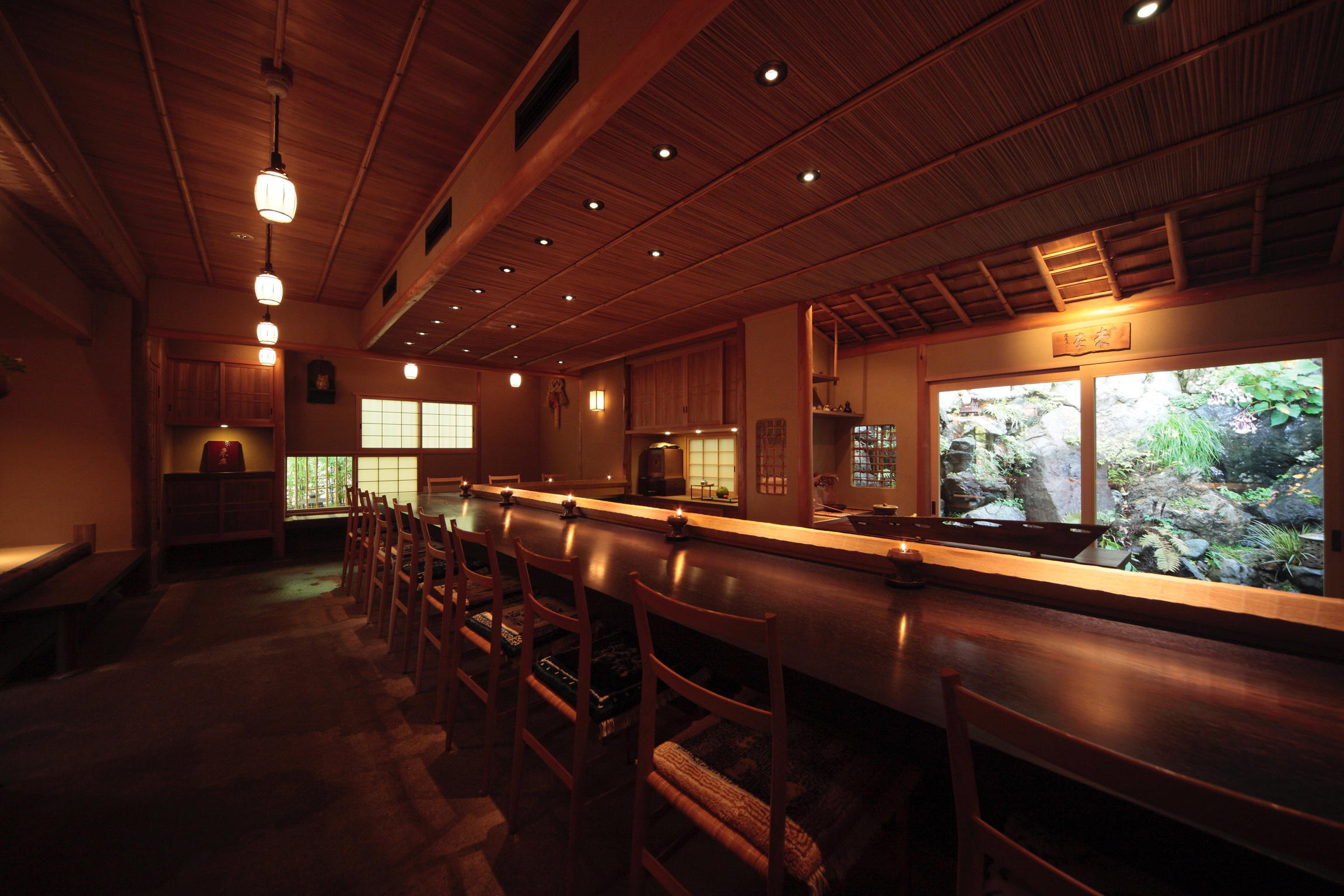
Bars in Kyoto
Browse all →
Hotels in Kyoto
Browse all →
Wineries in Kyoto
Browse all →
At a Glance
- Intimate
- Elegant
- Sophisticated
- Date Night
- Special Occasion
- Solo
- Chefs Counter
- Sake Program
Current opening hours
- Monday
- 6–8 PM
- Tuesday
- 6–8 PM
- Wednesday
- 6–8 PM
- Thursday
- 6–8 PM
- Friday
- 6–8 PM
- Saturday
- 6–8 PM
- Sunday
- Closed
Hours can change for holidays and private events. Last verified .
Intimate counter seating in a small, welcoming hideaway with warm family service and focused attention on the chef's craft.