
Michelin Plate
Our verdict
Shimogamo Ichima keeps alive one of Kyoto's most specific sushi traditions: temari sushi, the hand-shaped spheres sized for geisha and maiko to eat in a single bite. Holding a Michelin Plate in both 2024 and 2025, the restaurant in Sakyo Ward offers a seasonally structured menu that shifts from mackerel sushi in autumn to steamed preparations in winter, with evening à la carte extending the range.

Pearl is the En Primeur Club membership app, where members save venues, book tables and use the concierge.
The menu
What to order
- Temari sushi
- Chirashi sushi
- Omakase nigiri sushi
A Room Built Around a Single Gesture
Kyoto's sushi culture does not mirror Tokyo's. Where the capital's omakase counters trade in fast-chilled nigiri and theatrical knife work, Kyoto developed its own idiom: pressed, marinated, and shaped forms that reflect the city's distance from the sea and its proximity to centuries of court refinement. Shimogamo Ichima sits at a specific coordinate within that tradition, one defined not by the broad sweep of kaiseki or the prestige ladder of Ginza-style counter sushi, but by a single, exacting form: temari sushi.
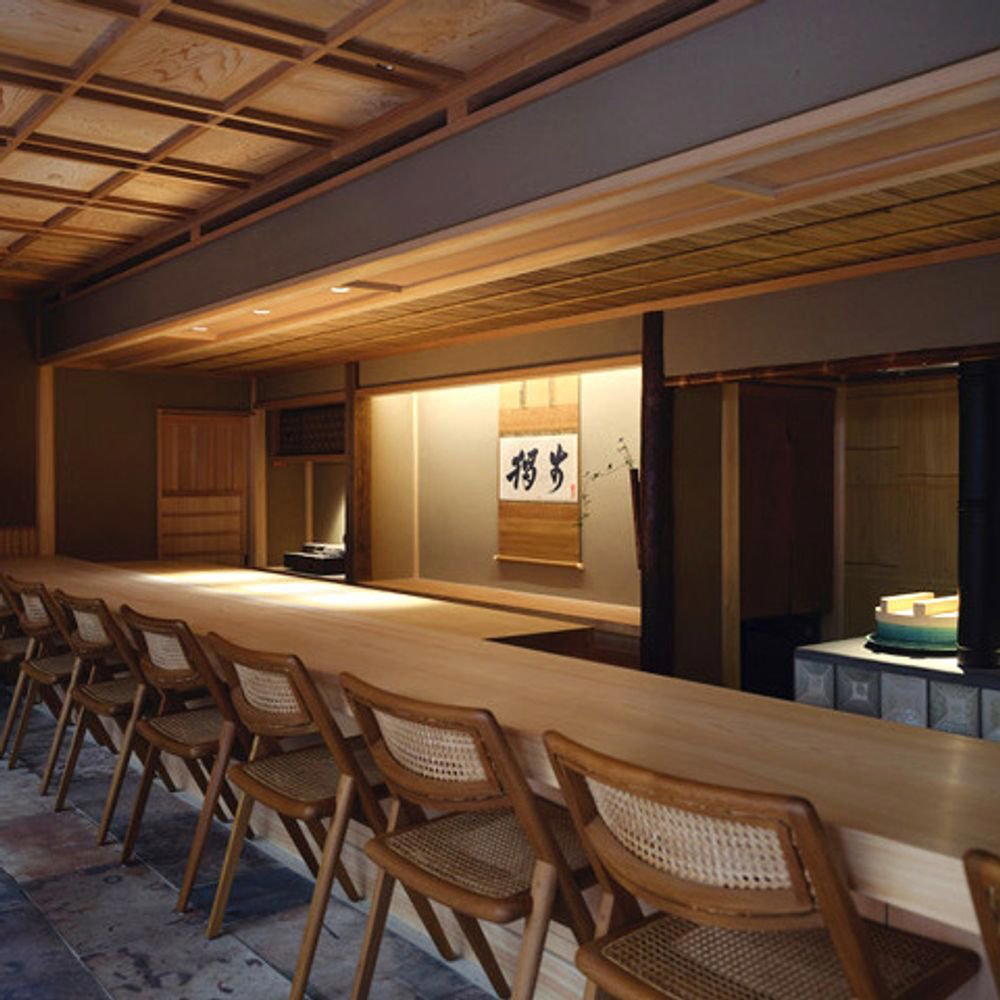
The address in Sakyo Ward, at 62 Shimogamo Miyakawacho, places the restaurant in a northern quarter of the city that retains the measured pace of residential Kyoto rather than the congestion of the tourist corridors near Gion or Nishiki. Arriving here, you are not walking a street lined with lanterns and omakase signage. The neighbourhood's scale is domestic, the architecture low, and the approach to the restaurant has none of the performative pageantry that now attaches itself to premium dining in more visited parts of the city. That physical restraint is itself a signal about what happens inside.
The Form That Defines the Menu
Temari sushi takes its name from the decorative thread balls that appear in traditional Japanese craft and New Year celebration. The association is deliberate: these are sushi pieces shaped by hand into small spheres, sized precisely so that a single bite encompasses the entire piece. The origin at Shimogamo Ichima connects directly to the culture of the hanamachi, the geisha districts where eating in a way that preserved composure and appearance was a practical constraint. The restaurant traces its founding to a grandfather who studied saikuzushi, the craft-oriented decorative sushi tradition, and adapted it to produce pieces that geisha and maiko could consume without breaking conversation or ceremony.
That founding logic still structures the menu. The range of toppings is broad, covering sea bream, tuna, shrimp, and further varieties, but the shared characteristic across all of them is the rice preparation. The sushi rice is shaped gently enough that it separates in the mouth with minimal pressure, carrying the topping and the rice together without the compacted resistance of pressed sushi or the density of a hand-roll. Eating through a selection becomes a matter of registering flavour combinations in sequence, which the restaurant treats as part of the intended experience rather than incidental to it.
Sushi Rakumi, Izuu, and Kikunoi Sushi Ao each occupy distinct positions within the city's sushi offering; Shimogamo Ichima's claim is narrower and more specific, which is precisely what makes it legible to a visitor who wants to understand how Kyoto's culinary identity diverges from the national mainstream. For Kyoto's broader dining context, Izugen and KASHIWAI represent the city's range at adjacent price points and registers.
Seasonality as Architecture
Kyoto cuisine is structured by the calendar in ways that go beyond ingredient availability. The seasons carry aesthetic and ceremonial weight, and menus that ignore that rhythm are understood to be operating outside the city's culinary logic. Shimogamo Ichima observes that rhythm with two anchoring seasonal forms: mackerel sushi in autumn, and steamed sushi in winter. Both represent distinct technical preparations, not simply the same format applied to different fish. Mackerel sushi in the Kyoto tradition involves curing and pressing, a method developed to handle fish transported inland before refrigeration. Steamed sushi is a warmer preparation suited to the cold months, with a different textural outcome from the room-temperature temari served across the rest of the year.
This seasonal structuring is a form of editorial discipline applied to the menu itself, comparable to what the higher-priced kaiseki houses in the city, such as the ¥¥¥¥-tier Gion Sasaki or Ifuki, express through course sequences. At Shimogamo Ichima's ¥¥¥ price point, the same seasonal attentiveness is present, organised around a more concentrated repertoire. Evening service adds an à la carte dimension, which extends the range and gives returning guests access to a broader selection than a single lunch sitting provides.
Michelin Recognition and Where It Places the Restaurant
The Michelin Plate, awarded in both 2024 and 2025, does not carry the same weight as a star, but it is not a minor signal either. Within the Guide's framework, the Plate denotes cooking that the inspectors consider good within its category. For a restaurant operating in a highly specific traditional format at a mid-to-upper price point, that consistency of recognition across two consecutive years indicates that the execution holds. It places Shimogamo Ichima in a different tier from the heavily awarded kaiseki institutions that define Kyoto's international dining profile, while confirming that it meets a documented standard.
For sushi in other major Japanese cities, Harutaka in Tokyo and regional alternatives like Goh in Fukuoka show how the form varies across geography. Outside Japan, Sushi Shikon in Hong Kong and Shoukouwa in Singapore represent the export model of Japanese sushi at the premium end. None of those comparisons diminish what Shimogamo Ichima does; they clarify that it is not attempting to compete in the same register.
For broader dining options across the Kansai region, HAJIME in Osaka and akordu in Nara are worth placing in the same planning window, as is 1000 in Yokohama and 6 in Okinawa for visitors extending further.
Planning Your Visit
Shimogamo Ichima is located in Sakyo Ward, Kyoto, at 62 Shimogamo Miyakawacho. Budget: ¥¥¥, placing it in the mid-to-upper tier of Kyoto dining, below the ¥¥¥¥ kaiseki houses but above casual sushi formats. Booking: Timing: Evening visits offer the extended à la carte selection; lunch service centres on the core temari menu. Autumn and winter visits access the seasonal mackerel and steamed sushi preparations respectively. Getting there: Sakyo Ward is accessible by bus from central Kyoto; the Shimogamo Shrine area is a well-mapped destination for visitors to the northern part of the city.
For further planning, see our full Kyoto restaurants guide, our full Kyoto hotels guide, our full Kyoto bars guide, our full Kyoto wineries guide, and our full Kyoto experiences guide.
Frequently asked questions
What should I budget for a meal at Shimogamo Ichima?
Pricing at Shimogamo Ichima is listed as ¥¥¥.
Can I walk in to Shimogamo Ichima?
The restaurant holds a Michelin Plate for two consecutive years (2024 and 2025), which typically generates consistent demand at this price tier (¥¥¥). Contacting the restaurant directly in advance is advisable, particularly for evening sittings when the full à la carte menu is available.
At-a-Glance Comparison
A compact comparison to help you place this venue among nearby peers.
| Venue | Cuisine | Price | Awards | Notes |
|---|---|---|---|---|
| Shimogamo IchimaThis venue (the venue you are viewing) | Traditional Kyoto Sushi | $30–50 | Michelin Plate | Not listed |
| Gion Sasaki | Modern Kaiseki | $300–500 | 3 Michelin Stars · La Liste Top Restaurants | Kaiseki, Japanese |
| cenci | Innovative Italian-Japanese Fusion | $100–150 | 1 Michelin Star · World's 50 Best #76 | Italian |
| Ifuki | Sumibi Kappo Kaiseki | $200–300 | 2 Michelin Stars · La Liste Top Restaurants | Kaiseki |
| Kyokaiseki Kichisen | Kyoto Kaiseki | $200–300 | 2 Michelin Stars · La Liste Top Restaurants | Japanese |
| Kyo Seika | Modern Chinese Fine Dining | $150–200 | 1 Michelin Star · Tabelog Bronze #216 | Chinese |
Recognition history
Dated appearances from independent guides and award organizations, with the underlying list record or original source where available.
Michelin Plate
Michelin
Full recognition history (3 entries)
Michelin Plate
Michelin
Michelin Plate
Michelin
Continue exploring
More in Kyoto
Restaurants in Kyoto
All restaurants in Kyoto →
Bars in Kyoto
All bars in Kyoto →
Hotels in Kyoto
All hotels in Kyoto →
Wineries in Kyoto
Browse all →
Details
- Cozy
- Quiet
- Intimate
- Classic
- Solo
- Date Night
- Family
- Sake Program
- Local Sourcing
- A La Carte
- Omakase
- Counter Dining
- Sake
- Wine
Current opening hours
- Monday
- 11:30 AM–3 PM, 5–9 PM
- Tuesday
- Closed
- Wednesday
- 11:30 AM–3 PM, 5–9 PM
- Thursday
- 11:30 AM–3 PM, 5–9 PM
- Friday
- 11:30 AM–3 PM, 5–9 PM
- Saturday
- 11:30 AM–3 PM, 5–9 PM
- Sunday
- 11:30 AM–3 PM, 5–9 PM
Hours can change for holidays and private events. Hours as of .
Cozy Japanese atmosphere with relaxing wood grain counter seats and tatami rooms in a serene residential area.