

Tabelog Bronze #388
Our verdict
Sato Burian places Tokyo yakiniku in a serious critical bracket rather than a casual grill-house category. The Asagaya restaurant, led by Akihiro Sato and recognised by Tabelog and Opinionated About Dining, reflects a strain of beef cookery where cut selection, pacing and grill discipline matter as much as luxury sourcing.

Pearl is the En Primeur Club membership app, where members save venues, book tables and use the concierge.
The menu
What to order
- Chateaubriand
- Buri-Meshi
- Chateaubriand Cutlet Sandwich
Approaching a serious yakiniku room in Tokyo is different from approaching a sushi counter or kaiseki restaurant. The signals are less ceremonial: the hiss of tabletop grills, the rhythm of small plates moving across compact tables, the smell of rendered fat meeting heat. In Asagaya, that everyday grammar is pushed into a higher register. Sato Burian belongs to the strand of Tokyo beef dining where yakiniku is not a loose night of meat and beer, but a structured meal built around sequence, portion control and the handling of prized cuts.
Yakiniku’s modern Japanese identity has always been urban and social. It is a cuisine of proximity: diners sit close to the grill, the table manages pace, and the room’s energy comes from small decisions repeated across the meal. At this level, the difference is not merely the grade of beef. It is how the restaurant controls the format so that richness does not flatten the evening. That is why the stronger Tokyo yakiniku addresses feel closer to counter-led dining than to conventional barbecue, even when the cooking happens in front of the guest.
Asagaya gives high-end yakiniku a different Tokyo accent
Tokyo’s luxury dining map often pulls visitors toward Ginza, Roppongi, Nishi-Azabu and Ebisu. Yakiniku has a wider geography. Serious beef rooms can sit in residential districts, near commuter stations, or in neighbourhoods where the local evening trade matters as much as destination dining. Asagaya gives this meal a less polished frame than the central hotel-and-taxi circuit, which suits the category. Beef cookery in Japan carries status, but yakiniku retains a democratic table culture: smoke, conversation, shared heat and a certain directness that fine dining sometimes works too hard to suppress.
That context matters when reading Sato Burian’s critical position. Tabelog lists it as a 2026 Bronze winner with a 3.98 score, and it was selected for the Tabelog 100 Yakiniku Tokyo list in 2025. Opinionated About Dining also includes it in its 2026 Japan Top Restaurants Recommended selection, following ranked appearances in earlier Japan lists. Those signals place the restaurant in a serious national conversation, not simply a neighbourhood favourite with a loyal following.
Tokyo’s comparable yakiniku tier splits along different ideas of refinement. Nikusho Horikoshi sits in the same citywide beef conversation, while comparison names such as Nikuyama, Yoroniku, Sumibiyakiniku Nakahara and Ushigoro S NishiAzabu show how varied the category has become: some rooms lean into progression and service polish, others into meat literacy and a more primal grill focus. Sato Burian’s appeal sits in that second tension, where luxury is present but the meal remains recognisably yakiniku rather than a tasting-menu disguise.
What critics respond to in the beef-first format
Akihiro Sato’s name matters as a credential, but the stronger editorial point is the format around him. Yakiniku at this level depends on confidence with repetition. A restaurant can serve excellent beef and still become tiring if every course is treated as a climax. The acclaimed Tokyo examples tend to understand contrast: leaner cuts against fattier ones, grilled items against rice or condiments, and pauses that keep the table from drifting into excess. Sato Burian’s sustained recognition suggests that critics are responding to that kind of control as much as to sourcing.
The restaurant’s Tabelog history is unusually useful because it shows durability. Awards include Tabelog Bronze in 2020, 2021, 2022, 2023, 2024, 2025 and 2026, with Silver recognition listed for 2018 and 2019 and Gold for 2017. For a meat-led restaurant, that continuity carries weight. Beef fashions move quickly in Tokyo: new suppliers become fashionable, new rooms arrive with more expensive interiors, and social media can overheat a particular cut or presentation. Repeated recognition over several years suggests consistency in a category where inconsistency is easy to notice.
The restaurant opened in 2011, another useful marker. Tokyo has seen waves of premium yakiniku since then, with wagyu branding becoming more legible to international diners and reservation platforms turning small rooms into destination targets. A restaurant that remains in the conversation after more than a decade has survived a shift from local enthusiast culture to global dining tourism. That does not make it sentimental; it makes it relevant to understanding how Tokyo yakiniku matured from a late-night pleasure into a critical category.
How to place it within a Tokyo dining itinerary
For travellers, this is not a substitute for sushi, tempura or kaiseki. It answers a different question: how does Tokyo treat beef when the format remains table-based, communal and heat-driven? The answer is more disciplined than many overseas versions of Japanese barbecue. The meal is about restraint as much as appetite, and about trusting a sequence rather than ordering impulsively around marbling alone.
That makes it especially useful for repeat visitors to Tokyo who have already covered the classic counter formats. In a city where high-end dining can become rigid, yakiniku restores a degree of participation without abandoning precision. It is also a good reminder that Japanese luxury is not confined to silence and ceramics. Sometimes it comes through a grill, a compact room and a procession of beef handled with enough confidence to avoid spectacle.
Readers building a wider Tokyo dining plan can compare the city’s beef rooms with Cossott’e, Jumbo Hanare, Kinryuzan and Kiraku-Tei. For broader planning, use Our full Tokyo restaurants guide, then cross-check stays, drinks and cultural time through Our full Tokyo hotels guide, Our full Tokyo bars guide, Our full Tokyo wineries guide and Our full Tokyo experiences guide.
For readers tracing Japanese beef cookery beyond central Tokyo, useful contrasts include -Grilled beef Sukiyaki- KAMAKURA TANUKIAN 鎌倉 たぬき庵 in Kamakura, Keiraku Yakiniku Pome, Yakiniku in Osaka and the overseas casualisation of the format at Gyu-Kaku Japanese BBQ, Yakiniku in Los Angeles. Other Japan listings, from.cafe in Osaka and.know in Kumamoto to (Shoku) Vietnam in Kawasaki, [Curry Senmon Ten] Maruyama Kyoju. in Sapporo and [ki:] in Kyoto, show how specialised formats define dining trips as much as famous neighbourhoods do.
Frequently asked questions
How do I find Sato Burian?
Sato Burian is located in Tokyo.
What are the opening hours for Sato Burian?
Hours at Sato Burian: Hours: Monday 2:30–10 pm Tuesday 2:30–10 pm Wednesday 2:30–10 pm Thursday 2:30–10 pm Friday 2:30–10 pm Saturday 2:30–10 pm Sunday 2:30–10 pm.
What cuisine category does Sato Burian fall under?
Sato Burian serves Yakiniku cuisine.
Is there a head chef associated with Sato Burian?
The chef associated with Sato Burian is Akihiro Sato.
What do critics highlight about Sato Burian?
Critics focus on the format as much as the name: a reservation-only yakiniku room in Asagaya with 24 seats, led by Akihiro Sato. Its credentials are clear too, including the Tabelog Award 2026 Bronze and repeated selection for Tabelog’s Yakiniku Tokyo 100.
Is Sato Burian good for families?
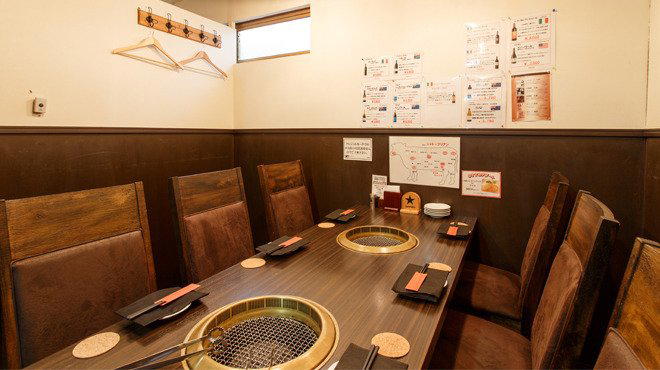
Yes, within a narrow frame: the venue accepts children of elementary school age and above, and it offers private rooms for 4 or 6 people, plus up to 2 people on course reservations. The room is set up for adults-first dining, with reservation-only service and a 2-hour actual stay window at the Tokyo address on Asagayaminami 3 Chome.
Comparable venues nearby, for context on price, style, and recognition.
| Venue | Cuisine | Price | Awards | Notes |
|---|---|---|---|---|
| Sato BurianThis venue (the venue you are viewing) | Premium Yakiniku with Chateaubriand | $150–200 | Tabelog Bronze #388 | Not listed |
| Aoyama Ototo | Seasonal Japanese Kaiseki with Charcoal-Grilled Seafood | $50–100 | Michelin Plate | Shibuya |
| Tokihami | Modern Kappo Izakaya | $50–100 | Michelin Plate · Tabelog 100 #62 | Chūō |
| Hikarimono | Modern Japanese Omakase | $50–100 | Michelin Plate | Minato |
| Unagi Tokito | Modern French-Influenced Unagi | $100–150 | Michelin Plate · Tabelog 100 #55 | Minato |
| Fujisushi | Seasonal Japanese Sushi | $200–300 | Michelin Plate | Minato |
Recognition history
Dated appearances from independent guides and award organizations, with the underlying list record or original source where available.
Opinionated About Dining Top Restaurants in Japan Recommended
Opinionated About Dining
Tabelog Bronze #388
Tabelog
Full recognition history (6 entries)
Opinionated About Dining Top Restaurants in Japan Ranked #185
Opinionated About Dining
Tabelog 100 #64 · No. 64
Tabelog · Tabelog 100 - Yakiniku - TOKYO - 2025
Opinionated About Dining Top Restaurants in Japan Ranked #138
Opinionated About Dining
Opinionated About Dining Top Restaurants in Japan Ranked #107
Opinionated About Dining
Continue exploring
More in Tokyo
Restaurants in Tokyo
All restaurants in Tokyo →



Bars in Tokyo
All bars in Tokyo →



Details
- Cozy
- Intimate
- Elegant
- Special Occasion
- Date Night
- Group Dining
- Sake Program
- Local Sourcing
- Omakase
- Set Menu
Current opening hours
- Monday
- 2:30–10 PM
- Tuesday
- 2:30–10 PM
- Wednesday
- 2:30–10 PM
- Thursday
- 2:30–10 PM
- Friday
- 2:30–10 PM
- Saturday
- 2:30–10 PM
- Sunday
- 2:30–10 PM
Hours can change for holidays and private events. Hours as of .
Cozy and relaxed atmosphere with spacious, relaxing seating that feels less formal than typical fine-dining yakiniku spots.