Our verdict
Ramen Nagi in Nishishinjuku has operated 24 hours a day every day of the week, placing it inside Tokyo's serious all-night ramen tier rather than the tourist-facing chains that share the neighbourhood.

Pearl is the En Primeur Club membership app, where members save venues, book tables and use the concierge.
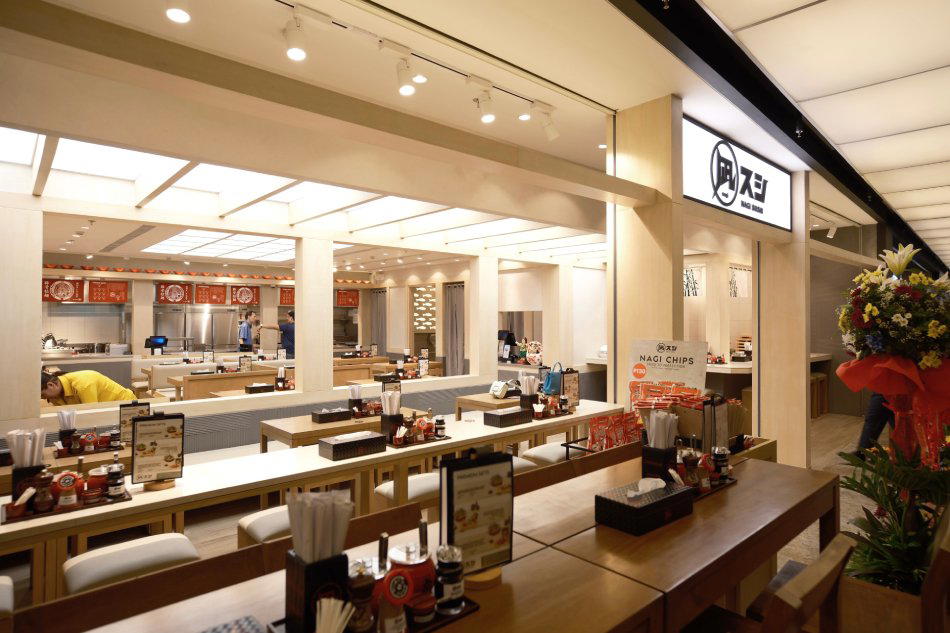
Tokyo's All-Night Ramen Circuit and Where Nagi Sits
The case for late-night ramen in Tokyo rests on infrastructure that few cities can replicate: a dense network of small-format shops, open around the clock, where the competition for a regular customer base is decided almost entirely by broth depth and noodle calibre. Nishishinjuku, the western office district that empties by early evening and refills after midnight with shift workers, cooks, and anyone who missed the last express train, is one of the more reliable patches of that infrastructure. Ramen Nagi on 7-chome operates inside that ecosystem, open every day of the week, every hour of the day, since its founding.
That 24-hour format is not a convenience gimmick. In Tokyo's casual ramen tier, it functions as a signal: the kitchen team is large enough to rotate staff without dropping production standards, and the supply chain, from pork bone delivery to noodle prep, is calibrated for continuous output rather than a single service window. The operational discipline required to hold broth quality at 3am matches the discipline required at noon. That consistency is what separates the functional all-night shops from the merely open ones.
The Ingredient Question in Tonkotsu-Style Broth
The editorial angle that matters most in understanding Tokyo ramen at this price point is not the chef's biography or the shop's origin story. It is the sourcing logic behind the bowl. Ramen, at its competitive peak, is an ingredient-forward discipline. The dashi base, the fat content and provenance of the pork bones or chicken carcasses, the alkalinity of the water used in noodle production, the fermentation depth of the tare: these are the variables that separate a ranked shop from an adequate one.
Ramen Nagi has carried a consistent position in Opinionated About Dining's Casual Japan rankings across three consecutive years: #43 in 2023, #47 in 2024, and #46 in 2025. That stability is more telling than a single-year spike. OAD rankings in the casual Japan category draw on a pool of evaluators who eat in the category professionally, and sustained presence over multiple cycles suggests the kitchen is not varying its sourcing or production approach significantly year on year. In a category where ingredient costs fluctuate and operator margins are thin, consistency of ranking implies consistency of supply relationships.
The broth in high-performing Tokyo ramen shops typically reflects a sourcing decision made years in advance: which farms or processors supply the bones, how far in advance the fat is clarified, whether the tare is blended in-house or sourced from a specialist producer. These are not decisions that shift seasonally the way a kaiseki menu does. They are structural commitments, and a shop that has held its ranking across three annual cycles has, by implication, held those commitments.
Positioning in the Tokyo Casual Ramen Field
To understand where Ramen Nagi sits competitively, it helps to map the broader tier. Tokyo's serious ramen field splits roughly between the heavily reservation-dependent shops with limited hours and premium pricing, and the walk-in accessible shops that run high volume, lower per-cover revenue, and compete on repeat-visit loyalty. Nagi occupies the second tier by format, but its OAD ranking at #46 nationally places it well above the mass-market chains that dominate the neighbourhood's visible foot traffic.
For comparison within the EP Club Tokyo restaurant file: Afuri works a lighter, yuzu-inflected broth style that attracts a different customer profile, while Fuunji has built its reputation around tsukemen in a format that requires daytime hours and queuing discipline. Chukasoba Ginza Hachigou and Chukasoba KOTETSU operate in the chukasoba register, a lighter soy-forward tradition that sits in a different flavour register from Nagi's richer broth profile. Chuogo Hanten Mita and Goh in Fukuoka represent the Kyushu tonkotsu tradition that informs much of Nagi's broth language, though the execution context differs substantially between cities.
Ramen Nagi also appears in Opinionated About Dining's Cheap Eats in North America rankings, placing #197 in 2024 and #475 in 2025, reflecting the reach of the Nagi brand beyond its Shinjuku origin. That cross-market recognition is worth noting as context: it suggests the format has translated enough to register with evaluators outside Japan, though the Nishishinjuku location remains the reference point for the original product.
How Nagi Compares: Planning Your Visit
| Venue | Format | Hours | OAD Casual Japan 2025 | Booking Required |
|---|---|---|---|---|
| Ramen Nagi (Nishishinjuku) | Counter / walk-in ramen | 24 hours, 7 days | #46 | No |
| Afuri | Counter / walk-in ramen | Standard service hours | Ranked | No |
| Fuunji | Tsukemen counter | Daytime, queue-dependent | Ranked | No, queue required |
| Chukasoba Ginza Hachigou | Chukasoba counter | Limited daytime hours | Ranked | No |
Practical Planning
The 7-chome address in Nishishinjuku places Ramen Nagi a short walk from Shinjuku Station's west exits, accessible via the Marunouchi, Oedo, and Shinjuku lines. Midday and post-midnight tend to be the quieter windows relative to the post-work dinner hour.
No booking method is listed, which is consistent with the walk-in counter format standard across Tokyo's serious ramen tier. Arrive, assess the queue, and plan accordingly. Cash is the safest assumption at small-format ramen shops in Shinjuku, though card acceptance has increased across the district in recent years.
For visitors building a broader Tokyo itinerary, our full Tokyo restaurants guide covers the range from Nagi's casual tier up through the kaiseki and fine dining registers. If you're extending across Japan, HAJIME in Osaka, Gion Sasaki in Kyoto, akordu in Nara, and 6 in Okinawa map a different register of Japanese restaurant culture. For ramen context outside Japan, Afuri Ramen in Portland and Akahoshi Ramen in Chicago are among the North American reference points worth knowing. Additional Tokyo planning resources: hotels, bars, experiences, and wineries. For the greater Kanto area, 1000 in Yokohama is worth considering as a day-trip addition.
Frequently asked questions
Is Ramen Nagi a family-friendly restaurant?
The format suits families with older children. Ramen Nagi operates 24 hours a day at its Nishishinjuku address, which means there is no rigid booking window or peak-only service that complicates timing around kids. The counter-style setup common to Tokyo ramen shops at this tier is compact, so families with prams or very young children may find the space tight.
How would you describe the vibe at Ramen Nagi?
Functional and unhurried in the way that serious Tokyo ramen shops tend to be: the focus is on the bowl, not the room. The Nishishinjuku location draws a cross-section of Shinjuku regulars, late-shift workers, and visitors moving through one of Tokyo's busiest transit hubs. Opinionated About Dining has ranked Nagi in its top 50 casual Japan entries three consecutive years (2023–2025), which signals consistent delivery rather than novelty-driven traffic.
What kind of recognition has Ramen Nagi received?
Ramen Nagi has received recognition including: Opinionated About Dining Cheap Eats in North America Ranked #475 (2025); Opinionated About Dining Casual in Japan Ranked #46 (2025); Opinionated About Dining Cheap Eats in North America Ranked #197 (2024); Opinionated About Dining Casual in….
What's the best thing to order at Ramen Nagi?
Ramen Nagi built its reputation around tonkotsu-style broth, and that remains the editorial reference point for the shop across its consistent Opinionated About Dining placements.
What cuisine category does Ramen Nagi fall under?
Peers You’d Cross-Shop
A short peer table to compare basics side-by-side.
| Venue | Cuisine | Price | Awards | Notes |
|---|---|---|---|---|
| Ramen NagiThis venue (the venue you are viewing) | Niboshi Ramen | $10–20 | Not listed | Not listed |
| Harutaka | Edo-Style Omakase Sushi | $200–300 | 3 Michelin Stars · World's 50 Best #76 | Sushi |
| RyuGin | Modern Kaiseki | $500+ | 3 Michelin Stars · World's 50 Best #41 | Kaiseki, Japanese |
| L'Effervescence | Modern French with Japanese Influences | $200–300 | 3 Michelin Stars · World's 50 Best #69 | French |
| HOMMAGE | Modern French with Japanese Influences | $150–200 | 2 Michelin Stars · World's 50 Best #78 | Innovtive French, French |
| MAZ | Innovative Peruvian-Japanese Fusion | $150–200 | 2 Michelin Stars · World's 50 Best #28 | Innovative |
Recognition history
Dated appearances from independent guides and award organizations, with the underlying list record or original source where available.
Opinionated About Dining Casual in Japan Ranked #66
Opinionated About Dining
Full recognition history (7 entries)
Opinionated About Dining Casual in Japan Ranked #46
Opinionated About Dining
Opinionated About Dining Cheap Eats in North America Ranked #475
Opinionated About Dining
Opinionated About Dining Cheap Eats in North America Ranked #197
Opinionated About Dining
Opinionated About Dining Casual in Japan Ranked #47
Opinionated About Dining
Opinionated About Dining Cheap Eats in North America in Recommended
Opinionated About Dining
Opinionated About Dining Casual in Japan Ranked #43
Opinionated About Dining