1 Michelin Star
Our verdict
Near Nijo Castle, Nijojo Furuta in Kyoto refines kaiseki into a tempo-driven tasting—charcoal-grilled fish, sashimi with verdant condiments, and Hira clay-pot rice—elevated by Shiga sake pairings in an intimate counter setting.

Pearl is the En Primeur Club membership app, where members save venues, book tables and use the concierge.
What a Single Michelin Star Buys You in Nakagyo Ward
Nakagyo Ward sits at the geographic and cultural midpoint of Kyoto, removed from the tourist density of Gion yet close enough to the old city grid to carry the same sense of layered history. In this neighbourhood, dining at the mid-tier price point tends to mean competent kaiseki execution or reliable izakaya fare. Nijojo Furuta occupies a different register: a one-star house at a ¥¥¥ price point in a city where comparable Michelin recognition routinely commands ¥¥¥¥ spend. That arithmetic alone explains the booking pressure the restaurant faces from a relatively small pool of reviews.
The Logic of the Menu: Simplicity Structured Around Expertise
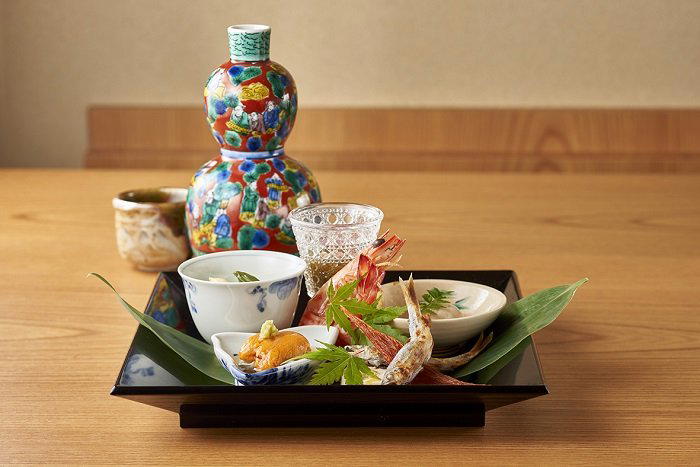
Kyoto's dominant dining tradition is kaiseki, a sequence-driven format built around seasonal ingredient sourcing, precise knife work, and presentation that encodes the season. Nijojo Furuta operates within a related but distinct tradition: a fish-forward menu in which the core skill is procurement and preparation at a level that makes direct technique feel sufficient. In a city full of restaurants that layer elaboration onto ingredients, the decision to work with fish simply, through slicing, grilling, and deep-frying, is an editorial choice as much as a culinary one. It signals confidence in the primary material.
The sourcing logic behind the fish programme is traceable and specific. The chef's formative period was spent working at a fishmonger's, a background that orients his cooking around selection before preparation. The result is a menu structured around what arrived rather than what was planned, which tends to produce food that tastes of its moment. In Kyoto's dining ecosystem, where restaurants like Isshisoden Nakamura and Gion Matayoshi operate at higher price points with elaborately codified seasonal menus, this approach represents a different value proposition: the price of admission buys proximity to the ingredient rather than to the ceremony around it.
The Closing Course: Where Provenance Gets Personal
Rice finales are not unusual in Japanese dining. What Nijojo Furuta does with the format is specific enough to anchor the value argument for the entire meal. White Omi rice, grown by the chef's uncle in the Hira region near Lake Biwa, is served steaming in Shigaraki clay pots. Omi rice from Shiga Prefecture carries its own regional identity, distinct from the more commonly cited Koshihikari varieties. Shigaraki ware, produced in the hills east of Kyoto, is among Japan's six ancient kilns and has been produced continuously for over 1,200 years. The pairing of a regionally specific grain with historically grounded ceramics is the kind of detail that formal kaiseki restaurants charge considerably more to deliver. Here it closes a ¥¥¥ meal.
That combination of traceable provenance, tactile ceramics, and a family connection to the land is not incidental styling. It is the clearest signal of the restaurant's positioning: personal, specific, and calibrated toward substance over spectacle. Among Kyoto's one-star houses, including Kikunoi Roan and Kodaiji Jugyuan, the intimacy of that connection to the producer is not always a feature of the experience, particularly as price tiers rise and operations scale.
The Room and the Atmosphere: Conversation as a Structural Element
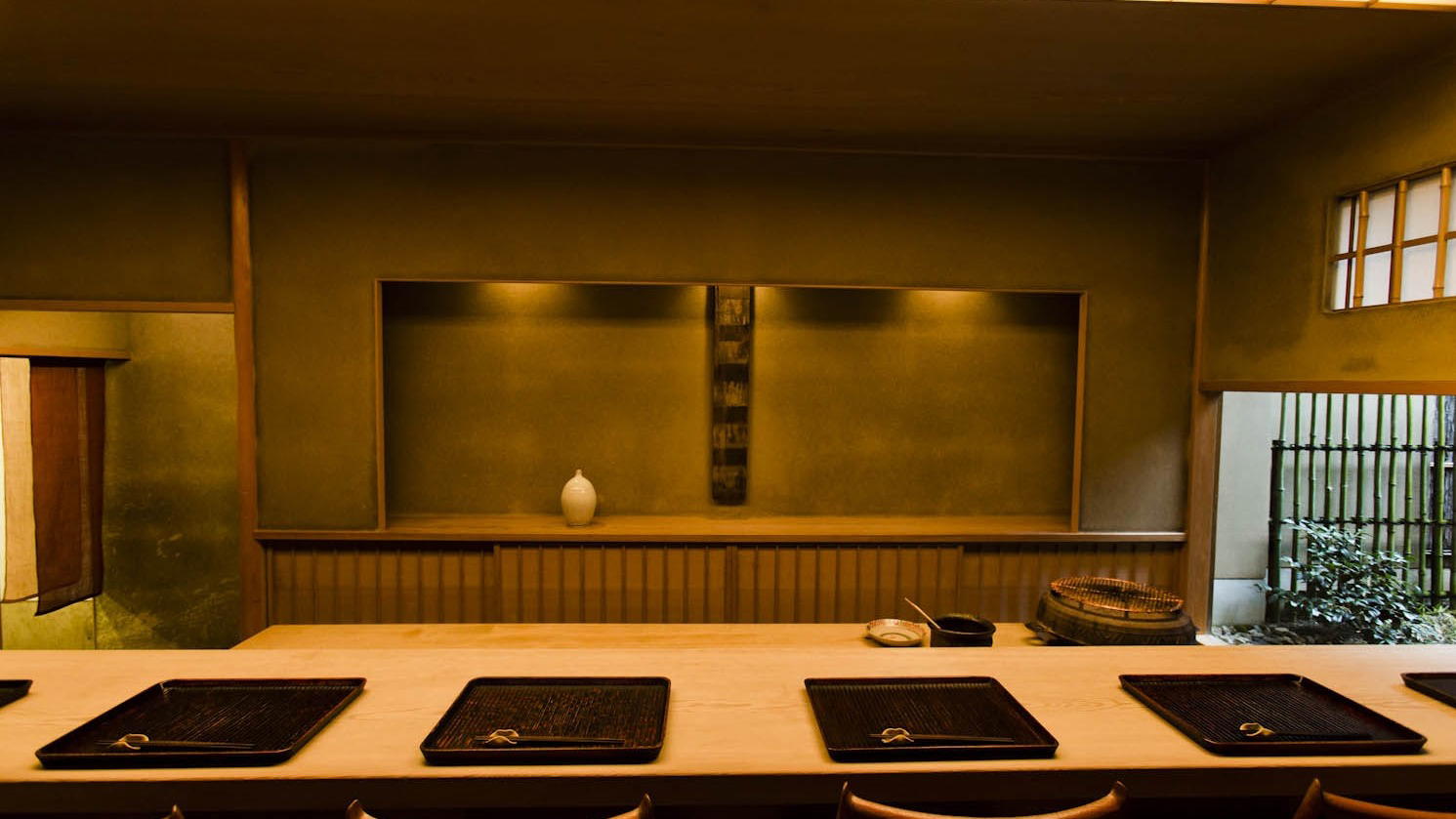
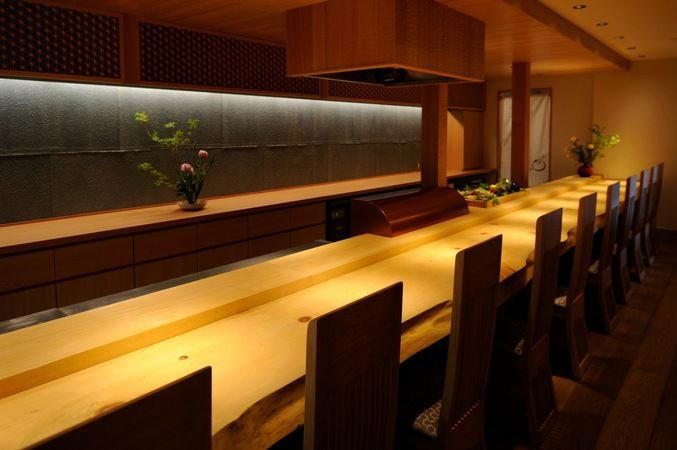
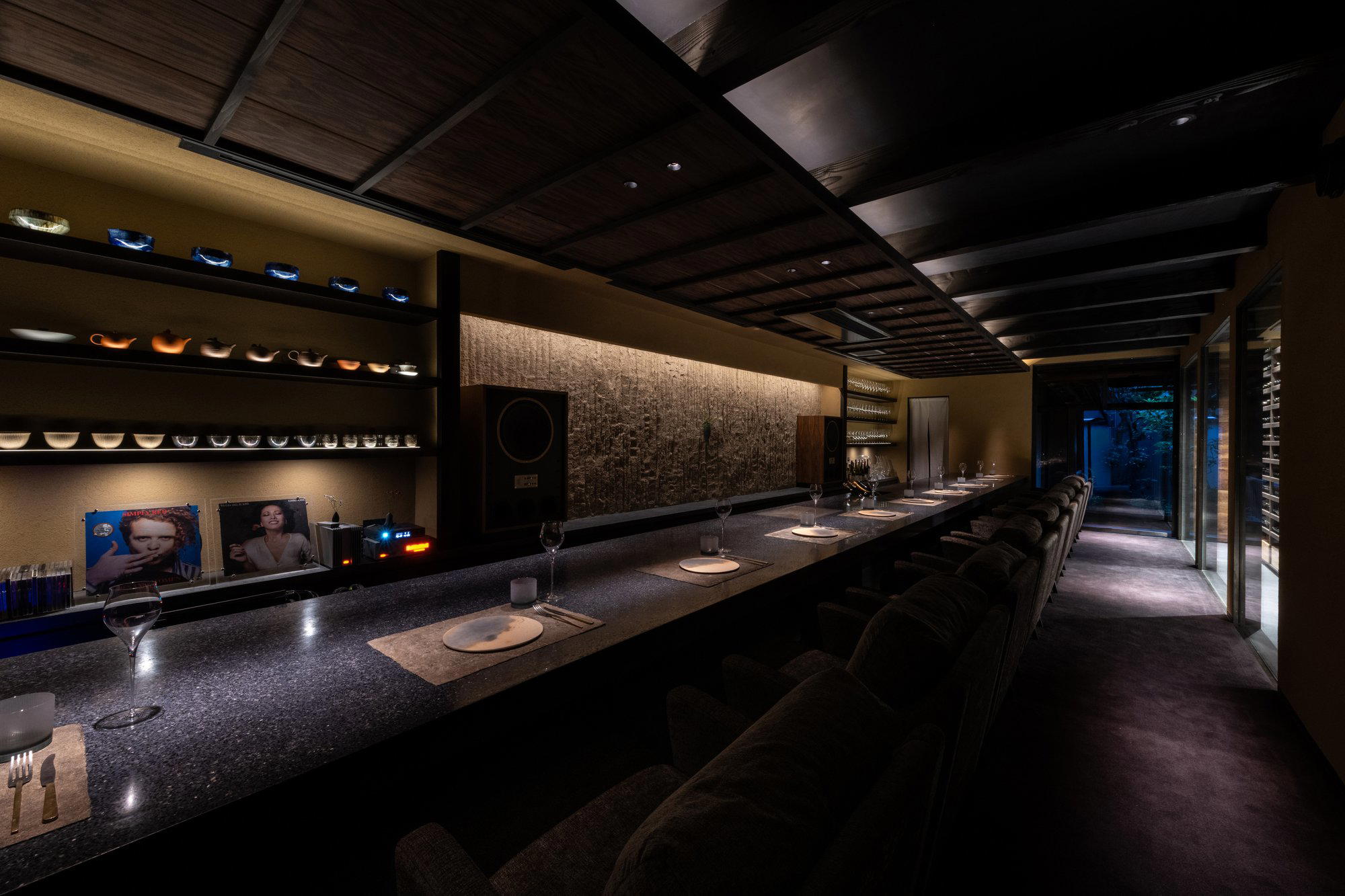
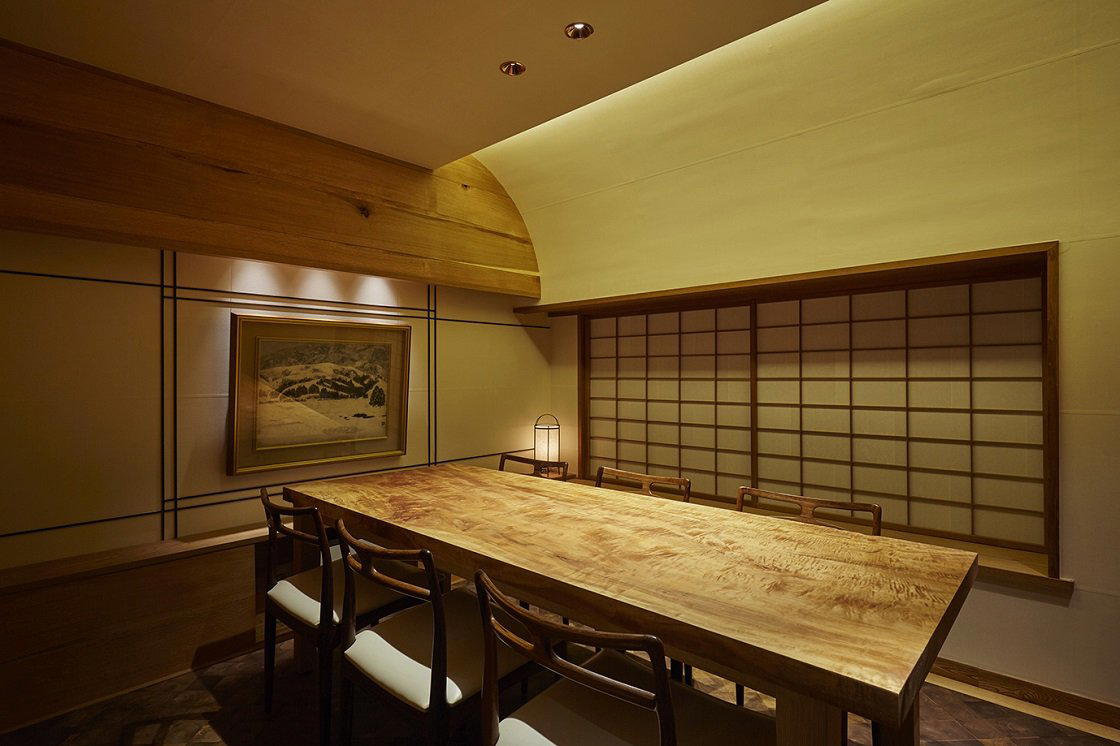
Japanese restaurants in the one-star tier tend toward formal restraint. The service registers are precise, the silence is deliberate, and the transaction between guest and kitchen is mediated through careful ceremony. Nijojo Furuta sits in a different register within the same tier. The chef's engagement with guests, described in the Michelin citation as a pattern of conversation rather than an occasional gesture, functions as a structural feature of the experience rather than a supplement to it. The restaurant's atmosphere is shaped as much by that exchange as by the room itself.
For international visitors unfamiliar with Kyoto's dining codes, this matters practically. Restaurants like Kenninji Gion Maruyama carry significant ceremonial weight that can feel opaque without language fluency or cultural context. An environment where the chef actively contributes to the narrative of the meal, explaining the fish, the rice, the clay pot, removes some of that opacity. Knowledge transfers across the counter rather than remaining in the kitchen.
Value Proposition: The Price-Tier Analysis
Kyoto's Michelin-starred Japanese restaurants cluster at ¥¥¥¥ and above. Gion Sasaki, Ifuki, and Kyokaiseki Kichisen all carry ¥¥¥¥ pricing alongside their recognition. Nijojo Furuta earns one-star status at ¥¥¥, placing it in a smaller competitive set. The practical implication: a starred meal in Kyoto need not cost what the category's premium tier charges. The trade is clear enough. What you give up is the full kaiseki ceremony and the depth of the tasting sequence that a longer, more expensive format produces. What you retain is ingredient quality validated by Michelin, a closing course with genuine regional specificity, and a room where the host is genuinely present.
For comparison, generous portions are explicitly cited in the Michelin commentary, an unusual emphasis for a cuisine tradition that more often prioritises precision over volume. The combination of portion satisfaction and technical intelligence in the ingredient combinations points toward a kitchen that is not performing scarcity to justify price. That is a meaningful distinction in a city where the theatre of restraint can sometimes feel like its own course.
Visitors building a broader Japan itinerary can cross-reference this approach against fish-focused one-star programmes elsewhere: Harutaka in Tokyo and Myojaku in Tokyo represent the capital's equivalents, while HAJIME in Osaka offers a contrasting approach to what Kansai-region dining can mean at the starred level. For those exploring further afield, akordu in Nara, Goh in Fukuoka, 1000 in Yokohama, and 6 in Okinawa each represent distinct regional cooking at the recognised tier. Azabu Kadowaki in Tokyo also offers a useful reference point for understanding how Japanese cooking at this level varies by city and context.
Planning Your Visit
Nijojo Furuta is located at 371 Furushirocho, Nakagyo Ward, Kyoto 604-0045. The ¥¥¥ price tier places it at a meaningful discount relative to most Kyoto one-star restaurants, which typically fall into ¥¥¥¥ territory. Contact and booking details are not publicly listed, suggesting reservations are managed through phone or in-person enquiry, or via concierge at a local hotel.
| Venue | Cuisine | Price Tier | Michelin Recognition | Format |
|---|---|---|---|---|
| Nijojo Furuta | Japanese (fish-focused) | ¥¥¥ | 1 Star (2024) | Counter/conversational |
| Gion Sasaki | Kaiseki | ¥¥¥¥ | Starred | Formal kaiseki |
| Ifuki | Kaiseki | ¥¥¥¥ | Starred | Formal kaiseki |
| Kyokaiseki Kichisen | Japanese | ¥¥¥¥ | Starred | Formal kaiseki |
| cenci | Italian | ¥¥¥ | Starred | Tasting menu |
For broader Kyoto planning, see our full Kyoto restaurants guide, our full Kyoto hotels guide, our full Kyoto bars guide, our full Kyoto wineries guide, and our full Kyoto experiences guide.
Frequently asked questions
Is Nijojo Furuta child-friendly?
The venue data does not specify a children's policy. That said, the chef is noted for a friendly demeanour and a conversational approach with guests, which suggests the room is relaxed rather than rigidly formal. Families considering a visit should check the venue's official channels to confirm suitability, particularly given the multi-course format.
What's the vibe at Nijojo Furuta?
Counter-casual rather than ceremonially stiff. The Michelin inspectors specifically note the chef's habit of engaging guests in conversation, which sets Nijojo Furuta apart from the deliberate silence that defines many one-star Japanese rooms. At ¥¥¥ pricing in Nakagyo Ward, the atmosphere tracks closer to a chef's table you've been invited into than a formal dining institution.
Does Nijojo Furuta have a Michelin star or similar recognition?
Nijojo Furuta has received recognition including: Generous portions give satisfaction, while ingenious ingredient combinations make simple presentations all the more impressive. To learn about fish, the chef spent time working at a fishmonger’s. Fish is prepared simply—freshly sliced, gril….
What's the must-try dish at Nijojo Furuta?
The closing rice course is the clearest expression of what the kitchen is doing: white Omi rice, grown by the chef's uncle in Hira, served steaming in Shigaraki clay pots. It is a provenance argument made edible. The fish preparations, built on time the chef spent working at a fishmonger's, are the structural centre of the meal, simply sliced, grilled, or deep-fried, but executed with enough precision to draw a Michelin star in 2024.
What should I expect cuisine-wise at Nijojo Furuta?
Is Nijojo Furuta expensive?
Pricing at Nijojo Furuta is listed as ¥¥¥.
Budget and Context
| Venue | Cuisine | Price | Awards | Notes |
|---|---|---|---|---|
| Nijojo FurutaThis venue (the venue you are viewing) | Michelin 1-Star Kyoto Kaiseki | $200–300 | 1 Michelin Star | Not listed |
| Gion Sasaki | Modern Kaiseki | $300–500 | 3 Michelin Stars · La Liste Top Restaurants | Kaiseki, Japanese |
| cenci | Innovative Italian-Japanese Fusion | $100–150 | 1 Michelin Star · World's 50 Best #76 | Italian |
| Ifuki | Sumibi Kappo Kaiseki | $200–300 | 2 Michelin Stars · La Liste Top Restaurants | Kaiseki |
| Kyokaiseki Kichisen | Kyoto Kaiseki | $200–300 | 2 Michelin Stars · La Liste Top Restaurants | Japanese |
| Kyo Seika | Modern Chinese Fine Dining | $150–200 | 1 Michelin Star · Tabelog Bronze #216 | Chinese |
Recognition history
Dated appearances from independent guides and award organizations, with the underlying list record or original source where available.
Michelin 1 Star
Michelin
Full recognition history (2 entries)
Michelin 1 Star
Michelin