.png)
A counter-style kappo in Osaka's Dojima district, Konishi operates from the second floor of a multi-tenant building with minimal signage and a Michelin Plate recognition for 2025. The chef draws on Ishikawa Prefecture roots for both the menu and the sake list, serving at a handcrafted counter of cypress and cherrywood. Google reviewers rate it 4.7 from 29 reviews.
 Discover on Pearl
Pearl is the En Primeur Club membership app — saves, bookings, and concierge access live there. Same editors, same standards.
- Address
- Japan, 〒530-0003 Osaka, Kita Ward, Dojima, 1 Chome−3−34 第二京松ビル 2階
- Phone
- +81 6-6485-8221
- Website
- tablecheck.com
A Counter Built by Hand, in a Building That Doesn't Announce Itself
Osaka's kappo tradition runs deep, but it rarely runs loud. The format, chef at the counter, guests watching the work, courses arriving without a fixed script, has always sat somewhere between the theatrical distance of kaiseki and the informal directness of an izakaya. Konishi, on the second floor of a multi-tenant building in Dojima, Kita Ward, belongs to this quieter current: no ground-floor presence, no signage that competes for attention on the street below.
Arriving here is an exercise in paying attention. The building itself gives little away. That deliberate inconspicuousness is not accidental neglect, it's a pattern shared by some of Osaka's most serious kappo rooms, where the interior is the point and the exterior is simply the threshold. Once inside, the counter takes over. Cypress and cherrywood, built by the chef's elder brother, a carpenter by trade, forms the physical spine of the room. Woodwork of this specificity, a bespoke piece commissioned from family, not sourced from a supplier, sets the material tone for everything that follows. The grain, the warmth of the wood under low light, the way it absorbs the smell of dashi over years of service: this is the kind of detail that separates a room designed for atmosphere from one that has simply accumulated it.
What Kappo in Osaka Actually Means
The word kappo translates roughly as "cut and cook," and the format has long given Osaka chefs latitude that kaiseki's rigid choreography does not. Where kaiseki sequences are set in advance and executed to a precise programme, kappo allows the chef to read the room, respond to what arrived at the market that morning, and adjust the arc of a meal in real time. The counter format is the mechanism for this, the guest is close enough to watch, to ask, to understand what's in front of them before it arrives on the plate.
Osaka has a dense field of kappo counters across its mid-to-upper price tiers. At the ¥¥¥ bracket, where Konishi sits alongside recognised names like Kashiwaya Osaka Senriyama and Miyamoto, the expectation is seasonal precision and a clear culinary identity, but not necessarily the multi-course formality of a three-star kaiseki house. The distinction matters for what a guest brings to the table: kappo at this level rewards curiosity and engagement more than deference.
The Counter as the Room's Architecture
In many small kappo spaces, the counter is functional rather than designed, a working surface with seating arranged around it. At Konishi, the cypress and cherrywood counter is the room's defining architectural object. The choice of materials signals something about the register of the space: cypress carries a clean, almost medicinal scent when new; over time, it deepens into something warmer. Cherrywood has a tighter grain and a richer colour that ages differently under oil and heat. The combination, built as a single piece by someone who knows the chef, makes the counter something between furniture and heirloom.
This matters beyond aesthetics. Counter-style dining depends on the surface as a stage. What the chef places in front of you, how it's framed by the wood grain beneath it, the distance between your position and the kitchen work, all of it is determined by the counter's proportions and character. At Konishi, that object was made with intention. It's the kind of detail that doesn't appear in a menu description but shapes every meal served at the room.
What to Expect from the Menu
The chef's origins in Ishikawa Prefecture, a region on the Sea of Japan coast with a strong cold-water seafood tradition and a well-regarded sake industry, give the menu a regional anchor that is less common in central Osaka. Bell peppers, salted and finely chopped, are finished with katsuobushi in a preparation that speaks to the kappo instinct for clean, direct flavour: few components, clear technique. Tekkamaki, raw tuna and vinegared rice rolled in seaweed, is a recurring closing item, a choice that frames the end of the meal in the sushi tradition rather than with a heavier course, keeping the finish light.
The sake list follows the same regional logic. Ishikawa-origin sake at a kappo counter is a deliberate pairing choice, not a geographic footnote. The prefecture produces sake with a character suited to cold-water fish, a point worth raising with the chef or, failing that, simply ordering the house recommendation and following where it leads. Other Osaka kappo counters at this price tier, including Oimatsu Hisano and Tenjimbashi Aoki, take similarly specific regional approaches to their drink programmes, which is now an expectation rather than a distinction at this level.
Where Konishi Sits in Osaka's Broader Scene
Osaka's dining infrastructure is deep enough that a Michelin Plate, the recognition Konishi holds for 2025, represents quality acknowledged rather than quality exceptional. It places the restaurant in a large group of kitchens the guide considers worth seeking out, without the starred tier occupied by Yugen or the multi-starred houses at the top of the city's pecking order. For the reader planning a serious Osaka itinerary, this positioning is useful: Konishi is a room for a mid-week dinner, a solo meal at the counter, or a quieter night alongside a heavier booking elsewhere in the trip.
Across Japan, the counter kappo model appears in various registers. Harutaka in Tokyo and Gion Sasaki in Kyoto represent the starred end of this tradition in their respective cities; Myojaku and Azabu Kadowaki in Tokyo offer further reference points for what the Japanese counter format looks like with Michelin recognition. Konishi operates at a different scale, small room, 4.6 on Google from 31 reviews, and that's precisely the niche it occupies. For wider regional context, see also akordu in Nara, Goh in Fukuoka, 1000 in Yokohama, and 6 in Okinawa for a broader sense of where serious Japanese counter dining is happening outside Tokyo.
For full coverage of what Osaka offers beyond a single counter, the EP Club guides to Osaka restaurants, Osaka hotels, Osaka bars, Osaka wineries, and Osaka experiences cover the full range.
Know Before You Go
Location: Japan, 〒530-0003 Osaka, Kita Ward, Dojima, 1 Chome−3−34 第二京松ビル 2階
Cuisine: Japanese, kappo-style counter
Price range: ¥¥¥
Recognition: Michelin Plate 2025
Google rating: 4.6 (31 reviews)
Booking: Reservation essential
Hours: Mon: 6 PM-12 AM; Tue: 6 PM-12 AM; Wed: 6 PM-12 AM; Thu: 6 PM-12 AM; Fri: 6 PM-12 AM; Sat: 6-11 PM; Sun: Closed
Comparable Venues
Comparable venues nearby, for context on price, style, and recognition.
| Venue | Cuisine | Price | Awards | Notes |
|---|---|---|---|---|
| KonishiThis venue — the venue you are viewing | Kappo | $$$ | Michelin Plate | |
| Momen | Kappo | $$$ | 5 recognitions | Chūō |
| RiVi | Modern Japanese Fusion | $$$ | Michelin Plate | Nishi |
| Shuko Osaka Manpukudou | Traditional Japanese Shuko Omakase | $$$ | Michelin Plate | Higashinari |
| Manger | Premium Tonkatsu | $$$ | 5 recognitions | Yao |
| Teppanyaki WAJO | Modern Teppanyaki | $$$$ | Michelin Plate | Chūō |
Continue exploring
More in Osaka
Restaurants in Osaka
Browse all →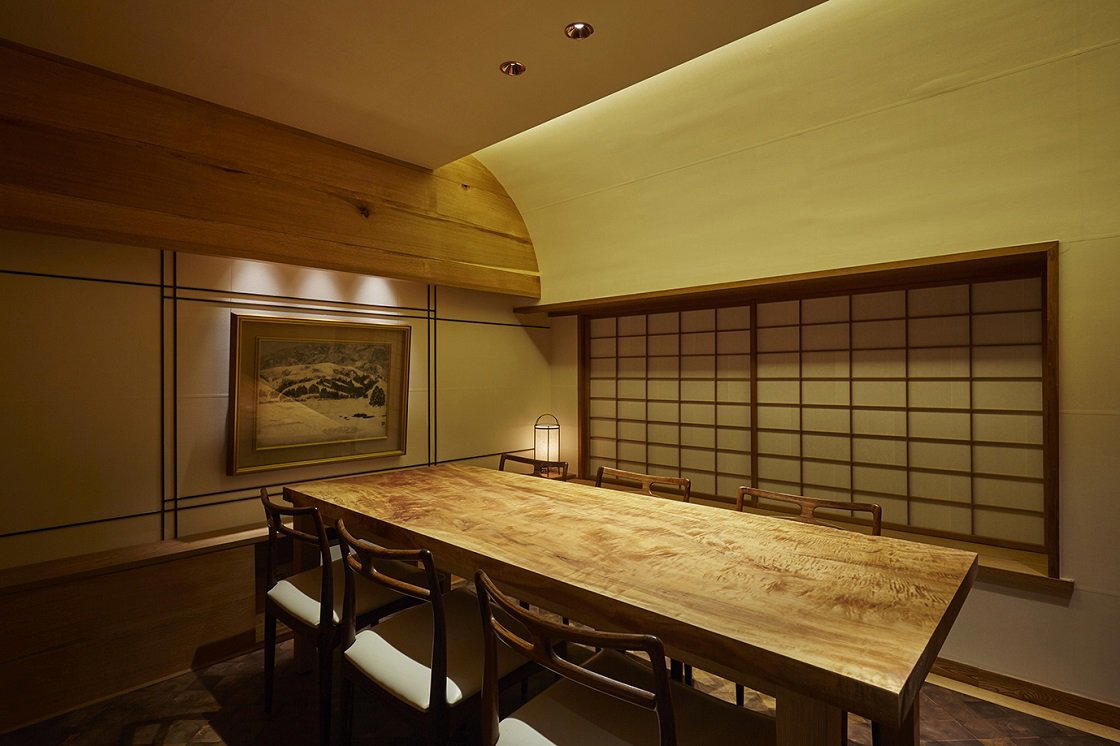

Bars in Osaka
Browse all →



Hotels in Osaka
Browse all →




Wineries in Osaka
Browse all →
At a Glance
- Intimate
- Quiet
- Elegant
- Hidden Gem
- Sophisticated
- Minimalist
- Special Occasion
- Date Night
- Chefs Counter
- Open Kitchen
- Sake Program
- Local Sourcing
- Sustainable Seafood
Relaxing, quiet hideout with cypress-and-cherrywood counter seating and meticulous chef-driven service.