




1 Michelin Star · La Liste Top Restaurants · Tabelog Gold #24
Our verdict
Osaka sushi has a quieter register than Tokyo’s trophy-counter circuit, and Sushi Sanshin belongs to that smaller, disciplined school: eight counter seats, a reservation-only format, and Yoshitaka Ishibuchi’s shokunin-led sushi. Recognition from Tabelog Gold, La Liste, Michelin, and OAD places it in the city’s serious sushi conversation rather than the casual nigiri lane.

Pearl is the En Primeur Club membership app, where members save venues, book tables and use the concierge.

The menu
What to order
- Soft-boiled octopus
- Ikura salmon roe
- Toro nigiri
Osaka’s serious sushi counters are often less theatrical than Tokyo’s Ginza ritual. The city favors precision without ceremony overload: compact rooms, short sightlines across the counter, and a rhythm built around rice temperature, fish handling, and the quiet authority of the chef’s hands. Sushi Sanshin fits that register. It is not for grazing, nor a room that competes with the meal; it asks diners to watch craft closely and understand restraint as luxury.
Osaka’s sushi tradition carries different pressure from the capital. Tokyo counters are often judged by Edomae orthodoxy and market mythology, while Kansai sushi has its own history of pressed forms, sharper vinegar profiles, and merchant-city hospitality. Modern Osaka counters borrow from both: Edomae concentration, Kansai warmth, and a less performative room culture. Here, an eight-seat counter is not merely small; it signals control. Fewer diners mean fewer compromises in pacing, rice management, and attention across the course.
Osaka sushi through the apprentice's discipline
The shokunin model matters because sushi at this level is less invention than transmission. Years of repetition, correction, and inherited technique create the grammar: seasoning rice, preparing fish, applying pressure, and moving each piece from hand to guest. Yoshitaka Ishibuchi’s name gives the counter visible authorship, but the deeper point is the apprenticeship culture behind contemporary Japanese sushi. The chef is not selling autobiography; the room is built around disciplined execution of a craft that resists shortcuts.
That separates Sushi Sanshin from mid-tier sushi rooms where luxury is signalled through ingredients alone. In Osaka, the competitive set is narrow but serious. Sushi Yuden and Sushi Harasho sit in the same premium conversation, Sushi Hoshiyama occupies a higher price bracket, and Sushitsune works in a more accessible lane. Sushi Ichiei also belongs to the city’s sushi map, but at the upper end the difference is not category; it is calibration. The counter must justify its form through sequence, temperature, knife work, and consistency across every seat.
Recognition clarifies that position. Sushi Sanshin was a Tabelog Award Gold winner in 2024, 2025, and 2026, after Bronze recognition in 2021, 2022, and 2023. It was selected for Tabelog Sushi WEST “Tabelog 100” in 2021, 2022, and 2025. La Liste scored it 94 points in 2026, and Opinionated About Dining ranked it in its 2026 Japan list. Michelin recognition also appears in its recent award history. Together, these signals place it among Osaka’s exacting sushi counters, not broadly popular seafood restaurants.
What the counter format says about the meal
The eight-seat, counter-only setup is central because sushi depends on seconds, not minutes. At this scale, the room’s economy is visible: each guest sees the same gestures, receives the same pacing logic, and joins the same concentration. That intimacy changes the social contract. Perfume, late arrival, and inattentive dining are not minor breaches; they affect the room. Serious Japanese sushi treats the counter as a shared working space, not just a dining room.
The price tier says the same. A lunch budget around JPY 30,000 to JPY 39,999 puts the counter firmly in Osaka’s premium sushi bracket, below the extreme luxury of some Tokyo destinations but far above casual sushi spending. It is a focused choice for diners who care about sushi’s technical language rather than broad-menu comfort. The better comparison is not hotel Japanese dining or market sushi, but specialist counters shaped by one chef’s sequence and limited capacity.
For travellers building an Osaka dining itinerary, the city rewards contrast. A counter like this can sit beside kappo, yakiniku, tempura, and late-night bar culture without repeating the same mood. Readers mapping that circuit can use Our full Osaka restaurants guide for restaurant context, then cross-check sleep, drinks, wine, and cultural planning through Our full Osaka hotels guide, Our full Osaka bars guide, Our full Osaka wineries guide, and Our full Osaka experiences guide.
How it sits among serious sushi in Japan
Osaka’s premium sushi scene does not need to imitate Tokyo to matter. Its strongest counters feel more compact, more residential, and less dependent on international trophy language. That is part of the appeal: serious Osaka sushi can be technically ambitious without feeling staged for global dining pilgrims. Sushi Sanshin’s awards have made it visible beyond local regulars, but the format remains closer to Japanese counter tradition than to an exportable luxury template.
Within Osaka, comparisons show the range of expectations in one city. AKA to SHIRO, Kyoto Saeki, Matsuzushi, Saeki, and Sakamoto Sushi each point to a different reading of Kansai sushi culture, from established prestige to tightly focused counter craft. Sushi Sanshin belongs in the latter conversation: small, disciplined, and better understood through technique than spectacle.
Japan’s wider dining map can make Osaka look secondary if judged only by international name recognition, but that misses the city’s strength. Kansai has depth across sushi, kappo, tea, beef, and specialist formats, and serious travellers should not treat Osaka as a one-night stop between Tokyo and Kyoto. For national comparison, EP Club’s Japan coverage ranges from 3110, Sushi in Tokyo to [ki:] in Kyoto, while casual and regional entries such as. 鮪と炭火焼き うお炭 秋葉原店 in Tokyo.know in Kumamoto, (Shoku) Vietnam in Kawasaki, [Curry Senmon Ten] Maruyama Kyoju. in Sapporo, and -Grilled beef Sukiyaki- KAMAKURA TANUKIAN 鎌倉 たぬき庵 in Kamakura show how varied the country’s specialist dining culture becomes outside one cuisine category.
The editorial case is clear: this is a counter for diners who understand that sushi’s drama can be quiet. The awards are useful, but not the reason to care. The reason is how Osaka’s smaller sushi rooms preserve apprenticeship values in a contemporary premium setting: limited seats, visible technique, strict pacing, and a meal that rewards attention more than appetite. For an international point of contrast, Akikos, Sushi in San Francisco shows how sushi-counter codes translate abroad; in Osaka, the language remains closer to its source.
Frequently asked questions
Is Sushi Sanshin suitable for children?
The restaurant lists 18 years and older for guests who can enjoy the course, so it is not set up for children. That policy applies at Sushi Sanshin in Osaka, where seating is limited to 8 seats at the counter.
What is the atmosphere like at Sushi Sanshin?
Expect a counter-only room with 8 seats, described as a stylish and relaxing space in Osaka’s Chuo Ward. The setup suits a formal sushi service, and the restaurant’s Tabelog Gold recognition underlines its serious positioning.
What kind of cuisine does Sushi Sanshin serve?
Sushi Sanshin serves Sushi cuisine.
Is Sushi Sanshin more mid-range or high-end?
Pricing at Sushi Sanshin is listed as ¥¥¥.
What are the opening hours for Sushi Sanshin?
Hours at Sushi Sanshin: Hours: Monday 11:30 am–5 pm Tuesday 11:30 am–5 pm Wednesday 11:30 am–5 pm Thursday 11:30 am–5 pm Friday 11:30 am–5 pm Saturday 11:30 am–5 pm Sunday Closed.
What part of town is Sushi Sanshin in?
Sushi Sanshin is located in Osaka.
Quick Comparison
Nearby venues at a similar price tier for orientation.
| Venue | Cuisine | Price | Awards | Notes |
|---|---|---|---|---|
| Sushi SanshinThis venue (the venue you are viewing) | Edomae Omakase Sushi | $200–300 | 1 Michelin Star · La Liste Top Restaurants | Not listed |
| Sushi Murakami Jiro | Michelin 1-Star Omakase Sushi | $300–500 | 1 Michelin Star · Tabelog Bronze #294 | Kita |
| Nishitemma Ichigaya | Modern Kappo | $100–150 | 1 Michelin Star | Kita |
| Torisho Ishii | Premium Yakitori Omakase | $150–200 | 1 Michelin Star · Tabelog Bronze #476 | Kita |
| Oryori Horikawa | Kaiseki | $100–150 | 1 Michelin Star | Kita |
| Ajikitcho Horieten | Traditional Kaiseki | $150–200 | 1 Michelin Star | Nishi |
Recognition history
Dated appearances from independent guides and award organizations, with the underlying list record or original source where available.
Michelin 1 Star
Michelin
La Liste Top Restaurants
La Liste
Opinionated About Dining Top Restaurants in Japan Ranked #49
Opinionated About Dining
Tabelog Gold #24
Tabelog
The Best Chef Two Knives
The Best Chef
Full recognition history (11 entries)
La Liste Top Restaurants
La Liste
Opinionated About Dining Top Restaurants in Japan Ranked #158
Opinionated About Dining
Tabelog Gold
Tabelog
Tabelog 100 #85 · No. 85
Tabelog · Tabelog 100 - Sushi - WEST - 2025
Michelin 1 Star
Michelin
Opinionated About Dining Top Restaurants in Japan Ranked #318
Opinionated About Dining
Continue exploring
More in Osaka
Restaurants in Osaka
All restaurants in Osaka →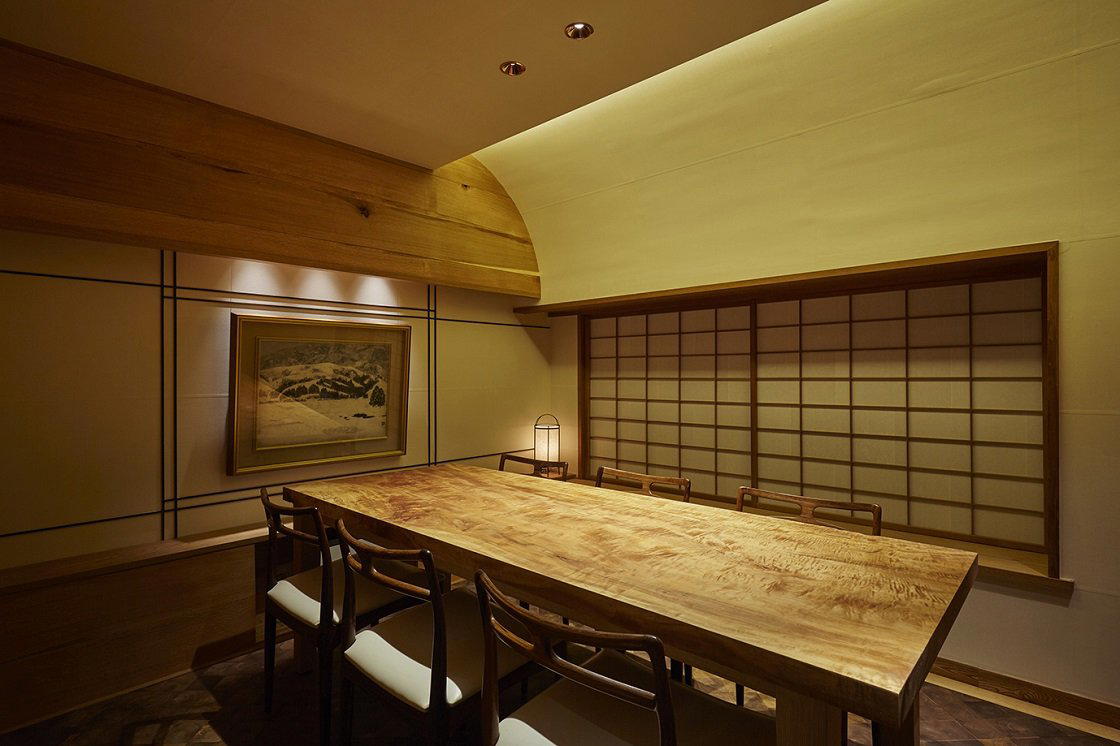




Bars in Osaka
All bars in Osaka →

Hotels in Osaka
All hotels in Osaka →




Wineries in Osaka
Browse all →
Details
- Intimate
- Elegant
- Minimalist
- Sophisticated
- Special Occasion
- Date Night
- Chefs Counter
- Sake Program
- Sustainable Seafood
- Local Sourcing
- Street Scene
- Omakase
- Counter Dining
- Sake Program
Current opening hours
- Monday
- 11:30 AM–5 PM
- Tuesday
- 11:30 AM–5 PM
- Wednesday
- 11:30 AM–5 PM
- Thursday
- 11:30 AM–5 PM
- Friday
- 11:30 AM–5 PM
- Saturday
- 11:30 AM–5 PM
- Sunday
- Closed
Hours can change for holidays and private events. Hours as of .
Naturally lit minimalist interior in a traditional Japanese house with warm wood and cypress counter creating an austere, relaxing, and intimate atmosphere.