
2 Michelin Stars
Our verdict
A two-Michelin-star kaiseki address in Osaka's Tenjinbashi district, Tenjimbashi Aoki has held consecutive recognition in 2024 and 2025 for cooking that places seasonal aesthetics at its centre. The kitchen draws on principles absorbed in Hozenji Alley, expressed through handpicked serving vessels and flowers grown by the chef. At the ¥¥¥¥ price point, it occupies the upper tier of Osaka's traditional Japanese dining scene.

Pearl is the En Primeur Club membership app, where members save venues, book tables and use the concierge.
The menu
What to order
- Seasonal Sashimi Platter
- Grilled Seasonal Fish
- Wagyu Beef with Seasonal Vegetables
Where Osaka's Kaiseki Tradition Sits in 2025
Osaka's position in Japan's fine-dining hierarchy is often undersold relative to Kyoto, yet the city's top-tier kaiseki addresses have drawn sustained Michelin attention for over a decade. The 2025 Guide awards two stars to a concentrated cluster of Japanese-cuisine restaurants across the city, spanning the ¥¥¥ bracket occupied by Kashiwaya Osaka Senriyama through to the more expensive counters. Holding two Michelin stars in both 2024 and 2025 confirms that the recognition is not a debut anomaly but a settled critical verdict.
The broader context matters here. Osaka's kaiseki scene has historically defined itself in contrast to Kyoto's more ceremonial register: Osaka cooking tends toward a warmer, more ingredient-forward expression rather than the austere restraint often associated with kyo-kaiseki. Within that local tradition, restaurants that nonetheless pursue formal aesthetic discipline, in the choice of vessels, the interior, the seasonal sequencing of courses, occupy a specific niche. Tenjimbashi Aoki belongs firmly to that niche, and the Michelin commentary makes the emphasis explicit: attention to ceremonial space, serving vessels, and the sense of the seasons are singled out as the defining attributes.
The Sukiya Interior and What It Signals
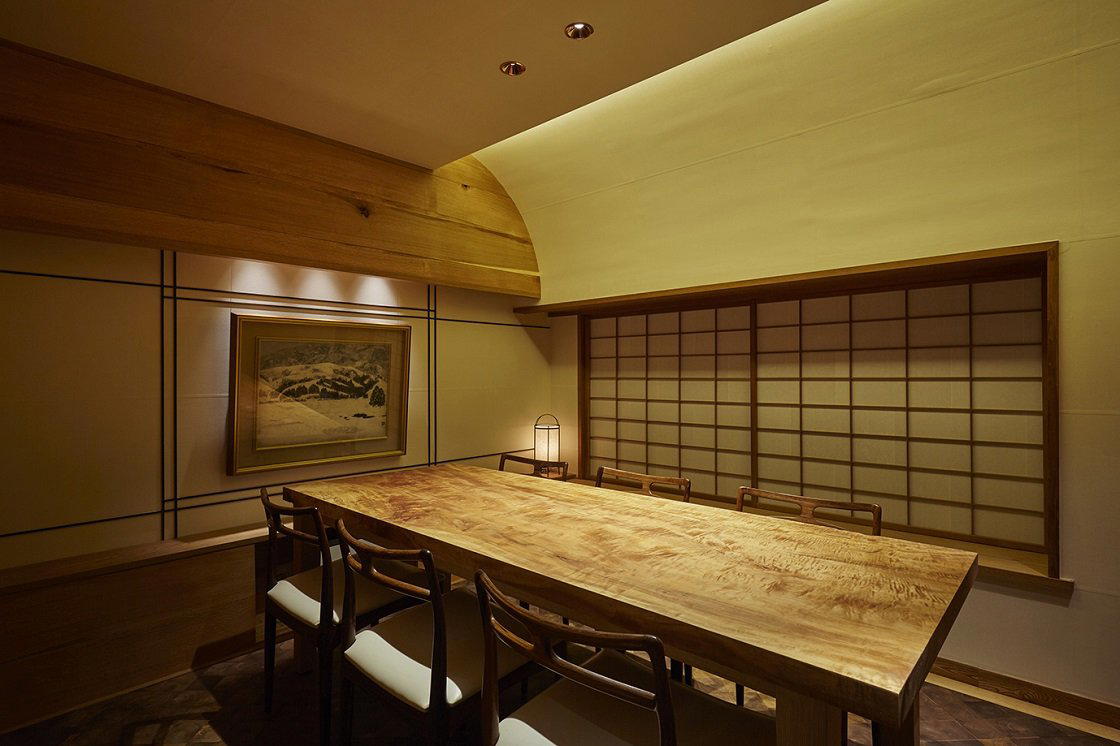
Sukiya architecture, the refined residential style derived from tea-house construction, is the dominant spatial language of serious kaiseki. Restraint in material, asymmetry in proportion, and the deliberate accommodation of natural light are its hallmarks. A chef who grows flowers specifically to decorate a sukiya interior is making an argument about coherence: that the visual and spatial experience of a meal is inseparable from what arrives at the table. This kind of curatorial commitment is relatively rare even within Japan's most formal dining tier, and it aligns Tenjimbashi Aoki with a particular school of thinking about hospitality that has close parallels at addresses like Gion Sasaki in Kyoto.
Seasonal serving vessels compound this effect. Collecting ceramics, lacquerware, and glassware that shift with the calendar year requires significant investment and specialist knowledge. The practice is not decorative: in kaiseki, the vessel is considered part of the dish, framing temperature, colour, and portion in a way that plain crockery cannot. When Michelin's inspectors note this specifically, it usually indicates that the selection is genuinely calibrated rather than superficially stylistic.
Hozenji Alley and the Formation of a Kitchen's Principles
Hozenji Alley, the cobbled lane in Osaka's Namba district running past the moss-covered Fudodo statue, is one of the city's most concentrated corridors of serious traditional cooking. Establishments there tend toward long-standing, high-craft formats rather than the trend-driven openings of other neighbourhoods. A kitchen that traces its guiding principles to apprentice work in Hozenji inherits a specific lineage: close attention to the aesthetics of kaiseki presentation, particularly the appetiser platter (hassun or zensai arrangements), which requires both technical precision and a considered editorial eye for seasonal composition.
That formation is not incidental to how Tenjimbashi Aoki cooks. The Michelin record notes that the chef was specifically entrusted with preparing appetiser platters during that period, a task that in traditional Japanese kitchens is given only after years of observation and training, not as a starting assignment. The practical consequence at table is a cooking style in which even the early courses carry the weight of considerable thought, rather than serving purely as prologue to a centrepiece protein.
Critical Reception: Two Stars, Two Years Running
Two consecutive Michelin two-star entries, in 2024 and 2025, carry a specific meaning. The two-star designation in the Guide's own language means a restaurant is worth a detour: a judgment that places it above the category of neighbourhood favourites and below the very small number of venues given three stars. Osaka's 2025 two-star cohort is selective, and Tenjimbashi Aoki's repeated inclusion confirms that the inspectors' assessment of the kitchen has not changed. Consistency at this level in kaiseki is genuinely demanding: seasonal menus must shift across twelve months while maintaining the coherence that earned recognition in the first place.
Comparable signals appear at other tightly controlled Japanese fine-dining addresses, including Myojaku in Tokyo and Azabu Kadowaki in Tokyo, where Michelin recognition coexists with minimal English-language online footprint.
Positioning Within Osaka's ¥¥¥¥ Tier
At the ¥¥¥¥ price point, Tenjimbashi Aoki competes in the same bracket as Osaka's French and Innovative restaurants: Hajime, La Cime, Fujiya 1935. The distinction in cuisine type matters. Japanese-cuisine restaurants at this price point offer a fundamentally different value proposition: the premium is absorbed by seasonal ingredient sourcing, vessel collection, and the high staff-to-guest ratios that kaiseki requires, rather than by Western luxury product categories. Diners choosing between this tier of kaiseki and a similarly priced French tasting menu in the same city are making a choice about entirely different hospitality philosophies.
Within the Japanese-cuisine tier, the comparison set includes Miyamoto, Oimatsu Hisano, Yugen, and Ajikitcho Bumbuan. These addresses collectively define the character of serious traditional cooking in the city. Tenjimbashi Aoki's position among them, confirmed by two years of two-star Michelin recognition, places it in the upper part of that cohort. For visitors to Osaka who want to understand how the city's kaiseki tradition differs from Kyoto's, this is a more instructive choice than a crossover address that hedges between registers.
Osaka in Regional Context
Understanding what Tenjimbashi Aoki represents is easier with regional perspective. Across Japan's fine-dining tier, kaiseki addresses from Osaka, Kyoto, and beyond regularly anchor the Michelin listings. Harutaka in Tokyo and akordu in Nara illustrate the range of serious cooking formats available within a half-day's travel. Further afield, Goh in Fukuoka, 1000 in Yokohama, and 6 in Okinawa show how Japan's Michelin-recognised dining ecosystem extends across the archipelago. Tenjimbashi Aoki's location in Kita Ward, Osaka's commercial and transit hub, makes it accessible within any Kansai itinerary that includes Kyoto or Nara as adjacent stops.
For a full view of what Osaka's dining, hotel, and cultural scene offers alongside addresses like this one, see our full Osaka restaurants guide, our full Osaka hotels guide, our full Osaka bars guide, our full Osaka wineries guide, and our full Osaka experiences guide.
Planning Your Visit
Address: 7 Chome-12-14 Tenjinbashi, Kita Ward, Osaka, 531-0041, Japan. Budget: ¥¥¥¥, this is the upper tier of Osaka's Japanese dining price range; factor accordingly for pre-booking. Reservations:Dress: Formal dress is consistent with the sukiya setting and kaiseki tradition at this level. Timing: Kaiseki at this register is designed around the Japanese lunar calendar's seasonal turning points; visiting during a seasonal transition (spring, early autumn) tends to produce the most considered menus.
Frequently asked questions
Where exactly is Tenjimbashi Aoki?
Tenjimbashi Aoki is located at 7 Chome-12-14 Tenjinbashi, Kita Ward, Osaka, 531-0041, Japan, Osaka.
What kind of recognition has Tenjimbashi Aoki received?
Tenjimbashi Aoki has received recognition including: Scrupulous attention is paid to the ceremonial space, cuisine, serving vessels and sense of the seasons. The chef learned his guiding principles at a restaurant in Hozenji Alley. Entrusted with preparing the appetiser platters, he became sc….
What's the must-try dish at Tenjimbashi Aoki?
Tenjimbashi Aoki does not publish a fixed menu, and specific dish listings are not available. What the Michelin committee has consistently noted across two consecutive two-star entries is the appetiser platter, a format Yoshikazu Ono spent formative years mastering at a Hozenji Alley restaurant. The assortments are built around seasonal and festival themes, served in vessels the chef collects specifically for each occasion.
What should I budget for a meal at Tenjimbashi Aoki?
Pricing at Tenjimbashi Aoki is listed as ¥¥¥¥.
Who is the chef at Tenjimbashi Aoki?
The chef associated with Tenjimbashi Aoki is Yoshikazu Ono / Takashi Ono.
Do they take walk-ins at Tenjimbashi Aoki?
Walk-in availability is not documented for Tenjimbashi Aoki, and at the ¥¥¥¥ price point with two consecutive Michelin two-star ratings in 2024 and 2025, advance reservations are the standard at comparable Osaka kaiseki addresses.
Fast Comparison
| Venue | Cuisine | Price | Awards | Notes |
|---|---|---|---|---|
| Tenjimbashi AokiThis venue (the venue you are viewing) | Michelin-Starred Kaiseki | $200–300 | 2 Michelin Stars | Not listed |
| HAJIME | Avant-Garde Japanese Fine Dining | $300–500 | 3 Michelin Stars · World's 50 Best #83 | French, Innovative |
| La Cime | Modern French with Japanese Ingredients | $150–200 | 2 Michelin Stars · World's 50 Best #13 | French |
| Kashiwaya Osaka Senriyama | Seasonal Kaiseki Omakase | $200–300 | 3 Michelin Stars · La Liste Top Restaurants | Japanese |
| Taian | Traditional Japanese Kaiseki Omakase | $150–200 | 3 Michelin Stars · La Liste Top Restaurants | Kaiseki, Japanese |
| Fujiya 1935 | Modern Japanese with European influences | $100–150 | 2 Michelin Stars · La Liste Top Restaurants | Innovative |
Recognition history
Dated appearances from independent guides and award organizations, with the underlying list record or original source where available.
Michelin 2 Stars
Michelin
Full recognition history (3 entries)
Michelin 2 Stars
Michelin
Michelin 2 Stars
Michelin
Continue exploring
More in Osaka
Restaurants in Osaka
All restaurants in Osaka →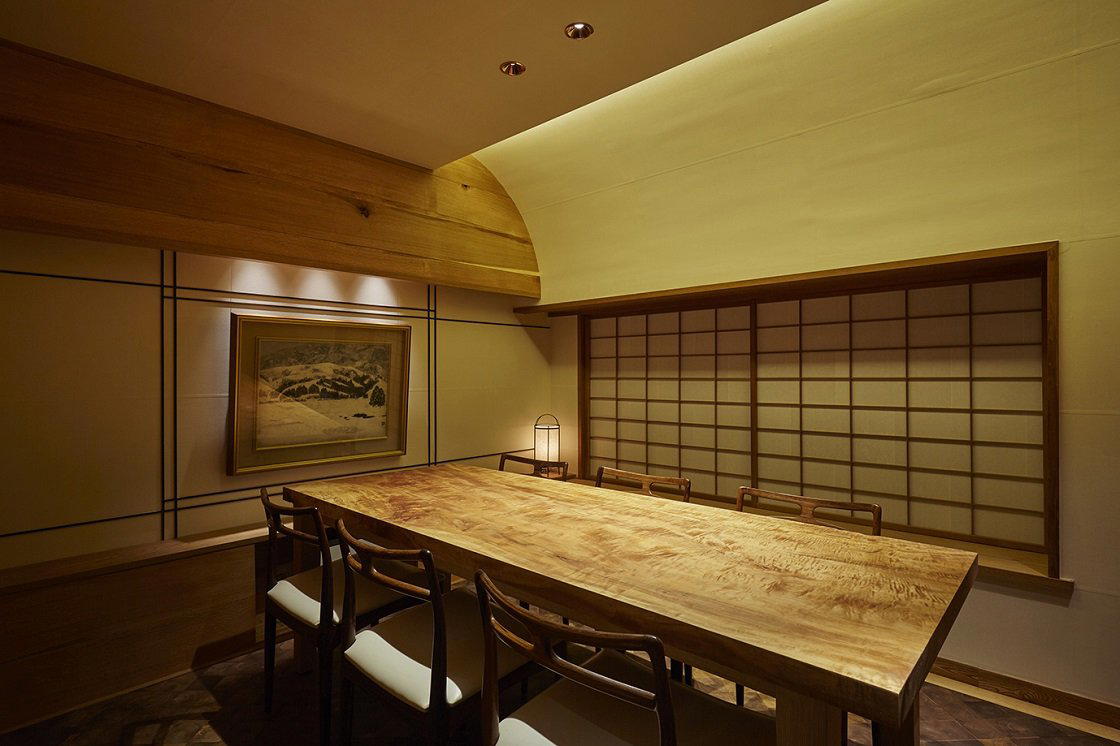


Bars in Osaka
All bars in Osaka →



Hotels in Osaka
All hotels in Osaka →


Wineries in Osaka
Browse all →
Details
- Elegant
- Intimate
- Serene
- Sophisticated
- Special Occasion
- Date Night
- Chefs Counter
- Sake Program
- Counter Dining
- Sake Program
Current opening hours
- Monday
- 5:30–8:30 PM
- Tuesday
- 5:30–8:30 PM
- Wednesday
- 5:30–8:30 PM
- Thursday
- 5:30–8:30 PM
- Friday
- 5:30–8:30 PM
- Saturday
- 5:30–8:30 PM
- Sunday
- Closed
Hours can change for holidays and private events. Hours as of .
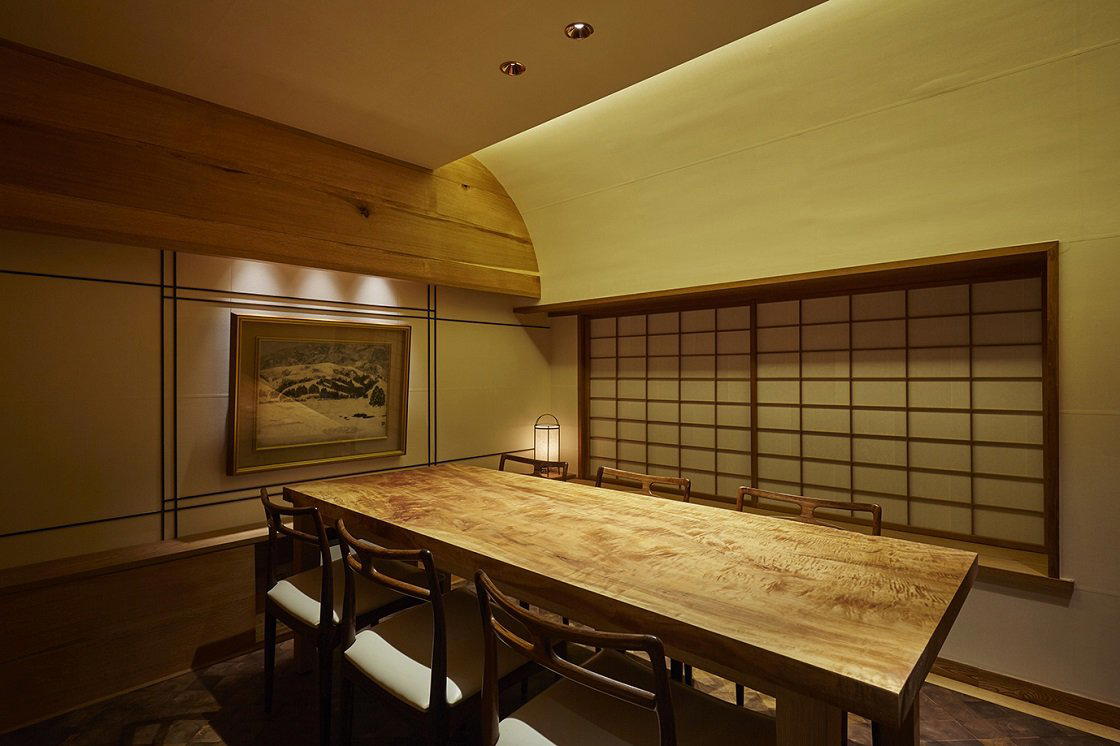
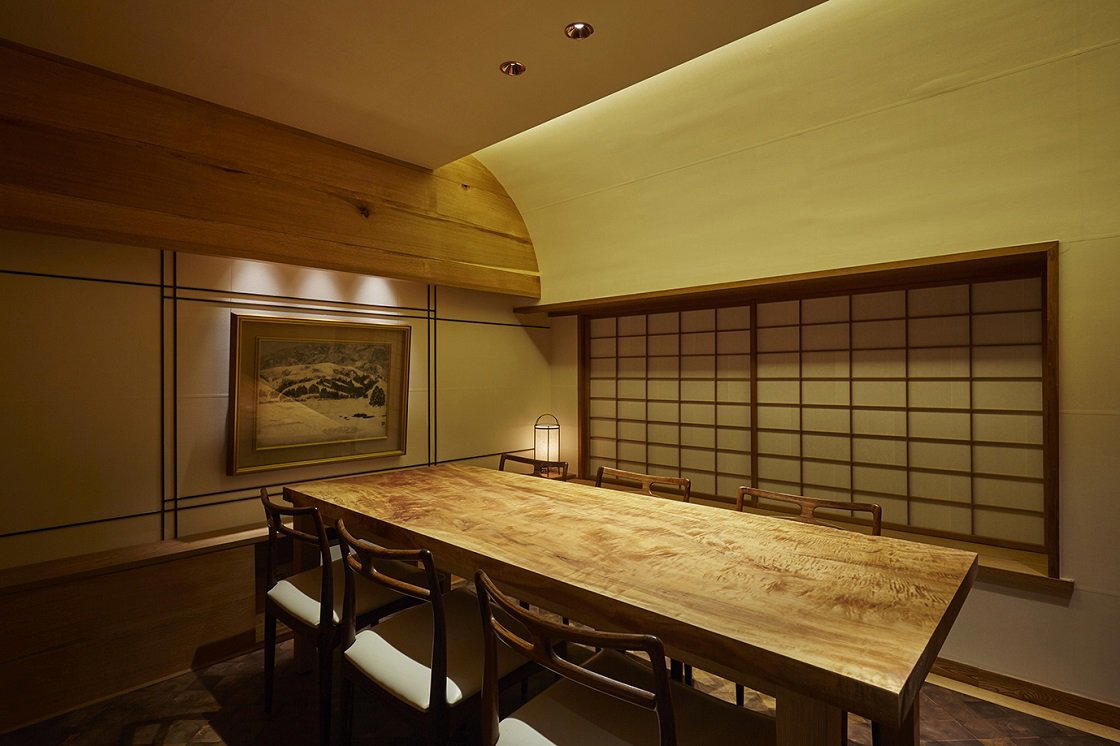
Serene and refined sukiya-style interior with a counter from 250-year-old ash wood, decorated with chef-grown flowers and seasonal vessels, creating a ceremonial and relaxing atmosphere.