


Michelin Plate · Star Wine List · Tabelog 100 #42
Our verdict
In Kyomachibori, one of Osaka's quieter riverside precincts, RiVi runs a genre-less prix fixe that draws on Italian, French, and Japanese traditions without settling into any single one. The first half of the menu is explicitly Osaka-focused; the meal closes with seasonal mixed rice served in a bowl held in the guest's hands. A Michelin Plate holder in both 2024 and 2025, it sits at the ¥¥¥ tier in a city where cross-cultural fine dining spans several price brackets.

Pearl is the En Primeur Club membership app, where members save venues, book tables and use the concierge.
The menu
What to order
- Loach Flan with duck consommé
- Seared bonito with yuzu and natto
A Quieter Precinct With Its Own Logic
Kyomachibori sits on the western edge of central Osaka, along a canal that once served the city's textile merchants. Today the neighbourhood functions as a low-key corridor between the Minami entertainment districts and the business density of Namba and Shinsaibashi, with a residential and gallery character that keeps foot traffic modest. It is not where most visitors go looking for dinner, which is part of what defines the restaurants that have chosen to open here. A venue in this precinct is making a statement about audience: it expects guests to seek it out rather than stumble upon it.
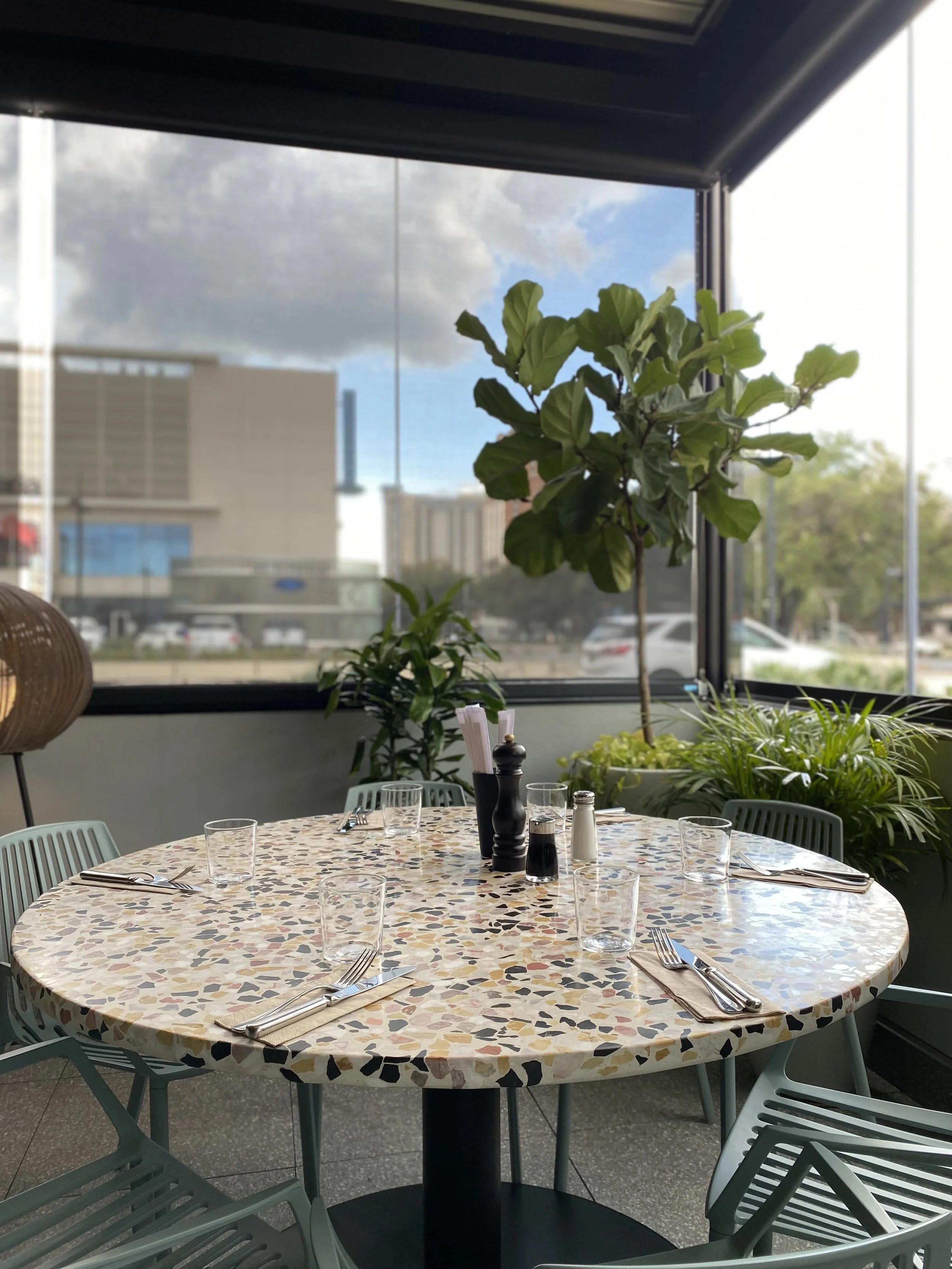
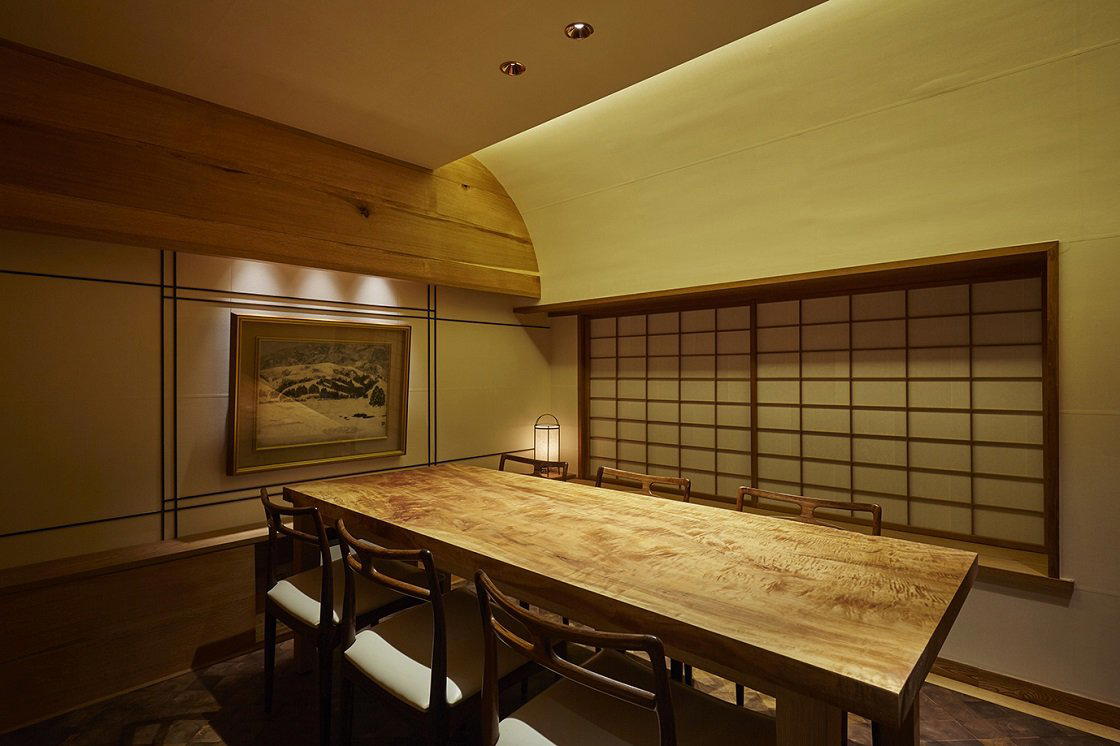
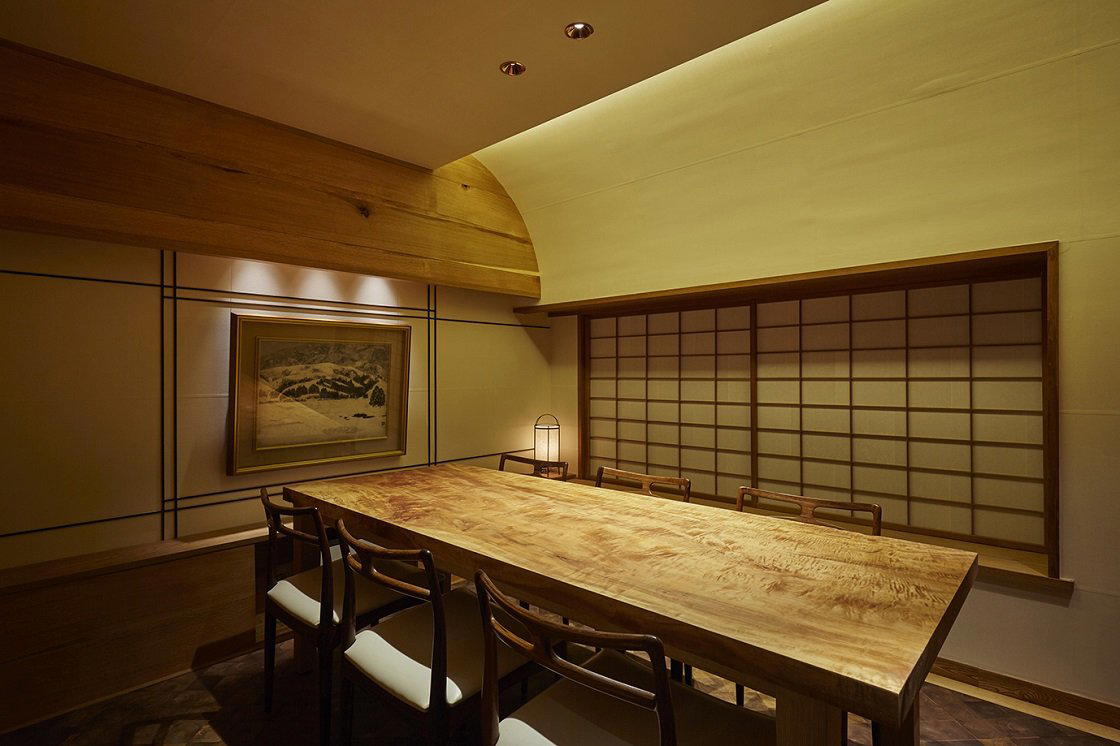
RiVi occupies the ground floor of a building on Kyomachibori 1-chome, in a space that has been recently renovated. The interior, by available accounts, reflects that renovation rather than layering years of accumulated décor, giving the room a considered clarity that suits the cooking's own sense of discipline. In a neighbourhood this contained, the physical space matters more than it would in a denser dining corridor; there is nothing to overhear from next door, no street-level noise to manage around.
Cross-Cultural Cooking at a Specific Price Point
Osaka has a densely competitive contemporary dining scene, and the cross-cultural category inside it is worth reading carefully. At the top of the price range, venues like HAJIME (French, Innovative) and La Cime (French) operate at ¥¥¥¥, with Michelin star recognition and international profiles that draw overseas visitors specifically. Below that tier, at ¥¥¥, the field is broader and more varied, mixing kaiseki-adjacent formats with genre-crossing contemporary menus.
RiVi sits in that ¥¥¥ bracket and is categorised as Contemporary. The cooking draws on Italian and French techniques as well as pastry traditions, applied through a chef whose formation has been shaped by Osaka itself. That combination, Western technical reference, Japanese ingredient sensibility, local cultural pride, is a recognisable pattern across Japan's contemporary restaurant sector. What distinguishes how different venues execute it is the degree to which the Japanese element remains structural rather than decorative. At RiVi, the Osaka-focused first half of the menu and the closing rice course suggest the Japanese and local registers are load-bearing, not garnish.
For a broader picture of where this fits in the city's dining hierarchy, our full Osaka restaurants guide maps the range from casual to destination-level.
The Menu as Argument
Prix fixe menus in this category live or die by their internal logic, and RiVi's structure makes an editorial point. The first half of the menu is framed around Osaka specifically, its ingredients, its culinary culture, its character as a city that treats eating seriously. This is not a gesture. Devoting the opening arc of a tasting menu to a place rather than a technique or a season is a deliberate organising principle. It tells the guest something about where the kitchen's priorities sit.
The closing move, seasonal mixed rice, served in a bowl that the guest holds, completes that argument. Mixed rice, or takikomi gohan in its broader Japanese form, is a deeply practical, deeply local dish: grains cooked with seasonal vegetables or proteins, a format that appears across the country in home kitchens and traditional restaurants alike. Ending a contemporary prix fixe with it, and specifying that the guest should hold the bowl, insists on a physicality and informality that cuts against fine-dining distance. The gesture is not casual, it is deliberately chosen.
Because the kitchen operates without fixed standard dishes, the specific menu at any given visit will reflect the season and the chef's current thinking. This is a format that rewards return visits, and also one that makes firm recommendations about individual courses unreliable from the outside. The structure of the experience, however, is consistent: a narrative that runs from Osaka celebration to Japanese closing ritual, with Italian and French technique threaded through the middle.
Visitors looking for Japanese restaurants that similarly bridge tradition and contemporary format might consider Kamado or Rooots Nakanoshima in Osaka, or look further afield to Gion Sasaki in Kyoto and akordu in Nara for cross-cultural contemporary formats elsewhere in the Kansai region.
Michelin Recognition and What It Signals Here
A Michelin Plate, awarded in both 2024 and 2025, is a specific credential worth contextualising. The Plate designation, distinct from one, two, or three stars, signals that inspectors consider the food good quality cooking, and it carries weight in a category as crowded as Osaka's contemporary tier. The consecutive awards indicate consistency rather than a single exceptional meal. In a scene where the ¥¥¥ bracket contains restaurants that have not received any Michelin recognition alongside those that have, the Plate places RiVi credibly in the upper range of its price tier.
Across Japan, the cross-cultural contemporary format carries its own competitive context. Harutaka in Tokyo represents the specialist Japanese end of the spectrum, while formats that combine European technique with Japanese sensibility appear throughout the country, from Goh in Fukuoka to 1000 in Yokohama. Outside Japan, the contemporary cross-cultural format at a comparable tier includes Jungsik in Seoul and César in New York City, both of which navigate similar questions about how much the local context should anchor a menu built on foreign techniques.
Using Osaka as a Base
Kyomachibori is accessible from central Osaka by a short taxi or subway ride. The neighbourhood's relative calm makes it an interesting contrast to the Namba or Dotonbori-adjacent dining circuit, and pairing an evening here with a broader Osaka itinerary is direct. Our full Osaka hotels guide, bars guide, and experiences guide cover the wider city for those building a multi-day programme. For wine-focused additions to an Osaka trip, our Osaka wineries guide covers the regional options. Visitors extending into the Kansai region may also find Tosara worth considering alongside RiVi for an Osaka-specific dining focus.
Those travelling further afield might compare the dining register at 6 in Okinawa, which sits in a different culinary tradition but shares the same pattern of a chef working between local and international references.
Planning Your Visit
Location: 1 Chome-16-28 Kyomachibori, Nishi Ward, Osaka (ground floor, Kumari Lift building). Price range: ¥¥¥. Awards: Michelin Plate 2024 and 2025. Reservations: Format: Prix fixe menu; no standard dishes; menus evolve seasonally.
Frequently asked questions
What should I order at RiVi?
RiVi does not offer à la carte and does not maintain standard dishes across service periods. The format is a prix fixe that changes with the season and the kitchen's current direction. What remains consistent is the menu's structure: the first half is oriented around Osaka and its culinary identity, drawing on Italian, French, and Japanese technique in combination, and the meal ends with seasonal mixed rice presented in a bowl held by the guest. Rather than directing a specific dish choice, the practical instruction is to go without a fixed expectation about particular courses. The meal is designed as a sequence, and the closing rice course is as much part of the experience as any single savoury course. If the kitchen's cross-cultural approach, Italian and French technique applied through a Japanese and specifically Osaka sensibility, is what draws you, you are already pointed at the right thing. Michelin recognition in consecutive years signals that the quality across the menu, not just in one standout dish, meets a consistent standard.
Category Peers
| Venue | Cuisine | Price | Awards | Notes |
|---|---|---|---|---|
| RiViThis venue (the venue you are viewing) | Modern Japanese Fusion | $100–150 | Michelin Plate · Star Wine List | Not listed |
| HAJIME | Avant-Garde Japanese Fine Dining | $300–500 | 3 Michelin Stars · World's 50 Best #83 | French, Innovative |
| La Cime | Modern French with Japanese Ingredients | $150–200 | 2 Michelin Stars · World's 50 Best #13 | French |
| Kashiwaya Osaka Senriyama | Seasonal Kaiseki Omakase | $200–300 | 3 Michelin Stars · La Liste Top Restaurants | Japanese |
| Taian | Traditional Japanese Kaiseki Omakase | $150–200 | 3 Michelin Stars · La Liste Top Restaurants | Kaiseki, Japanese |
| Fujiya 1935 | Modern Japanese with European influences | $100–150 | 2 Michelin Stars · La Liste Top Restaurants | Innovative |
Recognition history
Dated appearances from independent guides and award organizations, with the underlying list record or original source where available.
Michelin Plate
Michelin
Star Wine List
Star Wine List
Tabelog 100 #42 · No. 42
Tabelog · Tabelog 100 - Innovative / Creative cuisine - 2025
Full recognition history (5 entries)
Michelin Plate
Michelin
Michelin Plate
Michelin

Continue exploring
More in Osaka
Restaurants in Osaka
All restaurants in Osaka →

Bars in Osaka
All bars in Osaka →



Hotels in Osaka
All hotels in Osaka →




Wineries in Osaka
Browse all →
Details
- Elegant
- Intimate
- Sophisticated
- Cozy
- Date Night
- Special Occasion
- Open Kitchen
- Extensive Wine List
- Sommelier Led
- Wine
Current opening hours
- Monday
- 12–11 PM
- Tuesday
- 12–11 PM
- Wednesday
- 12–11 PM
- Thursday
- 12–11 PM
- Friday
- 12–11 PM
- Saturday
- 12–11 PM
- Sunday
- 12–11 PM
Hours can change for holidays and private events. Hours as of .
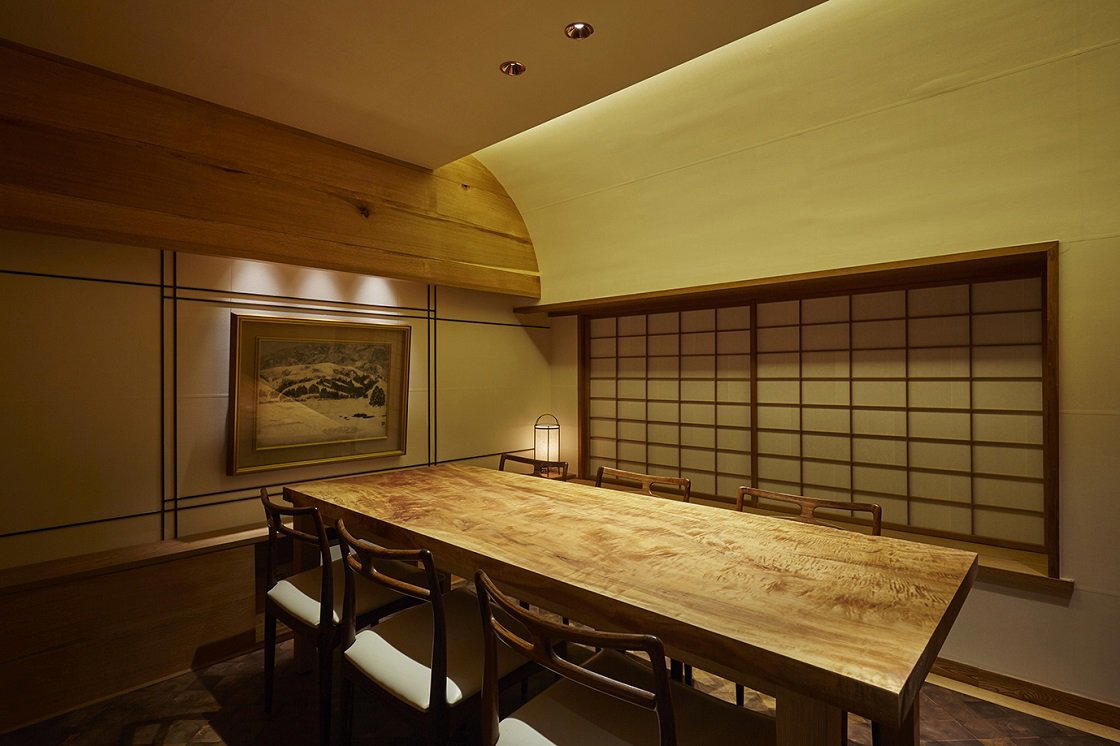
Stylish interior with subdued sophisticated tones, warm lighting, and a relaxing adult hideaway atmosphere well-suited for intimate counter dining.