

Tabelog Bronze #289
Our verdict
A nine-seat kaiseki counter in Shinsaibashi holding a Tabelog score of 4.27 and consecutive Bronze Awards from 2018 through 2026, plus three Tabelog 100 selections for Japanese cuisine in the West. Momen operates reservation-only, accepts no new walk-in bookings, and prices dinner in the JPY 20,000–29,999 range. The beverage programme focuses deliberately on sake and shochu, with no credit card payments accepted on site.

Pearl is the En Primeur Club membership app, where members save venues, book tables and use the concierge.
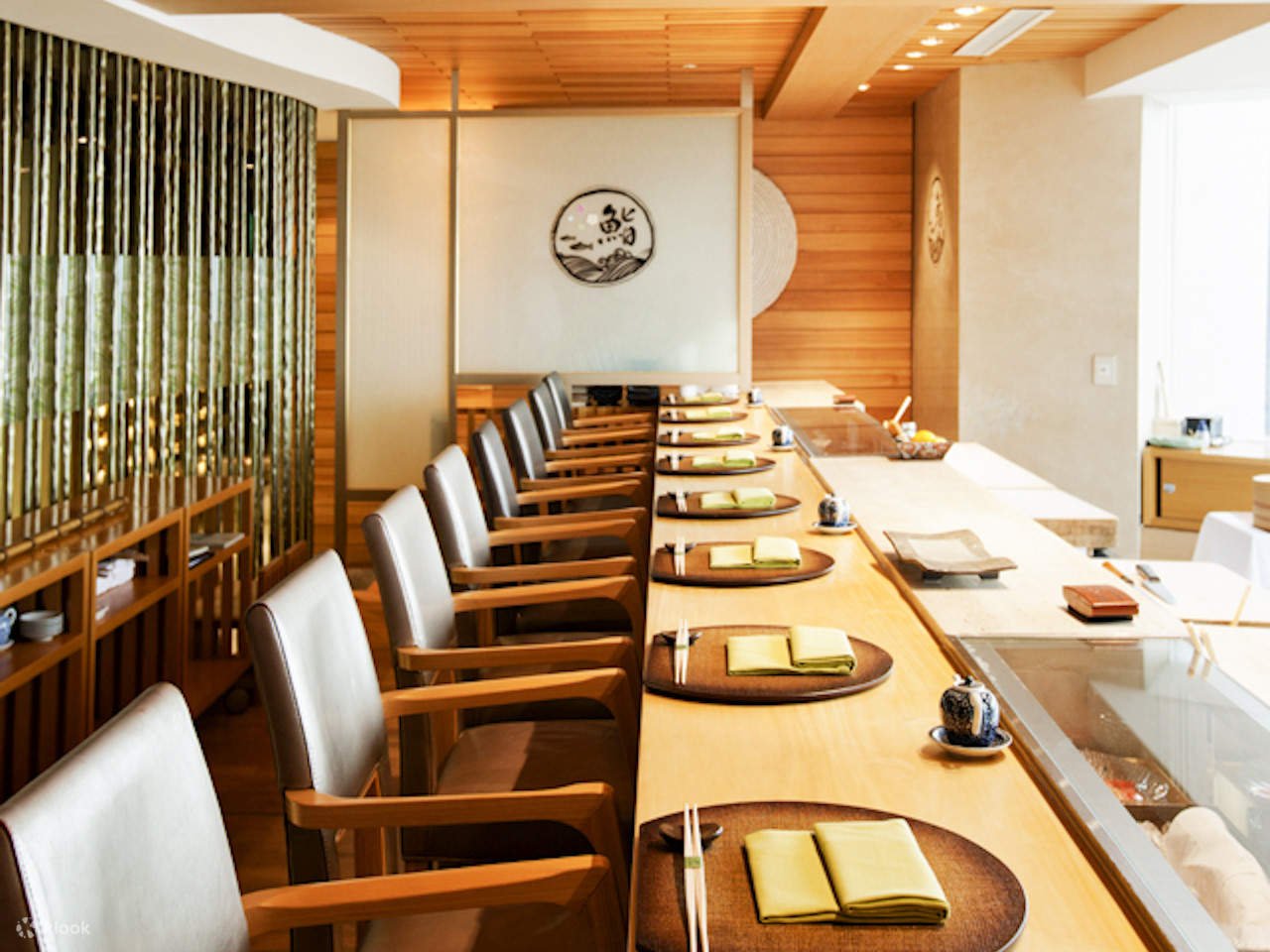
A Counter Format That Defines the Room
In Osaka's kaiseki tier, the counter format is not a design choice so much as a philosophical commitment. At nine seats, the room at Momen leaves no space for ceremony that does not serve the food or the drink. The Shinsaibashi address places it inside one of Osaka's densest commercial corridors, roughly 400 metres from Shinsaibashi station, yet the dining room itself operates as a deliberate withdrawal from that density. Tabelog classifies the location as a 'hideout,' and the format earns that designation: there is no signage language aimed at passing trade, no lunch service, and, at the time of writing, no new reservations being accepted.
That last point carries real weight for planning. Momen operates on a reservation-only basis with a closed intake for new guests, which places it alongside a specific cohort of small Japanese counters where access depends on either repeat patronage or an established introduction. The nine seats are a ceiling, not an aspiration. Anyone treating this as a spontaneous Shinsaibashi booking will be disappointed; the correct approach is months of lead time and, ideally, a contact who has eaten here before.
Where Sake Drives the Experience
Among Osaka's kaiseki establishments, deliberate beverage programmes built around sake and shochu, rather than wine, occupy a distinct position. Many high-end Japanese restaurants now maintain hybrid lists that weight Western wine heavily for international guests. Momen's documented drink offering runs specifically to sake (nihonshu) and shochu, with the Tabelog record noting a particular focus on sake. This is a meaningful editorial signal: the kitchen's pacing, seasoning, and course structure are almost certainly calibrated around how nihonshu interacts with the progression of dishes, not how a Burgundy white would.
Sake selection at this tier typically moves through a range of production styles, from junmai daiginjo with pronounced fragrance and lower rice polish ratios, to aged and ambient-temperature expressions that can hold against richer, later courses. The absence of credit card, electronic money, and QR payment options at Momen is also suggestive of operational philosophy: a cash-only counter running at this price point (JPY 20,000–29,999 per person at dinner) is signalling that the relationship with the guest is primary, and that administrative friction is the guest's problem to solve in advance, not the kitchen's. Bring cash in the correct denomination range.
Kaiseki counters that are specific about sake tend to treat the beverage as a parallel narrative to the food rather than as an accompaniment. A guest who arrives familiar with production regions, brewery names, or seasonal sake release cycles will find more to engage with here than one who treats the drink list as a supporting role. If sake literacy is limited, arriving willing to follow the counter's guidance is the more productive approach than requesting a wine substitute.
The Award Record and What It Implies About Consistency
A Tabelog score of 4.27, combined with Bronze Awards in each consecutive year from 2018 through 2026, and three separate inclusions in the Tabelog Japanese Cuisine WEST 100 list (2021, 2023, 2025), constitutes a consistency record that is harder to achieve than a single peak rating. The Tabelog Bronze tier spans a wide range of restaurants, but the combination of multi-year consecutive recognition and repeated Tabelog 100 selection narrows that field considerably. Momen also held a Silver Award in 2017, suggesting the kitchen was operating at a high level before the current run of Bronze recognitions.
The Opinionated About Dining (OAD) rankings add a second data layer: ranked at 472 in Japan in 2025 and 476 in 2024, following a 'recommended' listing in 2023. That trajectory, moving from recommended to ranked and then holding position, is consistent with a kitchen that has not dipped. For international travellers using OAD alongside Tabelog as dual reference points, the alignment between the two platforms here removes some of the ambiguity that exists when one index rates highly and the other is silent.
For comparison within Osaka's kaiseki tier, Taian and Kashiwaya Osaka Senriyama occupy the same broad kaiseki category at a similar price bracket. Honkogetsu represents a further reference point within Osaka's Japanese cuisine landscape. Momen's counter scale and sake-specific beverage position distinguish it from those larger or more formally structured establishments. On the French-influenced innovative side of Osaka's fine dining, HAJIME and La Cime serve a different audience and a different cuisine logic entirely.
Kaiseki in Osaka Versus the Kyoto Model
The dominant cultural association for kaiseki is Kyoto: the seasonal progression of courses, the restrained aesthetic, the tea-ceremony lineage. Osaka kaiseki operates in the shadow of that association but with different priorities. Osaka's food culture historically valorises ingredient directness and flavour assertiveness over formal elegance, and the city's kaiseki counters often reflect that in pacing and seasoning even when maintaining strict seasonal discipline. A counter like Momen, sitting inside Shinsaibashi rather than a quiet Kyoto machiya street, is making a statement about where it belongs in that geography.
For those building a kaiseki itinerary across the Kansai region, Gion Sasaki in Kyoto and Ifuki in Kyoto offer the canonical Kyoto register. Akordu in Nara occupies a different category altogether. Beyond Kansai, Kikunoi in Tokyo and Harutaka in Tokyo provide useful Tokyo-side reference points for the same price bracket. Further afield, Goh in Fukuoka, 1000 in Yokohama, and 6 in Okinawa round out the picture of what Japan's fine dining counter format produces across different cities and ingredient cultures.
Operational Details Worth Knowing
Momen's operating hours run Monday through Friday, 5 pm to approximately 10 pm, with Saturday and Sunday closed. That Friday closure limit and the five-day-only week creates a compressed window of availability that, combined with the nine-seat capacity and closed reservations, makes this among the harder counters to access in Osaka's current dining map. The private room option is unavailable, but the counter is available for full private hire, which is relevant for corporate or group bookings if a contact already holds an established relationship with the kitchen.
The no-smoking policy throughout, combined with the relaxed counter format, positions this as a focused dining environment without the formal rigidity of some Kyoto equivalents. Payment in cash only is confirmed across all payment categories: no credit card, no electronic money, no QR code. At a dinner spend of JPY 20,000–29,999, that requires preparation.
Know Before You Go
- Address: 2 Chome-1-3 Shinsaibashisuji, Chuo Ward, Osaka, 542-0085
- Phone: +81-6-6211-2793
- Hours: Monday–Friday, 5:00 pm–10:00 pm (approx.); Saturday–Sunday closed
- Reservations: Reservation only; no new reservations currently being accepted
- Price: JPY 20,000–29,999 per person at dinner
- Payment: Cash only (no credit cards, electronic money, or QR payments)
- Seats: 9 counter seats; full private hire available
- Drinks: Sake (nihonshu) and shochu; particular focus on sake
- Smoking: Non-smoking throughout
- Nearest station: Shinsaibashi (approx. 400 metres)
- Awards: Tabelog Bronze 2018–2026; Tabelog Silver 2017; Tabelog Japanese Cuisine WEST 100 (2021, 2023, 2025); Tabelog score 4.27; OAD Leading Restaurants Japan #472 (2025)
Frequently asked questions
What is the vibe at Momen?
Nine counter seats in Shinsaibashi, no private rooms, cash only, and a beverage programme oriented around sake rather than wine. The atmosphere is focused and relatively quiet by Osaka standards: the format favours guests who are there for the counter experience specifically, not those looking for a social occasion with a large party. Tabelog reviewers most frequently cite it as a venue for groups of friends rather than large celebrations, which aligns with the seat count. Given consecutive Tabelog Bronze recognition from 2018 through 2026 and a dinner price of JPY 20,000–29,999, this sits in the upper-middle tier of Osaka kaiseki in terms of formality and price, without the institutional weight of the city's most ceremonially formal addresses.
What should I order at Momen?
The kaiseki format means the menu is not a selection exercise: the kitchen determines the progression and the guest follows it. What the records do indicate is that the sake programme is specific enough to warrant engagement, and arriving with at least a basic understanding of nihonshu styles will add dimension to the experience. Chef Seiji Momen's kitchen has sustained Tabelog recognition continuously since at least 2017 and holds OAD placement in Japan's top 500, which suggests the seasonal course structure is the reliable anchor here rather than any single dish. Asking the counter what sake pairings are available for each course is the more productive question than arriving with a specific order in mind.
For a broader map of Osaka's dining scene, see our full Osaka restaurants guide, along with our Osaka hotels guide, our Osaka bars guide, our Osaka wineries guide, and our Osaka experiences guide.
Price and Positioning
Comparable venues nearby, for context on price, style, and recognition.
| Venue | Cuisine | Price | Awards | Notes |
|---|---|---|---|---|
| MomenThis venue (the venue you are viewing) | Kappo | $100–150 | Tabelog Bronze #289 | Not listed |
| Kasane | Oden & Japanese Cuisine | $50–100 | Michelin Plate | Kita, Oden & Japanese Cuisine |
| Kitashinchi Kushikatsu Bon | Michelin Kushikatsu Omakase | $150–200 | Michelin Plate | Kita, Michelin Kushikatsu Omakase |
| Washoku Iikura | Kansai Kappo | $100–150 | Michelin Plate | Kita, Kansai Kappo |
| Kitashinchi Shien | Premium Yakitori Omakase | $50–100 | Michelin Plate | Kita, Premium Yakitori Omakase |
| Oribe | French-Infused Teppanyaki & Okonomiyaki | $50–100 | Michelin Bib Gourmand · Tabelog 100 #51 | Nishi, French-Infused Teppanyaki & Okonomiyaki |
Recognition history
Dated appearances from independent guides and award organizations, with the underlying list record or original source where available.
Opinionated About Dining Top Restaurants in Japan Recommended
Opinionated About Dining
Tabelog Bronze #289
Tabelog
Full recognition history (7 entries)
Opinionated About Dining Top Restaurants in Japan Ranked #472
Opinionated About Dining
Tabelog Bronze
Tabelog
Tabelog 100 #80 · No. 80
Tabelog · Tabelog 100 - Japanese cuisine - WEST - 2025
Opinionated About Dining Top Restaurants in Japan Ranked #476
Opinionated About Dining
Opinionated About Dining Top Restaurants in Japan Recommended
Opinionated About Dining
Continue exploring
More in Osaka
Restaurants in Osaka
All restaurants in Osaka →


Bars in Osaka
All bars in Osaka →

Hotels in Osaka
All hotels in Osaka →


Wineries in Osaka
Browse all →
Details
- Intimate
- Elegant
- Minimalist
- Special Occasion
- Chefs Counter
- Open Kitchen
- Sake Program
- Counter Dining
Current opening hours
- Monday
- 6–10 PM
- Tuesday
- 6–10 PM
- Wednesday
- 6–10 PM
- Thursday
- 6–10 PM
- Friday
- 6–10 PM
- Saturday
- Closed
- Sunday
- Closed
Hours can change for holidays and private events. Hours as of .
Intimate and relaxing counter seating in a narrow alley hideout, focused on the artistry of chef-prepared seasonal fine dining.