
2 Michelin Stars
Our verdict
Among Osaka's kaiseki counters, Oimatsu Hisano occupies a specific position: two Michelin stars earned in 2025 after a one-star run, with a format that treats seasonal ingredients as primary documents rather than decorative choices. Rice grown in serpentinite soil, leaves gathered from hillside foraging, and a clay-pot cooking method mark a kitchen where material sourcing drives the menu logic.

Pearl is the En Primeur Club membership app, where members save venues, book tables and use the concierge.
The menu
What to order
- Conger Eel
- Crab and Daikon Radish
- Ise Lobster with Kuzu Sauce and Turnip Soup
- Soft-Shelled Crab and Blue Crab
Where Seasonal Materials Set the Terms
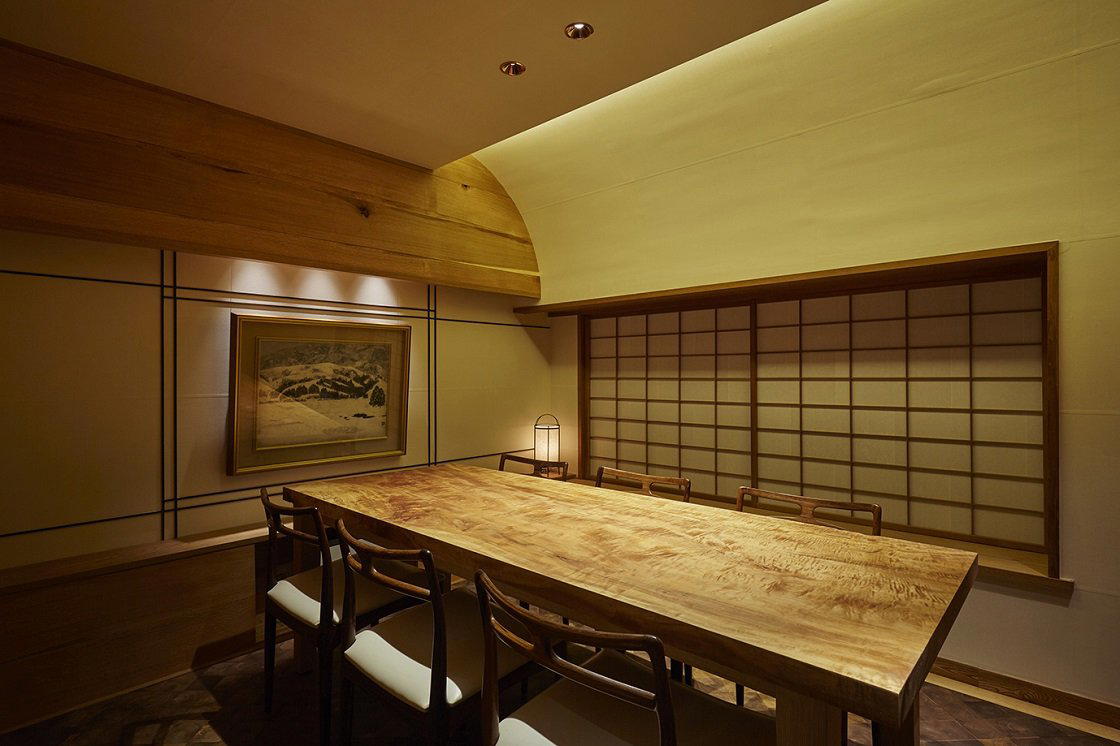
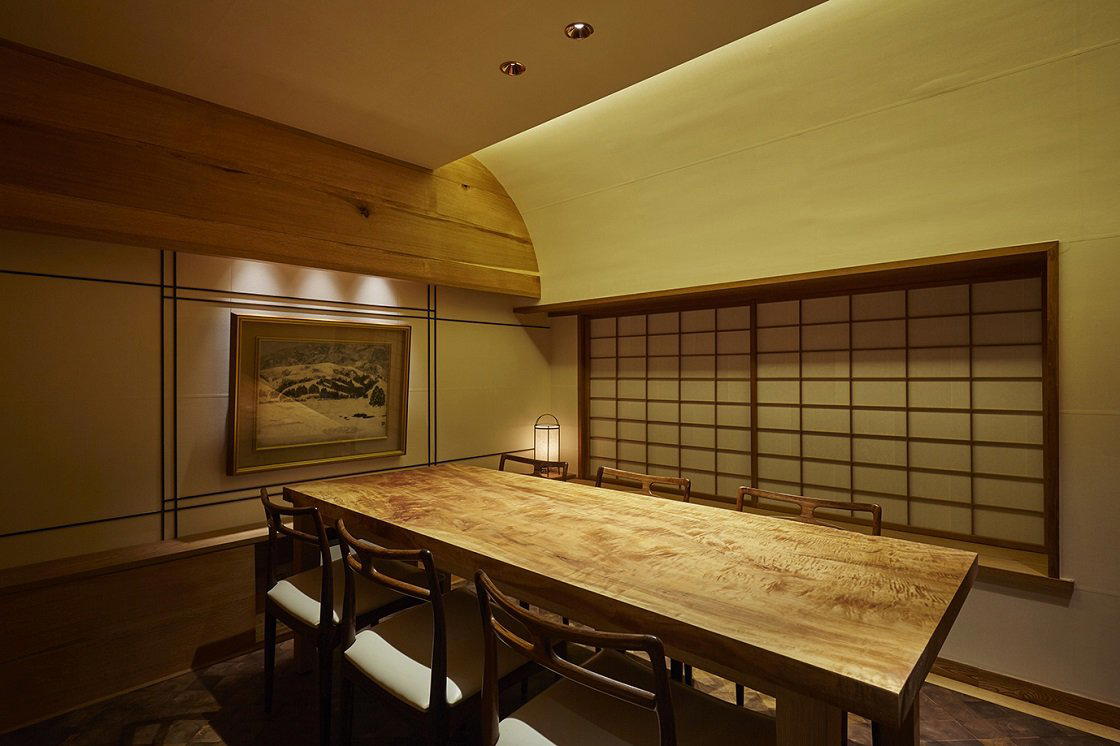
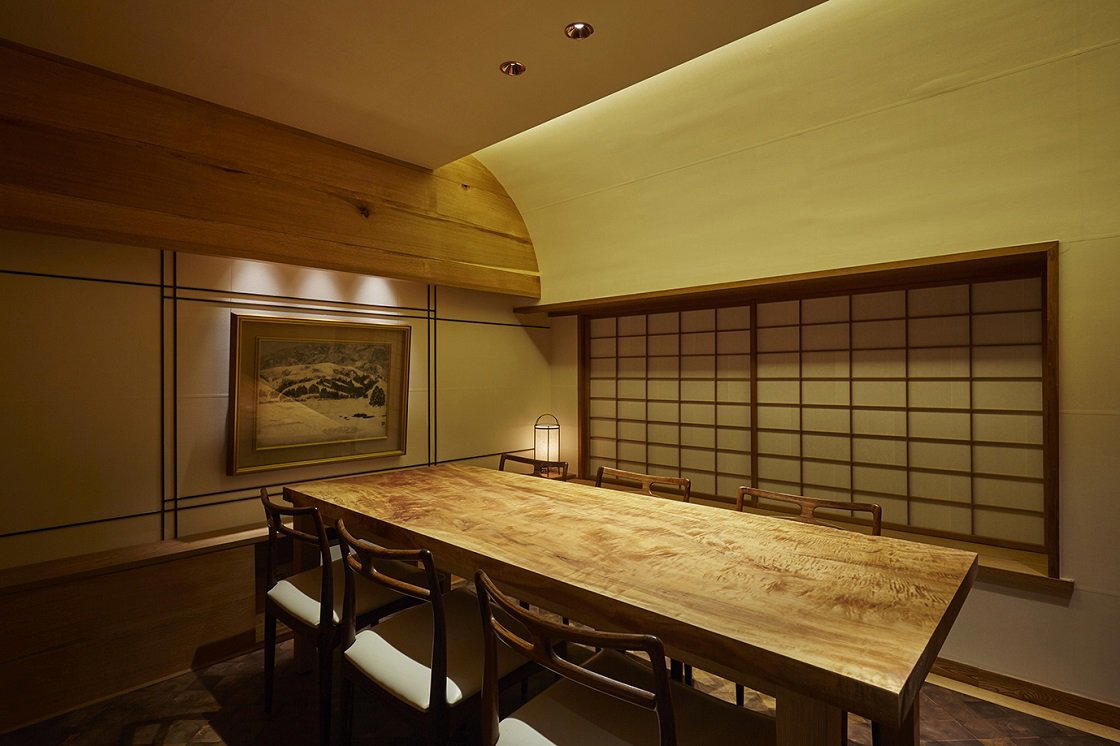
Minamisenba, the stretch of Chuo Ward that sits between the fashion trade showrooms and the older merchant-quarter streets, holds a concentration of serious Japanese restaurants that rarely appears in the same sentence as Osaka's neon-lit food theatre. The neighbourhood runs quieter than Namba, draws fewer first-night tourists, and rewards the kind of diner who has pre-booked rather than wandered in. Oimatsu Hisano sits at this address, at 3 Chome-8-1 Minamisenba, and the room telegraphs its intent before the first course appears: this is a counter built around the logic of kaiseki, where material quality and seasonal rhythm determine what arrives in front of you, not the other way around.
The kaiseki tradition asks its practitioners to make the calendar legible through food. At its more dutiful expressions, that can produce meals that feel like annotated menus. At Oimatsu Hisano, the seasonal premise is made literal in ways that go beyond plating aesthetics. Leaves gathered from hills and dales accompany appetisers, and a slim strip of paper inscribed with a seasonal phrase frames each opening sequence. These are not decorative gestures; they are material evidence that someone sourced, selected, and placed them with intention. The effect is a meal that reads as a specific date rather than a general season.
The Ingredient Logic at the Counter
Japanese kaiseki at its most disciplined treats raw materials as argument. The chef's selection and handling of ingredients is the thesis; technique is the syntax that makes the argument legible. At Oimatsu Hisano, the ingredient-forward position is stated most clearly in the rice program, which is the kind of detail that separates kitchens preoccupied with sourcing from those that treat ingredients as interchangeable inputs.
The rice is grown in serpentinite soil, a geological condition that produces grain with an refined mineral content. Serpentinite-derived soils are mineral-rich and relatively rare as an agricultural substrate, which means rice produced in them carries a flavour profile distinct from more common paddy conditions. That rice is cooked in clay pots, donabe, which manage heat transfer differently from metal or electric alternatives, producing a texture and crust that is specific to the method. It is then seasoned with salt and soy sauce calibrated to amplify umami rather than simply add salinity. The scorched bottom layer, the okoge, is served separately, pressed and crisped until it functions like a rice cracker. This is not a stylistic flourish; it is a technique that wastes nothing and extracts a second flavour dimension from the same base ingredient.
This level of attention to a single element, rice, the most foundational component in Japanese cuisine, signals how the rest of the menu is likely to be handled. Dashi quality, seasonal produce selection, the sourcing of fish and vegetable materials: these decisions at Oimatsu Hisano appear to be made upstream of the kitchen, not improvised from what the market offers on the day. That upstream sourcing discipline is what separates the kaiseki tradition's serious practitioners from its more decorative exponents.
Two Stars in 2025: What the Rating Change Signals
Oimatsu Hisano held one Michelin star through 2024 and moved to two stars in the 2025 Michelin Guide. That progression is worth reading carefully. A single star marks a kitchen worth a detour; two stars mark a kitchen worth planning a trip around. The gap between them, in Michelin's own framing, is meaningful, and the timing matters here. Osaka's kaiseki tier is not thin: Kashiwaya Osaka Senriyama, Ajikitcho Bumbuan, and Yugen operate in the same Japanese fine-dining category, with Tenjimbashi Aoki and Miyamoto adding further depth to the city's roster. For Oimatsu Hisano to gain a second star in that competitive environment is a specific recognition, not a general one.
The Michelin write-up accompanying the rating points to Chef Masamitsu Hisano's approach as one that holds the fundamentals of Japanese cuisine intact while allowing imagination to operate within that structure. That framing is significant. The two-star kaiseki restaurants that hold their position over time tend to be those that can credibly claim both rigor and personality, not a personal philosophy imposed on the cuisine, but a set of technical convictions expressed through it. The 2025 promotion suggests the inspectors read the kitchen that way.
For a ¥¥¥¥ kaiseki counter, where expectations arrive pre-loaded and where a single disappointing course can reshape the entire memory of a meal, that consistency across a meaningful sample size is notable.
Oimatsu Hisano in the Osaka Fine-Dining Context
Osaka's premium restaurant market now splits clearly between its French and innovative cohort, Hajime, La Cime, Fujiya 1935, and its Japanese kaiseki tier. Both operate at the ¥¥¥¥ price level, but they represent different value arguments. The French and innovative kitchens sell technique, provocation, and a global culinary conversation. The kaiseki kitchens sell seasonal specificity, material sourcing depth, and a cuisine that can only be read correctly against a Japanese cultural calendar.
The move to ¥¥¥¥ pricing alongside the two-star promotion repositions Oimatsu Hisano into a tighter peer group nationally. Comparable two-star kaiseki counters in other Japanese cities offer useful reference points: Gion Sasaki in Kyoto operates at a similar tier within Kyoto's densely competitive kaiseki market, while Harutaka in Tokyo and Myojaku in Tokyo and Azabu Kadowaki in Tokyo show how the capital handles a similar positioning. Further afield, akordu in Nara, Goh in Fukuoka, 1000 in Yokohama, and 6 in Okinawa illustrate how Japan's regional fine-dining tier has broadened in recent years, making Osaka's concentration of serious kitchens less exceptional geographically but no less specific in character.
Planning Your Visit
| Venue | Cuisine | Price Range | Michelin (2025) | Location |
|---|---|---|---|---|
| Oimatsu Hisano | Kaiseki / Japanese | ¥¥¥¥ | 2 Stars | Minamisenba, Chuo Ward |
| Kashiwaya Osaka Senriyama | Japanese | ¥¥¥ | Michelin-recognised | Senriyama, Osaka |
| Taian | Kaiseki / Japanese | ¥¥¥ | Michelin-recognised | Osaka |
| Hajime | French / Innovative | ¥¥¥¥ | Michelin-recognised | Osaka |
| Fujiya 1935 | Innovative | ¥¥¥¥ | Michelin-recognised | Osaka |
Advance reservations at two-star kaiseki counters in Osaka typically require booking several weeks ahead, with popular windows filling faster. The Minamisenba address is accessible from central Osaka via the Midosuji line; Shinsaibashi station is the most practical stop. Dress codes at kaiseki restaurants of this level are not typically enforced in writing, but the format calls for smart casual at minimum. For wider Osaka planning, see our full Osaka restaurants guide, our full Osaka hotels guide, our full Osaka bars guide, our full Osaka experiences guide, and our full Osaka wineries guide.
Frequently asked questions
Does Oimatsu Hisano work for a family meal?
The format is a sequential multi-course kaiseki that unfolds over two hours or more, priced at ¥¥¥¥ in a two-Michelin-star setting. That structure calls for patience and sustained attention rather than a relaxed family dinner. Adults with a genuine interest in Japanese seasonal cooking will get the most from it; it is not designed around children's meal rhythms or informal sharing.
What should I expect atmosphere-wise at Oimatsu Hisano?
Minamisenba sits between the fashion trade district and older merchant-quarter streets in Chuo Ward, running noticeably quieter than Osaka's central entertainment zones. Chef Hisano's kaiseki format sets the pace deliberately: courses are accompanied by seasonal leaves gathered from hill and dale, and each appetiser arrives with a strip of paper inscribed with a seasonal phrase. At ¥¥¥¥ pricing in a two-star house, the room operates at the considered, unhurried register that the cuisine demands.
Does Oimatsu Hisano have a Michelin star or similar recognition?
Oimatsu Hisano has received recognition including: The chef interprets the seasons through kaiseki, adding twists and tricks that make the cuisine his own. To express each season, appetisers are accompanied by leaves collected on hill and dale and a slim strip of paper is inscribed with a s….
What do people recommend at Oimatsu Hisano?
The rice course draws the most consistent attention in guest accounts: rice grown in serpentinite soil, which carries a high mineral content, is cooked in clay pots, seasoned with salt and soy sauce to pull out umami, and served alongside scorched rice formed into a cracker-style portion. That treatment of a single staple ingredient captures Hisano's broader approach, classic kaiseki discipline with specific, personal interventions that make the cooking his own.
Just the Basics
| Venue | Cuisine | Price | Awards | Notes |
|---|---|---|---|---|
| Oimatsu HisanoThis venue (the venue you are viewing) | Modern Seasonal Kaiseki Omakase | $200–300 | 2 Michelin Stars | Not listed |
| HAJIME | Avant-Garde Japanese Fine Dining | $300–500 | 3 Michelin Stars · World's 50 Best #83 | French, Innovative |
| La Cime | Modern French with Japanese Ingredients | $150–200 | 2 Michelin Stars · World's 50 Best #13 | French |
| Kashiwaya Osaka Senriyama | Seasonal Kaiseki Omakase | $200–300 | 3 Michelin Stars · La Liste Top Restaurants | Japanese |
| Taian | Traditional Japanese Kaiseki Omakase | $150–200 | 3 Michelin Stars · La Liste Top Restaurants | Kaiseki, Japanese |
| Fujiya 1935 | Modern Japanese with European influences | $100–150 | 2 Michelin Stars · La Liste Top Restaurants | Innovative |
Recognition history
Dated appearances from independent guides and award organizations, with the underlying list record or original source where available.
Michelin 2 Stars
Michelin
Full recognition history (3 entries)
Michelin 2 Stars
Michelin
Michelin 1 Star
Michelin
Continue exploring
More in Osaka
Restaurants in Osaka
All restaurants in Osaka →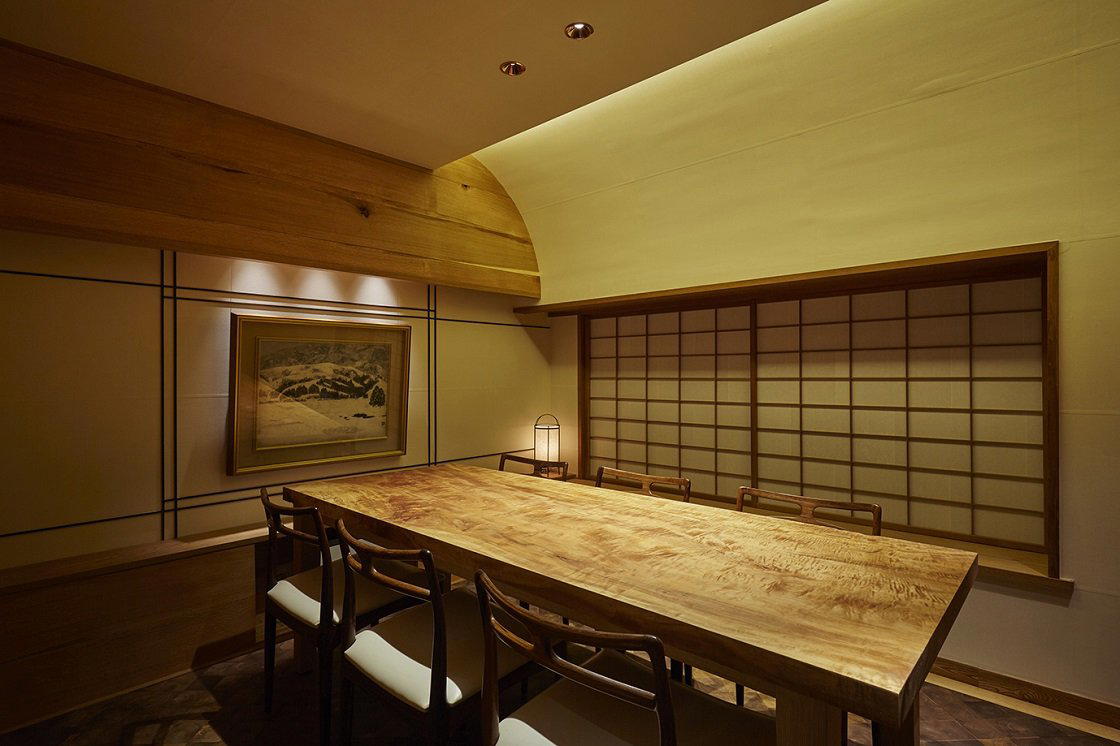


Bars in Osaka
All bars in Osaka →



Hotels in Osaka
All hotels in Osaka →



Wineries in Osaka
Browse all →
Details
- Intimate
- Elegant
- Sophisticated
- Quiet
- Special Occasion
- Celebration
- Date Night
- Business Dinner
- Chefs Counter
- Open Kitchen
- Private Dining
- Sake Program
- Sommelier Led
- Local Sourcing
- Farm To Table
- Omakase
- Counter Dining
- Tasting Menu
- Sake
- Allergy Accommodating
Current opening hours
- Monday
- 11 AM–6 PM
- Tuesday
- 11 AM–6 PM
- Wednesday
- 11 AM–6 PM
- Thursday
- 11 AM–6 PM
- Friday
- 11 AM–6 PM
- Saturday
- 11 AM–6 PM
- Sunday
- Closed
Hours can change for holidays and private events. Hours as of .
Serene and tranquil with soft lighting, golden wooden interior, and seasonal flowers at the entrance; intimate counter seating with personalized attention or private four-seat dining room.