
A traditional detached house in Higashinari Ward where a ball of cedar sprigs marks the entrance and an omakase format of numerous small shuko dishes pairs with a broad selection of Japanese local sakes. The proprietor's background in Chinese cuisine and subsequent conversion to sake culture shapes a menu built around appetizers as the main event, not a supporting act. An address that rewards those who know Osaka beyond its well-publicised dining corridors.
Pearl is the En Primeur Club membership app — saves, bookings, and concierge access live there. Same editors, same standards.
- Address
- Japan, 〒537-0014 Osaka, Higashinari Ward, Oimazatonishi, 3 Chome−4−14 大阪まんぷく堂
- Phone
- +81 6-6972-1199
- Website
- manpukudou.jp
- Directions
- Get directions
 Saves & bookings on Pearl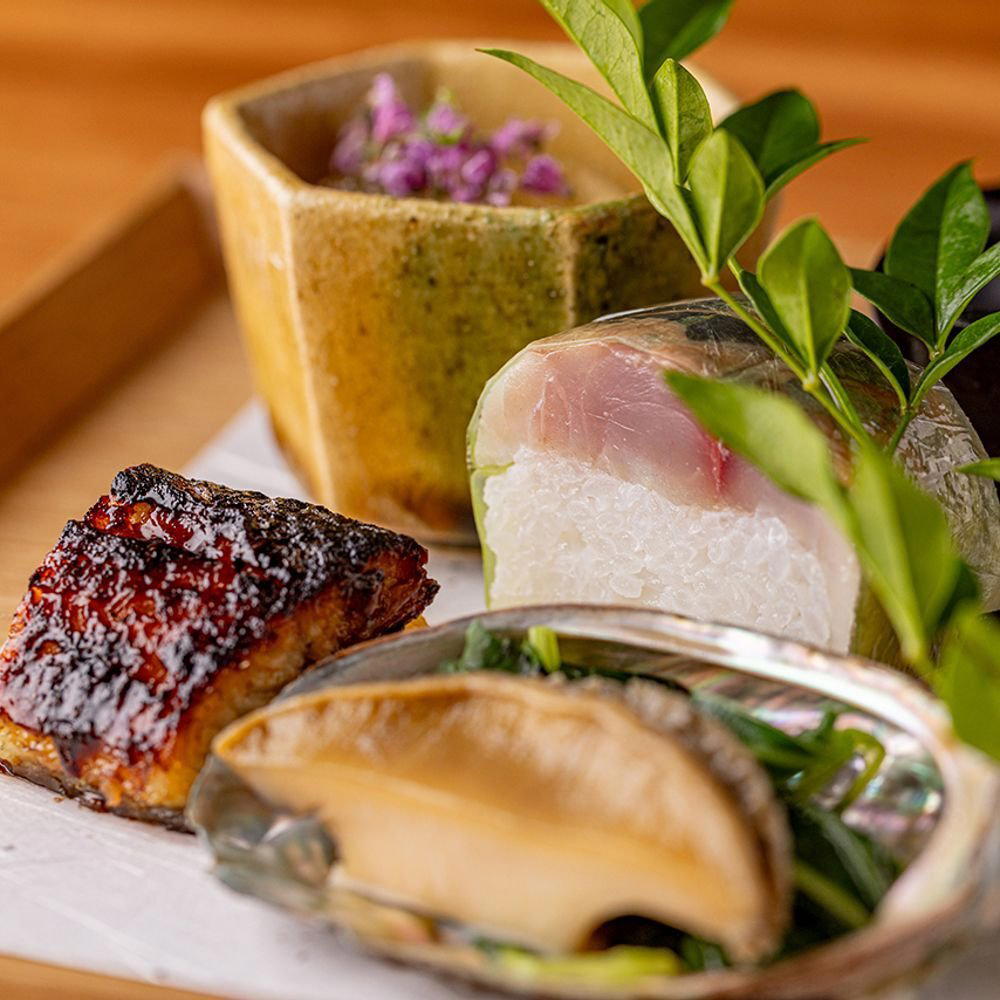
A Cedar Sprig, an Old Chest of Drawers, and the Case for Eating Like This
The first thing you notice approaching Shuko Osaka Manpukudou in Higashinari Ward is the ball of cedar sprigs hanging from the eaves. Known as a sugidama, the cedar globe is a centuries-old Japanese signal that sake is being poured inside, a tradition carried by sake breweries and, by extension, the restaurants and inns that take sake seriously. It is a small, specific detail, but it tells you everything about what the evening prioritises before you have stepped through the door.
Inside, the atmosphere reads as deliberately unhurried. An old chest of drawers, exposed transoms, and the kind of nostalgic material culture that takes decades to accumulate rather than weeks to stage: the space communicates that someone lives this aesthetic rather than performs it. In a dining city where the visual register of restaurants ranges from austere modernist counter to theatrical open kitchen, Shuko Osaka Manpukudou occupies a different register entirely, the domestic, the accumulated, the quietly confident.
The Format: Shuko as the Point, Not the Prelude
Across Japan's premium dining tier, the omakase format has become the dominant vocabulary for expressing culinary seriousness. Osaka carries its own version of this: the city's kaiseki and washoku traditions run parallel to Kyoto's more ceremonial interpretation, and places like Taian and Kashiwaya Osaka Senriyama represent the formal, multi-course end of that spectrum. Shuko Osaka Manpukudou takes a different position in the same tradition.
The name makes the philosophy explicit. Shuko translates directly as appetizers served with sake. In conventional Japanese meal structure, shuko occupy the supporting role, small bites that set the stage for a main course. Here, the omakase set menu is constructed entirely from numerous small dishes, meaning the supporting cast becomes the entire production. The effect is a meal built around accumulation and variety rather than a single crescendo, which makes it particularly well-suited to long evenings and the kind of occasion where the conversation matters as much as the food.
This format has precedent in the broader Japanese drinking-dining culture, where the line between izakaya and refined restaurant has always been more permeable than Western dining categories suggest. What distinguishes this address is the precision of execution and the depth of the sake program, which draws on local producers from throughout Japan rather than a standard commercial selection.
Occasion Dining in Osaka's Residential Grain
Higashinari Ward sits east of the Osaka city centre, away from the concentrated dining density of Minami and the tourist-facing corridors around Dotonbori. Restaurants in this part of the city tend to serve local residents rather than visitors optimising a short itinerary, which gives them a different character: they do not need to explain themselves to strangers, and the service reflects that ease.
For occasion dining, that dynamic matters. Milestone meals, anniversaries, homecomings, the kind of evening that needs to feel considered rather than merely booked, benefit from a venue that is already at ease with itself. Osaka's most formally decorated addresses, places like HAJIME or La Cime, deliver occasion weight through architectural ambition and multi-course French structure. Shuko Osaka Manpukudou delivers it differently: through the accumulated atmosphere of the traditional house, the specificity of the sake program, and a meal format that asks you to slow down and stay.
The proprietor's trajectory, a background in Chinese cuisine, a conversion to sake culture and Japanese food, produces the kind of kitchen sensibility that tends to integrate rather than separate. That cross-disciplinary formation does not translate to a particular dish or technique that can be pointed to; it produces a general approach to flavour combination and pacing that tends to feel more calibrated than it looks on paper.
Sake Culture and the Drinking-Dining Tradition
Japan's regional sake scene has deepened significantly over the past two decades, with smaller producers from prefectures outside the traditional Hyogo and Kyoto brewing heartlands gaining recognition at a national level. A restaurant that stocks local sakes from throughout Japan is making a curatorial commitment that parallels the wine programs at serious European restaurants: the selection is editorial, not merely comprehensive.
In this context, the shuko format becomes a tasting mechanism as much as a meal. Multiple small dishes, each calibrated to work with sake rather than compete with it, allow the drinks program to breathe. The structure rewards drinkers who want to work through several different regional expressions over the course of an evening, which is precisely what a special occasion permits that a casual dinner rarely does.
For readers who have experienced the precision sake pairings at counter restaurants in Tokyo, Harutaka being a relevant reference point for how a drinks-led philosophy shapes a menu, or the depth of washoku tradition at Gion Sasaki in Kyoto, the restaurant represents the Osaka version of that sensibility: less austere, more convivial, and built around the city's native preference for abundance over ceremony.
How It Sits in the Osaka Dining Picture
Osaka's dining scene has become among the more discussed in Asia, with formal recognition accumulating at its upper tier. Fujiya 1935 demonstrates the city's capacity for avant-garde innovation; Taian and Kashiwaya Osaka Senriyama anchor its kaiseki credentials. The restaurant does not compete in that formal register, nor does it try to. It represents a different and equally serious strand of Japanese hospitality: the specialist sake-and-shuko house, operating in a traditional domestic setting, where the measure of a successful evening is that both stomach and spirit are full.
The Japanese phrase rendered in the venue's name, manpuku, meaning to fill the belly and satisfy the soul, is not incidental branding. It describes an actual ambition: the meal is over when both conditions have been met. That framing makes this address particularly appropriate for occasions where the goal is to feel genuinely nourished rather than merely impressed.
Planning Your Visit
The restaurant is located in Higashinari Ward, Osaka, at 3 Chome-4-14 Oimazatonishi. The address is a traditional detached house identifiable by the cedar sprig ball at the eaves. The omakase format means the menu is set on arrival; the evening is built around numerous small shuko dishes paired with regional sake selections. Given the residential neighbourhood setting and small-house format, advance reservation is advisable. Advance reservation is advisable.
Cuisine and Recognition
Comparable venues nearby, for context on price, style, and recognition.
| Venue | Cuisine | Price | Awards | Notes |
|---|---|---|---|---|
| Shuko Osaka ManpukudouThis venue — the venue you are viewing | Traditional Japanese Shuko Omakase | $$$ | Michelin Plate | Not listed |
| Kasane | Oden & Japanese Cuisine | $$$ | Michelin Plate | Kita |
| Momen | Kappo | $$$ | Not listed | Chūō |
| Jizakeya Iwatsuki | Sake-Paired Japanese Izakaya | $$$ | Michelin Plate | Kita |
| Doshincho Washoku Zui | Traditional Japanese Kaiseki Omakase | $$$ | Michelin Plate | Kita |
| Washoku Iikura | Kansai Kappo | $$$ | Michelin Plate | Kita |
Recognition history
Dated appearances from independent guides and award organizations, with the underlying list record or original source where available.
Michelin Plate
Michelin
Michelin Bib Gourmand
Michelin
Continue exploring
More in Osaka
Restaurants in Osaka
Browse all →




Bars in Osaka
Browse all →


Hotels in Osaka
Browse all →




Wineries in Osaka
Browse all →
At a Glance
- Classic
- Cozy
- Intimate
- Special Occasion
- Sake Program
Current opening hours
- Monday
- 6–10 PM
- Tuesday
- 6–10 PM
- Wednesday
- Closed
- Thursday
- 6–10 PM
- Friday
- 6–10 PM
- Saturday
- 6–10 PM
- Sunday
- 6–10 PM
Hours can change for holidays and private events. Last verified .
Nostalgic atmosphere with accents like old chest of drawers and transoms, complemented by warm attentive friendly service.