Michelin Plate
Our verdict
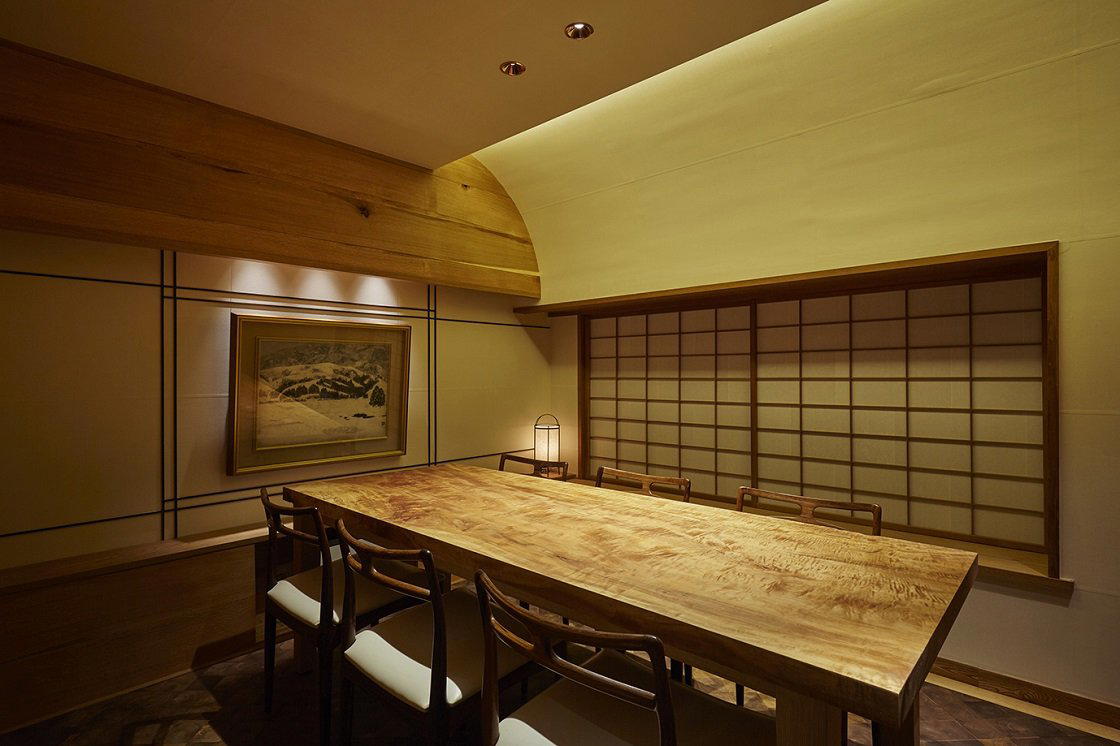
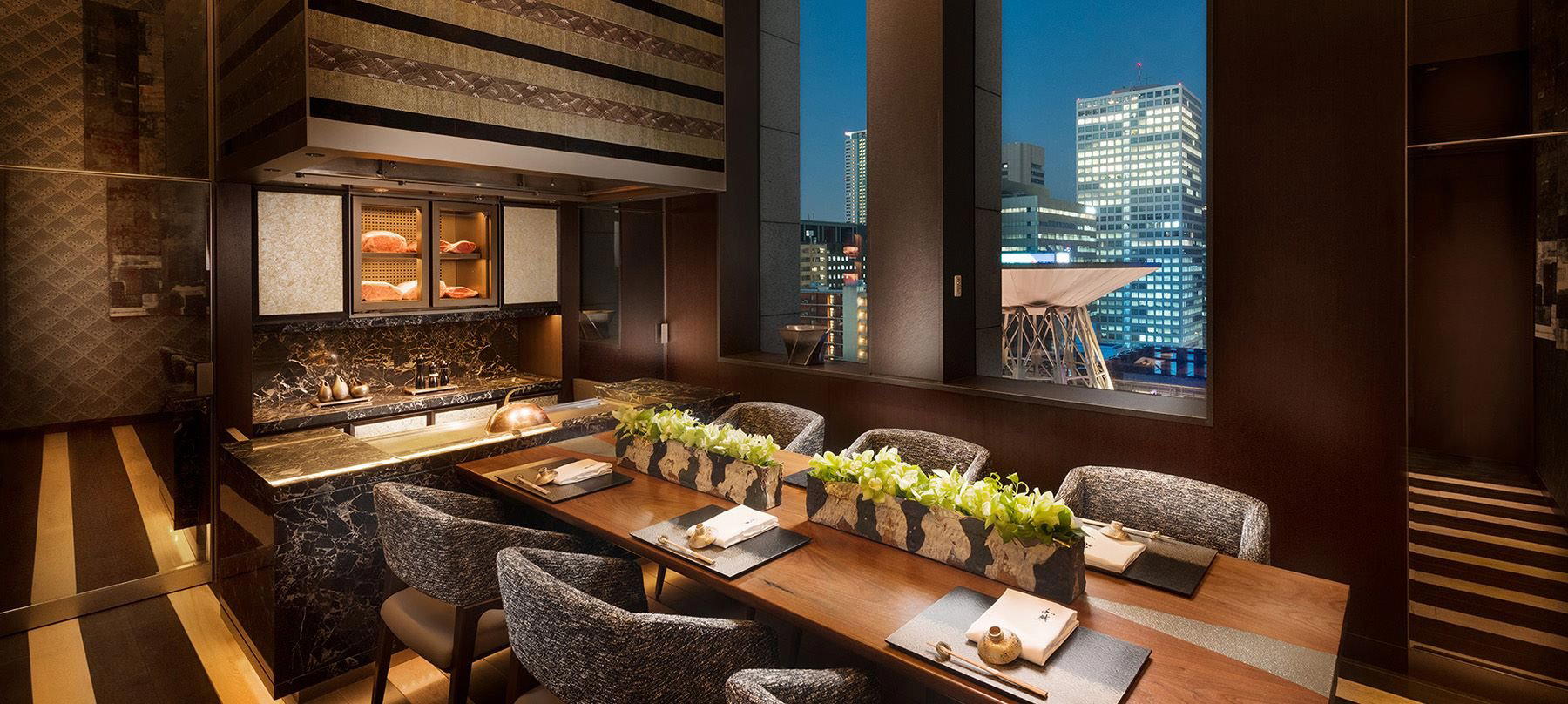
At the St. Regis Osaka's 12th floor, Teppanyaki WAJO operates at the intersection of Japanese teppanyaki technique and French culinary structure, a format shaped during Joël Robuchon's involvement with this address. Seasonal appetisers, a wagyu steak finished with a soy and red wine double sauce, and live cooking theatre define a meal that moves at its own deliberate pace.

Pearl is the En Primeur Club membership app, where members save venues, book tables and use the concierge.
The menu
What to order
- Ishigaki Island Kitauchi Farm Premium Beef
- Japanese Spiny Lobster
- Yamaguchi Kitauchi Farm Beef Sirloin
Where a Robuchon Chapter Left Its Mark
Teppanyaki as a dining format has always carried a performative weight that separates it from other Japanese traditions. The cook is visible, the heat is immediate, and the progression of the meal is governed by fire and timing rather than by kitchen-to-table distance. At Teppanyaki WAJO, located on the 12th floor of the St. Regis Osaka in Chuo Ward's Honmachi district, that format carries an additional historical layer: this is the counter where Joël Robuchon once introduced teppanyaki to his broader culinary programme, with chef Ryuta Izuka overseeing the kitchen during that period. That lineage matters less as biography and more as a marker of where this restaurant sits in Osaka's fine dining hierarchy, closer to the French-inflected top tier than to the casual neighbourhood teppanyaki grill.
Osaka's premium restaurant scene has organised itself into recognisable clusters. French technique applied to Japanese ingredients is a consistent thread running through addresses like HAJIME (French, Innovative) and La Cime, both operating at the ¥¥¥¥ tier. Traditional kaiseki continuity defines counters such as Kashiwaya Osaka Senriyama and Taian. Teppanyaki WAJO occupies a different register: a live-fire format that draws on French flavour logic, saucing, reduction, precision timing, without abandoning the directness and theatricality that makes teppanyaki a distinct tradition in its own right. Fujiya 1935 represents the innovative side of Osaka's top tier; WAJO sits in a smaller category where technique is expressed through heat control and speed rather than modernist plating.
The Architecture of the Meal
Teppanyaki's dining ritual is structured differently from an omakase counter or a kaiseki sequence, but the underlying grammar is similar: a fixed progression, a single focal point, and a pace set by the cook rather than the diner. At WAJO, that rhythm begins with appetisers that lean into a seasonal logic, reflecting the same ingredient-driven approach found across Osaka's serious restaurants. These early courses function as calibration, establishing the range of techniques and flavour combinations that will carry through the meal before the main event arrives at the iron plate.
The wagyu course is the pivot around which the meal turns. The preparation involves a double sauce built from soy and red wine, a construction that places the dish exactly at the intersection of Japanese and French culinary thinking. Soy brings depth and salinity; the red wine reduction brings structure and acidity. The combination is not a novelty pairing but a considered integration, the kind of thing that emerges when a kitchen has worked through the logic of both traditions rather than simply borrowing from one to dress up the other. It is the same structural instinct that produced the French-Japanese hybrids that define much of Osaka's ¥¥¥¥ tier, delivered here through live fire rather than through mise en place.
The Ritual of Watching
Part of what distinguishes teppanyaki as a format is that the diner is a participant in the cooking, not merely a recipient. The sounds, oil meeting hot steel, the sharp sizzle of a protein making first contact, the scrape of the spatula, are part of the experience in a way that kitchen noises filtering from behind a closed pass are not. The aromas arrive before the food. The conversation happens across the cooking surface. This is a fundamentally different sensory structure from a plated tasting menu, and WAJO leans into it deliberately.
That quality of shared attention, diner and cook facing each other across a heat source, has parallels in other live-fire or counter formats across Japan. Harutaka in Tokyo deploys a similar intimacy at its sushi counter. Gion Sasaki in Kyoto uses a kaiseki framework to create the same sense of a meal unfolding in real time before a small group. What teppanyaki adds to that format is kinetic energy, the visible transformation of ingredients under direct heat, with no gap between preparation and plating. The plate arrives immediately because the plate is the counter.
Positioning Within Osaka and Beyond
The St. Regis Osaka address places WAJO inside a hotel dining category that has become more competitive across Japan's major cities over the past decade. Hotel restaurants at five-star addresses have had to earn their standing independently of their parent property, and the Robuchon-era history at this counter provides a credential that most hotel teppanyaki addresses do not carry. For visitors building a multi-city dining itinerary, the wider Kansai region offers comparison points worth considering: akordu in Nara takes an entirely different approach to Western-Japanese fusion, while Goh in Fukuoka and 1000 in Yokohama each operate within their own distinct regional dining logic.
For travellers whose reference points are outside Japan, the French-technique dimension of WAJO places it in a conceptual conversation with counters like Le Bernardin in New York City, not in format, but in the seriousness with which French culinary discipline is applied to non-French primary ingredients. The precision-driven tasting counter model, meanwhile, has equivalents at Atomix in New York City, where the sequencing and presentation of a meal carries the same weight as the cooking itself. WAJO's version of that discipline is expressed through heat and timing rather than through elaborately constructed plates, but the underlying ambition is recognisably similar.
Planning a Visit
Teppanyaki WAJO sits at the St. Regis Osaka, at 3 Chome-6-12 Honmachi, Chuo Ward, on the 12th floor of the building. Honmachi is well-connected by Osaka's subway network, with the station of the same name on the Midosuji and Chuo lines providing direct access. Given the counter format and the Robuchon-era reputation, reservations should be made in advance, particularly for weekend seatings and during Osaka's peak travel seasons in spring and autumn when demand across the city's top-tier restaurants runs high. Specific hours, pricing, and booking procedures are best confirmed directly with the St. Regis Osaka, as these details shift with seasonal menu changes and hotel programming.
For readers building a broader understanding of what Osaka's restaurant scene offers, our full Osaka restaurants guide maps the city by cuisine type and price tier. We also cover Osaka hotels, bars, wineries, and experiences for a complete city picture. Okinawa's 6 offers an interesting contrast for travellers extending their Japan itinerary further south.
Frequently asked questions
Is Teppanyaki WAJO award-winning?
Teppanyaki WAJO has received recognition including: This is teppanyaki mixed with the essence of French cuisine and refined. Appetisers showcase modern creations, prepared with seasonal mood in mind. A double sauce of soy sauce and red wine transforms wagyu steak into an evolution of flavour….
What part of town is Teppanyaki WAJO in?
Teppanyaki WAJO is located at Japan, 〒541-0053 Osaka, Chuo Ward, Honmachi, 3 Chome−6−12 セント レジス ホテル 大阪 12F, Osaka.
What's the best thing to order at Teppanyaki WAJO?
The wagyu steak is the clearest expression of what WAJO does differently: a double sauce of soy and red wine bridges Japanese and French registers in a way that anchors the entire meal. The seasonal appetisers, conceived with a modern sensibility, set the context before the main event reaches the iron plate.
How far ahead should I plan for Teppanyaki WAJO?
WAJO operates within the St. Regis Osaka at 3 Chome-6-12 Honmachi, Chuo Ward, a hotel address that draws both hotel guests and destination diners, which compresses availability particularly on weekends. Booking two to four weeks in advance is a reasonable baseline; for Friday or Saturday seatings, extend that closer to a month.
Cuisine-First Comparison
Comparable venues nearby, for context on price, style, and recognition.
| Venue | Cuisine | Price | Awards | Notes |
|---|---|---|---|---|
| Teppanyaki WAJOThis venue (the venue you are viewing) | Modern Teppanyaki | $300–500 | Michelin Plate | Not listed |
| mikami limited50 | Exclusive Members-Only Omakase Sushi | $300–500 | Tabelog Bronze #271 | Kita |
| Aoki | Michelin-Starred Kaiseki | $200–300 | Tabelog Bronze #20 | Nishi |
| Sumisho Mikuriya | Yakitori | $50–100 | Michelin Bib Gourmand · Tabelog 100 #58 | Kita |
| Washun Taiki | Modern Kaiseki Omakase | $200–300 | Michelin Plate | Kita |
| Toyonaga | Osaka Sushi Omakase | $200–300 | Tabelog Bronze #479 | Kita |
Recognition history
Dated appearances from independent guides and award organizations, with the underlying list record or original source where available.
Michelin Plate
Michelin