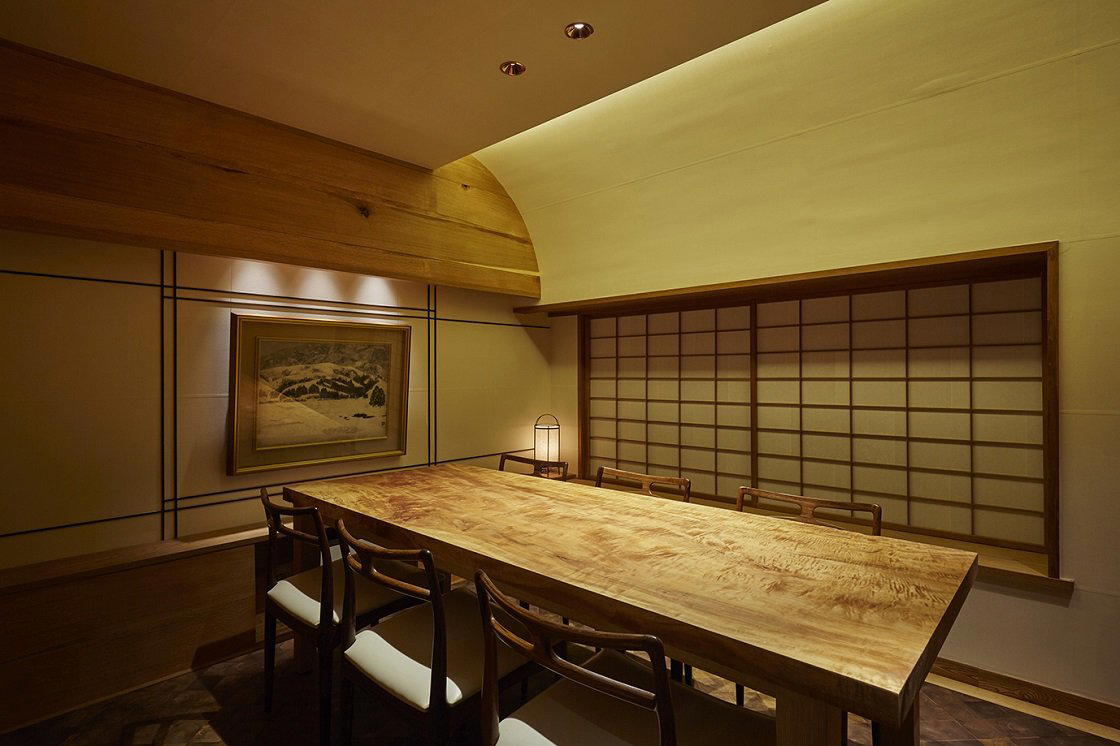
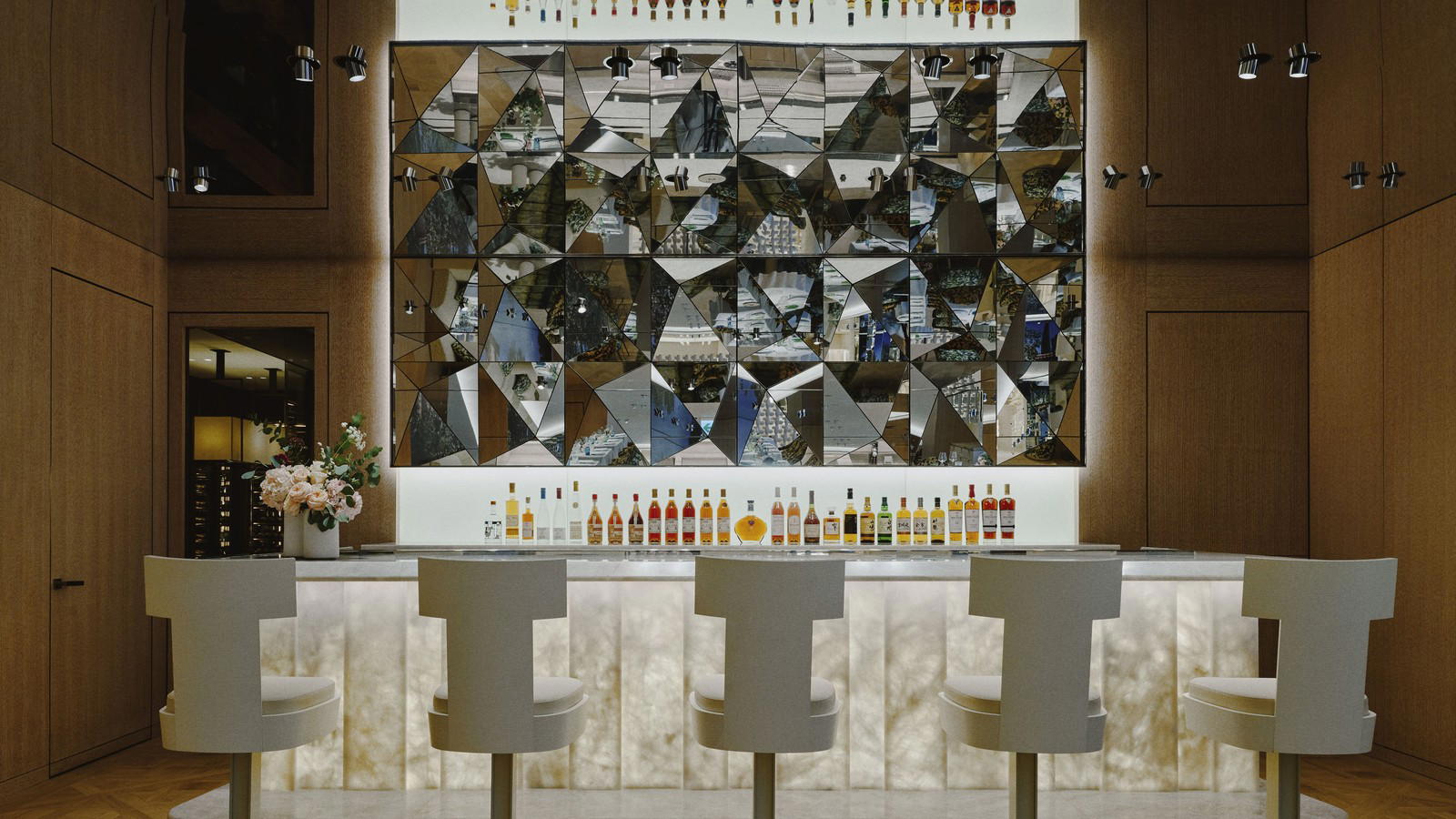
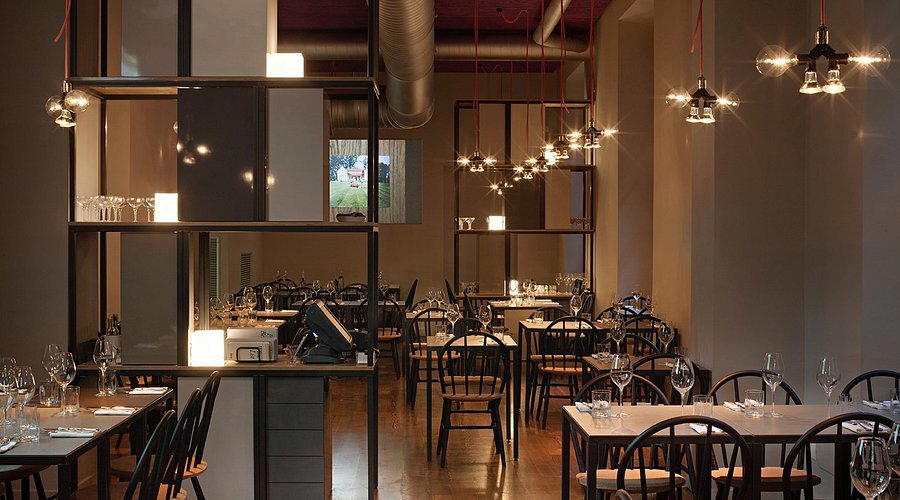
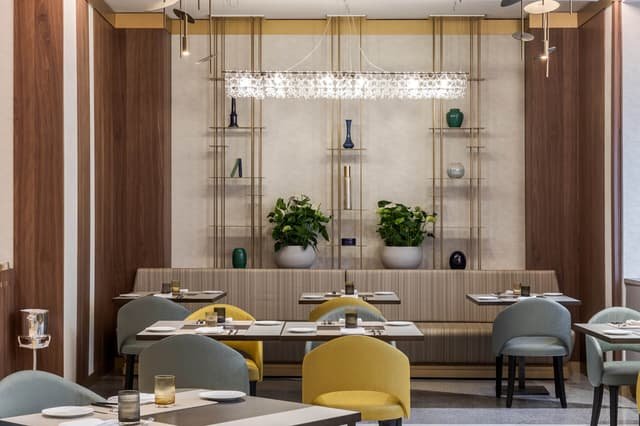
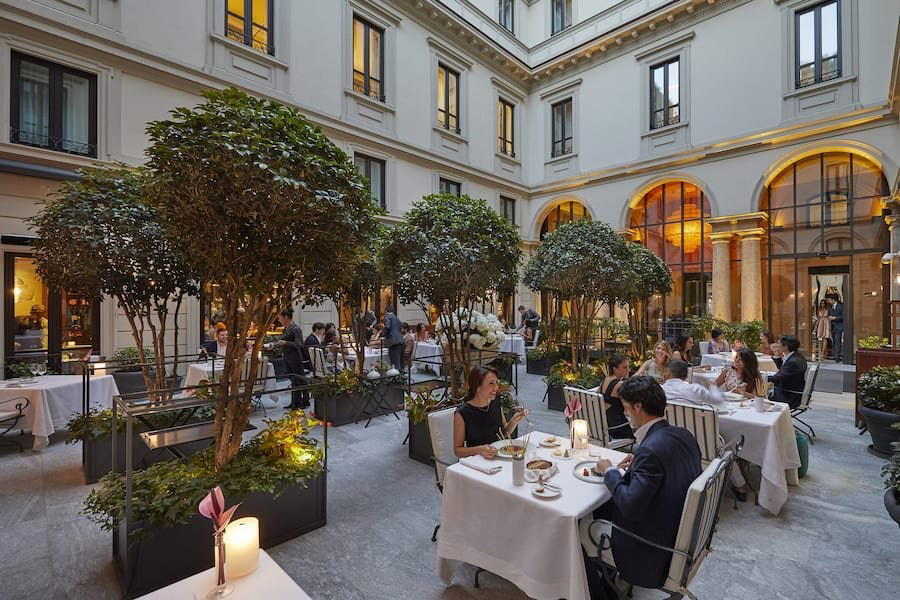
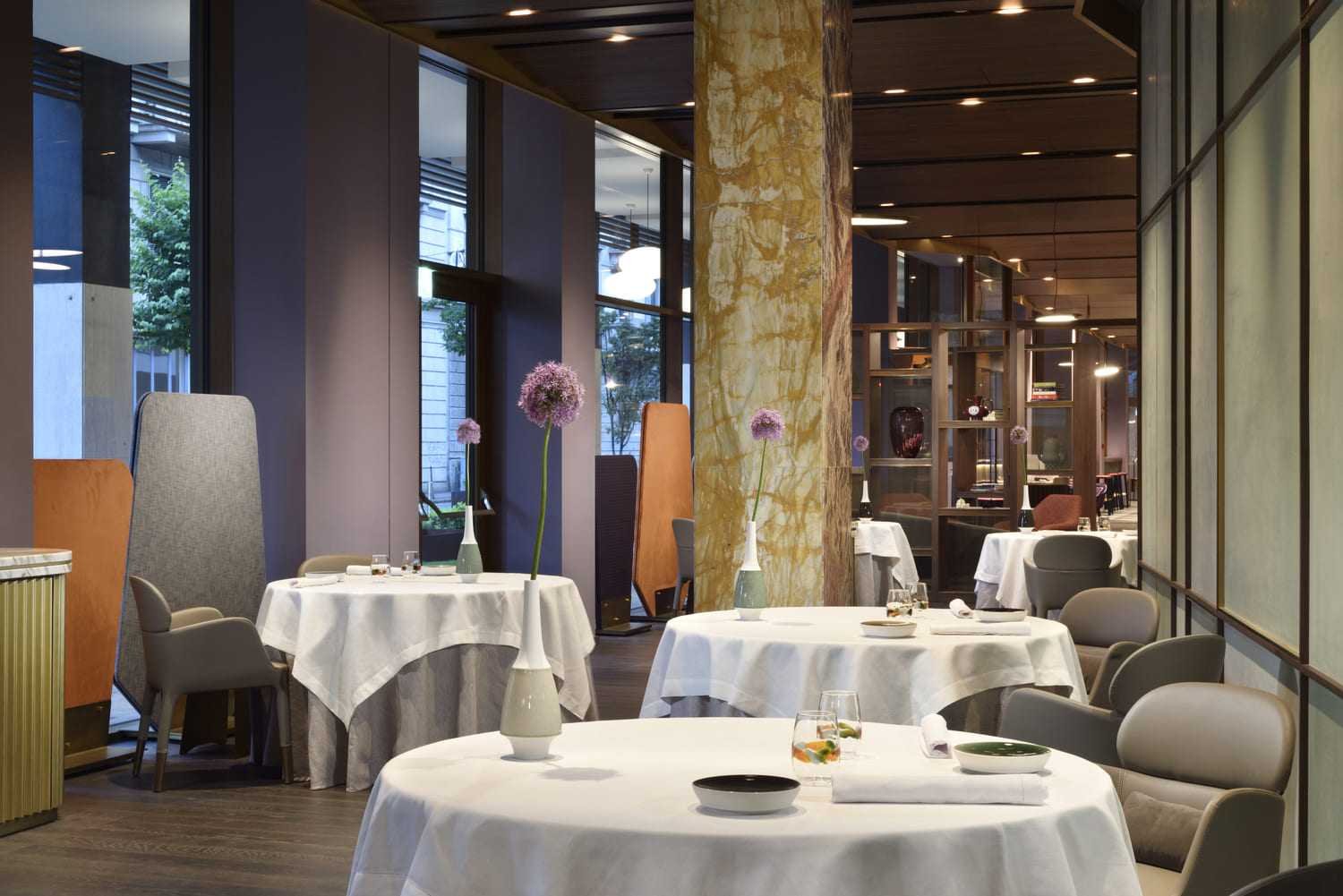
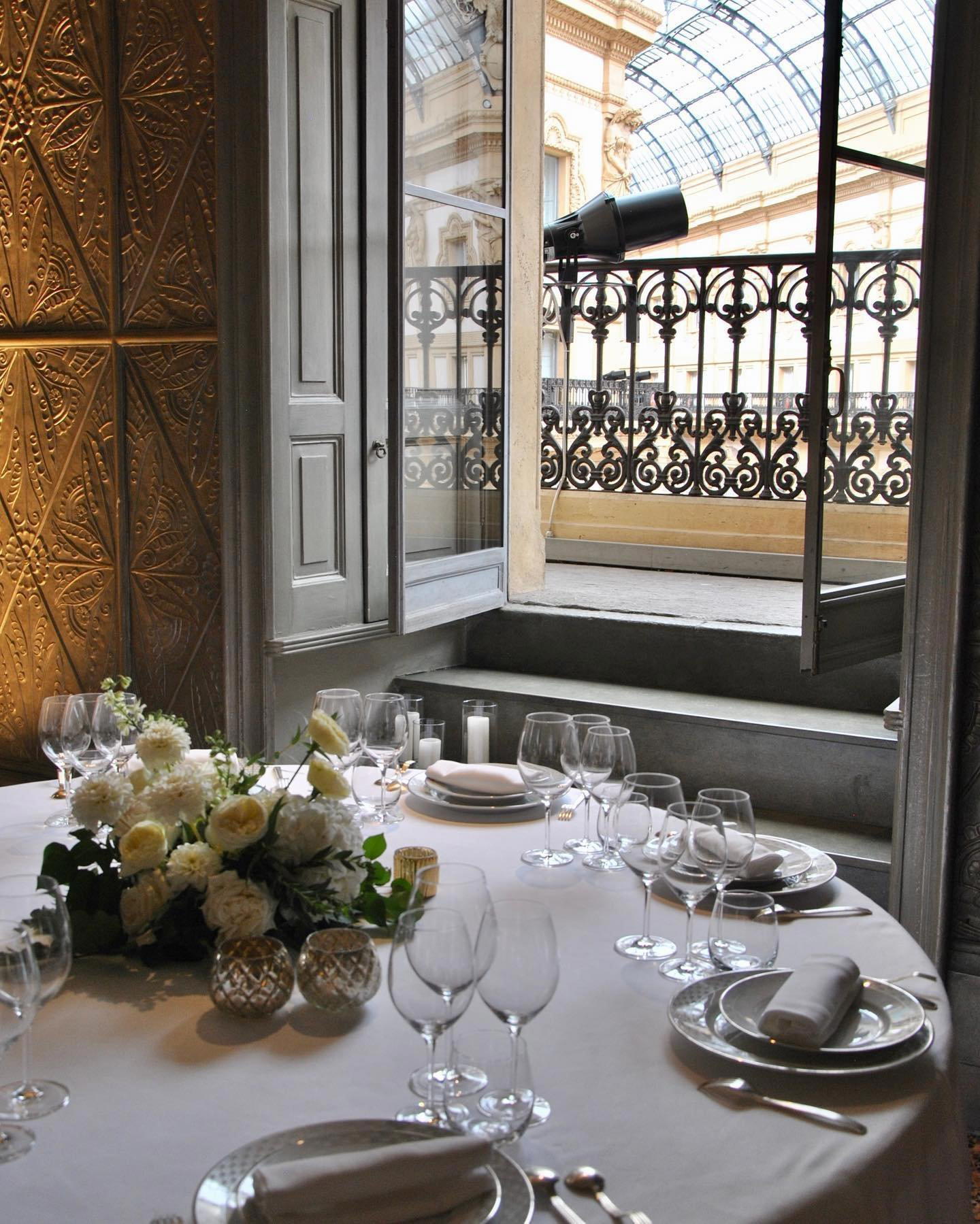
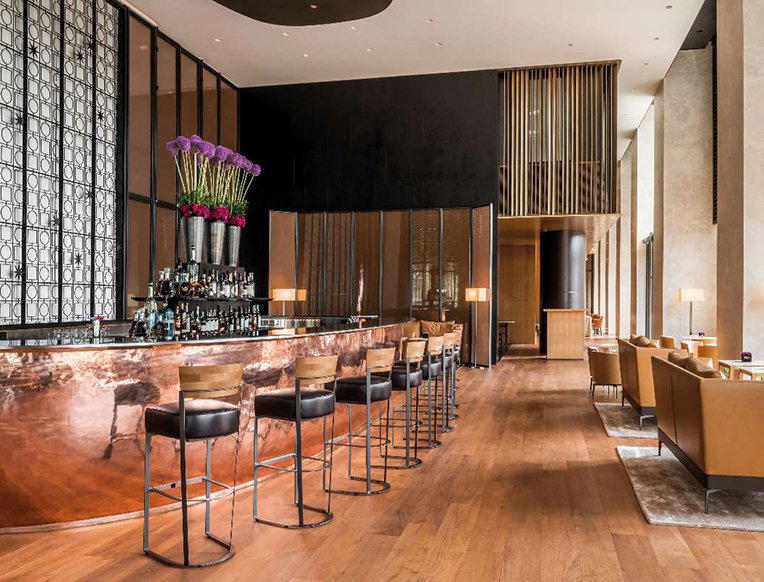
The Room: Minimal, Deliberate, and Built Around the Counter
The interior design at Osaka reflects a sensibility that Japanese restaurant operators in Europe have returned to repeatedly: the open counter as focal point, the kitchen as theatre, the room stripped of ornament so that the preparation itself becomes the visual subject. Diners facing the bar can watch the chefs at work, slicing, plating, composing, and the experience of eating is framed by that proximity to technique. The aesthetic is described as a full oriental orientation within a minimalist shell, which in practice means the materials and palette signal Japan without replicating the maximalist decoration that characterises some pan-Asian restaurants in the city.
The effect is that the room recedes. You notice the fish before you notice the walls. That structural choice matters more than it might appear: at a €€€ price point, where a diner is choosing between this and a wider field of Italian trattorias and modern European formats, the room has to perform a kind of confidence. Minimal interiors in this context function as a signal of seriousness, the same logic that governs the design of the more rarefied omakase counters in Tokyo, where absence of decoration implies that the food requires no theatrical assistance. For comparison, Myojaku in Tokyo operates on similar principles of restraint, as does Azabu Kadowaki.
The Menu: Two Formats, One Logic
Format divides along the lunch-dinner axis, which is standard practice for Japanese restaurants at this tier across European cities. Lunch operates on set menus, a structure that controls the kitchen's output, reduces decision fatigue, and positions the midday meal as an efficient, edited version of what the kitchen does. Dinner opens to à la carte, which is where the menu's breadth becomes apparent.
Two dishes function as reference points within the wider offering. The Makimoto rolls of amberjack with shiso leaves, sesame seeds, and freshly marinated wasabi represent the kitchen's capacity for precise, composed raw preparations: the combination of oily, firm yellowtail with the herbal note of shiso and the heat of fresh wasabi is a well-calibrated exercise in Japanese flavour layering. The second is the sukiyaki, a dish that carries significant cultural weight in Japan, where it appears at celebrations and family gatherings, functioning as the Japanese analogue to European shared-pot dishes like bourguignon. At Osaka, it arrives as meat and vegetables simmered in broth at the table, shared among the group. The tableside element is worth noting: it introduces a social, participatory dimension that most à la carte formats suppress, and it positions the dish as the kind of thing you order when you want the meal to be an event rather than a transaction.
The broader menu extends across the range of Japanese culinary categories, from raw preparations through cooked formats, giving the kitchen a wider canvas than a specialist sushi counter would allow. This breadth is both a practical advantage, it accommodates mixed groups and varied dietary orientations, and a stylistic marker that places Osaka in the generalist Japanese tradition rather than the narrow specialist tier occupied by places like Iyo, which operates under Michelin stars.
Where Osaka Sits in Milan's Japanese Tier
Milan's Japanese restaurant scene has developed considerably over the past decade. At the upper end, starred operations like Iyo and its kaiseki counterpart define one pole. Below that, a cluster of credentialled but non-starred restaurants, including Hazama, Bentoteca Milano, and Wicky's Innovative Japanese Cuisine, occupy a middle tier where the Michelin Plate signal does meaningful work. A Plate indicates food worth stopping for without claiming the same level of technical ambition as a starred kitchen. For a diner cross-referencing against Milan's heavily Italian fine-dining field, which includes starred addresses like Osteria Francescana in Modena, Enoteca Pinchiorri in Florence, Dal Pescatore in Runate, and Uliassi in Senigallia, the Osaka price-to-credential ratio sits comfortably in a range where the meal delivers more than the entry price implies.
A volume of that size, sustained at that average, indicates consistent execution rather than a venue coasting on historical reputation. In the comparison set that includes Milan's higher-tariff modern Italian addresses, Atelier Moessmer Norbert Niederkofler, Quattro Passi in Marina del Cantone, Osaka functions at a lower price tier but with a demonstrably active and satisfied audience.
What the Sukiyaki Signals
Returning to the sukiyaki is worth doing, because the dish performs a function that extends beyond its flavour profile. Japanese cuisine in European cities has historically been flattened into a sushi-and-ramen shorthand, with the broader repertoire of cooked, broth-based, and shared formats underrepresented on menus aimed at non-Japanese audiences. The presence of sukiyaki as a menu anchor at Osaka, and the framing of it as a festive, communal preparation, suggests a kitchen that treats authenticity as a structural commitment rather than a branding claim. You are not being offered a simplified version of Japanese food; you are being offered a dish that requires the table to participate.
That distinction matters when you are weighing Osaka against the wider field of Japanese restaurants in a northern Italian city where most of the competition at this price point defaults to safe, internationally legible formats.
Know Before You Go
- Address: Via Anfiteatro, 6, 20121 Milan, Italy
- Cuisine: Japanese
- Price range: €€€
- Recognition: Michelin Plate (2025)
- Format: Set menus at lunch; full à la carte at dinner
- Getting there: The address is in the historic centre (Brera-adjacent), accessible on foot from Cairoli or Lanza metro stations
Further Reading
For a broader view of where Osaka fits among Milan's dining options, see our full Milan restaurants guide. Planning beyond dinner? Our Milan hotels guide, bars guide, wineries guide, and experiences guide cover the wider city.
What Do Regulars Order at Osaka?
The two dishes that appear consistently as reference points, anchored in the Michelin record and the restaurant's own editorial framing, are the Makimoto rolls of amberjack with shiso, sesame, and freshly marinated wasabi, and the sukiyaki. The rolls represent the kitchen's precision with raw fish; the sukiyaki is the communal, broth-based preparation cooked at the table, typically ordered by groups who want the meal to unfold rather than arrive all at once. The lunch set menus are the more structured path in; the evening à la carte allows for a wider exploration of a menu described as extensive across Japanese categories.