Tabelog Silver #60
Our verdict
A five-seat sushi counter in Shimogyo Ward operating on a near-total referral model, Kiu has held Tabelog Silver for four of the past five years and earned a score of 4.40 in 2026. Chef Kazuo Hisada applies creative technique to fish-focused omakase at a price point of JPY 50,000–59,999, with two private sessions nightly. Booking opens only intermittently on Tabelog, making timing everything.

Pearl is the En Primeur Club membership app, where members save venues, book tables and use the concierge.
The menu
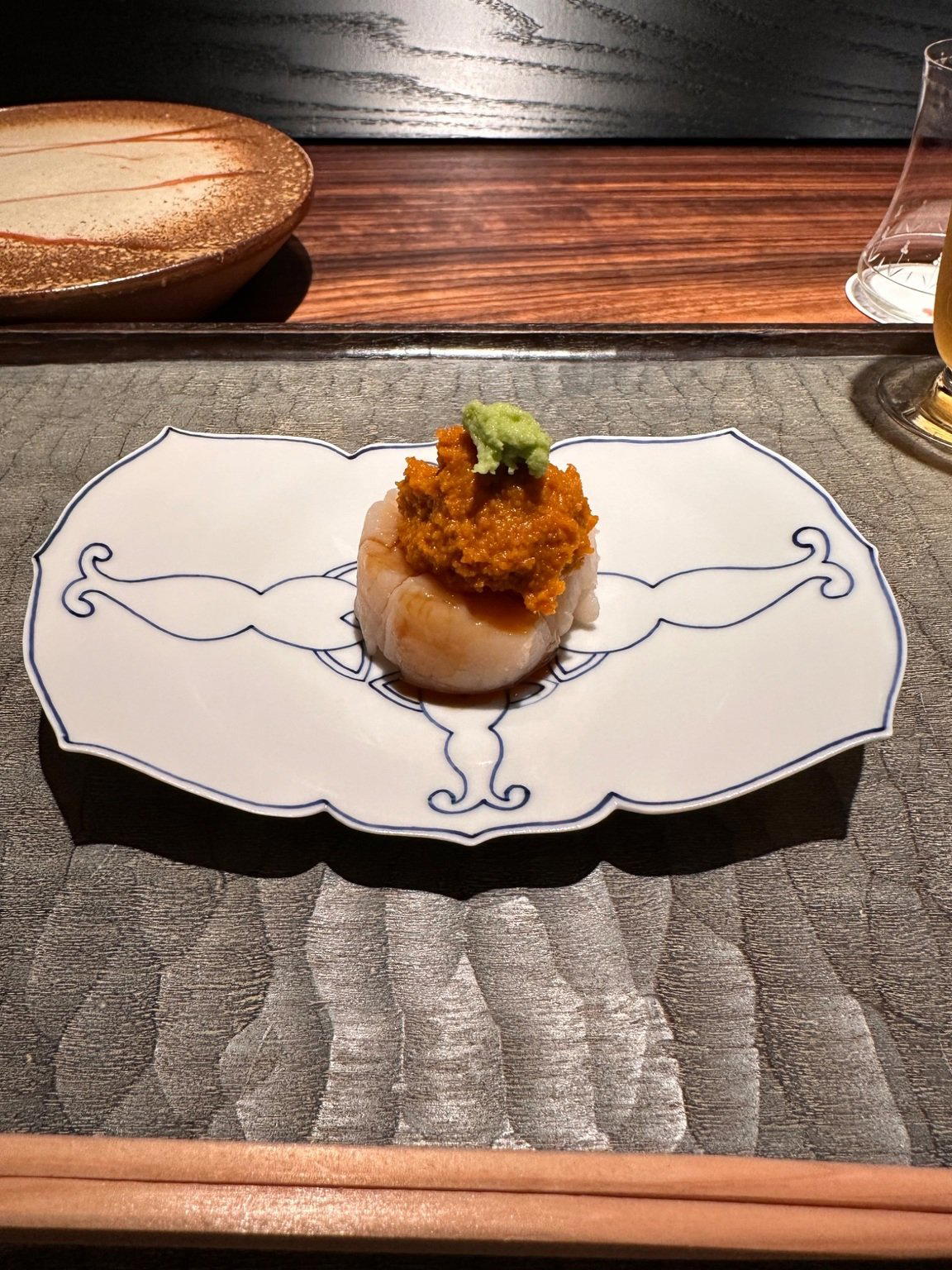
What to order
- Balsamic-vinegared nigiri
- Seto Sea seasonal nigiri
- Seared tuna
- Otsumami with Italian technique
- Burrata
A Counter-Format Argument for Kyoto Sushi
Kyoto is not where most serious sushi seekers look first. That instinct belongs to Tokyo, where the density of high-grade omakase counters, the supply chains from Toyosu, and the concentration of Jiro-lineage training have defined the national benchmark for decades. But a smaller, more deliberate tier of sushi has been building in the Kansai region, and it operates on different terms. Sushi Rakumi and Kikunoi Sushi Ao represent that shift within the city itself, each finding space between Kyoto's kaiseki tradition and the stripped-down precision of Edo-mae sushi. Kiu sits in that same conversation, but with a narrower footprint and a more guarded entry point than almost any comparable address in the city.
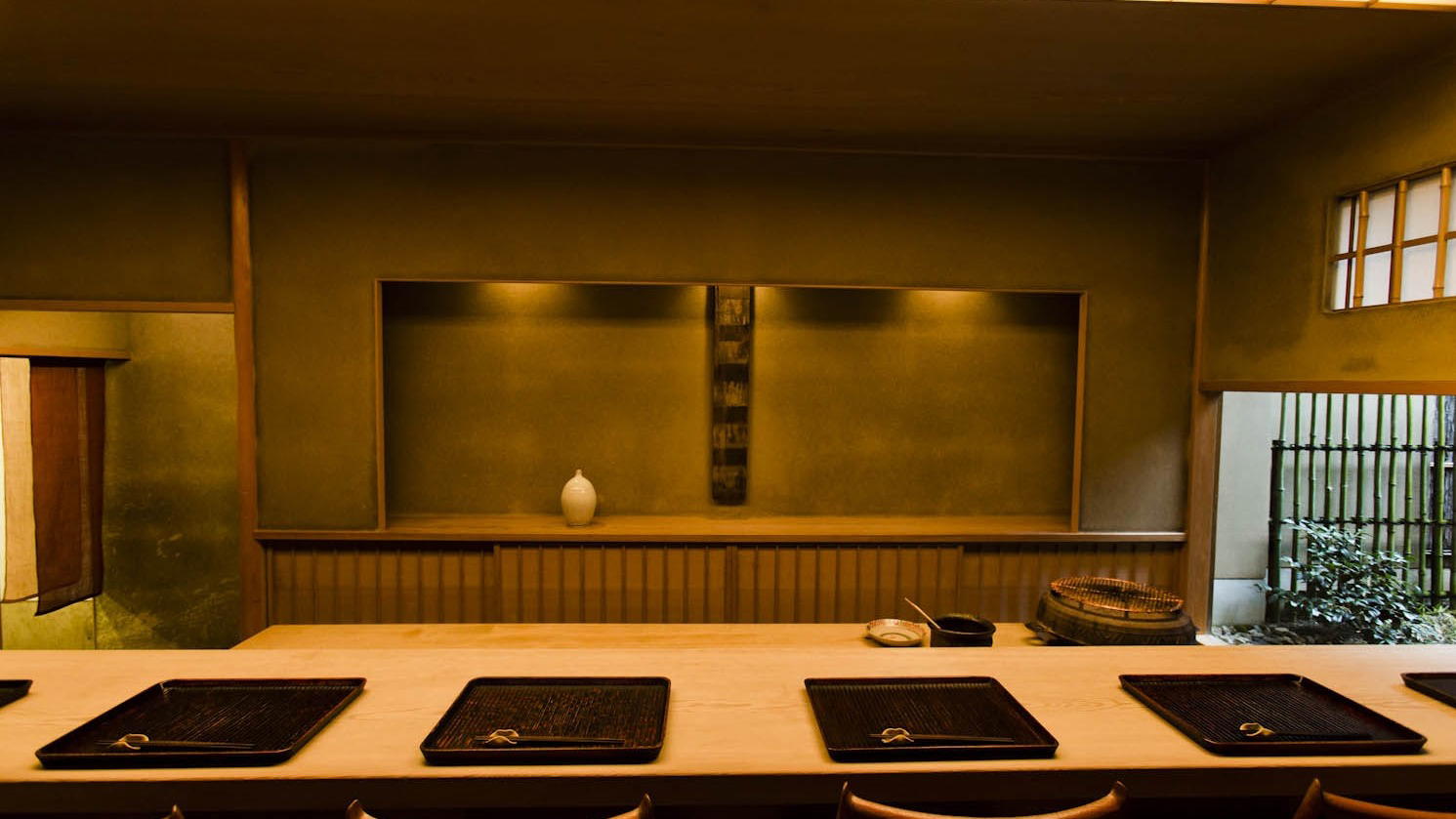
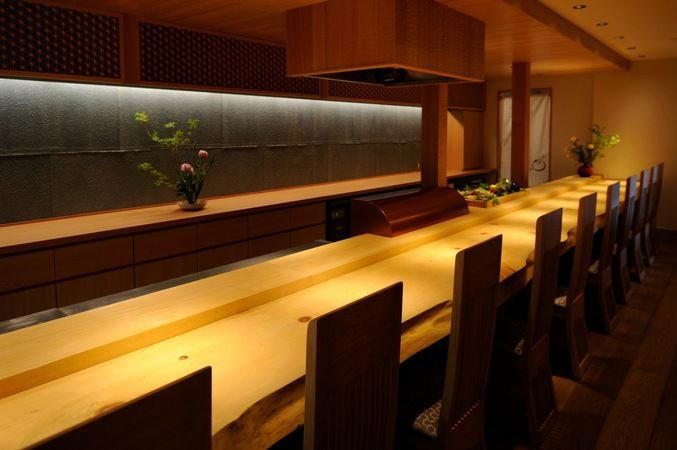
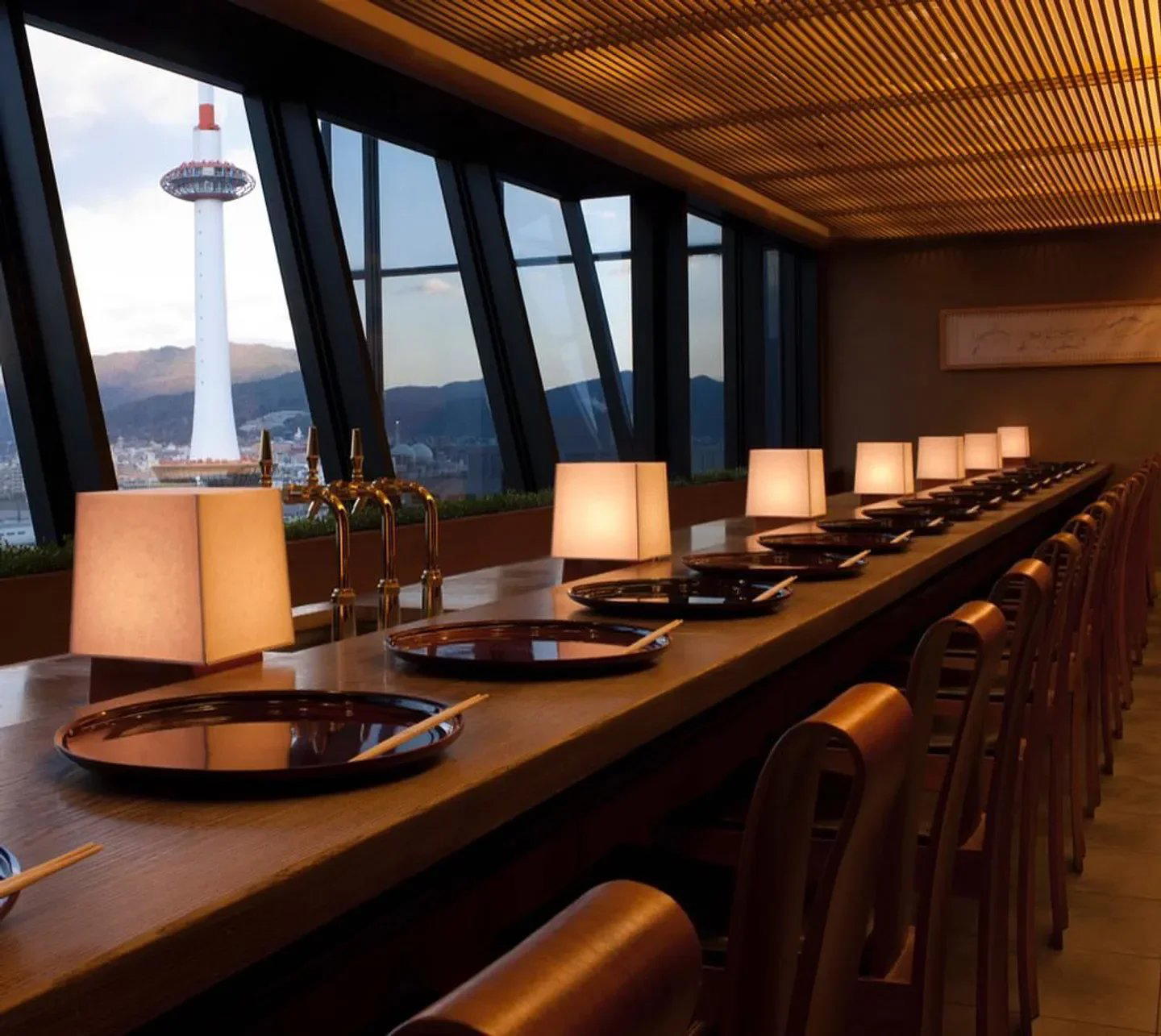
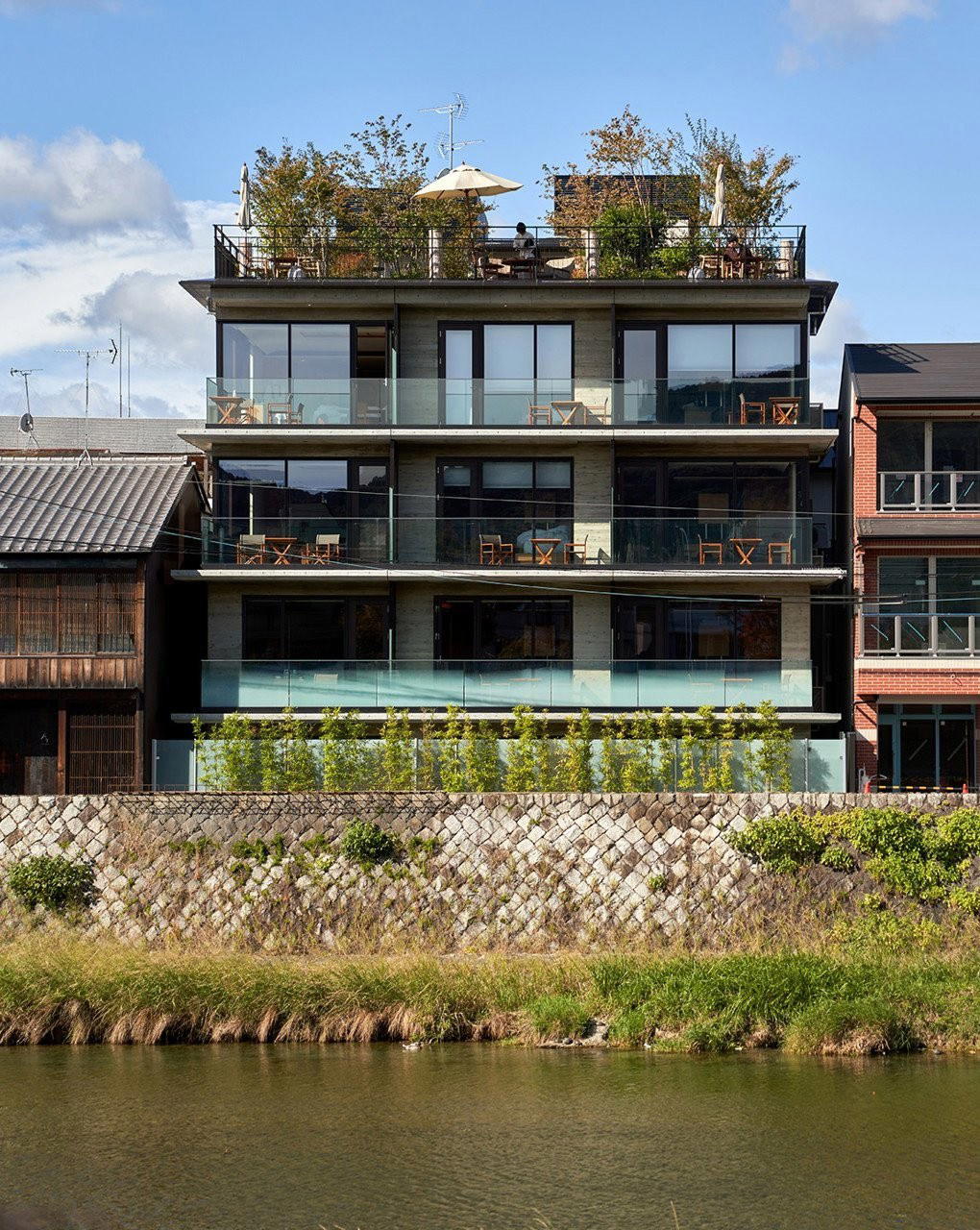
The counter runs to five seats on the second floor of a low-profile building in Shimogyo Ward, roughly a five-to-six minute walk from Karasuma Station. There is no sign-posting designed to attract walk-in trade, no official website, and no public phone number. What exists instead is a reservation structure that functions almost entirely on referral, opening to outside guests only a few times per year through Tabelog slots. That operational posture is itself a position in the market: a deliberate choice to prioritise return guests and introduced visitors over volume or discoverability.
What Five Years of Tabelog Recognition Actually Signals
Kiu opened in July 2020, into the least forgiving market conditions in recent hospitality memory. That it secured Tabelog Silver in 2022, its second full year of operation, and has held Silver in 2023, 2025, and 2026 (with a Bronze year in 2024) tells you something concrete about how the Tabelog community, which skews toward well-travelled domestic diners with high baseline expectations, has assessed consistency here. The 2026 score sits at 4.40.
The Tabelog Sushi WEST "Top 100" designation, awarded in 2021, 2022, and 2025, reinforces that positioning. This is a western Japan sushi list compiled from aggregate review data, and inclusion in three separate cycles indicates that performance has not been a single-vintage phenomenon. Holding a place in it from Kyoto, a city whose culinary identity is rooted far more in kaiseki than in nigiri, is a credential worth reading carefully.
On EP Club's own ranking of leading restaurants in Japan, Kiu sits at number 343 as of 2025, a position that reflects its scale and access constraints as much as its quality signals. It does not compete at the same visibility level as Michelin-flagged kaiseki rooms like KASHIWAI or Gion Sasaki, which carry three stars and draw international reservation traffic accordingly. Kiu operates at a different register: smaller, quieter, and accessible only to those who know precisely where to look.
Creative Technique at a Traditional Address
Tabelog classifies Kiu under both Sushi and Creative, a dual categorisation that points toward something worth examining. Pure Edo-mae sushi rooms, of which there are several strong examples in Kyoto (see Izugen and Izuu for different expressions of that tradition), tend to treat the Edo-mae method as the defining frame: specific aging and seasoning of rice, careful sourcing of fish from designated fisheries, and a restraint on embellishment that treats the technique itself as the statement.
The Creative tag alongside Sushi suggests that Chef Kazuo Hisada is working with a broader interpretive palette. Within the western Japan sushi context, this intersection of imported technique and local or seasonal product has become a recognisable approach. The logic runs as follows: Kyoto's food culture has always prioritised ingredient provenance and seasonal precision, values that kaiseki codified over centuries. When that sensibility is applied to sushi rather than multi-course Japanese cuisine, the result is a format that tends to treat the fish counter as a starting point rather than a constraint. What arrives at a counter like Kiu likely reflects that tension productively, though the specific dishes are not something this editorial can confirm from public record.
The Creative classification, combined with Hisada's apparent focus on fish quality and a price point of JPY 50,000–59,999 per person before service charge, positions this as a counter where the sourcing of product and the application of technique are doing parallel work rather than one subordinating the other.
For reference points that show how this approach plays out in adjacent formats across Japan: Goh in Fukuoka and HAJIME in Osaka both represent models where technical ambition operates within a Japan-specific ingredient framework. In the sushi category specifically, Harutaka in Tokyo shows what restraint-led precision looks like at the leading Tokyo tier, while Sushi Shikon in Hong Kong and Shoukouwa in Singapore demonstrate how the omakase format exports. Kiu occupies a different node in that network: locally rooted, tightly capacity-constrained, and deliberately difficult to book from outside Japan's established dining circles.
The Format as the Policy
Two sessions per evening, each structured as a private reservation for five to six guests, means the counter never operates as a shared space between separate parties. The implications of that format are significant. A group of five fills the room entirely; a group of six does the same. There is no ambient dining noise from adjacent parties, no split attention from the kitchen between different tables at different stages of a meal, and no visual or acoustic intrusion from guests at different price tiers or pacing. The format is the hospitality policy.
Sessions open at 17:00 and 20:15. The closing policy is strict: arriving more than fifteen minutes past the reservation time converts to a cancellation, and any modification to the booking carries a cancellation fee. A 10% service charge applies. Credit cards are accepted across major networks, including VISA, Mastercard, JCB, AMEX, and Diners. Electronic money and QR code payments are not accepted.
The venue notes a preference that guests avoid wearing strong perfume, a standard request at small counters where ambient scent can interfere with the sensory conditions that the kitchen is working to create. There are no private rooms and no parking. The second-floor location in a residential-commercial block in Shimogyo is not a destination address in the way that Gion's streets or the Nishiki Market corridor are. That is, in part, the point. For broader context on where Kiu fits within Kyoto's overall dining scene, our full Kyoto restaurants guide maps the city's leading tables across formats and price tiers. For everything else the city offers, see our guides to Kyoto hotels, Kyoto bars, Kyoto wineries, and Kyoto experiences.
Among the Kyoto sushi tier specifically, Sushi Rakumi offers a more accessible entry to the city's high-grade sushi in a slightly larger format, while Izuu represents the pressed-sushi (oshizushi) tradition that Kyoto developed independently of the Edo-mae lineage. For those also exploring Nara as part of a Kansai itinerary, akordu in Nara and 1000 in Yokohama show how different cities in the region have developed high-technique formats with distinct local inflections. 6 in Okinawa extends that comparison to the southernmost extreme of Japan's high-end dining geography.
Know Before You Go
- Address: Shimogyo Ward, Shinmeicho 230-2, 2F, Kyoto (approx. 5–6 min walk from Karasuma Station)
- Sessions: First session from 17:00, second from 20:15; reservation only, private groups of 5–6
- Price: JPY 50,000–59,999 per person (listed rate); average based on reviews JPY 40,000–49,999; 10% service charge applies
- Booking: Primarily referral-based; Tabelog slots open a few times per year
- Cancellation: Arriving 15+ minutes late treated as cancellation; any reservation change incurs a cancellation fee
- Payment: Credit cards accepted (VISA, Mastercard, JCB, AMEX, Diners); no electronic money or QR payments
- Tabelog Awards: Silver 2022, 2023, 2025, 2026; Bronze 2024; Sushi WEST Top 100 in 2021, 2022, 2025; Score 4.40 (2026)
- Note: No official website; no public phone number listed; perfume restrictions apply
FAQ
at Kiu?
Kiu operates an omakase format, meaning the menu is determined by the kitchen and there is no ordering in the conventional sense. The Tabelog Creative classification alongside Sushi suggests that the progression likely includes both traditional nigiri and preparations where technique is applied more freely to seasonal fish. The kitchen's documented focus on fish sourcing and its sake program, described as an area of particular attention, both point toward a pairing-forward experience. The practical recommendation is to approach the sake list actively: Kyoto's Fushimi-area breweries produce styles well-matched to delicate fish, and at a counter of this calibre, the drinks program is generally treated as integral rather than supplementary. Guests with dietary restrictions or strong preferences should communicate these at the time of booking rather than at the counter, given the private-group format and the inflexibility of cancellation terms.
Frequently asked questions
Is there a head chef associated with Kiu?
The chef associated with Kiu is Kazuo Hisada.
Where is Kiu in Kyoto?
Kiu is located at Japan, 〒600-8092 Kyoto, Shimogyo Ward, Shinmeicho, 230-2 2F, Kyoto.
What's the best thing to order at Kiu?
Kiu operates a set omakase format with no à la carte menu, so the question of what to order does not apply in the conventional sense. Tabelog classifies the counter under both Sushi and Creative, and the venue notes a particular focus on fish sourcing alongside a curated sake and wine programme. The full omakase runs JPY 40,000–59,999 per person based on reviewer averages, with a 10% service charge added.
What type of food is Kiu known for?
Price and Positioning
Comparable venues nearby, for context on price, style, and recognition.
| Venue | Cuisine | Price | Awards | Notes |
|---|---|---|---|---|
| KiuThis venue (the venue you are viewing) | Modern Japanese Omakase with Italian Fusion | $200–300 | Tabelog Silver #60 | Not listed |
| Suzue | Kaiseki | $300–500 | Tabelog Bronze #411 | Sakyō, Kaiseki |
| Sakamoto | Traditional Kyoto Kaiseki Omakase | $200–300 | Not listed | Higashiyama, Traditional Kyoto Kaiseki Omakase |
| Mita | Kyoto Kaiseki | $300–500 | Tabelog Silver #78 | Nakagyō, Kyoto Kaiseki |
| Nihonryori Fujii | Shizuoka Kaiseki | Not listed | Not listed | Sakyō, Shizuoka Kaiseki |
| Gion Yamagishi | Creative Seasonal Kaiseki | $150–200 | Michelin Plate | Higashiyama, Creative Seasonal Kaiseki |
Recognition history
Dated appearances from independent guides and award organizations, with the underlying list record or original source where available.
Opinionated About Dining Top Restaurants in Japan Highly Recommended
Opinionated About Dining
Tabelog Silver #60
Tabelog
Full recognition history (5 entries)
Opinionated About Dining Top Restaurants in Japan Ranked #343
Opinionated About Dining
Tabelog Silver
Tabelog
Tabelog 100 #77 · No. 77
Tabelog · Tabelog 100 - Sushi - WEST - 2025