Michelin Plate
Our verdict
A Michelin Plate recipient in Kyoto's Shimogyo Ward, Kanzan frames Japanese cooking as a meditation on seasonal produce and antique craftsmanship. Chef Kazuma Yagi sources vegetables with field-level attention and presents them on vessels drawn from his family's Gion antique heritage. The result is a meal built around deliberate detail, much of it invisible to the eye, all of it felt at the table.

Pearl is the En Primeur Club membership app, where members save venues, book tables and use the concierge.
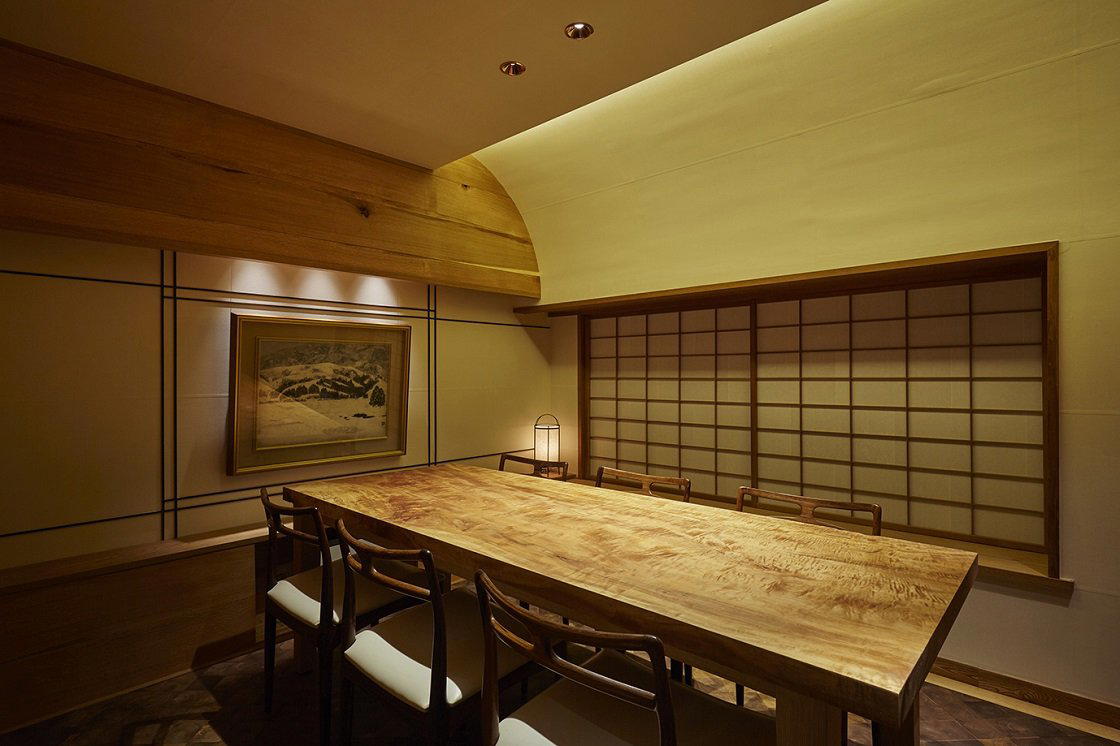
Where the Meal Begins Before the First Course
In Kyoto's mid-tier kaiseki and washoku scene, a great many restaurants promise seasonal cooking and careful presentation. Fewer interrogate what those phrases actually demand. At the ¥¥¥ price point, where Kanzan sits alongside peers such as Kenninji Gion Maruyama and Kikunoi Roan, the distinction between technically correct seasonality and genuine seasonal feeling is where reputations diverge. Kanzan sits in the latter camp, carrying consecutive Michelin Plate recognition in 2024 and 2025 as evidence that the kitchen's commitments are consistent rather than occasional.
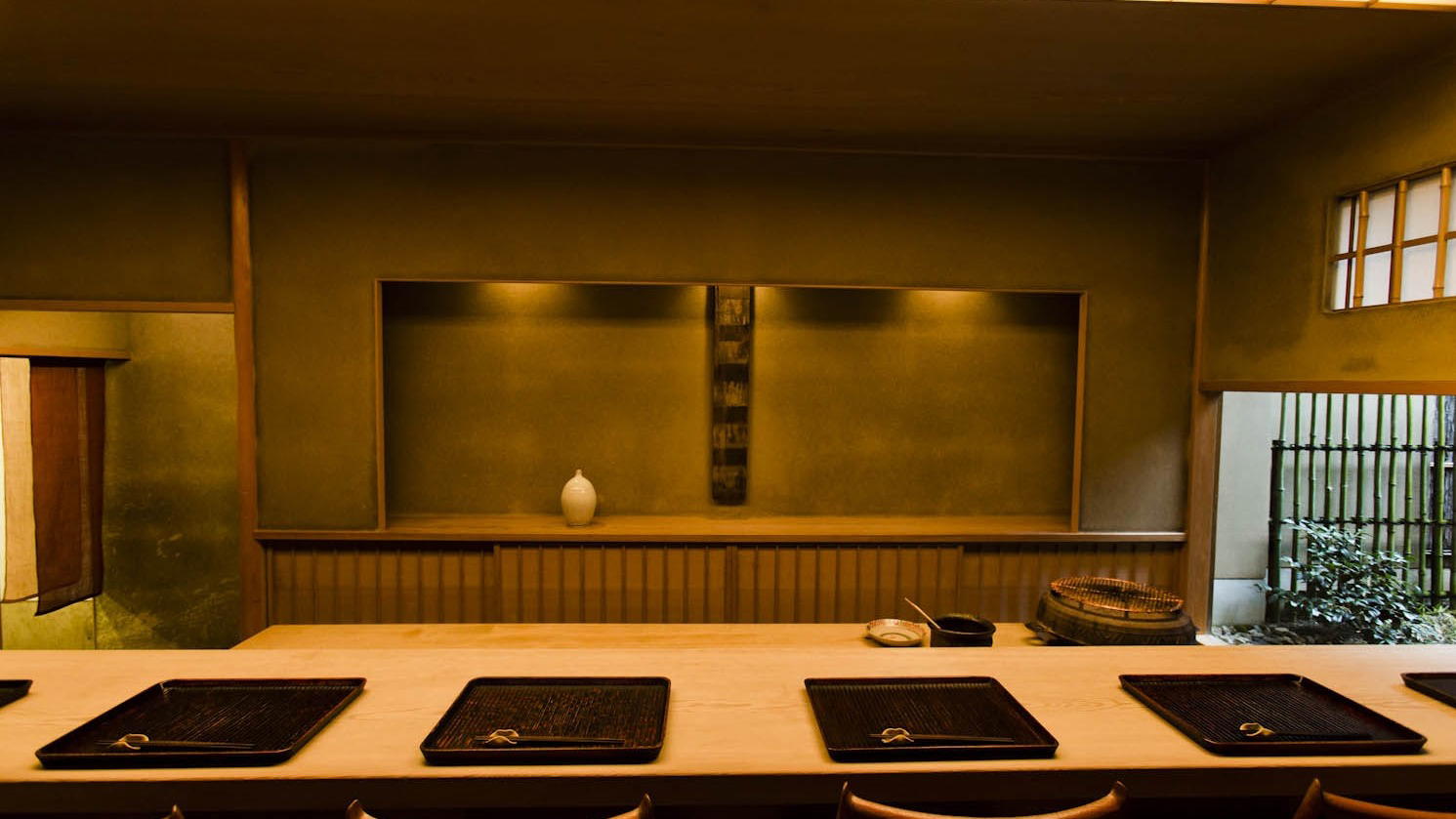
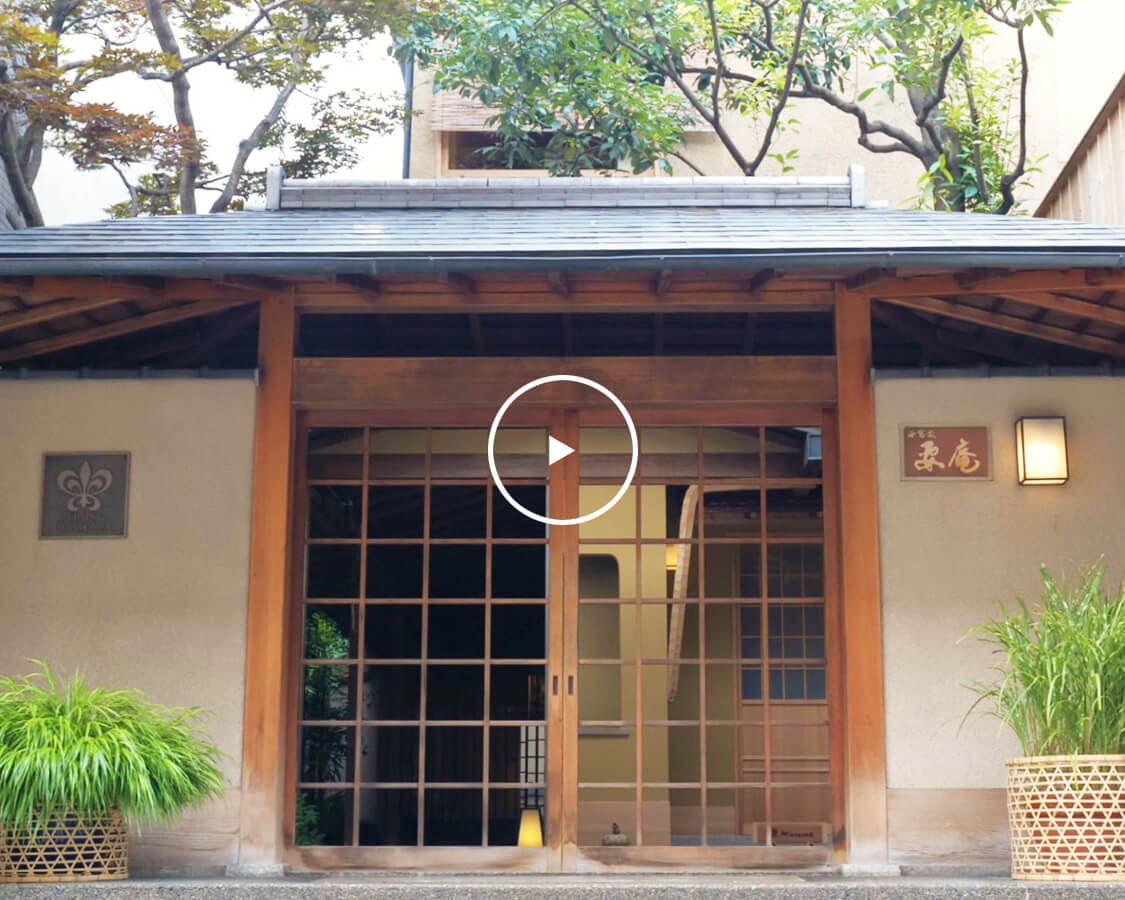
The address in Shimogyo Ward, on the eastern entry of Senshojicho along Takakura-dori, places the restaurant in a part of Kyoto that functions more as a working neighbourhood than a tourist corridor. Arriving here, past the machiya townhouses and the low hum of ordinary city life, sets a register for the meal that follows. The food is not performing for a stage. It exists in a city that has been doing this for centuries.
The Architecture of a Seasonal Meal
Japanese dining at this level operates on a logic of accumulation. A meal is not built around a centrepiece dish flanked by supporting courses; it is a sequence in which each element arrives at the right moment, in the right vessel, at the correct temperature, with a pacing that allows the diner to actually register what they are eating. That structure is the form. What varies is the content, and the content at Kanzan is seasonal produce sourced with a precision that takes the concept seriously.
Chef Kazuma Yagi's reference point for his menus is the kitchen gardens of the Shugakuin Imperial Villa in northern Kyoto, one of the great examples of Japanese garden design, where landscape and cultivation are inseparable. Simmering is a technique that either amplifies or obscures its raw material; here, the intent is amplification. The flavours of the season are not translated or reinterpreted. They are delivered.
This approach connects Kanzan to a wider tradition in Kyoto cooking, one that prizes restraint as a discipline rather than a stylistic choice. Across the city's better-regarded Japanese restaurants, from the three-star level of Isshisoden Nakamura down through the mid-tier, the shared assumption is that the ingredient, handled correctly, requires little intervention. What separates kitchens at the same tier is the quality of sourcing and the calibration of technique. At Kanzan, both are oriented toward the vegetable.
The Vessel as Argument
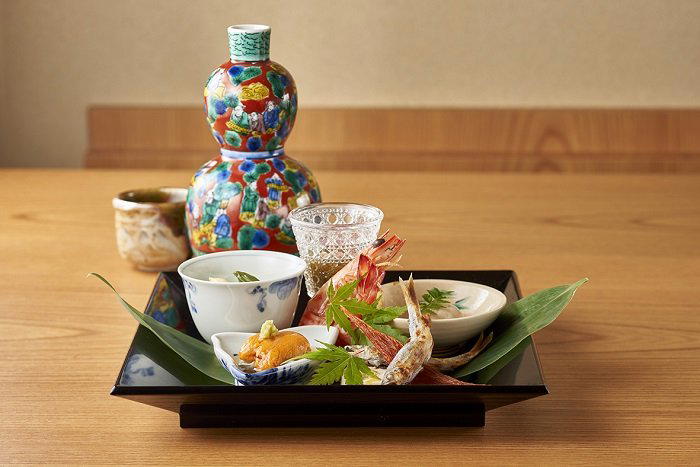
The ritual of Japanese dining is inseparable from its material culture. The plate, the bowl, the lacquerware box are not neutral carriers; they complete the dish. Yagi is the son of an antique dealer in Gion, Kyoto's historic entertainment district, and that background is not incidental to how the restaurant operates. The antique vessels used for service are drawn from that inheritance, and the appetiser platters are presented on rafts and baskets made by the chef's own hands.
Across Kyoto's dining scene, the use of traditional ceramics and lacquerware is standard practice at this price tier. The difference at Kanzan is provenance and specificity. The vessels have histories. They carry the kind of visual weight that comes from age and context, not reproduction. When the food arrives on them, the presentation is arguing for a continuity between the season's harvest and the accumulated material culture of the city, between what is grown now and what has been made and kept. It is an argument made quietly, course by course, without annotation.
For comparison, Gion Matayoshi and Kodaiji Jugyuan operate within the same broader tradition of considered presentation. What distinguishes Kanzan is the degree to which the vessel selection reflects a specific inherited knowledge of objects rather than a general aesthetic sensibility.
Detail That Does Not Announce Itself
The phrase in Kanzan's Michelin documentation, sincere devotion to details unseen by the eye, is worth pausing on. It describes a category of effort that characterises the leading Japanese service culture: the preparation done before service begins, the temperature management, the timing decisions that govern when a course arrives and how long a guest is left to sit with it. None of this is visible in the finished dish. It is felt in aggregate, as a sense that the meal is unfolding correctly without requiring the diner's active management.
Yagi trained across high-profile ryotei and ryokan before opening Kanzan, and the ryokan influence in particular is relevant here. Ryokan hospitality operates on the assumption that the guest should never have to ask for anything, because the host has already anticipated the need. That orientation toward proactive, invisible service is harder to maintain in a restaurant context than in an inn, where the relationship is more sustained.
Kanzan in the Context of Kyoto and Beyond
Within Kyoto, Kanzan occupies a position below the city's two- and three-star kaiseki houses such as Isshisoden Nakamura and above the more accessible end of the market. The Michelin Plate designation, awarded in both 2024 and 2025, signals consistent quality without the allocation pressure of a starred venue. For diners building a Kyoto itinerary that includes multiple meals, this positioning is useful: Kanzan delivers at a price and commitment level that sits between the grand kaiseki occasion and the casual obanzai lunch.
Japan's broader fine dining scene, from HAJIME in Osaka to Harutaka in Tokyo, contains a wide spectrum of approaches to seasonal Japanese cooking. What connects the serious end of that spectrum is not style but orientation: a commitment to the ingredient, to the season, and to the meal as a structured experience rather than a collection of dishes. Kanzan holds that orientation at its price point with a specificity, in its vessel culture and its sourcing logic, that sets it apart from peers doing the same thing more generically. Elsewhere in Japan, akordu in Nara, Goh in Fukuoka, and Myojaku in Tokyo each demonstrate how regional cooking traditions hold their own logic even within the shared framework of Japanese fine dining.
For a full picture of eating and drinking in Kyoto, see our full Kyoto restaurants guide, our full Kyoto bars guide, and our full Kyoto hotels guide. Further Japan context is available through 1000 in Yokohama, 6 in Okinawa, and Azabu Kadowaki in Tokyo. Our full Kyoto experiences guide and our full Kyoto wineries guide round out the city coverage.
Know Before You Go
- Location: Shimogyo Ward, Senshojicho, Kyoto, Takakura-dori, ground floor of the Takakura Building
- Price range: ¥¥¥
- Awards: Michelin Plate 2024, Michelin Plate 2025
- Guest rating:
- Cuisine: Japanese (washoku, vegetable-led seasonal cooking)
- Booking: Reservation details not publicly listed, contact via the venue directly or through a hotel concierge familiar with Kyoto's mid-tier reservation landscape
- Ideal time to visit: Each season brings a distinct menu logic; spring and autumn mark the two periods when Kyoto's seasonal produce is most pronounced
Frequently asked questions
Where is Kanzan located?
Kanzan is located at Japan, 〒600-8076 Kyoto, Shimogyo Ward, Senshojicho, 474 高辻通高倉東入泉正寺町465-2 たかくらビル 1F, Kyoto.
What should I budget for a meal at Kanzan?
Pricing at Kanzan is listed as ¥¥¥.
Has Kanzan won any awards?
Kanzan has received recognition including: Kazuma Yagi learned the spirit of devoted customer service at a succession of high-profile ryotei and ryokan. He thinks about his menus as he visits the fields of Shugakuin Imperial Villa in Kyoto. His vegetable takiawase impart the flavour….
What's the signature dish at Kanzan?
The vegetable takiawase is the dish most closely tied to chef Kazuma Yagi's identity at Kanzan. Drawing on produce from the fields around Shugakuin Imperial Villa, it foregrounds the aroma and texture of freshly harvested seasonal vegetables rather than protein. Appetiser platters served on handmade rafts and baskets extend that same philosophy to the opening of the meal.
How would you describe the cuisine at Kanzan?
How hard is it to get a table at Kanzan?
Kanzan holds a Michelin Plate for 2024 and 2025, which places it in demand without the extreme forward-booking pressure of Kyoto's starred houses.
What is Kanzan known for?
Kanzan is known for combining two distinct disciplines: kaiseki cooking rooted in Kyoto's seasonal produce cycle, and presentation through antique vessels sourced from Gion's antique trade, chef Yagi's family background. The Michelin documentation singles out 'sincere devotion to details unseen by the eye' as the defining quality, pointing to a kitchen that prioritises craft that does not seek visibility over flavour that does not announce itself.
Comparison Snapshot
| Venue | Cuisine | Price | Awards | Notes |
|---|---|---|---|---|
| KanzanThis venue (the venue you are viewing) | Kyoto Kaiseki | $200–300 | Michelin Plate | Not listed |
| Gion Sasaki | Modern Kaiseki | $300–500 | 3 Michelin Stars · La Liste Top Restaurants | Kaiseki, Japanese |
| cenci | Innovative Italian-Japanese Fusion | $100–150 | 1 Michelin Star · World's 50 Best #76 | Italian |
| Ifuki | Sumibi Kappo Kaiseki | $200–300 | 2 Michelin Stars · La Liste Top Restaurants | Kaiseki |
| Kyokaiseki Kichisen | Kyoto Kaiseki | $200–300 | 2 Michelin Stars · La Liste Top Restaurants | Japanese |
| Kyo Seika | Modern Chinese Fine Dining | $150–200 | 1 Michelin Star · Tabelog Bronze #216 | Chinese |
Recognition history
Dated appearances from independent guides and award organizations, with the underlying list record or original source where available.
Michelin Plate
Michelin
Full recognition history (3 entries)
Michelin Plate
Michelin
Michelin Plate
Michelin