Michelin Plate
Our verdict
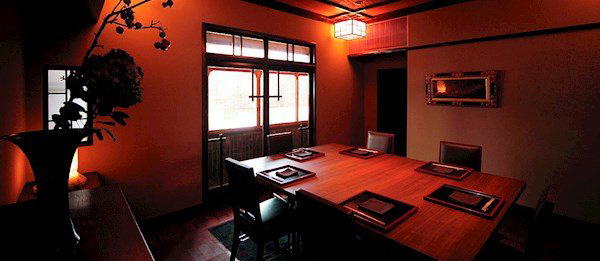
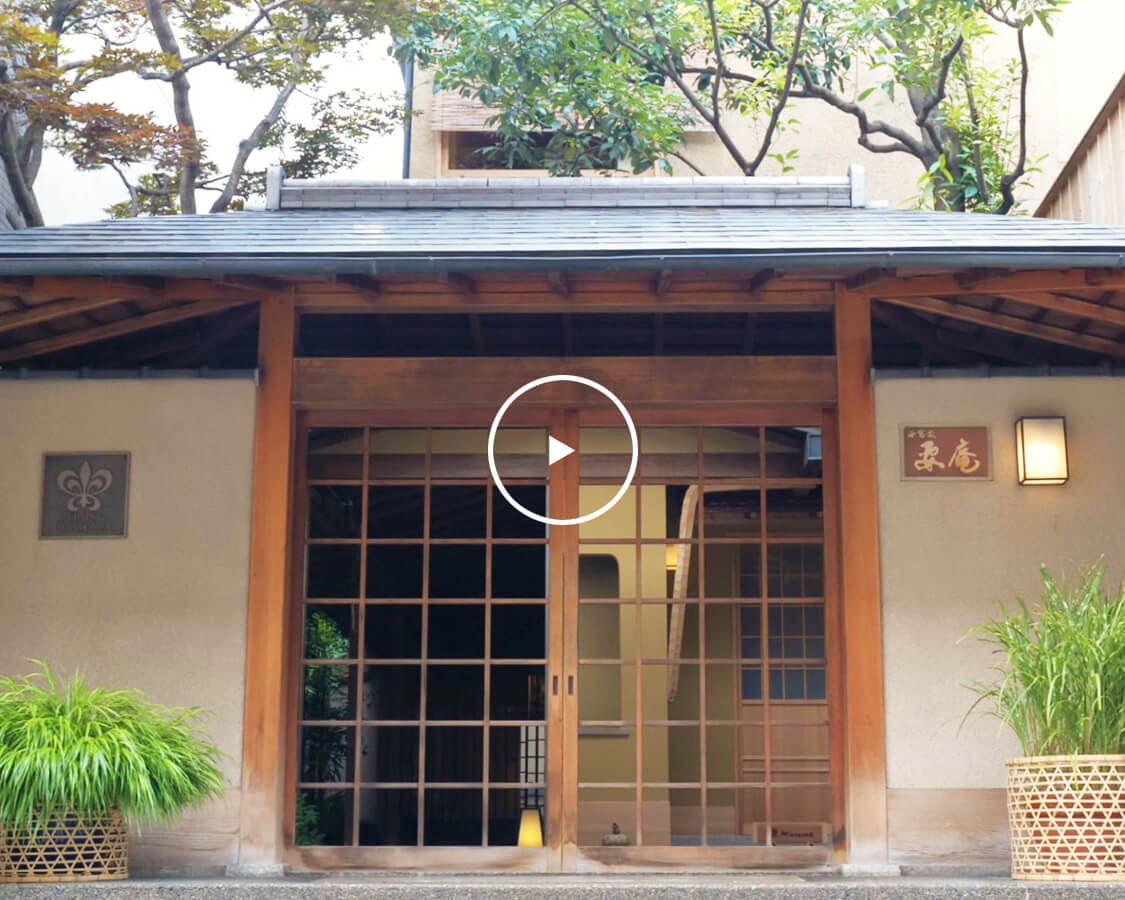
A Michelin Plate kappo in Kamigyo Ward where the menu shifts daily between à la carte requests, omakase courses, and whatever the chef decides that morning. Sourced seafood anchors the kitchen, with sashimi assortments, bonito-steeped greens, and house-made sweets rounding out a meal shaped as much by the couple running it as by any fixed formula.

Pearl is the En Primeur Club membership app, where members save venues, book tables and use the concierge.
The menu
What to order
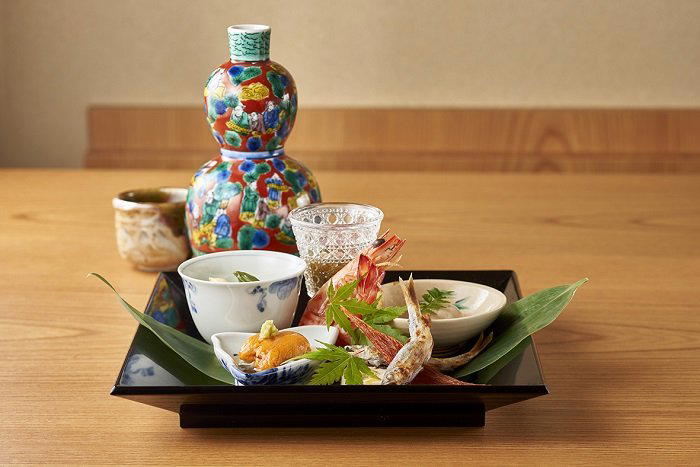
- Sashimi assortment
- Tempura of firefly squid and wild vegetables
Where Kamigyo Sets Its Own Pace
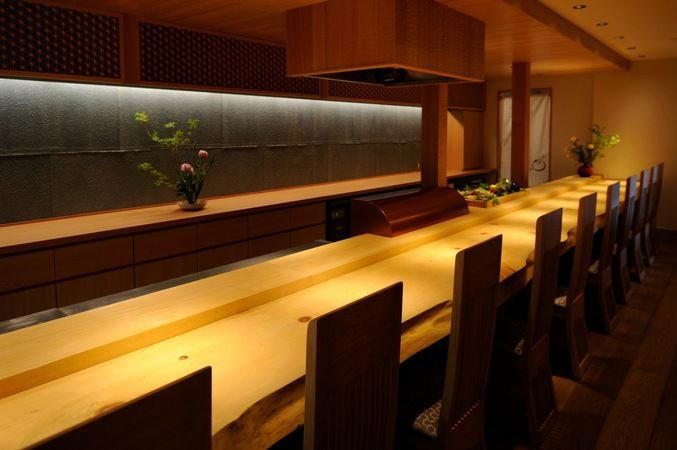
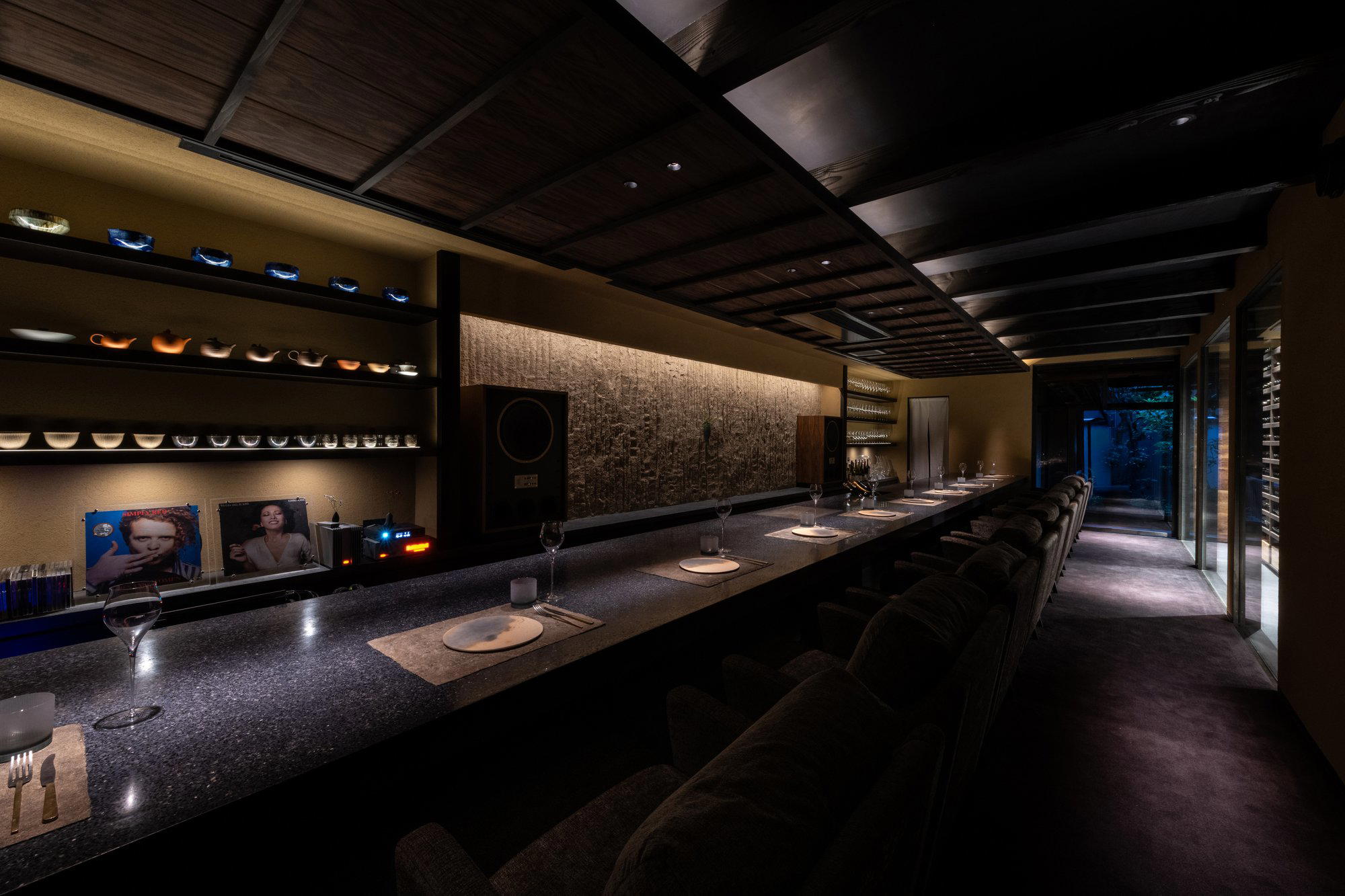
Kyoto's dining reputation tends to orbit kaiseki: the multi-course format that codified seasonal Japanese cooking and gave the city its culinary identity. But kaiseki is only part of the picture. Kappo, the older and less ceremonious sibling, operates on a different register. At a kappo counter, the chef cooks in front of you, the menu is more fluid, and the evening takes shape around conversation as much as choreography. In Kamigyo Ward, the northern residential district that sits above the tourist corridors of Gion and Higashiyama, this format fits the neighbourhood's character precisely: local, considered, and indifferent to performance.
Its address in Kamigyo is deliberate: the restaurant takes its name from an archaic reading of this part of the city, a gesture toward local identity that separates it from the Gion-facing venues that attract international visitors by default. For comparison, three-starred kaiseki houses like Gion Sasaki operate at ¥¥¥¥ price points and book months in advance; Kappo Shinatomi sits at ¥¥¥, placing it in a tier where the cooking remains serious but the transaction is less freighted.
The Format: Fluid by Design
The menu structure at Kappo Shinatomi defies the fixed-course logic that governs most of Kyoto's recognised dining. On any given evening, what you eat is determined by three overlapping inputs: what you ask for, what the chef has prepared as an omakase sequence, and what he has decided to cook that day based on ingredients and instinct. This is kappo operating as it was intended, not as a simplified alternative to kaiseki but as its own discipline, where the chef's reading of the room and the market matters as much as technique.
That fluidity places Kappo Shinatomi in a different conversation from the fixed-course operators in Kyoto's more visited districts. Venues like Kikunoi Roan and Kenninji Gion Maruyama are structured around a predetermined sequence; the interest lies in execution and seasonality within a known frame. Here, the frame itself changes. It is a model that rewards guests who arrive with questions rather than expectations.
Seafood, Stock, and the Logic of the Kitchen
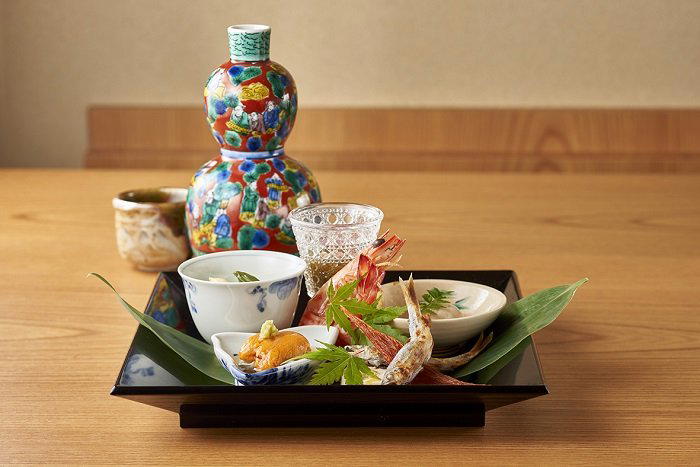
The kitchen at Kappo Shinatomi places seafood at its centre. Michelin's own notes on the restaurant point specifically to the sashimi assortment as the recommended starting point, citing the quality of sourcing as the reason. In Kyoto, a landlocked city, the sourcing of seafood has always been a logistical exercise: the old routes from the Sea of Japan through the mountains, the reliance on Osaka's markets, the premium placed on freshness in a city that cannot guarantee proximity to the coast. A kappo counter that makes seafood its focus is making a statement about supply relationships and buying standards, not just culinary preference.
Beyond sashimi, the cooking moves through boiled greens prepared with bonito stock and stewed dishes that belong to the Japanese tradition of nimono: slow-cooked preparations where seasoning accumulates over time rather than arriving in a single, sharp gesture. These are dishes that read as quiet on the plate but require precision in execution. The meal closes with sweets made by the chef's partner, a structural detail that gives the evening a domestic register distinct from the formality of a kaiseki service.
Sake as Counterpoint
Kappo format is, by its nature, more conversational around drinks than kaiseki. The chef is present throughout, the pacing is looser, and the option to order à la carte means that drink choices can respond to what arrives on the plate rather than following a predetermined pairing sequence. In this context, sake becomes an active tool rather than a background note.
The general logic of sake pairing in a kappo setting favours restraint: junmai and junmai ginjo styles, with their broader umami base and lower aromatic interference, tend to work across the range of flavours that a fluid kappo menu produces. A clean junmai daiginjo, applied selectively, suits the delicacy of well-sourced sashimi. Nimono and bonito-steeped greens call for something with more weight, where a kimoto or yamahai sake, with its lactic depth, holds its position against the stock. For guests more comfortable with shochu, the neutrality of mugi (barley) shochu provides a useful through-line across the meal's shifting registers. The point is that at a counter like this, the drink conversation is open, and there is room to ask.
This contrasts with the more controlled beverage structures at heavily starred kaiseki venues, where sake pairings are often pre-selected and the margin for individual preference is narrower. Among Kyoto's more structured kaiseki operators, including two-starred houses like Ifuki, the beverage program tends to mirror the fixed-course architecture. The kappo counter permits something closer to an ongoing negotiation.
Kamigyo in Context
Kamigyo Ward sits north of Nijo Castle and east of Nishijin, the district historically associated with textile production. It is not a dining destination in the conventional sense: there are no dense clusters of reviewed restaurants, no street that functions as a food corridor. What it offers instead is the texture of residential Kyoto, the version of the city that locals inhabit rather than visit. Placing a kappo counter here, and naming it after the area's old reading, situates the restaurant in a local network rather than a tourist circuit.
For visitors already familiar with Kyoto's reviewed dining, Kamigyo offers a different kind of evening. It requires more deliberate navigation than the Gion corridor or the southern kaiseki cluster around Higashiyama, but the distance from those circuits is partly the point. Other Kyoto operators working in analogous registers include Isshisoden Nakamura, Gion Matayoshi, and Kodaiji Jugyuan, though each sits in a different price tier and format category. For a wider view of where Kappo Shinatomi fits within the city's options, see our full Kyoto restaurants guide.
Across Japan, the kappo format appears in varied contexts. Harutaka in Tokyo and Azabu Kadowaki represent the Tokyo end of this tradition, operating at higher price points and with more formal counter structures. HAJIME in Osaka takes a different direction entirely, while akordu in Nara and Goh in Fukuoka show how the counter-cooking tradition extends across the Kansai and Kyushu regions. Further afield, Myojaku in Tokyo, 1000 in Yokohama, and 6 in Okinawa offer additional reference points for understanding how Japanese counter formats adapt to different cities and audiences. For Kyoto's broader hospitality and cultural scene, consult our full Kyoto hotels guide, our full Kyoto bars guide, our full Kyoto wineries guide, and our full Kyoto experiences guide.
Know Before You Go
Address: 315-4 Shintomicho, Kamigyo Ward, Kyoto, 602-0875, Japan
Price range: ¥¥¥
Recognition:
Cuisine: Kappo Japanese, à la carte, omakase, or a combination at the chef's discretion
Format note: The menu varies daily. Arriving with preferences rather than fixed expectations suits the format.
Booking: Not listed online; reservations likely arranged by phone or through a concierge contact. Confirmation of current booking method is recommended before visiting.
Neighbourhood: Kamigyo Ward, north Kyoto. Less central than Gion or Higashiyama; taxi or local bus is the practical approach from most hotel clusters.
Frequently asked questions
Is Kappo Shinatomi award-winning?
Kappo Shinatomi has received recognition including: Keen to earn the affection of locals, the chef named his restaurant after the ancient word for this part of Kyoto. Offerings are determined by customers’ à la carte preferences, the chef’s omakase menus, and how he feels that day. The quali….
What should I expect cuisine-wise at Kappo Shinatomi?
What's the signature dish at Kappo Shinatomi?
Michelin's own notes single out the sashimi assortment as the standout order, citing the quality of the seafood the kitchen sources. Beyond the sashimi, the restaurant holds to kappo's broader logic: boiled greens drawn through bonito stock and stewed dishes round out the savoury courses, and the meal closes with sweets made by the chef's partner. Because the menu shifts with the chef's daily preferences, the sashimi assortment is the one consistent reference point worth anchoring to.
What price level is Kappo Shinatomi?
Pricing at Kappo Shinatomi is listed as ¥¥¥.
Cuisine and Awards Snapshot
A short peer table to compare basics side-by-side.
| Venue | Cuisine | Price | Awards | Notes |
|---|---|---|---|---|
| Kappo ShinatomiThis venue (the venue you are viewing) | Kappo | $150–200 | Michelin Plate | Not listed |
| Gion Sasaki | Modern Kaiseki | $300–500 | 3 Michelin Stars · La Liste Top Restaurants | Kaiseki, Japanese |
| cenci | Innovative Italian-Japanese Fusion | $100–150 | 1 Michelin Star · World's 50 Best #76 | Italian |
| Ifuki | Sumibi Kappo Kaiseki | $200–300 | 2 Michelin Stars · La Liste Top Restaurants | Kaiseki |
| Kyokaiseki Kichisen | Kyoto Kaiseki | $200–300 | 2 Michelin Stars · La Liste Top Restaurants | Japanese |
| Kyo Seika | Modern Chinese Fine Dining | $150–200 | 1 Michelin Star · Tabelog Bronze #216 | Chinese |
Recognition history
Dated appearances from independent guides and award organizations, with the underlying list record or original source where available.
Michelin Plate
Michelin
Full recognition history (3 entries)
Michelin Plate
Michelin
Michelin Plate
Michelin