Michelin Plate
Our verdict
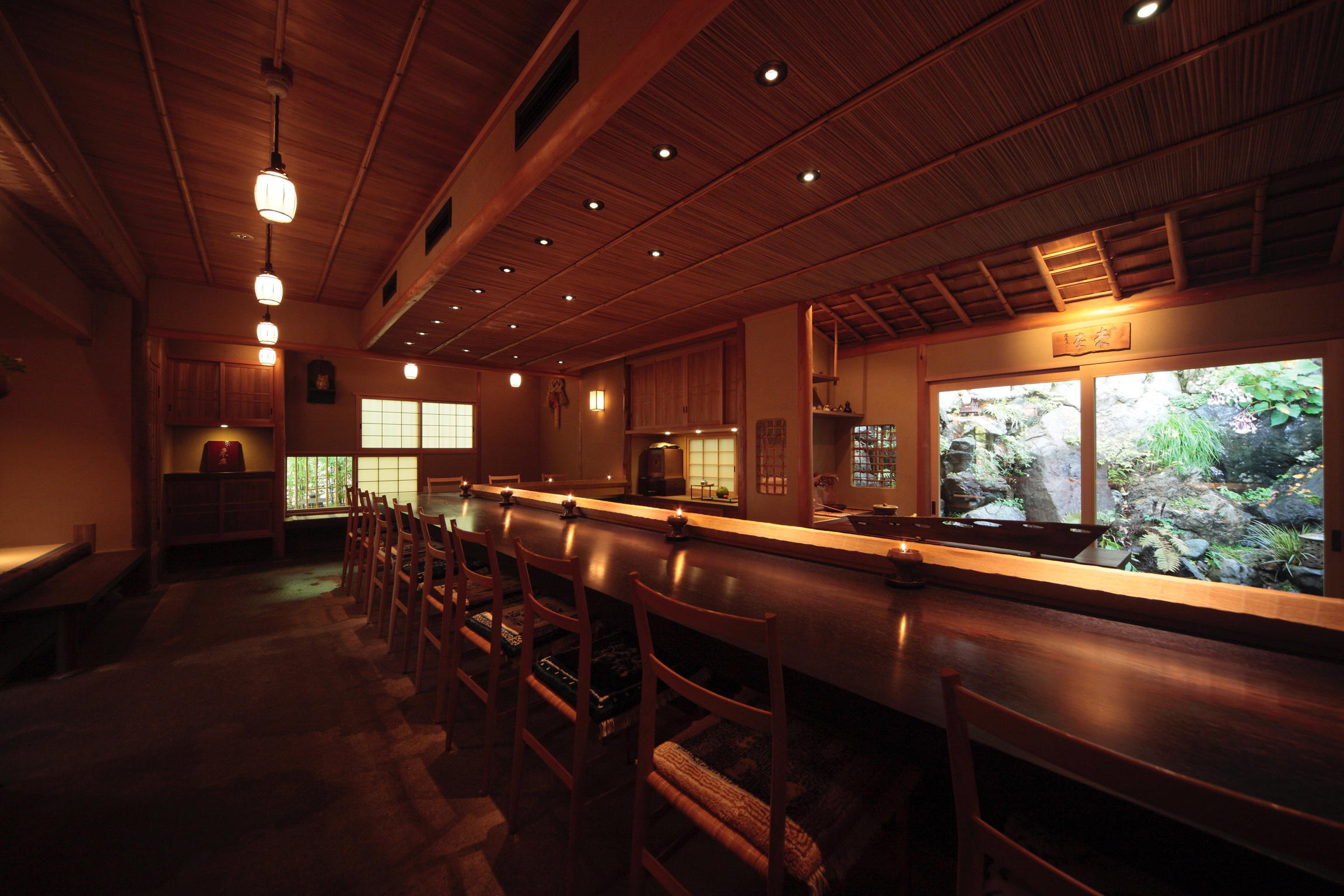
Nijo Aritsune sits in Kyoto's Nakagyo Ward as a Michelin Plate-recognised izakaya that frames itself as 'a kappo for grown-ups' — a deliberate positioning between the rigour of formal kappo and the conviviality of neighbourhood drinking. The à la carte format spans elaborate seasonal preparations and familiar staples like chargrilled chicken meatballs, with small technical gestures — whipped egg whites over rice in place of the whole egg — signalling a kitchen that takes the detail seriously without abandoning comfort.

Pearl is the En Primeur Club membership app — saves, bookings, and concierge access live there. Same editors, same standards.
- Address
- Japan, 〒604-0935 Kyoto, Nakagyo Ward, Chojiyacho, 694-3
- Phone
- +81 75-212-7587
- Hours
- Mon ClosedTue–Sat 5–10 PMSun 5–8 PM
- Website
- aritsune.jp
- Directions
- Get directions
- Booking
- Book on TableCheck
The menu
What to order
- Chargrilled chicken meatballs
- Crab croquettes
- Whipped-egg-white tamago kake gohan
The Tenor of the Room
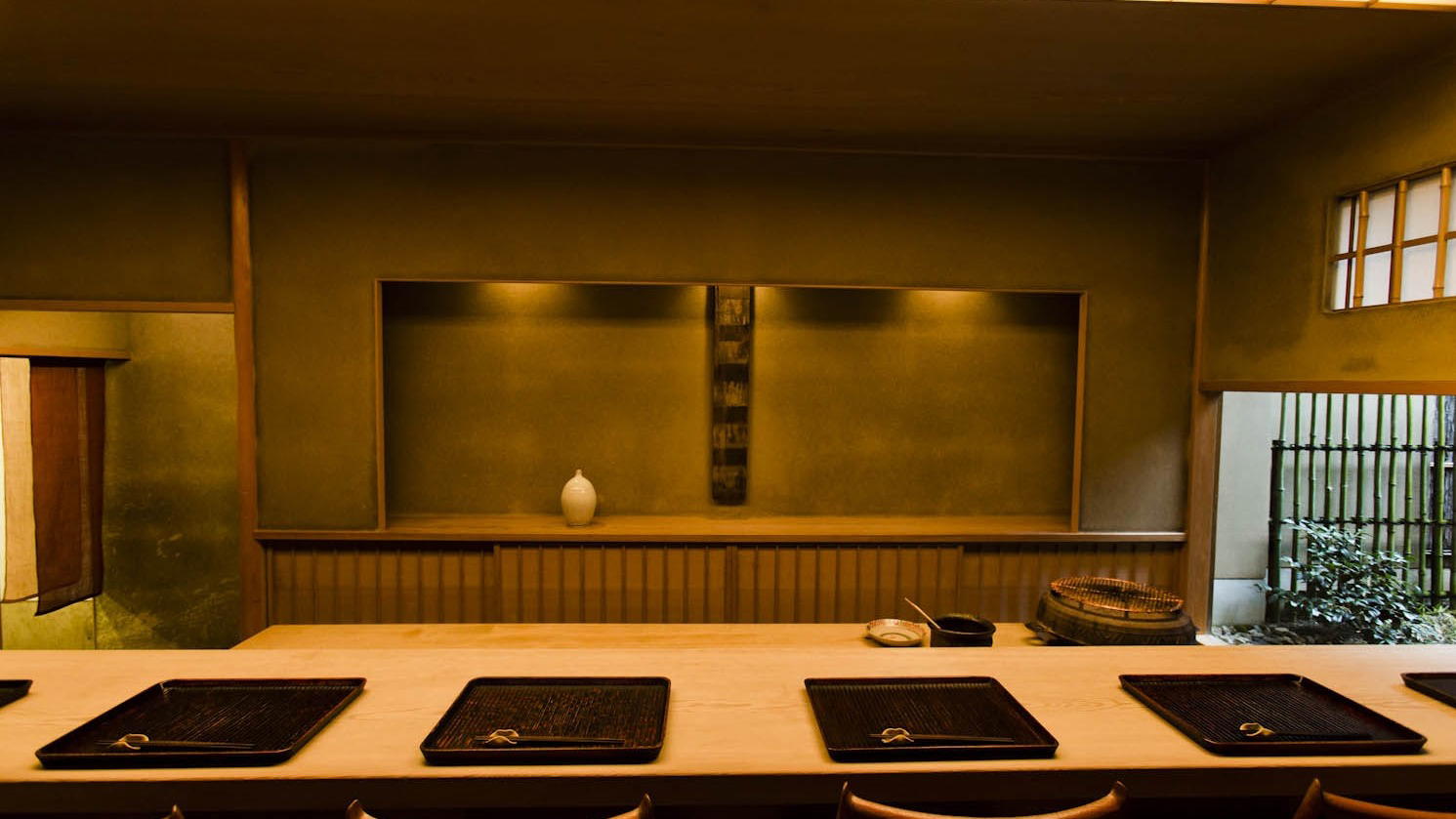
Certain Kyoto dining rooms ask you to adjust to them the moment you cross the threshold. The light shifts, the pace slows, and you understand, without being told, what register of evening is expected. Nijo Aritsune, in the Nakagyo Ward address on Chojiyacho, operates in that tradition — though its self-description as 'a kappo for grown-ups' signals something more precise than generic refinement. This is not a room for loud tables or hurried orders. The dignified tenor the kitchen explicitly cultivates is a curatorial decision, one that positions the space somewhere between the ceremonial weight of full kaiseki and the easy informality of a neighbourhood izakaya.
That positioning matters in Kyoto more than it would elsewhere. The city's dining culture rewards specificity of register. A kaiseki house like Gion Sasaki or Ifuki carries explicit seasonal ritual into its structure; the progression, the vessels, the silences are all part of the contract with the guest. An izakaya, by contrast, traditionally invites disorder — plates arriving when they arrive, conversations overlapping, sake flowing ahead of any clear narrative arc. Nijo Aritsune's proposition is that you can have the à la carte freedom of the latter with the composure and craft ambition of the former.
The Ritual of À La Carte in a Disciplined Room
The dining ritual here is shaped by the à la carte format, which places the pacing decisions in the guest's hands rather than the kitchen's. In kaiseki, the kitchen dictates sequence; in an izakaya, chaos frequently fills that vacuum. The distinction at Nijo Aritsune is that the room's atmosphere functions as a quiet guide. The dignified tenor is not enforced, it is performed by the setting, encouraging a slower, more deliberate approach to ordering than you might take elsewhere.
This matters because the menu spans a wider range than the room's composure might suggest. Elaborate dishes sit alongside accessible staples, chargrilled chicken meatballs, croquettes, without the menu apologising for either end of the range. In izakaya culture broadly, the coexistence of refined and familiar on the same menu is a feature, not a contradiction; the art is in the transition between them. Nijo Aritsune leans into this, treating both registers as legitimate expressions of Japanese food culture rather than separate categories that need to be kept apart.
The technical gestures visible in the menu point to a kitchen that pays attention to texture and temperature at a granular level. The treatment of egg whites, whipped separately and placed over rice rather than cracking a whole raw egg in the standard tamago-kake-gohan manner, is a small intervention that changes the dish's mouthfeel and visual presentation without disrupting its essential character. It is exactly the kind of edit that signals culinary intelligence without needing to announce itself. Compared to the stricter boundaries of kaiseki peers operating at the ¥¥¥¥ tier, the freedom to make these lateral moves within familiar forms is part of what defines the izakaya format's creative latitude.
The 'Aritsune' Principle and What It Means in Practice
The name Aritsune translates as 'changing so that things will not change', a formulation that echoes the broader Japanese cultural concept of maintaining essential character through careful evolution. In practice, this is a useful lens for reading the menu. The kitchen is not chasing novelty for its own sake, nor is it frozen in a preservationist stance toward traditional forms. The whipped egg white is an example: the dish remains recognisably tamago-kake-gohan, but the preparation is updated. The chargrilled chicken meatball, a preparation with deep roots in Japanese yakitori culture, appears without irony alongside more elaborate preparations.
This approach places Nijo Aritsune in a broader current running through Kyoto's contemporary dining scene. Restaurants like Berangkat, Eitaroya, and Saketosakana DNA each work through different versions of the same tension: how much formal tradition to retain, how much contemporary sensibility to admit. In the izakaya category specifically, Nonkiya Mune and Komedokoro Inamoto represent different points on the spectrum between comfort-first and craft-forward. Nijo Aritsune's Michelin Plate recognition in both 2024 and 2025 places it in the tier of izakaya the guide considers worth seeking out, not starred, but acknowledged as operating with intention and consistency.
Seasonal Framing and the Right Time to Go
Izakaya menus in Japan respond to seasonal availability with varying degrees of commitment. At the ¥¥¥ price point and with a Michelin Plate designation, Nijo Aritsune operates in a tier where seasonal responsiveness is expected rather than optional. Kyoto's culinary calendar has marked peaks: the matsutake season in autumn, the ayu sweetfish window in summer, the spring vegetables that define Kyo-yasai cooking in the months before the tourist surge. Coming during one of these transitions, late September through November, or the quieter weeks of early spring before the sakura crowds arrive, is likely to yield a more interesting à la carte range than a visit in the flat months of mid-winter. For broader context on how Kyoto's dining calendar maps across categories, see our full Kyoto restaurants guide.
Where This Fits in the Wider Kansai Picture
At the ¥¥¥ price tier, Nijo Aritsune sits in a competitive band that includes non-Japanese options in Kyoto (cenci, Kyo Seika) alongside Japanese-cuisine peers. The izakaya format, however, gives it a specific flexibility those restaurants do not share: the ability to serve both as a full dinner destination and as a later-evening stop after an earlier meal elsewhere. That functional range is part of why the format endures in Japanese city dining culture, and it is particularly useful in Kyoto, where multi-stop evenings, an early kaiseki followed by a nightcap and small plates, are a common pattern among food-focused visitors.
Across the Kansai region and beyond, the izakaya category is producing some of the more interesting cooking in Japan's mid-to-premium tier. Benikurage in Osaka represents a different inflection of the format, and seeing both cities' approaches to the genre is instructive. Further afield, HAJIME in Osaka, akordu in Nara, Goh in Fukuoka, and Harutaka in Tokyo each sit in adjacent categories for those building a multi-city Japan itinerary. For a more unusual comparison of how the izakaya form translates into entirely different cultural contexts, Cube by Mika in Schwerin offers a European counterpoint worth considering. For dining further afield, 1000 in Yokohama and 6 in Okinawa round out a broader Japan picture.
Planning Your Visit
| Detail | Nijo Aritsune | Izakaya peer (casual tier) | Kaiseki peer (¥¥¥¥) |
|---|---|---|---|
| Price tier | ¥¥¥ | ¥¥ | ¥¥¥¥ |
| Format | À la carte, full menu range | À la carte, casual range | Set kaiseki progression |
| Michelin recognition | Plate (2024, 2025) | Typically none | Star(s) or Plate |
| Varies | Varies | ||
| Pacing control | Guest-led | Guest-led | Kitchen-led |
Address: 694-3 Chojiyacho, Nakagyo Ward, Kyoto. For broader trip planning, consult our full Kyoto hotels guide, our full Kyoto bars guide, our full Kyoto wineries guide, and our full Kyoto experiences guide.
Frequently asked questions
Is Nijo Aritsune better for a quiet night or a lively one?
The room positions itself as 'a kappo for grown-ups', which signals a deliberate preference for composed conversation over table-to-table noise. The à la carte format reinforces this: pacing is guest-controlled, which tends to suit a measured evening rather than a fast-moving group dinner. At ¥¥¥, the price point alone filters the crowd toward something unhurried.
Is Nijo Aritsune expensive?
Pricing at Nijo Aritsune is listed as ¥¥¥.
Does Nijo Aritsune have a Michelin star or similar recognition?
Nijo Aritsune has received recognition including: Billing itself as ‘a kappo for grown-ups’, Nijo Aritsune maintains a dignified tenor while offering a broad range of à la carte items. While elaborate dishes are the establishment’s forte, familiar friends such as chargrilled chicken meatba….
What do people recommend at Nijo Aritsune?
The kitchen's elaborate dishes are the stated forte, but the chargrilled chicken meatballs and croquettes have enough of a following to remain fixtures on the à la carte menu alongside more considered plates. The egg-white rice dish — a reworking of the familiar raw-egg-on-rice format using only whipped whites — draws particular attention as a marker of the kitchen's modernising instinct. Both the Michelin Plate in 2024 and 2025 confirm the consistency of the offer.
| Venue | Cuisine | Price | Awards | Notes |
|---|---|---|---|---|
| Nijo AritsuneThis venue — the venue you are viewing | Modern Kappo | $100–150 | Michelin Plate | Not listed |
| Gion Sasaki | Modern Kaiseki | $300–500 | 3 Michelin Stars · La Liste Top Restaurants | Kaiseki, Japanese |
| cenci | Innovative Italian-Japanese Fusion | $100–150 | 1 Michelin Star · World's 50 Best #76 | Italian |
| Ifuki | Sumibi Kappo Kaiseki | $200–300 | 2 Michelin Stars · La Liste Top Restaurants | Kaiseki |
| Kyokaiseki Kichisen | Kyoto Kaiseki | $200–300 | 2 Michelin Stars · La Liste Top Restaurants | Japanese |
| Kyo Seika | Seasonal Chinese Fine Dining in Kyoto | Not listed | 1 Michelin Star | Chinese |
Recognition history
Dated appearances from independent guides and award organizations, with the underlying list record or original source where available.
Michelin Plate
Michelin
Full recognition history (3 entries)
Michelin Plate
Michelin
Michelin Plate
Michelin