
Michelin Plate
Our verdict
A Michelin Plate–recognised à la carte kitchen in Nakagyo Ward, Tokumaru updates its menu daily to track the seasons, working through a full repertoire of wanmono alongside dishes that turn familiar formats on their head. The price point sits well below Kyoto's kaiseki tier, making it a practical entry into serious Japanese cooking without the omakase commitment.

Pearl is the En Primeur Club membership app, where members save venues, book tables and use the concierge.
The menu
What to order
- Sweetfish sushi
- Eel tempura rice ball
- Potato salad with beef and pickled turnip
Daily Change, Daily Discipline
Nakagyo Ward sits between Kyoto's ceremonial north and its denser commercial south, a district of narrow machiya-lined streets where the city's working restaurant culture runs quietly alongside its more photographed traditions. In this part of town, the dining room doesn't announce itself with lanterns or latticed facades designed for tourism. The approach is quieter, and the signal is the food itself.
Tokumaru occupies that register. Recognised with a Michelin Plate in both 2024 and 2025, it operates on a daily-change à la carte format that positions it at a different point from the fixed-course kaiseki houses that define Kyoto's upper tier, places like Isshisoden Nakamura or Gion Matayoshi, where the chef's sequence is the contract. Here, the guest chooses. The kitchen's job is to make every individual dish worth that choice.
The Argument for À La Carte
Kyoto's kaiseki tradition is built around progression: the arc from sakizuke through hassun to shokuji is the form, and the form is half the point. Restaurants operating at the ¥¥¥¥ level Kenninji Gion Maruyama, Kikunoi Roan, Kodaiji Jugyuan, price against that architecture. Tokumaru prices against a different logic. At ¥¥, it occupies a tier where the kitchen must justify individual dishes rather than hide weaker moments inside a structured sequence. That is a harder standard in some ways, and the Michelin recognition suggests the kitchen meets it.
The à la carte format also enables a different relationship with seasonality. Where a kaiseki chef builds a single seasonal argument per service, an à la carte menu updated daily can respond to what arrived at the market that morning. The commitment to daily revision is not a marketing posture; it requires the kitchen to source with precision and cook with enough range to absorb whatever the season offers on any given day.
Ingredient Logic: Wanmono and the Weight of the Sea
The menu's editorial emphasis on wanmono, the lidded soup course that kaiseki practitioners treat as one of the most technically demanding categories, signals a kitchen that is not softening its ambitions for an accessible price point. Wanmono broth work requires calibrated dashi, careful seasoning, and a protein or vegetable component cut and cooked to precision. A full range of wanmono on an à la carte menu at this price tier is an unusual commitment.
Approach to individual ingredients carries the same attention. The kitchen's version of potato salad replaces ham with beef, a substitution that shifts the dish's weight and fat register without announcing itself as innovation. The isobe-age, tempura-fried ingredients wrapped or dusted with nori, uses aosa nori, a laver seaweed with a distinctly oceanic fragrance, in place of the more common dried sheet nori. The effect is described as bringing out the scent of the sea: a specific sensory outcome achieved through a specific material choice, not through technique alone.
That orientation toward ingredient primacy connects Tokumaru to a broader current in Japanese cooking, one that runs from the standing sushi bars of Tokyo's market districts through to the ingredient-led counter restaurants of Osaka and Fukuoka. Chefs at venues like Harutaka in Tokyo and Goh in Fukuoka operate at different price points and formats, but share the same foundational argument: that sourcing quality and restraint in preparation are the primary discipline. Tokumaru makes that argument at ¥¥.
Seasonal Revision as Practice
The daily menu update is the structural expression of a philosophical position common to serious Japanese kitchens: that the role of the cook is to convey the season rather than to impose a style upon it. This is not a new idea in Kyoto. The city's ingredient vocabulary, bamboo shoot in spring, ayu in summer, matsutake in autumn, turnip and buri in winter, is one of the most codified in any food culture, and the pressure to work within that vocabulary honestly is part of what gives Kyoto dining its particular character.
What distinguishes daily revision from monthly or seasonal menu changes is the granularity of response it demands. A kitchen updating its card daily must know its suppliers well enough to anticipate, not just react. The discipline behind that practice rarely shows on the plate in a way a first-time visitor would identify, but it is the reason the plate arrives in the condition it does.
For context across the Kansai and wider Japan, venues operating with similar ingredient-forward commitments at varying price tiers include HAJIME in Osaka, akordu in Nara, 1000 in Yokohama, and 6 in Okinawa. Tokyo kitchens working within the same register of Japanese cooking include Myojaku and Azabu Kadowaki.
Where Tokumaru Sits in the City
Kyoto's restaurant market stratifies clearly. The ¥¥¥¥ kaiseki tier carries global recognition and requires advance booking measured in weeks or months. Below that sits a ¥¥¥ layer of more contemporary Japanese and fusion formats. At ¥¥, serious Japanese cooking is less densely represented, which is part of what gives Tokumaru its position in the city's dining map. It holds Michelin recognition and operates a technically demanding menu at a price point that places it outside the set-menu-only circuit.
For a kitchen working on daily change, consistency at that scale requires operational discipline that the numbers quietly confirm.
For a fuller picture of where Tokumaru fits within Kyoto's restaurant options, see our full Kyoto restaurants guide. The city's broader hospitality context is covered in our full Kyoto hotels guide, our full Kyoto bars guide, our full Kyoto wineries guide, and our full Kyoto experiences guide.
Planning Your Visit
Address: 406 Kameyacho, Nakagyo Ward, Kyoto, 604-0941. Budget: ¥¥, mid-range by Kyoto standards, accessible without the commitment of a full kaiseki spend. Recognition: Michelin Plate 2024 and 2025.
What Should I Order at Tokumaru?
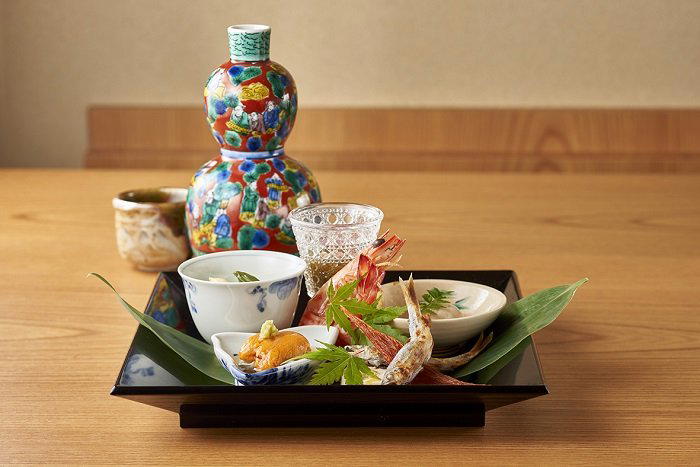
Because the menu changes daily, no specific dish is guaranteed on any given visit. What the kitchen consistently prioritises, based on its Michelin documentation, is its wanmono selection and its ingredient-driven variations on familiar formats. If wanmono appears on the card, it is the course that leading demonstrates the kitchen's technical range. Among the à la carte options, dishes built around seasonal seafood and those incorporating aosa nori reflect the kitchen's preference for ingredients that carry distinct natural fragrance and texture. The potato salad with beef in place of ham is cited as a representative example of the kitchen's approach: a small, deliberate material substitution that changes a dish's register without calling attention to itself. Order across categories rather than anchoring to a single course, the à la carte format exists precisely to let you move through the menu on your own terms.
Credentials Lens
A short peer table to compare basics side-by-side.
| Venue | Cuisine | Price | Awards | Notes |
|---|---|---|---|---|
| TokumaruThis venue (the venue you are viewing) | Seasonal À La Carte Japanese | $100–150 | Michelin Plate | Not listed |
| Gion Sasaki | Modern Kaiseki | $300–500 | 3 Michelin Stars · La Liste Top Restaurants | Kaiseki, Japanese |
| cenci | Innovative Italian-Japanese Fusion | $100–150 | 1 Michelin Star · World's 50 Best #76 | Italian |
| Ifuki | Sumibi Kappo Kaiseki | $200–300 | 2 Michelin Stars · La Liste Top Restaurants | Kaiseki |
| Kyokaiseki Kichisen | Kyoto Kaiseki | $200–300 | 2 Michelin Stars · La Liste Top Restaurants | Japanese |
| Kyo Seika | Modern Chinese Fine Dining | $150–200 | 1 Michelin Star · Tabelog Bronze #216 | Chinese |
Recognition history
Dated appearances from independent guides and award organizations, with the underlying list record or original source where available.
Michelin Plate
Michelin
Full recognition history (3 entries)
Michelin Plate
Michelin
Michelin Plate
Michelin
Continue exploring
More in Kyoto
Restaurants in Kyoto
All restaurants in Kyoto →
Bars in Kyoto
All bars in Kyoto →
Hotels in Kyoto
All hotels in Kyoto →
Wineries in Kyoto
Browse all →
Details
- Intimate
- Elegant
- Cozy
- Sophisticated
- Date Night
- Special Occasion
- Business Dinner
- A La Carte
Current opening hours
- Monday
- 5–11 PM
- Tuesday
- 5–11 PM
- Wednesday
- Closed
- Thursday
- 5–11 PM
- Friday
- 5–11 PM
- Saturday
- 5–11 PM
- Sunday
- 5–11 PM
Hours can change for holidays and private events. Hours as of .
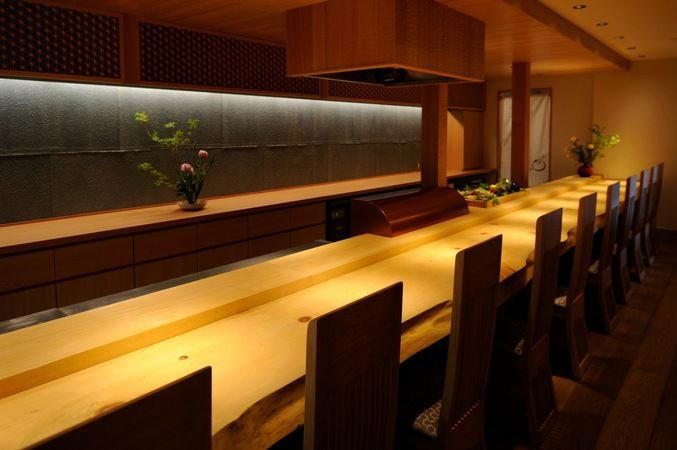
Comfortable and relaxed atmosphere where time flows easily amid amiable conversation with the chef.