
Our verdict
A Gion institution operating since before modern Kyoto's tourist infrastructure existed, Izuju has earned consecutive recognition on Opinionated About Dining's Japan list, ranking 542nd nationally in 2025. The kitchen focuses on Chinese cuisine in a neighbourhood better known for kaiseki, which positions it as a deliberate counterpoint to the district's dominant culinary tradition. Open four days a week with hours ending at 7pm, it rewards visitors who plan around its schedule.

Pearl is the En Primeur Club membership app, where members save venues, book tables and use the concierge.
Gion's Counterpoint: Chinese Cuisine in a Kaiseki Neighbourhood
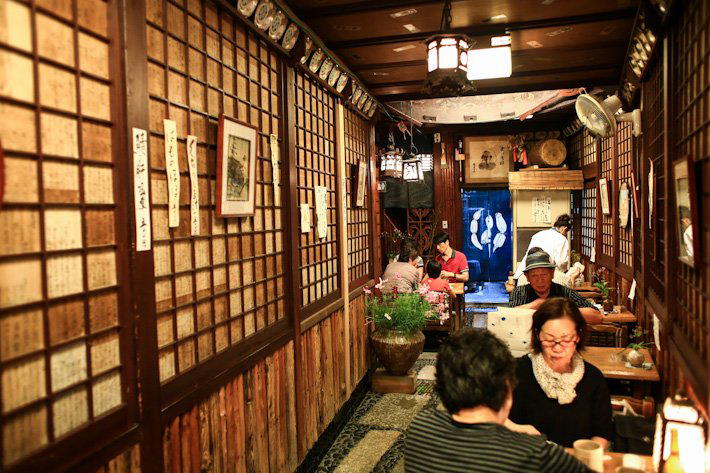
Approaching Izuju along Gionmachi Kitagawa, the sensory cues are familiar Higashiyama: stone-paved lanes, wooden shopfronts, the ambient presence of temples and teahouses that have shaped this district's identity for centuries. What is less expected is what you find inside: a Chinese kitchen operating in a neighbourhood whose culinary reputation rests almost entirely on kaiseki. That tension, between Gion's dominant tradition and Izuju's deliberate departure from it, is exactly what gives the restaurant its critical footing.
Kyoto's dining hierarchy has long been organised around washoku formality, with kaiseki houses like Akihana and Hachiraku anchoring the high end, and the three-Michelin-starred Gion Sasaki setting the benchmark for seasonal precision. Chinese cuisine occupies a smaller niche in this city, and restaurants operating in that niche must work harder to establish legitimacy with an audience primed for Japanese culinary traditions. Izuju has done so quietly, accumulating critical recognition over time without the Michelin infrastructure that typically drives visibility.
What the OAD Rankings Signal
Opinionated About Dining, the survey-based ranking system that aggregates votes from serious diners and industry professionals, has included Izuju in its Japan list in both 2023 (Recommended) and 2025 (Ranked #542 nationally). That progression from recommended to ranked reflects a tightening of voter consensus around the restaurant's quality. OAD rankings skew toward venues that satisfy experienced eaters rather than casual visitors, so a national ranking in Japan, a country with one of the world's most competitive restaurant ecosystems, carries more signal than it might elsewhere.
For context: the OAD Japan list positions Izuju against thousands of restaurants across the country, from Tokyo omakase counters to regional specialists. Reaching a numbered rank means sustained positive feedback from a pool of diners who compare it, consciously or not, against the full range of Japanese dining options. That this has been achieved by a Chinese restaurant in Kyoto, rather than a kaiseki house in a more expected location, is itself an editorial point worth registering.
Kyo Seika, holding a Michelin star and operating at ¥¥¥ price point, represents the tier that combines institutional recognition with accessible pricing. Canton Shunsai Ikki adds another reference point in the same cuisine category. Izuju's OAD recognition places it in conversation with this cohort without the Michelin marker that tends to dominate the mainstream conversation about Chinese dining in Japan.
Chinese Cuisine in the Kyoto Context
Chinese restaurants in Japan operate across a wide spectrum, from the Cantonese-influenced yoshoku adaptations that became fixtures of postwar urban dining to technically rigorous kitchens that draw on regional Chinese traditions with the same precision applied to kaiseki. Kyoto's version of this spectrum has historically been compressed: the city's culinary identity is so defined by indigenous tradition that outside cuisines tend to occupy peripheral positions in the critical imagination, even when the cooking is serious.
What OAD recognition does in this context is confirm that a subset of informed eaters has assessed Izuju on its own terms, independent of how it sits within Kyoto's dominant culinary narrative. The breadth of its audience, combined with its specialist critical recognition, suggests a kitchen capable of working at multiple registers.
For visitors who typically anchor their Kyoto dining to Japanese forms, whether kaiseki at VELROSIER or the precision-driven menus at Ifuki (two Michelin stars) or Kyokaiseki Kichisen (two Michelin stars), a meal at Izuju offers a genuinely different frame on what serious cooking looks like in this city. The comparison is instructive rather than competitive: kaiseki's logic of seasonal restraint and washoku's material hierarchy are not operative here, which means the kitchen is solving a different set of problems.
The Restaurant in Its Regional Setting
Japan's broader dining scene offers a useful frame for understanding what Izuju represents at a national level. Cities like Osaka, with institutions such as HAJIME, and Tokyo, with counters like Harutaka, tend to dominate the OAD conversation simply by weight of numbers and institutional infrastructure. That a Kyoto Chinese restaurant achieves a national ranking in this environment reflects how strong the signal needs to be to break through the noise.
Further afield, the comparison set for serious Chinese cooking in unexpected settings includes Restaurant Tim Raue in Berlin and Mister Jiu's in San Francisco, both venues that have established Chinese culinary traditions in cities not primarily associated with the form. Izuju operates within a similar logic, though the context is tighter: Kyoto's culinary conservatism makes the achievement more pointed.
For those planning a broader Kansai itinerary, the region's dining scene extends well beyond Kyoto. akordu in Nara and Goh in Fukuoka represent the kind of serious, independently recognised cooking that the OAD survey tends to surface; 1000 in Yokohama and 6 in Okinawa extend the frame to Japan's outer dining geography.
Know Before You Go
- Address: 292-1 Gionmachi Kitagawa, Higashiyama Ward, Kyoto, 605-0073
- Hours: Monday, Tuesday, Friday, Saturday, Sunday 10:30am–7pm; Wednesday and Thursday closed
- Awards: Opinionated About Dining Japan Ranked #542 (2025); OAD Japan Recommended (2023)
- Planning note: The Wednesday–Thursday closure means mid-week visitors need to plan around a four-day operating window. Last entry timing is not confirmed; arrival before 6pm is advisable given the 7pm close.
Further Reading from EP Club
For broader planning, see our full Kyoto restaurants guide, alongside our Kyoto hotels guide, our Kyoto bars guide, our Kyoto wineries guide, and our Kyoto experiences guide.
Frequently asked questions
What's the address for Izuju?
Izuju is located at 292-1 Gionmachi Kitagawa, Higashiyama Ward, Kyoto, 605-0073, Japan, Kyoto.
Who's behind the kitchen at Izuju?
The chef associated with Izuju is Various.
Cuisine Context
A small set of peers for context, based on recorded venue fields.
| Venue | Cuisine | Price | Awards | Notes |
|---|---|---|---|---|
| IzujuThis venue (the venue you are viewing) | Traditional Kyoto-Style Sushi | $10–20 | Not listed | Not listed |
| Gion Sasaki | Modern Kaiseki | $300–500 | 3 Michelin Stars · La Liste Top Restaurants | Kaiseki, Japanese |
| cenci | Innovative Italian-Japanese Fusion | $100–150 | 1 Michelin Star · World's 50 Best #76 | Italian |
| Ifuki | Sumibi Kappo Kaiseki | $200–300 | 2 Michelin Stars · La Liste Top Restaurants | Kaiseki |
| Kyokaiseki Kichisen | Kyoto Kaiseki | $200–300 | 2 Michelin Stars · La Liste Top Restaurants | Japanese |
| Kyo Seika | Modern Chinese Fine Dining | $150–200 | 1 Michelin Star · Tabelog Bronze #216 | Chinese |
Recognition history
Dated appearances from independent guides and award organizations, with the underlying list record or original source where available.
Opinionated About Dining Top Restaurants in Japan Recommended
Opinionated About Dining
Full recognition history (3 entries)
Opinionated About Dining Top Restaurants in Japan Ranked #542
Opinionated About Dining
Opinionated About Dining Top Restaurants in Japan Recommended
Opinionated About Dining
Continue exploring
More in Kyoto
More from Chef Various
Browse all →
Restaurants in Kyoto
All restaurants in Kyoto →

Bars in Kyoto
All bars in Kyoto →

Hotels in Kyoto
All hotels in Kyoto →

Wineries in Kyoto
Browse all →
Details
- Classic
- Intimate
- Cozy
- Historic
- Solo
- Casual Hangout
- Historic Building
- Sake Program
- Street Scene
- A La Carte
Current opening hours
- Monday
- 10:30 a.m.–7 p.m.
- Tuesday
- 10:30 a.m.–7 p.m.
- Wednesday
- Closed
- Thursday
- Closed
- Friday
- 10:30 a.m.–7 p.m.
- Saturday
- 10:30 a.m.–7 p.m.
- Sunday
- 10:30 a.m.–7 p.m.
Hours can change for holidays and private events. Hours as of .
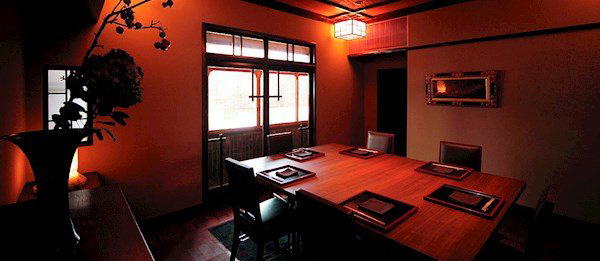
Dimly lit traditional interior with wood-paneled walls, paper screens, low chairs, and an ancestral wood-fired kitchen creating an intimate, historic atmosphere.