
A Michelin Plate-recognised Chinese restaurant in Kyoto's Higashiyama Ward, Hachiraku operates under an unusual self-imposed constraint: no garlic, no lard. The kitchen adapts Chinese technique to Kyoto's cultural codes, pairing stir-fries with wasabi and fried rice with local pickled vegetables. At the ¥¥ price point, it sits in a different tier from the city's starred Chinese peers and offers a considered entry into Kyo-style Chinese cooking.
Pearl is the En Primeur Club membership app — saves, bookings, and concierge access live there. Same editors, same standards.
- Address
- 428-5 Kamibentencho, Higashiyama Ward, Kyoto, 605-0822, Japan
- Phone
- +81 75-541-5898
- Directions
- Get directions
 Saves & bookings on Pearl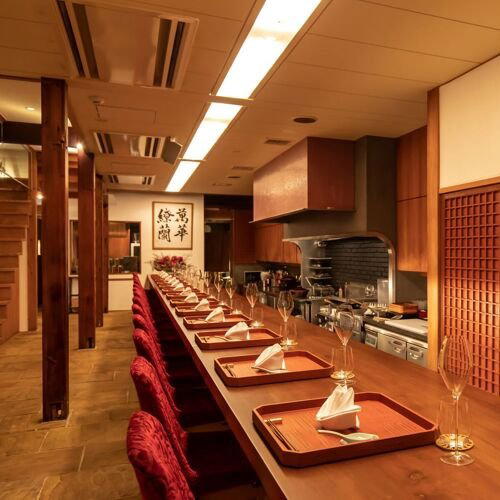
Chinese Cooking Filtered Through Kyoto's Cultural Logic
Higashiyama Ward carries a particular weight in Kyoto. The streets around the address at 428-5 Kamibentencho sit within one of the city's most historically layered neighbourhoods, where machiya townhouses press close to temple approaches and the expectation of comportment runs deeper than anywhere in contemporary Japan. It is not an obvious setting for a Chinese restaurant. And yet the friction is precisely the point.
Hachiraku holds consecutive Michelin Plate recognitions for 2024 and 2025. For context, Kyoto's Chinese tier runs from Hachiraku's ¥¥ position up through establishments like Kyo Seika, which holds a Michelin Star at ¥¥¥. The gap in both price and recognition defines Hachiraku's competitive placement clearly.
The Constraint That Defines the Kitchen
The architecturally interesting decision at Hachiraku is what it refuses to cook with. Garlic and lard, foundational ingredients across most Chinese regional traditions, are absent from the kitchen entirely. The reasoning is not dietary or health-driven in the contemporary wellness sense. It is social and historical: Kyoto's geisha districts, including the ochaya houses in Gion and Miyagawacho, operate under protocols of physical discretion that extend to scent. Guests who arrive or depart in kimono, including geishas and maikos, cannot carry food odour on cloth that may transfer to formal settings. The restaurant's self-description as 'Urban Chinese' and its stated commitment to the spirit of graceful service as only the ancient capital can offer positions this constraint as an expression of local culture rather than a limitation.
In practical cooking terms, removing garlic and lard requires a structural substitution. The kitchen responds by leaning into top-grade soup stock for depth and richness, a technique that pulls the flavour foundation toward umami-driven complexity rather than the aromatic punch that garlic typically provides. The result is Chinese food with a cleaner, quieter register, closer in temperament to the restrained flavour profiles that define Kyoto's own kaiseki tradition, even though the techniques and forms remain Chinese. This approach places Hachiraku in a different conversation from Chinese restaurants that adapt purely for Japanese palates by reducing heat. The adjustments here are more culturally specific and more conceptually consistent.
How the Menu Signals Its Positioning
The pairing choices on the menu read as deliberate editorial statements about where Chinese and Kyoto cooking traditions intersect. Stir-fried dishes arrive with wasabi as a condiment, a bridge between Chinese wok technique and the Japanese table's standard heat source. Fried rice comes alongside Kyoto pickled vegetables, tsukemono, rooting what is formally a Chinese staple in one of Kyoto's most locally specific culinary traditions. Spice use is described as restrained, consistent with what the kitchen terms the urbane refinement of Kyoto.
These are not fusion moves in the contemporary, technique-combining sense. They function more as translations: dishes executed within Chinese form but adjusted at the point of service to align with the cultural expectations of the room. For a diner approaching from kaiseki literacy, the logic is readable. For a diner approaching from Chinese restaurant experience in other Japanese cities, the differences are subtle but accumulate into a distinct atmosphere.
Placing Hachiraku in the Wider Japanese Restaurant Scene
China's culinary influence on Japan stretches across centuries, and Japan's adaptation of Chinese forms, from ramen to certain temple vegetarian traditions, has produced entirely distinct local categories. High-end Chinese restaurants in Japan occupy a specific niche: they are neither the casual Chinese-Japanese crossover that defines much of the market, nor Western-trained fusion concepts. They tend toward technical fidelity to regional Chinese technique while adapting presentation, service cadence, and occasionally ingredients to Japanese expectations.
Kyoto sits at a particular extreme of this tendency. Compared with Chinese restaurants in Tokyo, where the market supports every tier from direct Cantonese to elaborate creative concepts, or in Osaka where HAJIME demonstrates how far the city's restaurant culture pushes at formal boundaries, Kyoto's Chinese scene is smaller and more self-consciously filtered through local values. Hachiraku's consecutive Michelin Plates suggest it has found a coherent position in that filtered space. Internationally, Chinese restaurants working at the intersection of regional technique and locally specific cultural adaptation include Restaurant Tim Raue in Berlin and Mister Jiu's in San Francisco, both of which hold Michelin recognition while operating Chinese cuisine through a distinctly local cultural lens.
Within Kyoto itself, the broader dining context rewards exploration beyond any single cuisine type. The kaiseki tradition produces some of Japan's most technically demanding cooking, with restaurants like VELROSIER, Akihana, and hakubi all active in the city's current scene. For Chinese cooking specifically, Canton Shunsai Ikki and Kyo Seika both represent alternatives at different price and recognition levels. Further afield, akordu in Nara and Goh in Fukuoka are worth the trip for those building a wider Kansai and Kyushu itinerary, while Harutaka in Tokyo, 1000 in Yokohama, and 6 in Okinawa extend the scope of Japan's current restaurant moment.
Planning a Visit
Hachiraku sits in Higashiyama Ward at 428-5 Kamibentencho, positioned at the ¥¥ price range, which places it among the more accessible options in Kyoto's Michelin-recognised dining tier. The combination of a modest price point and consecutive Plate recognition for 2024 and 2025 makes it a practical entry for visitors who want critical endorsement without the booking difficulty or cost of the city's starred tables. Reservations are recommended. Given the Higashiyama location and the neighbourhood's concentration of visitors, arriving with a reservation rather than walking in is the pragmatic choice.
- Sweet and Sour Pork
- Stir-fried Beef in Lettuce
- Almond Tofu
- Hachiroku (Sweet and Sour Chicken with Shiso)
- Five-Colored Fried Rice
- Mapo Tofu
Compact Comparison
Comparable venues nearby, for context on price, style, and recognition.
| Venue | Cuisine | Price | Notes |
|---|---|---|---|
| HachirakuThis venue — the venue you are viewing | Higashiyama, Kyoto-style Chinese | $$$ | Not listed |
| hakubi | Not listed | $$$$ | Higashiyama, Modern Chinese Tasting - Manchu-Han Imperial Feast |
| Nishibuchi Hanten | Higashiyama, Kyoto-style Chinese | $$$$ | Not listed |
| COPPIE | Not listed | $$$ | Shimogyō, Modern Japanese Izakaya with Italian Fusion |
| Kyoryori Hachisei | Shimogyō, Traditional Kyoto Kaiseki | $$$ | Not listed |
| Gion Senryu | Higashiyama, Seasonal Tempura Omakase | $$$ | Not listed |
Recognition history
Dated appearances from independent guides and award organizations, with the underlying list record or original source where available.
Michelin Plate
Michelin
Michelin Plate
Michelin
Michelin Plate
Michelin
Continue exploring
More in Kyoto
Restaurants in Kyoto
Browse all →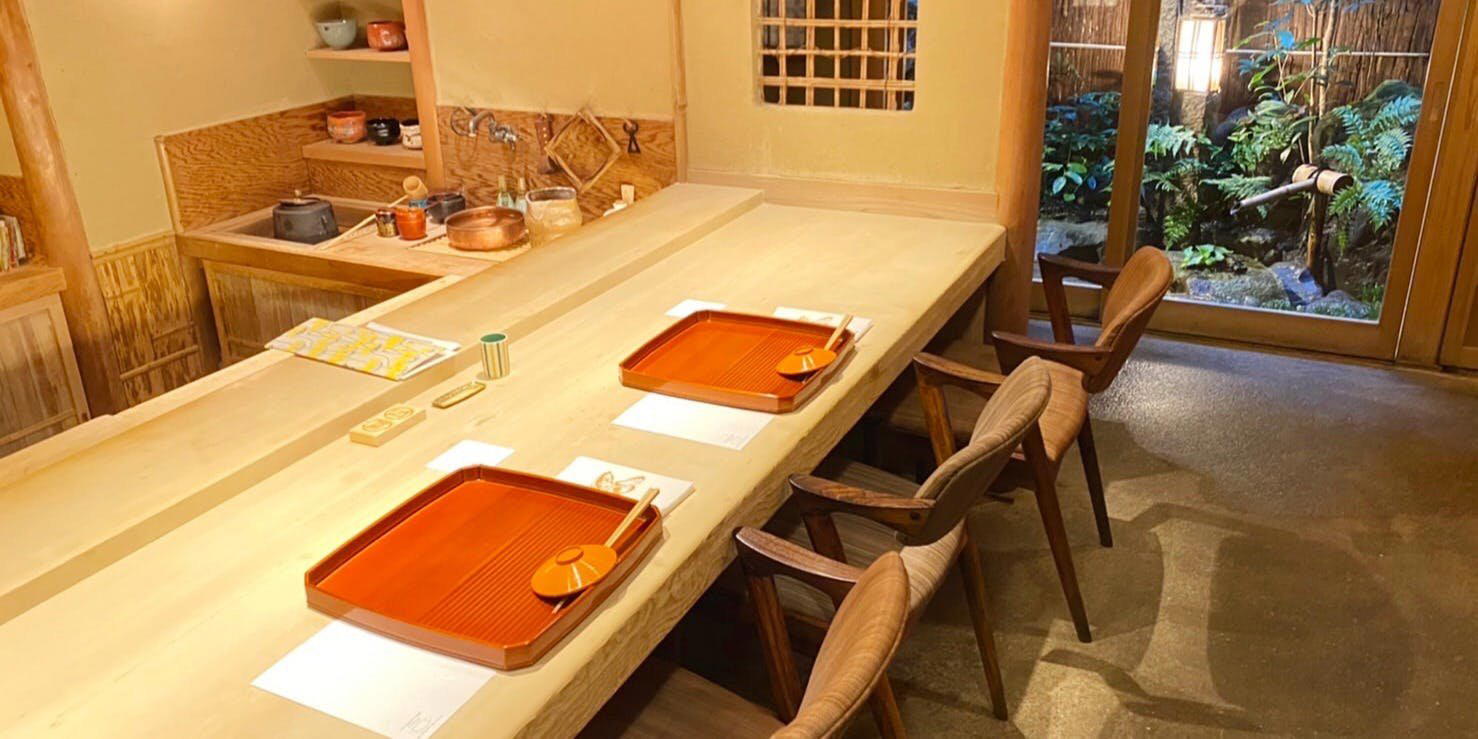
Bars in Kyoto
Browse all →

Hotels in Kyoto
Browse all →

Wineries in Kyoto
Browse all →
At a Glance
- Intimate
- Cozy
- Elegant
- Sophisticated
- Date Night
- Special Occasion
- Chefs Counter
- Sake Program
- Local Sourcing
Current opening hours
- Monday
- Closed
- Tuesday
- 5–9 PM
- Wednesday
- 5–9 PM
- Thursday
- 5–9 PM
- Friday
- 5–9 PM
- Saturday
- 5–9 PM
- Sunday
- 5–9 PM
Hours can change for holidays and private events. Last verified .
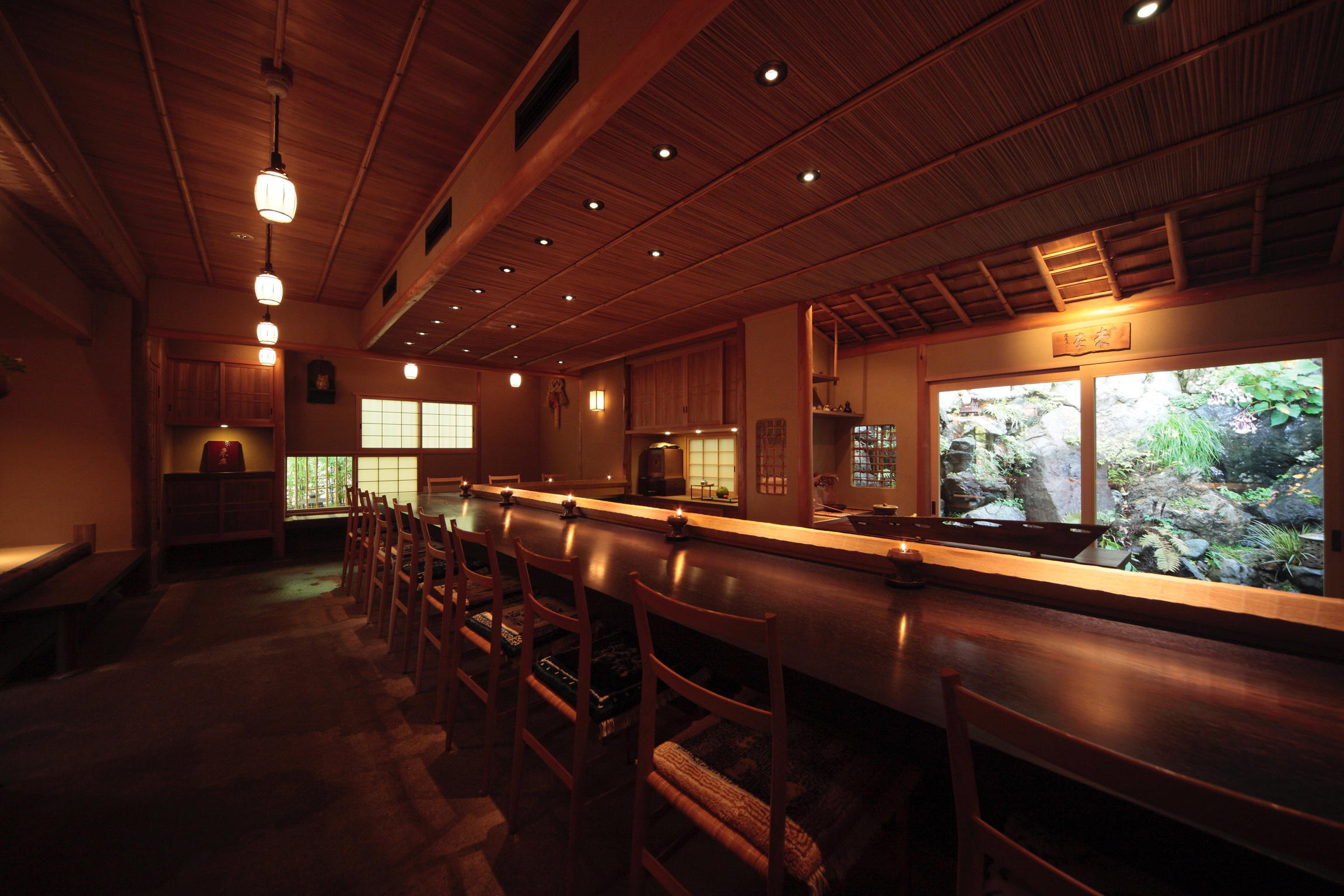
Intimate counter seating with warm hospitality from the owner couple, fostering a personal and refined dining atmosphere.