


2 Michelin Stars · Tabelog Bronze #527
Our verdict
A Michelin-starred kaiseki counter in Kyoto's Higashiyama district, Higashiyama Yoshihisa holds a Tabelog score of 4.37 and has appeared on the Tabelog Japanese Cuisine WEST Top 100 list in 2021, 2023, and 2025. The 14-seat room, built around a 10-seat counter, offers monthly-changing menus priced from JPY 30,000 at dinner, with December menus reaching JPY 47,000. Reservation-only and closed Wednesdays.

Pearl is the En Primeur Club membership app, where members save venues, book tables and use the concierge.
The menu
What to order
- Beef tongue soup topping
- Smoked cheese with highball pairing
A Counter Designed for Occasion Meals
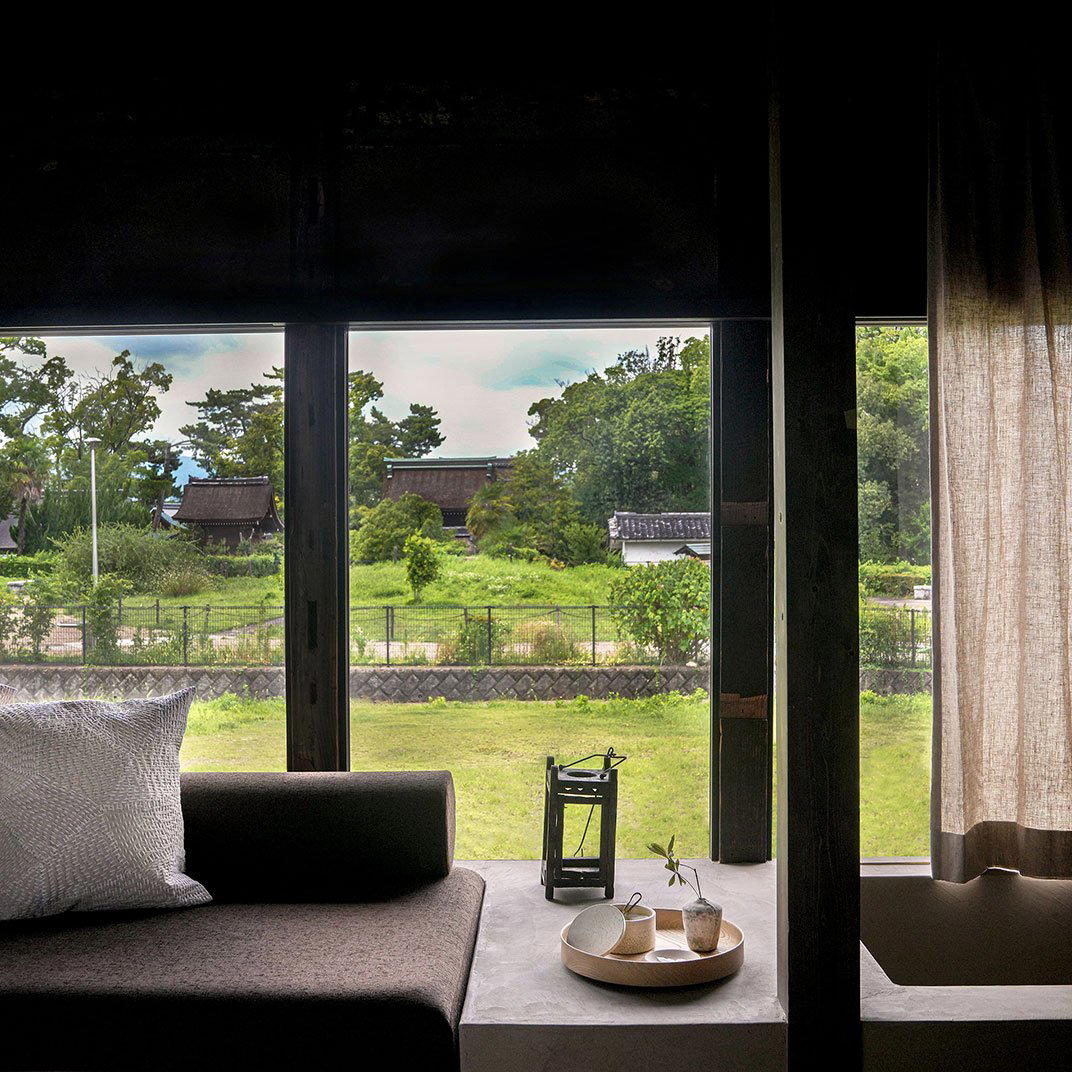
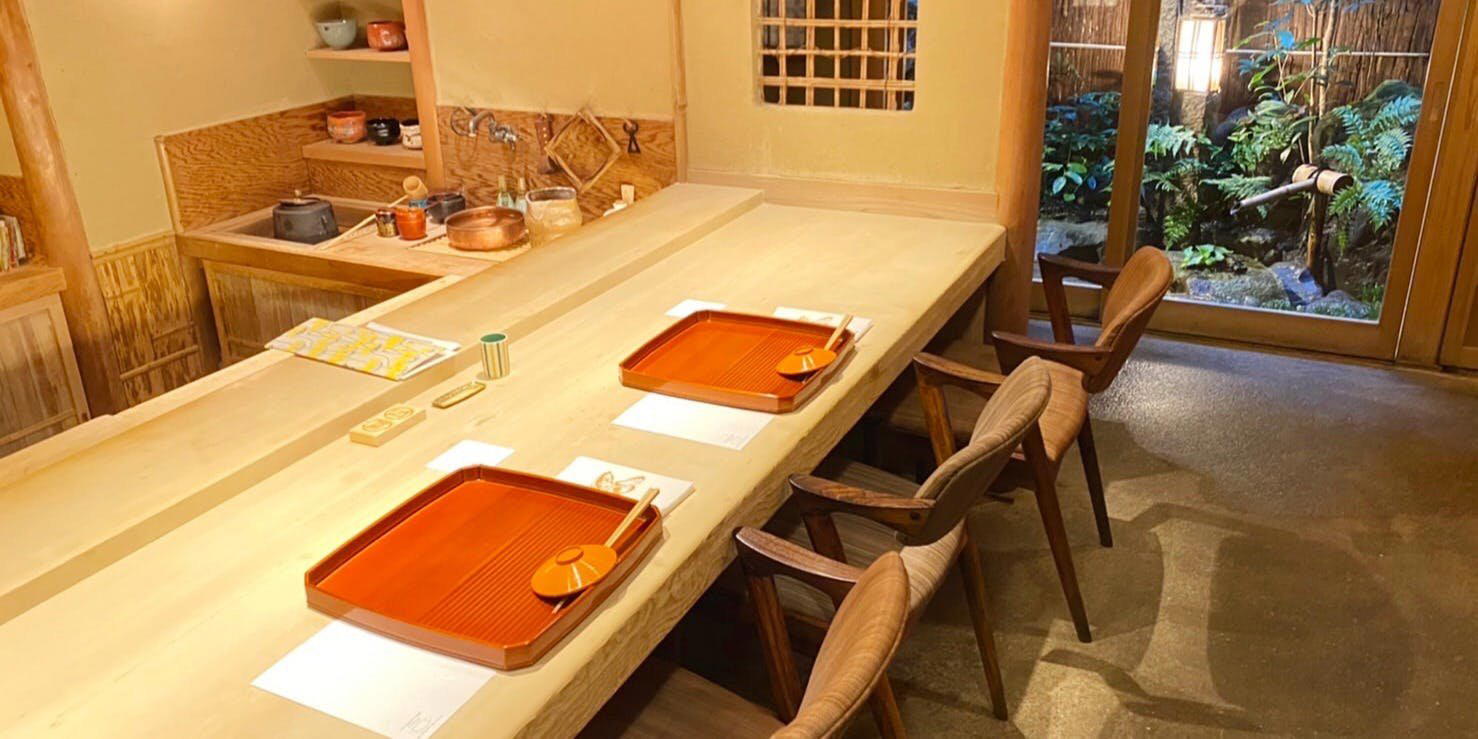
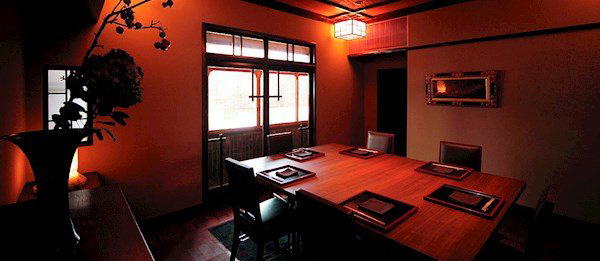
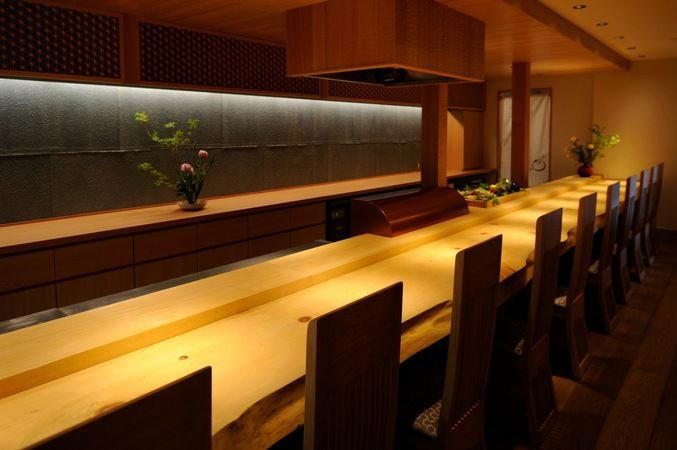
In Kyoto's Higashiyama ward, the neighbourhood between Sanjusangendo and Kiyomizudera contains a quieter residential layer behind the temple approach paths. It is in this layer, on Myohoin Maekawacho, that Higashiyama Yoshihisa sits. The address places it within walking distance of one of the city's most significant cultural corridors, roughly 11 minutes from Kiyomizu-Gojo Station on the Keihan Main Line, but the room itself reads as deliberate retreat. Fourteen seats, a 10-seat hinoki counter as the main axis, a private counter arrangement for up to four, and a space Tabelog reviewers consistently describe as relaxed without being informal. This is the physical configuration of a room designed for meals that matter: anniversaries, milestone birthdays, business relationships being honoured with seriousness.
Japan's kaiseki tradition has always been tied to occasion. The formal kaiseki sequence, with its succession of small courses tracking the season's produce from first light through its fullest expression, was never conceived as everyday eating. The counter format Higashiyama Yoshihisa uses focuses that tradition: guests face the preparation directly, courses arrive in the tempo the kitchen sets, and there is no background noise from adjacent tables at the main counter. For occasions where the meal is the event itself rather than the backdrop to it, this format concentrates attention in ways that larger rooms, however well-appointed, do not replicate.
The Award Trajectory and What It Signals
Higashiyama Yoshihisa opened on 1 September 2018. By 2020 it had collected its first Tabelog Bronze Award. It received Bronze consecutively through 2024, achieved Silver in 2025, then returned to Bronze in 2026 with a Tabelog score of 4.37, placing it 527th nationally across all categories on the Tabelog ranking, a position that represents a very small fraction of the platform's total restaurant count. It also holds a Michelin star (2024) and has been selected for the Tabelog Japanese Cuisine WEST Top 100 in 2021, 2023, and 2025.
Within Kyoto's high-end Japanese dining tier, this award profile places Higashiyama Yoshihisa in a specific position. Gion Sasaki holds three Michelin stars. Ifuki and Kyokaiseki Kichisen each hold two. Higashiyama Yoshihisa, with two Michelin stars and a sustained Tabelog presence that includes a Silver year, occupies the tier immediately below that ceiling, technically accessible relative to those rooms, but operating with comparable seriousness of intent. For occasion dining, this positioning matters: the restaurant delivers the gravity of a milestone meal without the multi-year reservation waits that characterise the most decorated counters in the city. Compared to peer kaiseki rooms like Kikunoi Roan or Gion Matayoshi, Yoshihisa sits within the same price and format tier while carrying a distinct award history built over seven consecutive Tabelog recognition years.
Monthly Menus and the Logic of Seasonal Occasion Dining
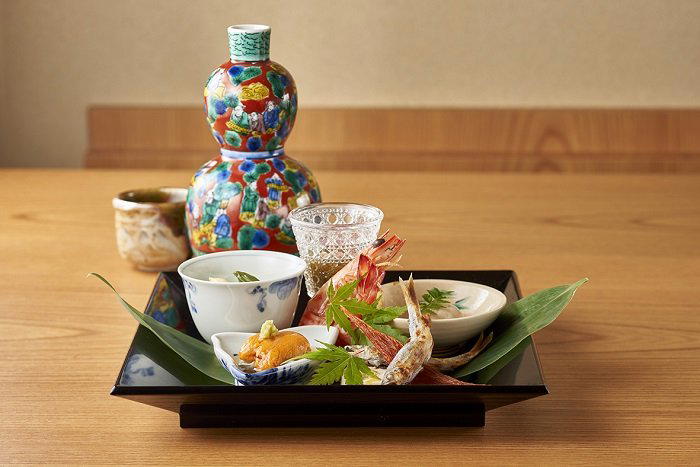
The menu changes monthly. This is standard practice among serious kaiseki houses, Kyoto's seasonal ingredient calendar is precise enough that a fixed menu would read as a refusal to engage with the city's culinary premise. What the monthly rotation does for occasion dining is create differentiation between visits: a couple returning on consecutive anniversaries will not eat the same meal twice. The kitchen's stated orientation around seasonal ingredients as the driver of each course reinforces this. The menu is not a fixed document with seasonal tweaks; it is rebuilt around what is available, which means the occasion is embedded in a specific moment in time.
December pricing reflects this logic in financial terms. The standard dinner sits at JPY 34,000, already at the top of the JPY 30,000–39,999 band recorded in review data. December menus reach JPY 47,000, a 38 percent premium that corresponds to the fugu, matsuba crab, and winter produce that make December one of the most ingredient-dense months in the Japanese culinary calendar. Anyone planning a year-end occasion meal should factor this into the budget. Lunch menus run between JPY 10,000 and JPY 14,999, offering access to the kitchen's approach at a significantly lower price point, though credit cards are not accepted for lunch, cash is required for that service.
Drinks, Format, and the Structure of the Evening
Higashiyama Yoshihisa's drink program focuses on sake and wine, with the Tabelog record noting particular emphasis on both nihonshu selection and wine curation. For kaiseki at this price level, sake pairing is the conventional choice, and the kitchen's monthly menu rotation means the pairing logic shifts alongside the food. A 10 percent service charge applies across all visits. The dress code is smart casual, specific enough to signal that the room takes presentation seriously, flexible enough to avoid the formality that can make occasion dining feel performative rather than celebratory.
Dinner service begins at 18:30. The private room accommodates four and is available for more contained occasions where complete separation from the main counter is preferred. For groups requiring full private use of the space, capacity extends to 20 people, which opens the room for corporate anniversary dinners or larger family celebrations that still want a kaiseki format rather than a banquet hall. Parking is available, which is worth noting given the address in a residential stretch of Higashiyama.
Placing Higashiyama Yoshihisa in Its Kyoto Context
Kyoto's Japanese cuisine scene divides broadly between legacy houses with multi-generational pedigree and post-2010 openings that have built reputations through award systems rather than inherited name recognition. Higashiyama Yoshihisa belongs to the latter group, having opened in 2018 and accumulated its recognition within seven years. This is not unusual in Kyoto's current dining environment, where Tabelog and Michelin have created parallel credentialing systems that allow newer kitchens to establish peer-set status more quickly than prior generations could through word-of-mouth alone.
Other counters in adjacent streets and neighbourhoods approach the occasion-dining category differently. Isshisoden Nakamura operates with deep historical roots. Kenninji Gion Maruyama and Kodaiji Jugyuan each carry distinct Gion-area positioning. Higashiyama Yoshihisa's location, slightly south of the main Gion cluster, gives it a different neighbourhood register, quieter on approach, closer to the temple precincts, with the Myohoin complex nearby providing context that is distinctly Kyoto without being in the tourist corridor proper.
Across Japan's broader kaiseki tier, the counter-led format Higashiyama Yoshihisa uses aligns it with a national pattern of intimate, chef-proximate dining that cities like Tokyo and Osaka have also developed. HAJIME in Osaka operates at a different price ceiling and with a different culinary register, but the logic of occasion dining at a small, serious counter is consistent. Similarly, Myojaku in Tokyo and Azabu Kadowaki in Tokyo represent how Japanese cuisine counters in other cities have developed comparable occasion-dining propositions. For regional comparison beyond Kyoto, akordu in Nara and Goh in Fukuoka show how the serious small-counter format has distributed across the Kansai and Kyushu regions.
Planning Your Visit
Reservations are required and should be made by phone between 9:00 and 17:00 (075-748-1216), with the caveat that calls during service hours may go unanswered. The restaurant is closed on Wednesdays and on additional irregular days. The social media policy is specific: photos of dishes are permitted during the meal, but posting to social platforms or Tabelog is requested to be delayed by one month, a policy that reflects the kitchen's preference for keeping current menu details within the room rather than circulating publicly in real time. Guests are also asked to avoid strong fragrances, a standard request at counters where aromatic interference with food and sake appreciation is taken seriously.
For those building a broader Kyoto programme around a meal here, our full Kyoto restaurants guide, Kyoto hotels guide, Kyoto bars guide, Kyoto wineries guide, and Kyoto experiences guide cover the wider context. For comparable dining references further afield, Harutaka in Tokyo, 1000 in Yokohama, and 6 in Okinawa each represent small-counter Japanese dining with comparable levels of award recognition.
What Do Regulars Order at Higashiyama Yoshihisa?
Because the menu changes monthly and is structured as a set kaiseki progression, there is no single dish that anchors every visit the way a signature item would at an à la carte restaurant. Regulars at kaiseki counters of this tier return to follow the seasonal arc: the kitchen's treatment of early spring vegetables in March and April, the fish-forward courses of summer, the deep root vegetable and mushroom work of autumn, and the prestige ingredients of December. The drink program's sake focus gives regulars a secondary dimension to track alongside the food, the nihonshu selection shifts as the food does. What carries between visits is format and rhythm rather than any one dish, which is precisely why this kind of counter suits milestone occasions: the meal commemorates a moment in time, not a recurring fixed menu.
City Peers
| Venue | Cuisine | Price | Awards | Notes |
|---|---|---|---|---|
| Higashiyama YoshihisaThis venue (the venue you are viewing) | Innovative Seasonal Kaiseki | $300–500 | 2 Michelin Stars · Tabelog Bronze #527 | Not listed |
| Gion Sasaki | Modern Kaiseki | $300–500 | 3 Michelin Stars · La Liste Top Restaurants | Kaiseki, Japanese |
| cenci | Innovative Italian-Japanese Fusion | $100–150 | 1 Michelin Star · World's 50 Best #76 | Italian |
| Ifuki | Sumibi Kappo Kaiseki | $200–300 | 2 Michelin Stars · La Liste Top Restaurants | Kaiseki |
| Kyokaiseki Kichisen | Kyoto Kaiseki | $200–300 | 2 Michelin Stars · La Liste Top Restaurants | Japanese |
| Kyo Seika | Modern Chinese Fine Dining | $150–200 | 1 Michelin Star · Tabelog Bronze #216 | Chinese |
Recognition history
Dated appearances from independent guides and award organizations, with the underlying list record or original source where available.
Michelin 2 Stars
Michelin
Opinionated About Dining Top Restaurants in Japan Recommended
Opinionated About Dining
Tabelog Bronze #527
Tabelog
Full recognition history (5 entries)
Tabelog 100 #31 · No. 31
Tabelog · Tabelog 100 - Japanese cuisine - WEST - 2025
Tabelog Silver
Tabelog
Continue exploring
More in Kyoto
Restaurants in Kyoto
All restaurants in Kyoto →
Bars in Kyoto
All bars in Kyoto →
Hotels in Kyoto
All hotels in Kyoto →
Wineries in Kyoto
Browse all →
Higashiyama Yoshihisa
The wine
- Extensive wine list
- Sommelier-led
- Sake program
Details
- Elegant
- Intimate
- Sophisticated
- Special Occasion
- Date Night
- Celebration
- Chefs Counter
- Open Kitchen
- Private Dining
- Sake Program
- Extensive Wine List
- Sommelier Led
- Local Sourcing
- Tasting Menu
- Omakase
- Counter Dining
- Sake
- Wine
- Champagne
- Vegetarian Friendly
- Allergy Accommodating
Current opening hours
- Monday
- 12–2 PM, 6:30–9:30 PM
- Tuesday
- Closed
- Wednesday
- Closed
- Thursday
- 12–2 PM, 6:30–9:30 PM
- Friday
- 12–2 PM, 6:30–9:30 PM
- Saturday
- 12–2 PM, 6:30–9:30 PM
- Sunday
- 12–2 PM, 6:30–9:30 PM
Hours can change for holidays and private events. Hours as of .
Serene, refined atmosphere in a hidden alley setting with traditional Japanese aesthetic; counter seating provides intimate connection to the chef's craft.