Our verdict
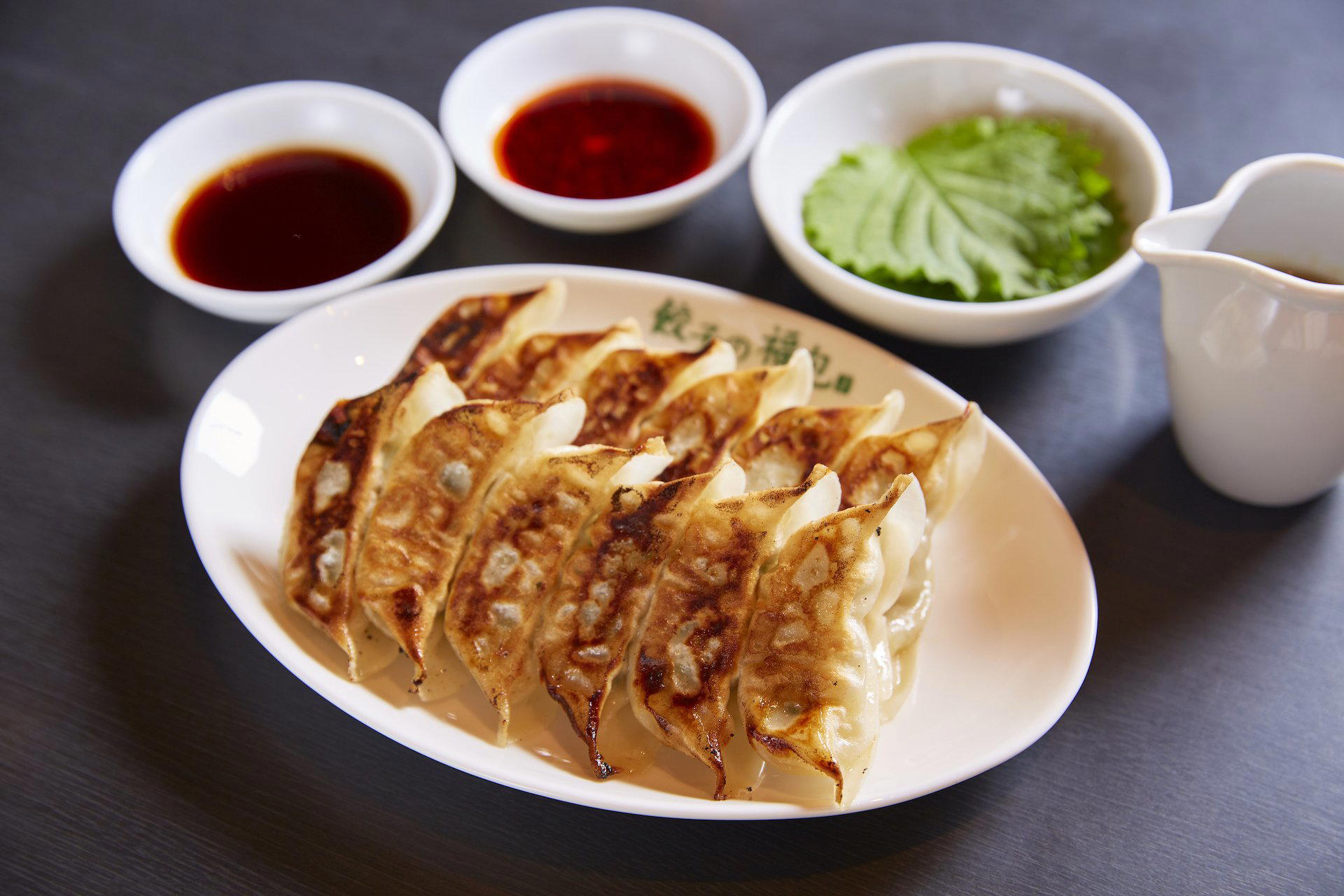
Gyoza no Fukuho (餃子の福包) serves traditional Japanese gyoza at counter service in Shinjuku, with beer, an open kitchen, and quick-bite pacing for lunch, dinner, or late night.

Pearl is the En Primeur Club membership app, where members save venues, book tables and use the concierge.
The menu
What to order
- Yaki-gyoza with garlic
- Sui-gyoza
- Gyoza with hane crust
Shinjuku's Gyoza Counter and What It Represents
Ground-floor counters in Shinjuku's commercial grid occupy a particular role in Tokyo's food culture: they absorb foot traffic from salaryman lunch crowds and late-night commuters with equal efficiency, keeping prices low and turnover high. Gyoza no Fukuho (餃子の福包), operating from the first floor of KDX Shinjuku 286 Building on 新宿2-8-6, sits inside this well-worn format. The address places it in one of Tokyo's densest dining corridors, where the competition for a seat at lunch runs from convenience-store onigiri to kaiseki counter, and where a gyoza specialist finds its natural gravity.
Tokyo's gyoza scene has always operated at two distinct registers. At one end, large chain operations like Osaka Ohsho and Gyoza no Osho standardize the form into assembly-line reliability. At the other, neighbourhood specialists treat the dumpling with a degree of care that recalls the northern Chinese and Manchurian traditions that introduced gyoza to the Japanese archipelago after the Second World War. Fukuho's positioning within Shinjuku, rather than in the outer residential wards where specialist gyoza houses tend to cluster, signals a deliberate orientation toward urban, office-district diners who want something more considered than a chain but faster than a full restaurant sit-down.
The Environmental Logic of the Gyoza Format
The editorial angle here is worth addressing directly: gyoza, as a food category, carries genuine environmental credentials that more celebrated formats do not. The dumpling's core architecture, wheat wrapper, filling of cabbage and pork or vegetable combinations, minimal sauce, produces almost no food waste in a competently run kitchen. Wrapper offcuts fold back into the next batch; filling ratios are calibrated by weight; the steaming or pan-frying process uses less energy per portion than, say, the lengthy braising programs at a high-end French kitchen like L'Effervescence or the wood-fire protocols at kaiseki houses such as RyuGin.
Across Japan, smaller specialist restaurants have historically sourced cabbage and pork from regional suppliers within relatively tight geographic ranges, partly because freshness in the filling is non-negotiable and partly because the economics of a low-ticket item demand tight supply-chain costs. That structural efficiency is not the same as a formal sustainability program, and in the absence of verified data about Fukuho's sourcing practices, it would be inaccurate to claim one. But the format itself, at its baseline, tends toward low-waste production in a way that a twelve-course tasting menu does not.
This matters for readers thinking about how their dining choices aggregate. Tokyo's fine-dining tier, from the Michelin-starred sushi counters like Harutaka to the French-inflected precision of Sézanne, produces extraordinary food with a significant resource footprint per cover. The neighbourhood gyoza specialist operates from the other end of that spectrum, and in a city where the gap between a 500-yen gyoza plate and a 50,000-yen omakase can be crossed within a ten-minute walk, that contrast is worth acknowledging.
Shinjuku as Dining Context
Shinjuku-ku is not a monolithic neighbourhood. The ward contains the density and neon of Kabukicho, the quieter bar lanes of Yotsuya, the garden corridors near Shinjuku Gyoen, and the high-rise office blocks along the western exit. The 新宿2-8-6 address locates Fukuho in the southern part of the district, between Shinjuku Station's south exit and the residential spill toward Yotsuya, an area that functions as a legitimate neighbourhood rather than pure entertainment infrastructure.
Dining in this part of Shinjuku rewards specificity. The area has long-standing ramen shops, izakayas that open before dusk, and several floors of restaurant tenants stacked into older commercial buildings. A ground-floor gyoza counter fits that texture without friction. For visitors constructing a day around central Tokyo dining, the location integrates naturally with a broader Shinjuku circuit, or as a lean, direct meal before heading east toward the dining corridors of Ginza or south toward the Michelin concentration in Minato-ku.
Tokyo's restaurant density means context always matters. Readers planning across the country should note that comparable levels of specialist focus appear at gyoza-adjacent formats elsewhere: Goh in Fukuoka represents a different expression of regional ingredient discipline, while HAJIME in Osaka shows how far Japanese culinary precision can travel from everyday formats. Both are useful reference points for understanding how seriously Japanese dining culture treats the full spectrum from street-adjacent to haute.
The Gyoza Tradition and Why It Still Holds
Gyoza entered mainstream Japanese cooking through repatriated soldiers and settlers returning from Manchuria in the 1940s and 1950s, and the dumpling's integration into the national food vocabulary was rapid. By the 1960s, regional gyoza styles had begun to diverge: Utsunomiya in Tochigi developed a thinner-skinned, garlic-forward version; Hamamatsu in Shizuoka favoured a pan-fried presentation with cabbage ratio adjustments that produced a lighter bite. Tokyo absorbed influences from both traditions while developing its own density of specialist shops, particularly in the outer wards and commuter corridors.
What has remained constant is the accessibility argument. Gyoza occupies the category of Japanese food that requires genuine craft, folding consistency, filling calibration, controlled heat application for the yaki-gyoza crust, while remaining priced for repeat, frequent dining rather than occasion eating. That combination of craft and accessibility is rarer in the broader restaurant market than it sounds. For comparison, Crony in Tokyo and Atomix in New York City work at the opposite end of that spectrum, where craft is priced at a significant premium and frequency is not the intended model.
Other restaurants across Japan demonstrate how regional Japanese dining maintains similar principles of ingredient respect and format discipline at varying price points: Gion Sasaki in Kyoto, akordu in Nara, and lesser-known regional specialists like 一本木 石川製 in Nanao, 古代山乃 in Sapporo, 湖畔荘 in Takashima, 鳥羽屋 in Nishikawa Machi, Birdland in Sakai, and Bistro Ange in Toyohashi all reflect different points on a wide spectrum. For a full picture of what Tokyo's dining scene offers across formats and price tiers, our Tokyo restaurants guide maps the range in detail. International comparisons are also instructive: the precision applied at Le Bernardin in New York City to seafood at the haute end of the price spectrum finds a structural parallel, however remote, in the attention a serious gyoza kitchen applies to folding consistency and oil temperature.
Planning Your Visit
The practical details for Fukuho are necessarily condensed given available data. Location: 新宿2-8-6, KDX Shinjuku 286 Building 1F, Shinjuku-ku, Tokyo 160-0022, most accessible from Shinjuku Station's south or east exits. Reservations: No booking information is publicly documented; ground-floor gyoza counters in this district typically operate on a walk-in basis, with peak demand at lunch (12:00-13:30) and early dinner (18:00-19:30). Budget: Specialist gyoza counters in Shinjuku's commercial core are priced for frequent, everyday dining, expect to spend materially less per head than at any of the Michelin-tier venues in the surrounding wards. Dress: No dress code applies to this format. Contact: No website or phone number is currently listed in public records; visiting directly during off-peak hours is the most reliable approach.
Frequently asked questions
How would you describe the vibe at Gyoza no Fukuho (餃子の福包)?
Ground-floor counters in Shinjuku's commercial grid set a particular tone: fast, functional, and unpretentious. Fukuho sits on the first floor of the KDX Shinjuku 286 Building, a salaryman-dense stretch of Shinjuku 2-chome where the expectation is efficient service, not ceremony. Come for the food, not the atmosphere.
Where is Gyoza no Fukuho (餃子の福包) in Tokyo?
Gyoza no Fukuho (餃子の福包) is located at 新宿2-8-6 (KDX新宿286ビル 1F), 新宿区, 東京都, 160-0022, Tokyo.
Where exactly is Gyoza no Fukuho located in Shinjuku, and is it easy to find?
Fukuho is on the first floor of the KDX Shinjuku 286 Building, address 新宿2-8-6, Shinjuku-ku, Tokyo 160-0022. The 2-chome block of Shinjuku sits between the station's east exit and the denser commercial streets heading toward Kabukicho, making it accessible on foot from Shinjuku Station in a few minutes. First-floor building counters in this part of Shinjuku can be easy to pass without looking up at signage, so checking the building name is the reliable approach.
What dish is Gyoza no Fukuho (餃子の福包) famous for?
The name says it directly, gyoza is the focus. Fukuho (福包) translates roughly as 'fortune wrap,' and the dumpling format is the entire premise of the restaurant. Gyoza counters of this type in Tokyo typically specialise in pan-fried, boiled, or steamed variations, with the kitchen's execution of the wrapper-to-filling ratio being the differentiating factor.
Is Gyoza no Fukuho (餃子の福包) reservation-only?
No reservation data is recorded for Fukuho. Ground-floor counters in Shinjuku's commercial belt, the address here is 新宿2-8-6, KDX Shinjuku 286 Building 1F, generally operate as walk-in formats, absorbing foot traffic from the surrounding office and retail density. Arriving outside peak lunch hours is the practical approach.
What is Gyoza no Fukuho (餃子の福包) known for?
Fukuho is a gyoza-specific counter in one of Tokyo's most commercially active wards. Its location in Shinjuku 2-chome positions it within a dining corridor that feeds a mix of office workers, shoppers, and late-night foot traffic. The restaurant's identity is built entirely around the gyoza format, a post-war Japanese staple with roots in Manchurian dumpling traditions that arrived in Japan in the 1940s and 1950s.
Can Gyoza no Fukuho (餃子の福包) adjust for dietary needs?
Traditional gyoza fillings in Tokyo counters typically centre on pork, which limits options for vegetarians or those avoiding certain proteins. Check the venue's official channels for the latest details.
Comparison Snapshot
| Venue | Cuisine | Price | Awards | Notes |
|---|---|---|---|---|
| Gyoza no Fukuho (餃子の福包)This venue (the venue you are viewing) | Traditional Japanese Gyoza | $1–10 | Not listed | Not listed |
| Harutaka | Edo-Style Omakase Sushi | $200–300 | 3 Michelin Stars · World's 50 Best #76 | Sushi |
| L'Effervescence | Modern French with Japanese Influences | $200–300 | 3 Michelin Stars · World's 50 Best #69 | French |
| RyuGin | Modern Kaiseki | $500+ | 3 Michelin Stars · World's 50 Best #41 | Kaiseki, Japanese |
| Crony | Modern French with Japanese Influences | $150–200 | 2 Michelin Stars · World's 50 Best #34 | Innovative, French |
| Florilège | Modern French-Japanese Plant-Based Fine Dining | $50–100 | 2 Michelin Stars · World's 50 Best #31 | French |
Continue exploring
More in Tokyo
Restaurants in Tokyo
All restaurants in Tokyo →


Bars in Tokyo
All bars in Tokyo →





Details
- Casual
- Well Known
- Casual Hangout
- After Work
- Late Night
- Open Kitchen
- Beer Program
- A La Carte
- Counter Dining
- Set Menu
- Beer
- Vegetarian Friendly
No-frills, casual counter-style dining with a lively, unpretentious atmosphere focused entirely on gyoza preparation.