Tabelog 100 #68
Our verdict
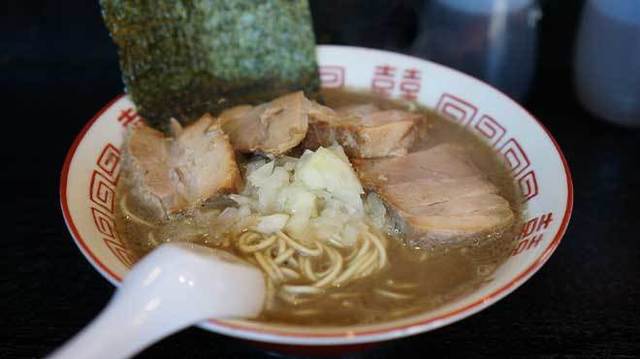
Chuka Soba Ibuki belongs to Tokyo’s serious ramen tier: small counter, tightly edited menu logic, and repeat recognition in Tabelog’s Ramen TOKYO 100 selections through 2025. Its appeal is not ceremony but concentration, the kind of bowl-focused format that makes a trip to Itabashi feel like part of the city’s ramen education rather than a detour.

Pearl is the En Primeur Club membership app, where members save venues, book tables and use the concierge.
The menu
What to order
- Chuka Soba (niboshi ramen)
- Tanrei Chuka Soba (light niboshi)
- Noukou / Noukou Niboshi Chuka Soba (rich niboshi)
Approaching a small ramen counter in outer Tokyo changes the terms of dining. The room is not built for lingering, the soundscape is practical, and the menu usually explains the proposition before anyone lifts a spoon: a few bowls, a few decisions, little tolerance for distraction. In that setting, Chuka Soba Ibuki belongs to a Tokyo category where short menus and counter-only service turn ramen from casual convenience into a disciplined study of broth, noodles, timing, and turnover.
Tokyo’s ramen culture rewards specialists over generalists: shops chasing regional nostalgia, shops pursuing modern clarity, and shops narrowing the proposition until everything rests on one bowl. Ibuki’s place is signalled by its Tabelog Ramen TOKYO 100 selection in 2025, prior selections through recent years, and Tabelog Award Bronze recognition in 2017. In Tokyo’s crowded, competitive, granular ramen field, such recognition carries weight without luxury cues.
A short ramen menu that puts structure ahead of spectacle
The useful way to read this ramen shop is through menu architecture, not decoration. A compact menu asks diners to notice proportion: how the base broth defines the bowl, how toppings support rather than bury it, and how quickly the kitchen repeats the same sequence without dilution. Unlike tasting-menu dining, there is no long progression to disguise weakness and no beverage program to broaden the evening. The bowl must justify the trip alone.
Chuka Soba Ibuki’s category is ramen, but the broader lesson is Tokyo’s affection for narrow formats. Eight counter seats create a rhythm closer to workshop than restaurant: prep, pacing, and the number of bowls served before the day’s supply is exhausted. In a city with countless late-night ramen options, this is the opposite model, built around finite production rather than open-ended availability. The constraint is the editorial interest: this is not ramen as afterthought, but ramen as the whole thesis.
That format also changes value. A low listed spend does not mean casual ambition. Tokyo can place serious craft inside inexpensive categories, and ramen is the clearest case. At the same end of the dining spectrum, Ishida Ya, Kotobuki Seimen Yoshikawa Nishidai ekimae ten, and Sanuki Udon Iwai show how outer-neighbourhood noodle shops compete on focus rather than polish. Shimura Tokujuen occupies a different spend band, while Miyako Wakemise broadens the local comparison, but Ibuki’s strongest context is the sub-¥1,000 noodle tradition, where technical repetition matters more than ceremony.
Itabashi gives the bowl a different Tokyo frame
Ramen in central Tokyo often becomes part of a tourist circuit: station-adjacent, late-service, easy to stack between bars, hotels, and shopping districts. Itabashi asks for a more deliberate reading. Outside the hotel-heavy core, a meal here feels less like itinerary padding and more like a study of how Tokyo eats away from the international spotlight. That matters because many serious ramen counters operate in residential or commuter districts where regulars, queues, and supply shape the experience more than design language.
Ibuki moved from Oizumigakuen to the Shimura Sakaue area in 2014, placing it inside Tokyo’s mobile, reputation-driven ramen scene. Ramen audiences travel for a specific broth profile or shop identity, and relocation does not erase that following when the cooking remains the draw. The 2011 opening date also puts the counter beyond novelty. Longevity, repeated selection, and a small service format say more than inflated claims.
The experience is not built around chef biography in the luxury-restaurant sense, appropriately so. Ramen shops at this level are assessed by output, consistency, and constraint rather than public authorship. In a city where sushi and kappo counters can make chefs central figures, ramen’s counter culture is more democratic and more ruthless: the bowl is the credential. Ibuki’s recognition places it within that judgment system, where repeat performance carries the argument.
How to place it within a Tokyo eating itinerary
For food-led Tokyo trips, Ibuki belongs in a different slot from a destination dinner. It is a focused ramen stop, not an all-evening reservation. The practical intelligence is simple: treat the counter as capacity-limited, expect a tight service rhythm, and do not plan it as a casual fallback after crossing the city. The shop’s operating pattern lists finite servings for lunch and dinner, with Saturday and public-holiday access handled differently from regular weekdays, so timing is part of the meal’s logic.
The better comparison is Tokyo’s broader culture of single-purpose specialists, not luxury dining. A curry counter such as 3 Chome no Curry Ya San, a yakitori-focused room like 124. KAGURAZAKA (Yakitori), or a tightly framed Shinjuku address such as 12/10 Shinjuku ten explain the city’s range: Tokyo rewards exact formats. For seafood and grill context, . 鮪と炭火焼き うお炭 秋葉原店 sits elsewhere, while 2D Cafe shows how visual concept can drive a different stop.
Seen that way, Chuka Soba Ibuki is worth seeking out because it compresses Tokyo ramen culture into a narrow, disciplined format: a small counter, repeat third-party recognition, and a menu structure that keeps attention on the bowl. It is not for lingering comfort or a broad menu. Choose it when the point is to understand how much authority Tokyo can place in a short service and a single category.
For wider planning, use Our full Tokyo restaurants guide alongside Our full Tokyo hotels guide, Our full Tokyo bars guide, Our full Tokyo wineries guide, and Our full Tokyo experiences guide. Travellers comparing Japanese specialist formats beyond the capital can also look at -Grilled beef Sukiyaki- KAMAKURA TANUKIAN 鎌倉 たぬき庵 in Kamakura.cafe in Osaka.know in Kumamoto, (Shoku) Vietnam in Kawasaki, [Curry Senmon Ten] Maruyama Kyoju. in Sapporo, and [ki:] in Kyoto. For Japanese drinking and casual-format reference outside Japan, Jōdo Saké Bar in Los Angeles and Onigiri Time in Pasadena extend the comparison.
Frequently asked questions
What's the pricing like at Chuka Soba Ibuki?
Pricing at Chuka Soba Ibuki is listed as - JPY 999.
When can I go to Chuka Soba Ibuki?
Hours at Chuka Soba Ibuki: Mon: Closed; Tue: 11:45 AM–2:30 PM, 6:15–8:15 PM; Wed: 11:45 AM–2:30 PM, 6:15–8:15 PM; Thu: 11:45 AM–2:30 PM, 6:15–8:15 PM; Fri: 11:45 AM–2:30 PM, 6:15–8:15 PM; Sat: 11:45 AM–2:30 PM, 6:15–8:15 PM; Sun: Closed.
What's the address for Chuka Soba Ibuki?
Chuka Soba Ibuki is located in Tokyo.
What makes Chuka Soba Ibuki worth seeking out?
It combines a tight 8-seat counter with serious external recognition: Tabelog Ramen TOKYO 100 selections from 2017 through 2025, plus a Tabelog Award Bronze in 2017. In Tokyo terms, that places Chuka Soba Ibuki in the company of ramen shops where consistency and throughput matter as much as the bowl itself. Lunch is listed at under JPY 999, which makes the address in Itabashi unusually hard to dismiss.
At-a-Glance Comparison
Side-by-side context: comparable cuisine and price.
| Venue | Cuisine | Price | Awards | Notes |
|---|---|---|---|---|
| Chuka Soba IbukiThis venue (the venue you are viewing) | Niboshi-focused ramen | $10–20 | Tabelog 100 #68 | Not listed |
| Kuromatsu Honpo Sogetsu | Traditional Japanese Wagashi & Dorayaki Shop | $1–10 | Tabelog 100 #77 | Kita |
| CURRY UP | Japanese curry house by NIGO in Harajuku | $10–20 | Tabelog 100 #48 | Shibuya |
| Naniwaya Sohonten | Traditional Japanese taiyaki & sweets shop | $1–10 | Tabelog 100 #92 | Minato |
| Sumibi Baisen Coffee Rin | Japanese Kissaten / Coffee Shop | $1–10 | Tabelog 100 #60 | Chūō |
| Gyokueido Hikokuro | Traditional Japanese Wagashi & Dorayaki | $1–10 | Tabelog 100 #63 | Chūō |
Recognition history
Dated appearances from independent guides and award organizations, with the underlying list record or original source where available.
Tabelog 100 #68 · No. 68
Tabelog · Tabelog 100 - Ramen - TOKYO - 2025