
Mitaka’s late-evening ramen culture gets a compact, counter-only expression at Ganso Stamina Manten Ramen Suzuki, a 2025 Tabelog 100 Ramen Tokyo selection with a score of 3.83. The appeal is not luxury polish but focus: ramen and tsukemen in a small basement setting that belongs to Tokyo’s high-commitment, low-friction noodle tradition.
Pearl is the En Primeur Club membership app — saves, bookings, and concierge access live there. Same editors, same standards.
- Address
- Japan, 〒181-0013 Tokyo, Mitaka, Shimorenjaku, 3 Chome−28−21 公団三鷹駅前第2アパート B1F
- Phone
- +81 70-2797-8807
- Website
- x.com
 Saves & bookings on Pearl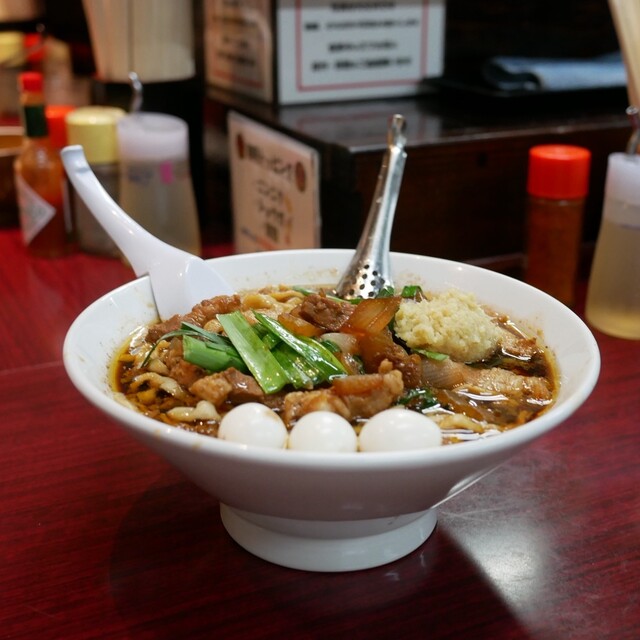
The approach is pure suburban Tokyo: a station-side block in Mitaka, a basement address, and a room built around counter eating, not spectacle. This is ramen as compressed urban ritual: quick, direct, judged bowl by bowl. Ganso Stamina Manten Ramen Suzuki belongs to a Tokyo category done unusually well: small-format noodle shops that draw serious attention without borrowing fine-dining language.
Tokyo ramen is democratic in price and obsessive in execution. While luxury dining runs on reservations, tasting menus, and international awards, ramen earns credibility through local repeat custom, specialty lists, station-area geography, and diners willing to queue for a counter seat. Selection for Tabelog 100 Ramen Tokyo 2025 places this Mitaka shop in that second economy of prestige, where a sub-¥1,000 listing can matter to noodle-focused diners as much as a starched dining room matters elsewhere.
Mitaka ramen with the discipline of a ten-seat counter
Mitaka sits west of central Tokyo’s hotel-and-department-store dining corridors, changing the meal’s rhythm. The audience is less international itinerary than after-work regular, solo diner, and ramen completist. That matters because ramen outside the central wards often shows Tokyo’s food culture at its least performative: smaller rooms, sharper specialization, and prices tied to everyday eating rather than occasion dining.
The format is tight. Ten counter seats allow little lingering, private dining, or group theatre. Counter seating keeps the kitchen in the foreground, showing that ramen’s hierarchy is built not on tablecloths but on repetition, timing, and consistency. In Tokyo, that intimacy is part of the genre. A ramen counter turns production into evidence.
The menu category is ramen and tsukemen, a familiar but demanding pairing. Ramen asks for harmony in one bowl; tsukemen separates noodles and dipping soup, giving texture and concentration different roles. That split signals a kitchen working inside two central Tokyo noodle formats. The defining idea is stamina ramen: a heartier, more forceful branch built for appetite rather than delicacy, and a counterpoint to the refined shio and shoyu styles often discussed in central Tokyo ramen.
For travelers who know Tokyo through omakase counters and luxury hotel dining, the distinction matters. Ramen has its own grammar of seriousness. A shop can be casual, inexpensive, and still compete hard. The 2025 Tabelog 100 recognition and 3.83 score give Ganso Stamina Manten Ramen Suzuki a measurable place in that bracket; the larger point is the category itself: Tokyo’s noodle culture rewards concentration over polish.
Where it sits in Tokyo's broader eating map
Price is part of the argument. A dinner budget below JPY 999 puts this address in a radically different lane from tasting-menu Tokyo, and below many casual sit-down meals. Ramen Sukoyaka is listed at JPY 1,000 to JPY 1,999, Shichijo in the same band, while Yakitori Yamamoto operates at JPY 8,000 to JPY 9,999. Even within casual Tokyo, Gyoza no Harbin and Udon Stand Gozu occupy broader budget ranges that can climb above the ramen baseline. The Mitaka counter offers a narrower proposition: low spend, specialist format, high local scrutiny.
That proposition is not rare in Tokyo, but it is hard to sustain. The ramen field is dense, and recognition follows shops with clear identity rather than menus for every mood. The appeal here lies in that clarity: no private-room comfort layer, elaborate beverage program, or chef-led biography needed. The scene is the story: compact counter, ramen and tsukemen, suburban station context, and enough reputation to register on a citywide specialty list.
For readers mapping a wider Tokyo food itinerary, this stop balances more formal reservations. A day built around central dining might include broader restaurant research through Our full Tokyo restaurants guide, while drink-led planning belongs in Our full Tokyo bars guide. Hotel location matters too, since late meals west of the city center have a different return rhythm; Our full Tokyo hotels guide is the better place to solve that part of the trip. For a fuller cultural frame, Our full Tokyo experiences guide and Our full Tokyo wineries guide cover the city beyond the bowl.
The broader Japanese dining map clarifies what this ramen counter is not. It is not the charcoal-led seafood mood of. 鮪と炭火焼き うお炭 秋葉原店, the yakitori focus of 124. KAGURAZAKA (Yakitori), the curry specialization of 3 Chome no Curry Ya San, the casual visual play of 2D Cafe, or the same social register as 12/10 Shinjuku ten. Its value is narrower: stamina ramen in a counter setting, judged by Tokyo noodle specialists.
Seen from outside Tokyo, the comparison stretches further. -Grilled beef Sukiyaki- KAMAKURA TANUKIAN 鎌倉 たぬき庵 in Kamakura.cafe in Osaka.know in Kumamoto, (Shoku) Vietnam in Kawasaki, [Curry Senmon Ten] Maruyama Kyoju. in Sapporo, and [ki:] in Kyoto each show different ways Japan organizes casual and specialist eating. Even abroad, Jōdo Saké Bar in Los Angeles and Onigiri Time in Pasadena show how Japanese formats travel. Mitaka’s lesson is local: in Tokyo, an inexpensive counter can carry serious culinary weight when the format is disciplined and the audience knows the category.
The editorial read
Ganso Stamina Manten Ramen Suzuki is compelling because it refuses usual luxury signals while satisfying the criteria that matter within ramen culture. The room is small, the category focused, and the recognition specific to Tokyo ramen rather than general hospitality prestige. For travelers, it corrects trophy dining, showing how Tokyo food culture can be exacting at everyday prices, especially where the meal is woven into ordinary city life rather than staged as an event.
Read this address not as a detour from premium Tokyo dining, but as a reminder of how broad the city’s standards are. A serious Tokyo itinerary should leave room for both the reserved counter and the no-reservation noodle shop, because the city’s culinary intelligence lives in both. Here, the claim is modest and persuasive: ramen, tsukemen, counter seats, late-day rhythm, and enough recognition to justify the ride west.
Cuisine Context
Comparable venues at similar price and category levels.
| Venue | Cuisine | Price | Notes |
|---|---|---|---|
| Ganso Stamina Manten Ramen SuzukiThis venue — the venue you are viewing | Stamina-style ramen & soba | $ | Not listed |
| Kitchen Nankai (キッチン南海) | Classic Yoshoku Katsu Curry | $ | Jimbocho |
| Yoshifuji | Musashino-style udon shop | $ | Kodaira |
| Sakurajosui Funakoshi | Modern shio ramen | $ | Suginami |
| Tsukemen Gonokami Seisakujo | Shrimp Tsukemen Ramen Shop | $ | Shibuya |
| Murayama Mangetsu Udon | Traditional Murayama kate udon | $ | Musashimurayama |
Recognition history
Dated appearances from independent guides and award organizations, with the underlying list record or original source where available.
Tabelog 100 #5 · No. 5
Tabelog · Tabelog 100 - Ramen - TOKYO - 2025
Continue exploring
More in Tokyo
Restaurants in Tokyo
Browse all →



Bars in Tokyo
Browse all →



Hotels in Tokyo
Browse all →




Wineries in Tokyo
Browse all →
At a Glance
- Lively
- Energetic
- Solo
- After Work
- Late Night
- Casual Hangout
- Chefs Counter
- Standalone
Current opening hours
- Monday
- 6 PM–12 AM
- Tuesday
- 6 PM–12 AM
- Wednesday
- 6 PM–12 AM
- Thursday
- 6 PM–12 AM
- Friday
- 6 PM–1 AM
- Saturday
- 6 PM–1 AM
- Sunday
- Closed
Hours can change for holidays and private events. Last verified .
Compact basement counter with a no-frills, high-energy ramen-ya feel where guests queue for intensely flavored bowls, eat quickly at the counter, and leave; bright, functional lighting and a focus squarely on the food rather than decor.