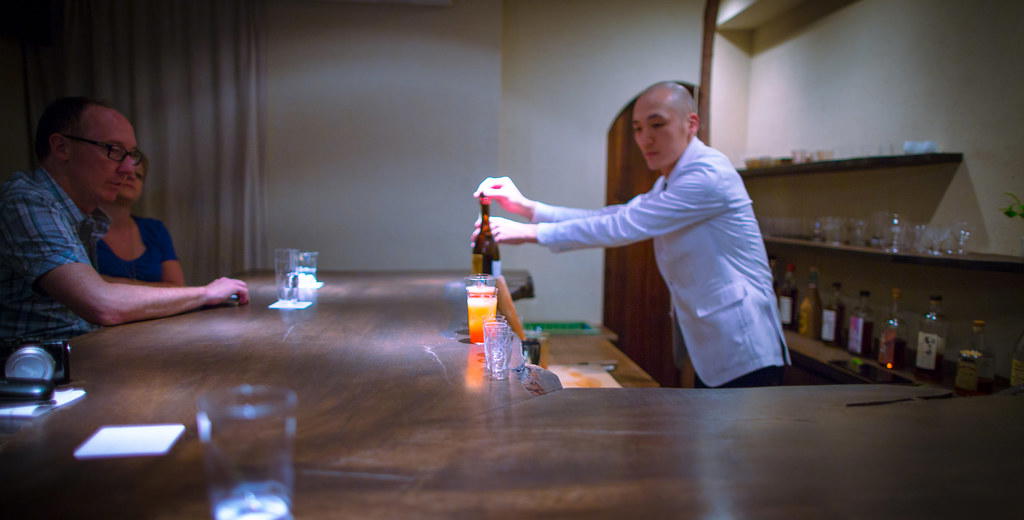
fragment 麻布台窓 occupies a second-floor address in Azabujuban, one of Tokyo's most quietly serious dining neighbourhoods. The name, fragment, window, suggests what the format delivers: a framed, deliberate encounter with a meal rather than a stage-managed spectacle. For visitors already familiar with Tokyo's top-tier omakase and kaiseki circuits, this is a considered addition to the itinerary.
 Discover on Pearl
Pearl is the En Primeur Club membership app — saves, bookings, and concierge access live there. Same editors, same standards.
- Address
- Japan, 〒106-0045 Tokyo, Minato City, Azabujuban, 3 Chome−9−2 タモン麻布 2F 十番
- Phone
- +81368126933
- Website
- tablecheck.com
The Second Floor and What It Signals
Azabujuban has a particular density of serious restaurants relative to its street noise. The neighbourhood sits between the diplomatic corridors of Moto-Azabu and the commercial pulse of Roppongi, and it has accumulated, over two decades, a roster of dining rooms that reward attention over atmosphere. fragment 麻布十番 sits at Japan, 〒106-0045 Tokyo, Minato City, Azabujuban, 3 Chome−9−2 タモン麻布 2F 十番, an address that places it in that quieter, more deliberate register. Second-floor restaurants in Tokyo frequently signal intent: fewer walk-ins, a more considered clientele, a pace set by the kitchen rather than the street.
The combination gestures at a format where the meal is a frame through which something specific is revealed, a sensibility that has become increasingly common in Tokyo's upper-tier dining rooms, where the ritual of eating is itself the point, not merely the vehicle for nutrition or socialising.
Dining as Ritual: Pacing, Posture, and the Shape of a Meal
Tokyo's most serious dining rooms have converged, across cuisine type, on a shared understanding of how a meal should move. Whether at a sushi counter in Ginza, a kaiseki room in Akasaka, or an innovative French table in Aoyama, the architecture of the experience follows similar logic: a deliberate opening, an escalating middle, a quiet resolution. The diner is expected to arrive on time, to disengage from external demands, and to let the kitchen set the tempo. Conversation is welcome but not the primary event.
This ritual structure, which Japanese dining culture has exported into international consciousness through venues like RyuGin and L'Effervescence, requires a specific posture from the guest. Arriving late compresses the kitchen's timing. Requesting substitutions mid-sequence disrupts a progression that was designed whole. Photographing every course without eating it warm is a choice with consequences. The restaurants that sustain serious reputations in this city are, almost without exception, those where the kitchen's authority over the meal's structure is respected and reciprocated.
fragment 麻布十番, positioned in this neighbourhood and at this address tier, operates inside that same framework. That is, functionally, what Tokyo's omakase-format rooms do, they offer a fragment of a chef's larger understanding, sequenced and timed for a single sitting.
Where fragment Sits in Tokyo's Dining Tier
Tokyo's restaurant market has stratified sharply. At the upper tier, venues like Harutaka and Sézanne operate with full occupancy, long lead times on reservations, and pricing that reflects both ingredient cost and scarcity value. A rung below, a cluster of ambitious but less institutionally recognised rooms, often newer, sometimes experimental, compete on a different axis: format invention, neighbourhood positioning, or a tighter edit of what the meal contains.
fragment 麻布十番 occupies a position in that second cluster. Azabujuban's dining density, it holds a disproportionate number of rooms operating quietly at high levels, provides cover for this kind of project. The neighbourhood does not need a restaurant to announce itself loudly. Reputation travels through the specific channels that matter: reservations systems, word among regulars, and the occasional appearance in curated lists.
For comparison, Crony operates at the innovative French tier with a similar audience in mind. fragment sits in a Tokyo context, but the dining logic it draws on is national.
Etiquette, Expectations, and the Informed Guest
The ritual expectations at Tokyo's concentrated dining rooms are not arbitrary. They exist because the format, typically fixed-sequence, counter or small-room, kitchen-paced, only functions when the guest's engagement matches the kitchen's preparation. A solo diner occupying a seat at such a counter is, in effect, entering a compact. The kitchen commits to a specific sequence; the guest commits to receiving it fully.
At venues operating in the same tier, this compact is rarely stated explicitly. It is communicated through the booking process, the room design, and the pace of service. There are no menus to browse at length, no à la carte negotiations, no option to linger indefinitely. The meal begins, moves, and closes on a schedule that was set before the guest arrived. This is not inflexibility; it is the formal condition that makes the level of cooking possible.
Guests unfamiliar with Tokyo's concentrated dining ritual sometimes find the pace faster than expected, or the room quieter than anticipated. Both of these are features. The silence is not cold, it is directed. The pace is not rushed, it is complete. Understanding this distinction is what separates a guest who leaves satisfied from one who leaves puzzled. For those who already understand it, from experience at rooms like Lazy Bear in San Francisco or Le Bernardin in New York City, the transition to Tokyo's version of the form is immediate.
Planning a Visit
Azabujuban is accessible via the Nanboku and Oedo subway lines, with the Azabujuban station providing direct access to the 3-chome end of the neighbourhood.
For those extending into other Japanese cities, akordu in Nara, Goh in Fukuoka, Abon in Ashiya, affetto akita in Akita, Aji Arai in Oita, Ajidocoro in Yubari District, Akakichi in Imabari, and aki nagao in Sapporo each represent the country's regional dining seriousness at different price points and in different culinary traditions.
| Venue | Neighbourhood | Cuisine Tier | Price Range | Booking Lead Time |
|---|---|---|---|---|
| fragment 麻布十番 | Azabujuban | Upper-mid / Emerging | Not confirmed | Not confirmed |
| Harutaka | Ginza | Premium Sushi | ¥¥¥¥ | Several weeks minimum |
| L'Effervescence | Nishi-Azabu | French | ¥¥¥¥ | Several weeks minimum |
| Crony | Minami-Aoyama | Innovative French | ¥¥¥¥ | Several weeks minimum |
| RyuGin | Roppongi | Kaiseki | ¥¥¥¥ | Several weeks minimum |
How It Stacks Up
Comparable venues nearby, for context on price, style, and recognition.
| Venue | Cuisine | Price | Awards | Notes |
|---|---|---|---|---|
| fragment 麻布十番This venue — the venue you are viewing | japanese | , | , | |
| Re:s Cafe Bar & Sweets | Japanese Dessert Cafe | $$ | , | Nishi Waseda |
| 日本料理 太月 | Japanese Traditional | , | , | Shibuya |
| Niwa Tori | Yakitori & Chicken Izakaya | $$ | , | Shinagawa |
| Takeno | Traditional Tsukiji seafood shokudo / izakaya | $$ | , | Chūō |
| 3 Chome no Curry Ya San | Japanese Curry House | $$ | , | Chūō |









At a Glance
- Special Occasion
- Sake Program