
Takeno belongs to Tsukiji’s practical seafood culture rather than Tokyo’s luxury sushi economy: a 39-seat izakaya and cafeteria hybrid where fish, sake, and shochu define the brief. Selection for Tabelog 100 Izakaya EAST in 2024 and 2025 gives it a clear trust signal in a category where everyday formats often say more about Tokyo dining than formal counters.
Pearl is the En Primeur Club membership app — saves, bookings, and concierge access live there. Same editors, same standards.
- Address
- 6 Chome-21-2 Tsukiji, Chuo City, Tokyo 104-0045, Japan
- Phone
- +81 3-3541-8698
- Website
- tsukijitakeno.owst.jp
 Saves & bookings on Pearl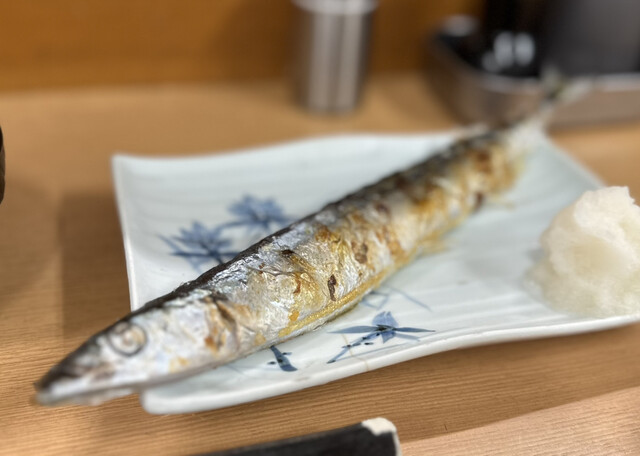
Tsukiji’s side streets have a different rhythm from Ginza’s polished counters a few blocks away. The area still trades on fish-market muscle memory: early lunches, practical rooms, seafood-first ordering, and a clientele that understands value in portions and freshness rather than ceremony. Takeno fits that older Tokyo grammar. It is not built around theatrical omakase pacing or chef mythology; it sits in the izakaya-cafeteria seam, where the menu architecture tells the story.
Tsukiji seafood without the sushi-counter script
Tokyo visitors often reduce Tsukiji to sushi, but the neighbourhood’s deeper dining pattern is broader: grilled fish, set meals, tavern plates, sake, shochu, and tables that turn from lunch into evening drinking without changing identity. That is the useful lens here. The listed categories are izakaya, seafood, and cafeteria, a combination that signals range rather than a single tasting-menu thesis. In practical terms, this places the room closer to daily Tokyo eating than to the reservation theatre surrounding premium sushi.
The strongest evidence is structural. The menu is described around fish rather than a named specialty, and the drinks list is anchored by nihonshu and shochu. That pairing matters in Tsukiji, where seafood restaurants often split between tourist-facing sushi counters and neighbourhood rooms that treat fish as a flexible ingredient across lunch sets, shared plates, and drinking food. Takeno’s appeal sits in that second camp: less choreography, more choice, and a price band that keeps it in the serious casual tier rather than the luxury bracket.
Recognition helps separate it from the large field of Tokyo izakaya. Selection for Tabelog 100 Izakaya EAST in 2024 and 2025 puts it inside a competitive regional list, and a Tabelog score of 3.69 is meaningful in a city where scores above the mid-threes usually indicate sustained local approval rather than simple tourist volume. The additional 2021 Tabelog 100 selection in the teishoku category reinforces the same point: this is not only a drinking address, but a room with set-meal credibility.
The menu logic: fish first, drinks close behind
Menu architecture in Tokyo izakaya often reveals intent faster than décor. A yakitori room builds around skewers and heat control; a sake bar often starts with the cellar and lets food support the glass. Here, the order of importance is fish, then sake and shochu, then the flexible social format of tables and a small counter. That mix gives the restaurant a broader use case than a single-purpose seafood counter.
Within Tsukiji, that puts it in a useful middle tier. Tempura Kurokawa and Trattoria Tsukiji Paradiso, both nearby comparison points, sit in different culinary lanes and higher dinner bands on listed pricing. Chosei An overlaps more closely on dinner budget, while Fugu Club miyawaki Bettei narrows the decision around pufferfish. Takeno’s case is broader: fish-led izakaya cooking with lunch credibility and evening drinking built into the same address. For travellers deciding between formats, that distinction is more important than chasing another sushi reservation.
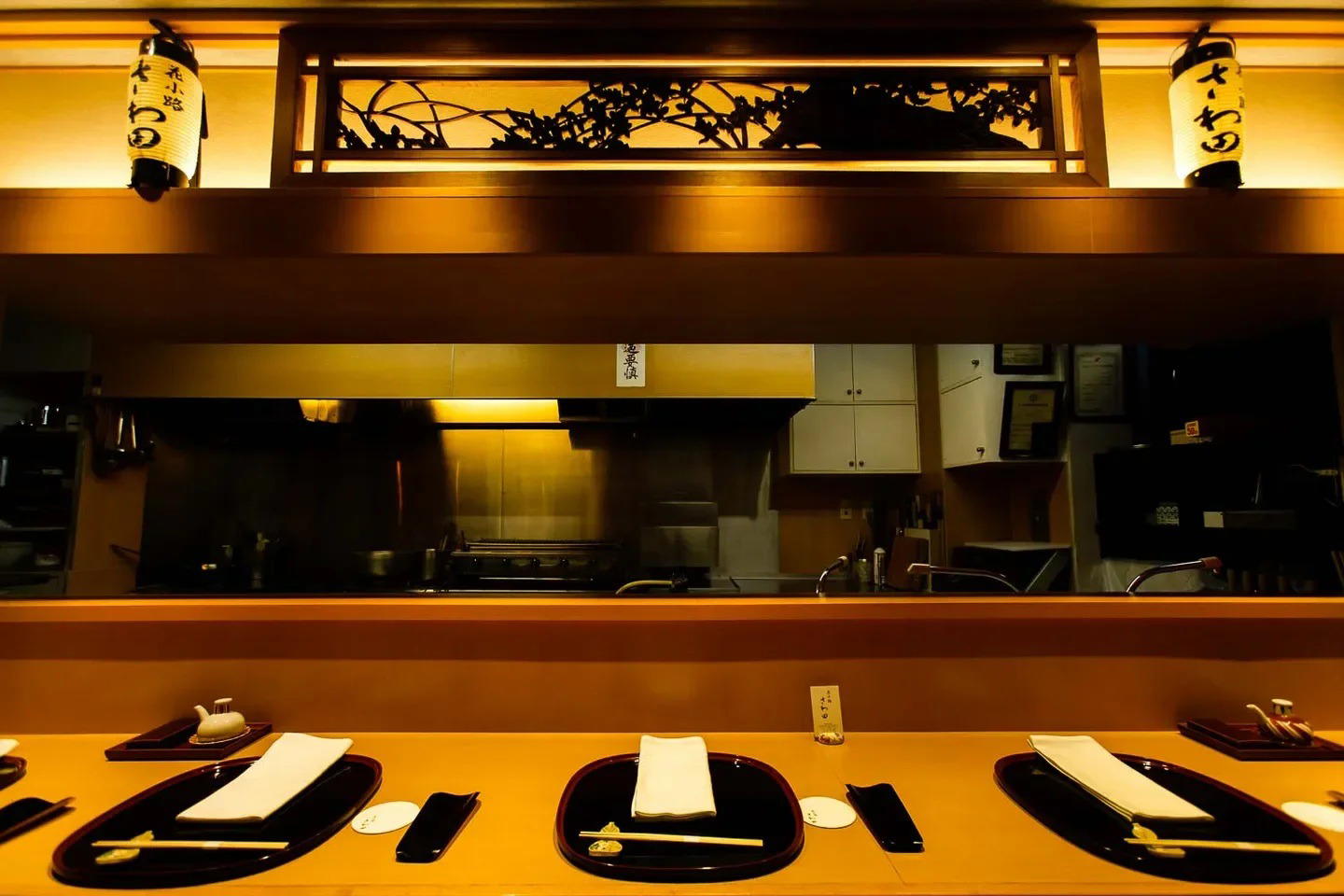
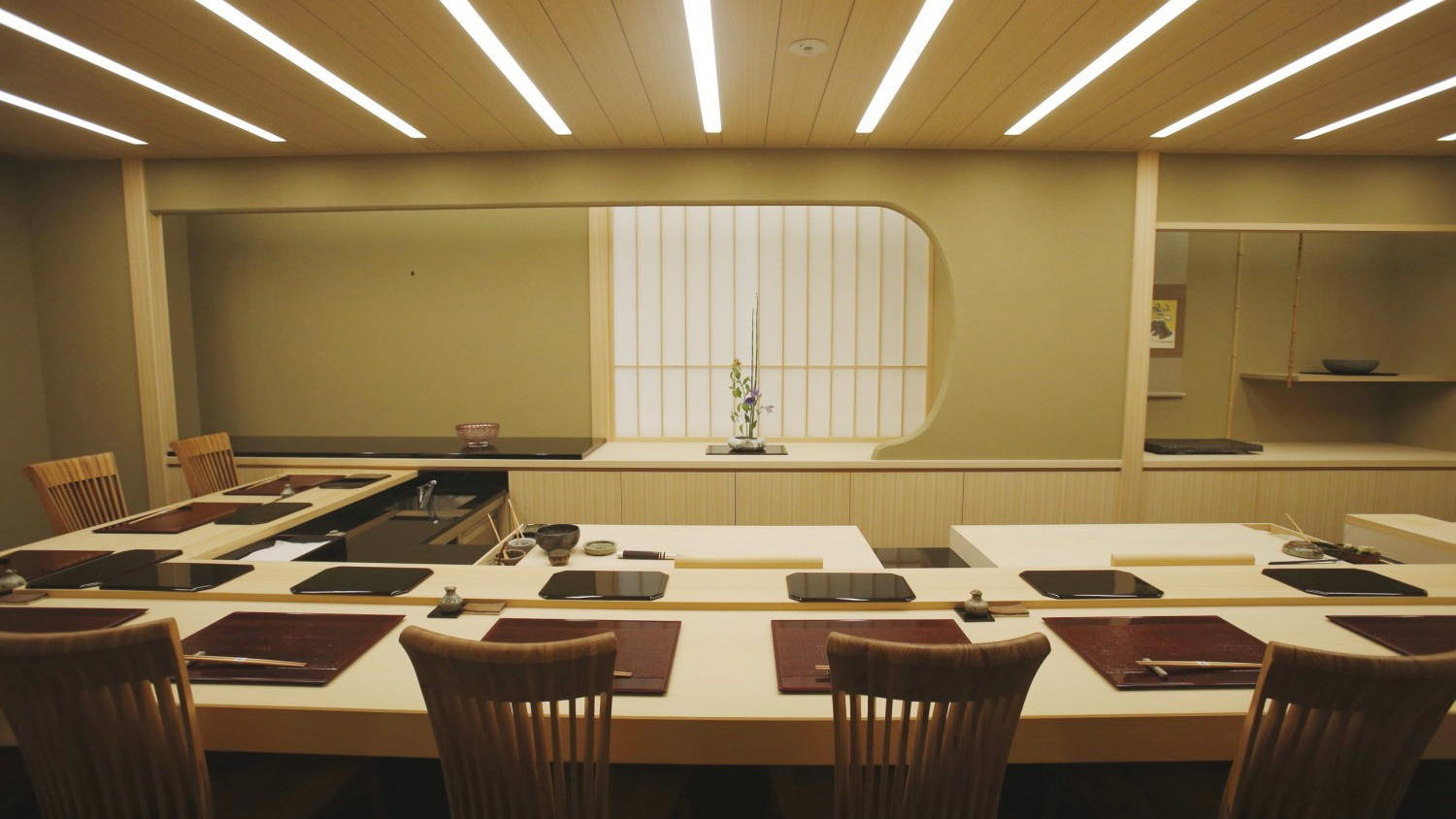
The seating also shapes the experience. Thirty-nine seats, including five counter seats and table seating across two floors, make the room small by casual-dining standards but not counter-only. That matters for groups, families, and travellers who want Tsukiji seafood without committing to a hushed format. Private rooms are not part of the setup, while private use is available, so the address reads as compact and social rather than secluded.
Pricing reinforces the editorial read. Dinner is listed at JPY 6,000 to JPY 7,999, with lunch at JPY 3,000 to JPY 3,999. That is not cheap izakaya territory, but it is a different proposition from Ginza sushi or formal kaiseki. In Tsukiji terms, the spend makes sense for a fish-focused room with award recognition, especially for diners who would rather allocate budget to breadth of ordering than to a fixed luxury sequence.
How to place it in a Tokyo dining itinerary
The address is in Chuo City’s Tsukiji district, close enough to the old market orbit that the area still rewards daytime wandering, but the restaurant’s evening hours give it a second role after the fish-market crowds thin. Monday to Friday service runs from late morning through evening, Saturday closes earlier, and Sunday is dark. That schedule favours lunch planners and early-evening diners more than late-night bar crawlers.
Reservations are available, and the room’s 39-seat scale makes advance planning sensible for groups. The restaurant asks guests to flag changes in party size as early as possible, a practical note that says a lot about small Tokyo dining rooms: capacity is tight, and last-minute adjustments affect everyone. Payment flexibility is stronger than many older neighbourhood rooms, with major credit cards, transport IC cards, several electronic money systems, and QR payments accepted. The room is non-smoking, has counter seating and free Wi-Fi, welcomes children, and has no parking.
For broader Tokyo planning, pair this kind of Tsukiji seafood stop with contrasting formats rather than more of the same. EP Club’s Tokyo restaurant coverage also tracks casual and specialist addresses such as . 鮪と炭火焼き うお炭 秋葉原店, 12/10 Shinjuku ten, 124. KAGURAZAKA (Yakitori), 2D Cafe, and 3 Chome no Curry Ya San. For the full city view, use Our full Tokyo restaurants guide, plus Our full Tokyo hotels guide, Our full Tokyo bars guide, Our full Tokyo wineries guide, and Our full Tokyo experiences guide. Japan and sake-adjacent planning can extend to -Grilled beef Sukiyaki- KAMAKURA TANUKIAN 鎌倉 たぬき庵 in Kamakura.cafe in Osaka.know in Kumamoto, (Shoku) Vietnam in Kawasaki, [Curry Senmon Ten] Maruyama Kyoju. in Sapporo, [ki:] in Kyoto, Jōdo Saké Bar in Los Angeles, and Onigiri Time in Pasadena.
- Nodoguro no nitsuke (blackthroat seaperch stew)
- Kinki no nitsuke (rockfish stew)
- Fresh sashimi selection
- Iwashi sashimi and namero
- Anago shirayaki
- Large seasonal rock oysters
A Tight Comparison
Comparable venues at a glance for context.
| Venue | Cuisine | Price |
|---|---|---|
| TakenoThis venue — the venue you are viewing | Not listed | $$ |
| tonkatsu.jp表参道 | Omotesando, Premium Tonkatsu Specialist | $$ |
| Nonokura | Kameari, Chuutakansuimen Ramen | $$ |
| Kajitsuen Riberu | Meguro, Fruit Parlor | $$ |
| Godaime Hanayama Udon Ginza ten | Chūō, Traditional Japanese Udon | $$ |
| Teuchi Soba Narutomi | Chūō, Traditional Ginza soba & tempura | $$ |
Recognition history
Dated appearances from independent guides and award organizations, with the underlying list record or original source where available.
Tabelog 100 #94 · No. 94
Tabelog · Tabelog 100 - Izakaya - EAST - 2025




At a Glance
- Classic
- Lively
- Cozy
- After Work
- Group Dining
- Solo
- Family
- Casual Hangout
- Standalone
- Sake Program
- Beer Program
- Local Sourcing
- Sustainable Seafood
Current opening hours
- Monday
- 11 AM–9 PM
- Tuesday
- 11 AM–9 PM
- Wednesday
- 11 AM–9 PM
- Thursday
- 11 AM–9 PM
- Friday
- 11 AM–9 PM
- Saturday
- 11 AM–8 PM
- Sunday
- Closed
Hours can change for holidays and private events. Last verified .