
A Michelin Plate-recognised Italian restaurant in Azabujuban, fragment occupies a second-floor address above the neighbourhood's low-lit residential streets and builds its menu around a single, counterintuitive premise: Italian cuisine expressed through Japanese seafood, with tuna sourced via intermediate wholesalers from fishing regions across the country. Lunch runs on pasta; evenings open into a wide à la carte spread.
Pearl is the En Primeur Club membership app — saves, bookings, and concierge access live there. Same editors, same standards.
- Address
- Japan, 〒106-0045 Tokyo, Minato City, Azabujuban, 3 Chome−9−2 タモン麻布 2F 十番
- Phone
- +81 3-6812-6933
- Website
- instagram.com
- Directions
- Get directions
 Saves & bookings on Pearl
Italian at Street Level in Azabujuban
Azabujuban sits in that particular Tokyo register, residential enough to feel like a neighbourhood, polished enough to attract serious restaurants, that has made it one of the city's more interesting addresses for European cooking. The streets around the shopping arcade are not Ginza's formal corridor, nor Nishi-Azabu's late-night circuit. They're the kind of blocks where a second-floor restaurant, reached by a staircase, can operate with the unhurried tempo of a local trattoria rather than a destination stage. That informal contract between room and street is the context for fragment Azabujuban, a Michelin Plate-listed Italian address that has held that recognition across both 2024 and 2025.
Tokyo's Italian scene has developed a distinct internal logic over the past two decades. At the upper end, you have formalist tasting-menu houses like Aroma Fresca and PRISMA, where a single sitting is the product and the pacing is controlled. Then there is a second tier, less discussed but more woven into daily Tokyo life, where Italian cooking meets the neighbourhood restaurant model, drop-in lunch, à la carte evenings, a menu that changes with what the chef can source rather than what the marketing calendar dictates. Fragment Azabujuban positions itself clearly in that second tier, and does so with a concept sharp enough to distinguish it from generic casual Italian.
The Premise: Italian Cooking, Japanese Seafood
The restaurant's stated concept, Italian cuisine from all over Japan, is not a marketing line so much as a structural decision about what goes on the plate. Italian technique is the method; Japanese coastal produce, particularly tuna, is the material. Tuna is sourced through intermediate wholesalers who aggregate from fishing regions around the country, a supply route that gives the kitchen access to regional variation in fish quality and species that a standard Tokyo market purchase would not provide.
The result is a menu that reads Italian but thinks Japanese in its sourcing logic. Tuna appears in several guises across the à la carte: carpaccio, salad preparations, and roasted tuna cheek among the documented formats. Roasted cheek of tuna is worth noting as a category: it is not a common Italian preparation anywhere, and its appearance here reflects the kitchen's willingness to treat Japanese fish using the full range of Italian cooking methods rather than limiting itself to crudo-adjacent presentations that would play it safe.
This approach places fragment in a broader pattern emerging across Japanese cities, where chefs trained in European traditions have begun building menus around Japanese ingredient supply chains rather than importing European raw materials. cenci in Kyoto occupies adjacent territory. So, in a different register, does akordu in Nara. The question each restaurant answers differently is how deeply the Japanese sourcing logic shapes the cooking at the structural level, not just the garnish level. At fragment, the tuna supply network suggests the answer runs fairly deep.
The Trattoria Structure: Lunch Pasta, Evening à la Carte
One of the clearest signals that fragment operates on a neighbourhood restaurant model rather than a destination dining model is its format split. Lunch is built around pasta, approachable, fast to produce, a product that encourages the repeat local visit. The evening shifts to an extensive à la carte, which gives the kitchen more range and gives the diner more control over pacing and spend.
This is the Italian trattoria model, adapted for a Tokyo context. In Italy, the trattoria's social contract rests on accessibility: the same room serves a quick weekday lunch and a longer Saturday dinner, and the menu breadth exists to accommodate both behaviours. Tokyo restaurants that adopt this structure are making a deliberate choice to avoid the exclusivity signal of a single prix-fixe format. Drop-in trade is explicitly welcomed at fragment, which is a meaningful departure from Tokyo's broader culture of omakase counters and advance-booking tasting menus.
By comparison, restaurants like Principio and AlCeppo occupy different points on Tokyo's Italian spectrum, and Gucci Osteria da Massimo Bottura Tokyo sits at the brand-statement end of the category. Fragment's commitment to walk-in accessibility and lunch pasta places it at the neighbourhood-hospitality end, less about event dining, more about being useful on a Tuesday.
Azabujuban in Context
The neighbourhood choice matters. Azabujuban's mix of long-established locals, expatriate residents, and visitors passing through from nearby embassies creates an audience comfortable with European cooking and attentive to quality without necessarily wanting the full formal dining ritual. A second-floor Italian with a wide à la carte and a welcoming lunch offer fits that demographic more accurately than a twelve-seat omakase counter would.
Tokyo's Italian restaurants have historically clustered in Roppongi and Ginza, but the drift into residential neighbourhoods like Azabujuban reflects a shift in where the reliable audience now lives and eats. For other Italy-meets-Japan readings at different geographic and price points, 8½ Otto e Mezzo Bombana in Hong Kong shows how the category scales at the luxury end in a different Asian city, while Japan's own regional Italian scene includes addresses like HAJIME in Osaka and Gion Sasaki in Kyoto for readers building a broader Japan itinerary.
Planning Your Visit
It prices at ¥¥¥¥.
| Venue | Category | Price | Format | Recognition |
|---|---|---|---|---|
| fragment Azabujuban | Italian, Japanese-sourced | ¥¥¥ | Pasta lunch / À la carte evening | Michelin Plate 2024, 2025 |
| PRISMA | Italian | ¥¥¥¥ | Tasting menu | Michelin-listed |
| Den | Innovative Japanese | ¥¥¥ | À la carte / set | Michelin 2 Stars |
| Crony | Innovative French | ¥¥¥¥ | Tasting menu | Michelin 2 Stars |
The restaurant is located on the second floor at 3 Chome-9-2 Azabujuban, Minato City, Tokyo. Regional itinerary builders may also find Goh in Fukuoka, 1000 in Yokohama, and 6 in Okinawa useful for building a broader Japan eating itinerary around a Tokyo base.
Accolades, Compared
Comparable venues nearby, for context on price, style, and recognition.
| Venue | Cuisine | Price | Awards | Notes |
|---|---|---|---|---|
| fragment AzabujubanThis venue — the venue you are viewing | Nationwide Italian with Japanese Seafood | $$$$ | Michelin Plate | Not listed |
| Orchestra | Modern Italian with Japanese Ingredients | $$$$ | Michelin Plate | Shibuya |
| sio AOYAMA | Modern Italian with Japanese influences | $$$$ | Michelin Plate | Minato |
| misola | Modern Italian | $$$$ | Michelin Plate | Minato |
| commedia | Modern Italian Omakase | $$$$ | Michelin Plate | Kōtō |
| LA BOTTEGAIA | Refined Seasonal Italian | $$$ | Michelin Plate | Chūō |
Recognition history
Dated appearances from independent guides and award organizations, with the underlying list record or original source where available.
Michelin Plate
Michelin
Michelin Plate
Michelin
Michelin Plate
Michelin











At a Glance
- Elegant
- Modern
- Intimate
- Sophisticated
- Minimalist
- Date Night
- Special Occasion
- Chefs Counter
- Open Kitchen
- Extensive Wine List
- Sake Program
- Local Sourcing
Current opening hours
- Monday
- 6–11 PM
- Tuesday
- 6–11 PM
- Wednesday
- Closed
- Thursday
- 12–1:30 PM, 6–11 PM
- Friday
- 12–1:30 PM, 6–11 PM
- Saturday
- 12–1:30 PM, 6–11 PM
- Sunday
- Closed
Hours can change for holidays and private events. Last verified .
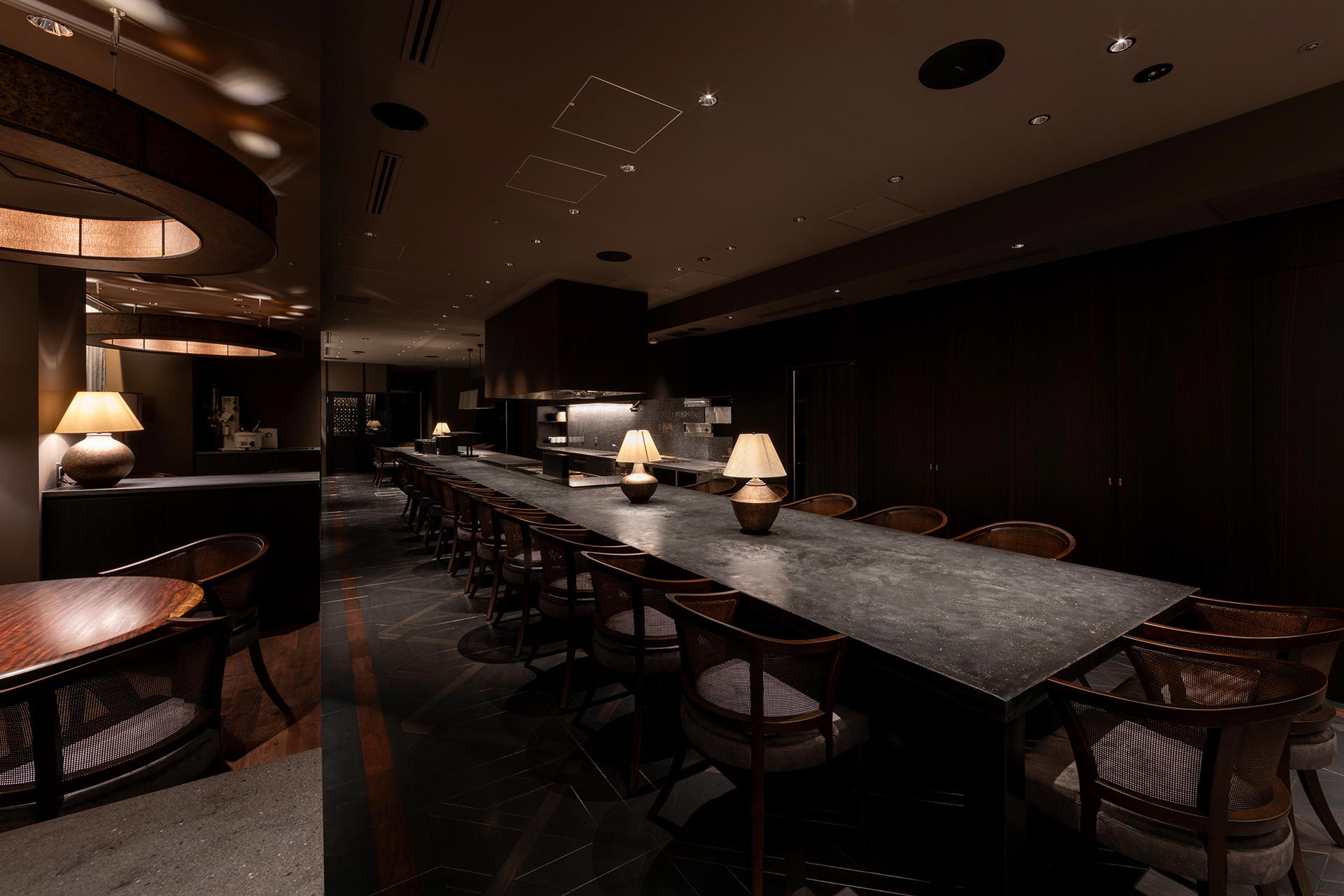
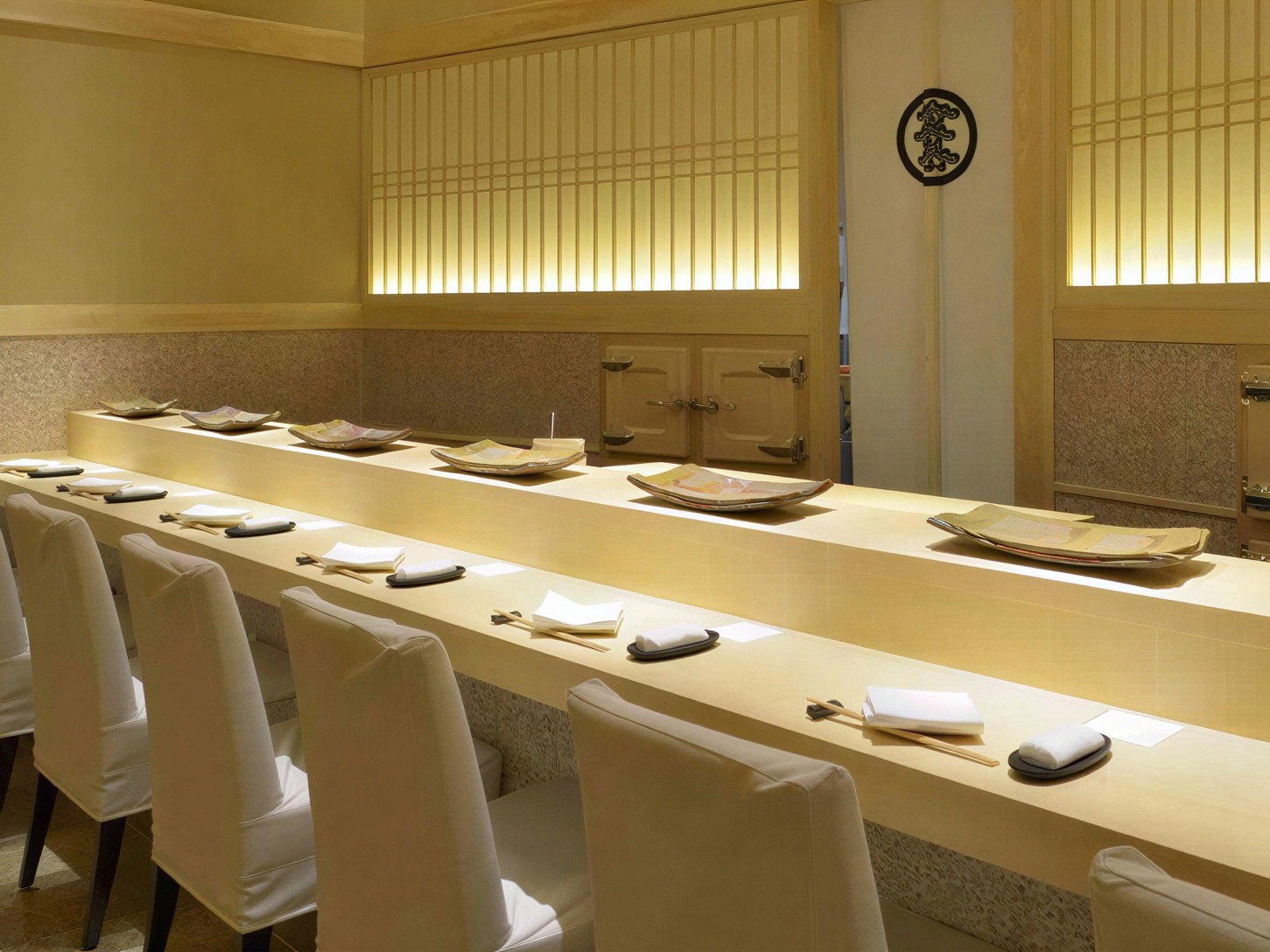
Calm and stylish 14-seat counter-only space described as relaxing and a stylish hideout.