Michelin Plate · Tabelog Bronze #47
Our verdict
Tokyo’s Italian dining scene has moved well beyond trattoria nostalgia, and commedia belongs to its counter-led, tasting-sequence tier: six seats, pasta and fish as central signals, and a dinner spend listed at JPY 30,000–39,999. Its 2026 Tabelog Award Bronze recognition, 2025 Tabelog 100 Italian Tokyo selection, and Michelin Plate listings in 2024 and 2025 put it in a narrow band of small-format restaurants where pacing matters as much as technique.

Pearl is the En Primeur Club membership app, where members save venues, book tables and use the concierge.
The menu
What to order
- Capellini with Black Soybeans and Sea Urchin
- Kikuchi Gengoku Beef Sirloin Steak
- Chestnut and White Truffle Risotto
- Lagane Pasta with Clams and Snow Crab
The approach to Kiba resets expectations before dinner begins. This is not Marunouchi-style Italian dining, with hotel polish and corporate tempo. In eastern Tokyo, behind the everyday scale of Toyo and Koto, the room contracts to a counter and the meal becomes a timed sequence. Italian cooking in Tokyo has split into clear lanes, from generous trattorias to high-price tasting rooms, and small counter restaurants now promise progression rather than familiar categories.
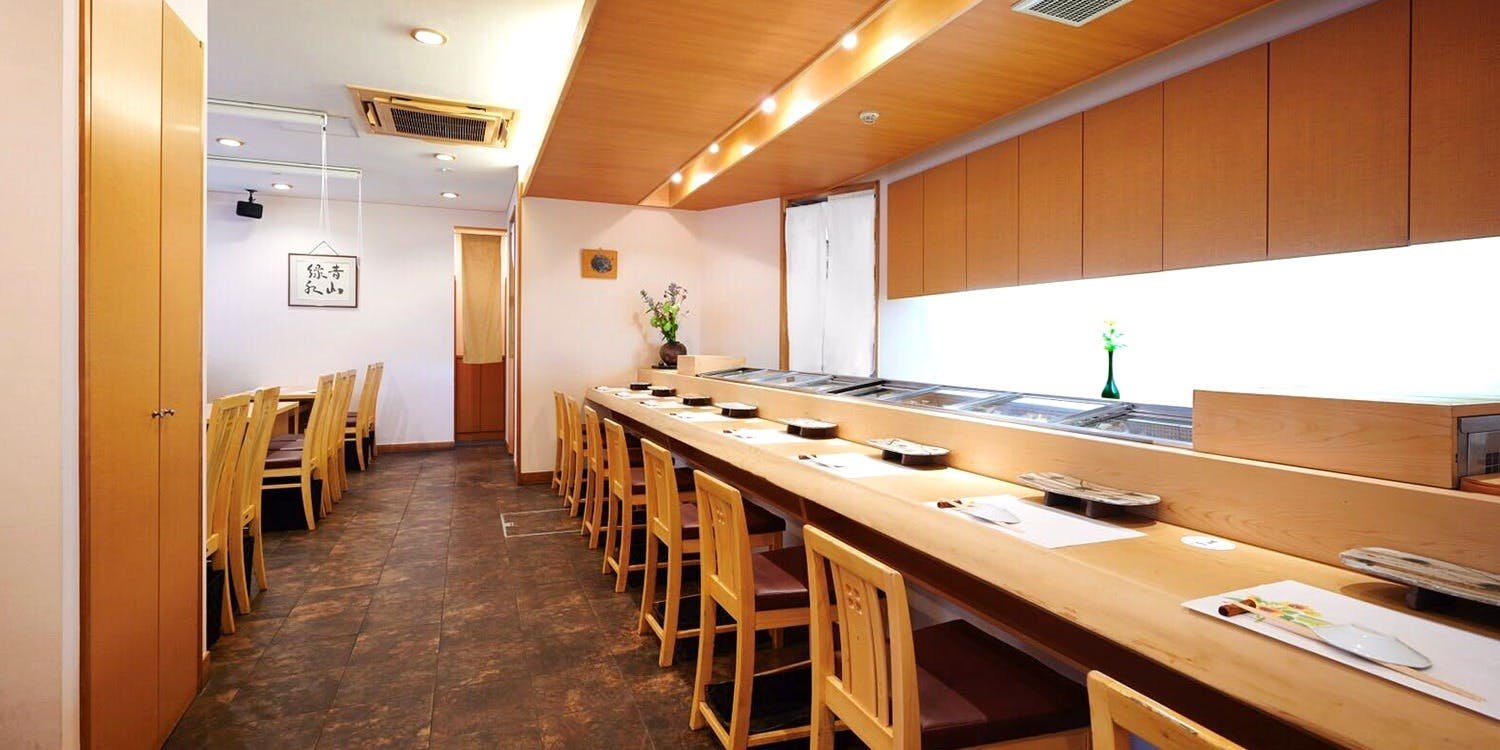
commedia sits in that narrower lane. It is listed as Italian and pasta, but the stronger signal is format: six counter seats, reservation-only service, a dinner budget of JPY 30,000–39,999, and a structure closer to staged performance than casual Italian dinner. Recognition reinforces that position: a 2026 Tabelog Award Bronze, selection for Tabelog 100 Italian Tokyo in 2025, and Michelin Plate recognition for 2024 and 2025. In a city where Italian restaurants range from neighborhood staples to luxury dining rooms, those markers place it among serious small-format addresses rather than broad-access trattorias.
A six-seat Italian counter built around progression, not abundance
The essential distinction is sequencing. Tokyo’s high-end Italian cooking often borrows the discipline of Japanese tasting formats: controlled arrival time, counter relationship with the kitchen, and a meal dependent on rhythm. Pasta remains an anchor, but not the whole argument. Fish is specifically flagged as a focus, and wine is treated seriously. Together, that points to Italian dining in Japan where ingredients receive the concentration associated with sushi counters or kappo rooms while the grammar remains Italian.
The room size raises the stakes. At six seats, pacing is dinner’s architecture, not background logistics. A late arrival or early departure can break the progression, so the restaurant rewards diners who treat the evening as a single arc rather than a slot between plans. The point is not theatricality alone. The value is how a compact counter lets heat, timing, wine, fish, and pasta sit in tighter relation than a larger dining room allows.
That is where commedia differs from Tokyo’s more relaxed Italian tier. AlCeppo, Appia, and Acid Brianza point to different expressions of Italian dining, while ALTER EGO and Aman sit closer to the contemporary tasting-room conversation. TRATTORIA BUCA'MASSIMO, sugahara, and LA BETTOLA da Ochiai represent less expensive Italian categories; farsi largo! occupies a similar price band; Il Ristorante Luca Fantin moves into a higher luxury bracket. The spread shows how wide “Italian” has become in Tokyo. Price alone does not define the meal; format does.
Tokyo Italian dining, filtered through Koto rather than Ginza
Location changes interpretation. Kiba and Toyo do not carry the automatic prestige shorthand of Ginza, Aoyama, or Roppongi, giving commedia a different charge. Tokyo has long allowed serious dining to migrate beyond obvious luxury districts, especially when a room depends on repeat diners, rating-site attention, and precise reservations rather than foot traffic. A compact counter in Koto can join the city’s high-end conversation without adopting the visual codes of a grand central address.
The awards trail confirms the restaurant is judged in that broader citywide field. Tabelog’s Bronze tier is not casual applause; in Tokyo it is a strong local recognition signal, especially for restaurants without an international hotel lobby or major media machine. The Tabelog 100 Italian Tokyo selection in 2025 narrows the category, placing commedia within a defined Italian cohort rather than a general dining list. Michelin Plate recognition in consecutive years adds another layer: not a star claim, but an external marker that the cooking is noticed beyond neighborhood reputation.
For readers mapping the city, commedia shows how Tokyo rewards specialization. The diner choosing it is not choosing trattoria comfort or grand luxury formality. The appeal is compressed format: a counter, defined progression, fish and pasta as core signals, and a wine program supporting the sequence. That makes the restaurant more interesting as part of a Tokyo pattern than as an isolated address.
How to place it within a Tokyo dining itinerary
For a short trip, commedia works well when the itinerary already includes contrast. Pairing a small Italian counter with sushi, tempura, or kappo clarifies what Tokyo does so well: it absorbs outside cuisines, then applies its standards of seasonality, timing, and seat-level control. The result is not “Italian in Japan” as novelty, but Italian cooking subjected to Tokyo’s obsession with format discipline.
The practical reader should think in opportunity cost. A six-seat room with a JPY 30,000–39,999 dinner range belongs in the same decision bracket as other serious tasting formats, not as an alternative to casual pasta night. It suits diners who care about the arc of a meal, value counter proximity, and are comfortable letting the kitchen determine pace. It is less suited to groups seeking flexible ordering, private-room distance, or a broad à la carte evening.
Tokyo’s wider dining map frames that decision. For Italian-specific planning, the city spans neighborhood trattorias to luxury hotel dining, and the category rewards careful matching rather than blanket recommendations. For a wider sweep, see Our full Tokyo restaurants guide, then balance the trip with Our full Tokyo hotels guide, Our full Tokyo bars guide, Our full Tokyo wineries guide, and Our full Tokyo experiences guide. Readers comparing Japanese dining beyond Tokyo may also want the contrast of -Grilled beef Sukiyaki- KAMAKURA TANUKIAN 鎌倉 たぬき庵 in Kamakura.cafe in Osaka.know in Kumamoto, (Shoku) Vietnam in Kawasaki, [Curry Senmon Ten] Maruyama Kyoju. in Sapporo, and [ki:] in Kyoto. For international Italian reference points outside Japan, 112 Eatery, Italian in Minneapolis and 8 1/2 Otto e Mezzo Bombana (Hong Kong), Italian in Hong Kong show how differently the category reads when scale, service culture, and city expectations change.
The verdict is clear without inflation: this is a small, serious Tokyo Italian counter for diners who want progression over choice and concentration over spectacle. Its awards and ratings signals are strong, but the deeper reason to care is structural. In a city crowded with excellent Italian cooking, the six-seat format, fish-forward focus, pasta identity, and measured dinner band put commedia in a specific, demanding corner of the scene.
Frequently asked questions
What are the opening hours for commedia?
Hours at commedia: Mon: 7–11 PM; Tue: 7–11 PM; Wed: Closed; Thu: 7–11 PM; Fri: 7–11 PM; Sat: 6–10 PM; Sun: Closed.
What does dinner at commedia typically cost?
Pricing at commedia is listed as ¥¥¥.
What kind of cuisine does commedia serve?
commedia serves Italian cuisine.
Where is commedia in Tokyo?
commedia is located in Tokyo 1F, Tokyo.
Nearby-ish Comparables
Comparable venues for cuisine and category context.
| Venue | Cuisine | Price | Awards | Notes |
|---|---|---|---|---|
| commediaThis venue (the venue you are viewing) | Modern Italian Omakase | $150–200 | Michelin Plate · Tabelog Bronze #47 | Not listed |
| TRATTORIA BUCA'MASSIMO | Italian Trattoria | $50–100 | Michelin Bib Gourmand | Italian |
| farsi largo! | Italian Seafood Cuisine | $100–150 | Michelin Plate | Italian |
| Il Ristorante Luca Fantin | Italian | Not listed | Michelin Plate · La Liste Top Restaurants | Not listed |
| sugahara | Homestyle Italian | $50–100 | Michelin Bib Gourmand | Italian |
| LA BETTOLA da Ochiai | Casual Italian Trattoria | $50–100 | Michelin Bib Gourmand | Italian |
Recognition history
Dated appearances from independent guides and award organizations, with the underlying list record or original source where available.
Michelin Plate
Michelin
Tabelog Bronze #47
Tabelog
Full recognition history (4 entries)
Tabelog 100 #77 · No. 77
Tabelog · Tabelog 100 - Italian - TOKYO - 2025
Michelin Plate
Michelin