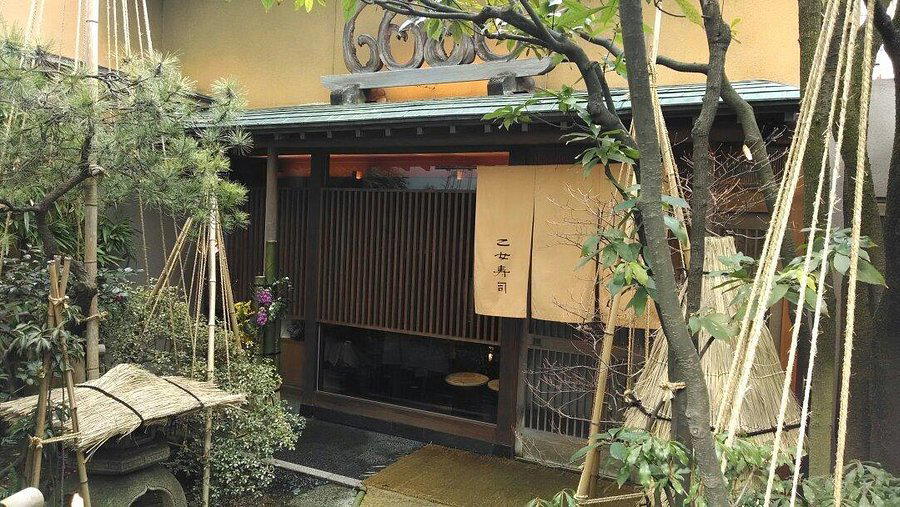
くら竹 sits in Kanazawa's Shiragikucho district, a residential pocket south of the city centre where traditional craft culture and understated dining have long coexisted. The address alone signals a locals-first posture.
Pearl is the En Primeur Club membership app — saves, bookings, and concierge access live there. Same editors, same standards.
- Address
- 3-25 Shiragikucho, Kanazawa, Ishikawa 921-8024, Japan
- Phone
- +81762206228
- Website
- laboshiragiku.com
- Directions
- Get directions
 Saves & bookings on Pearl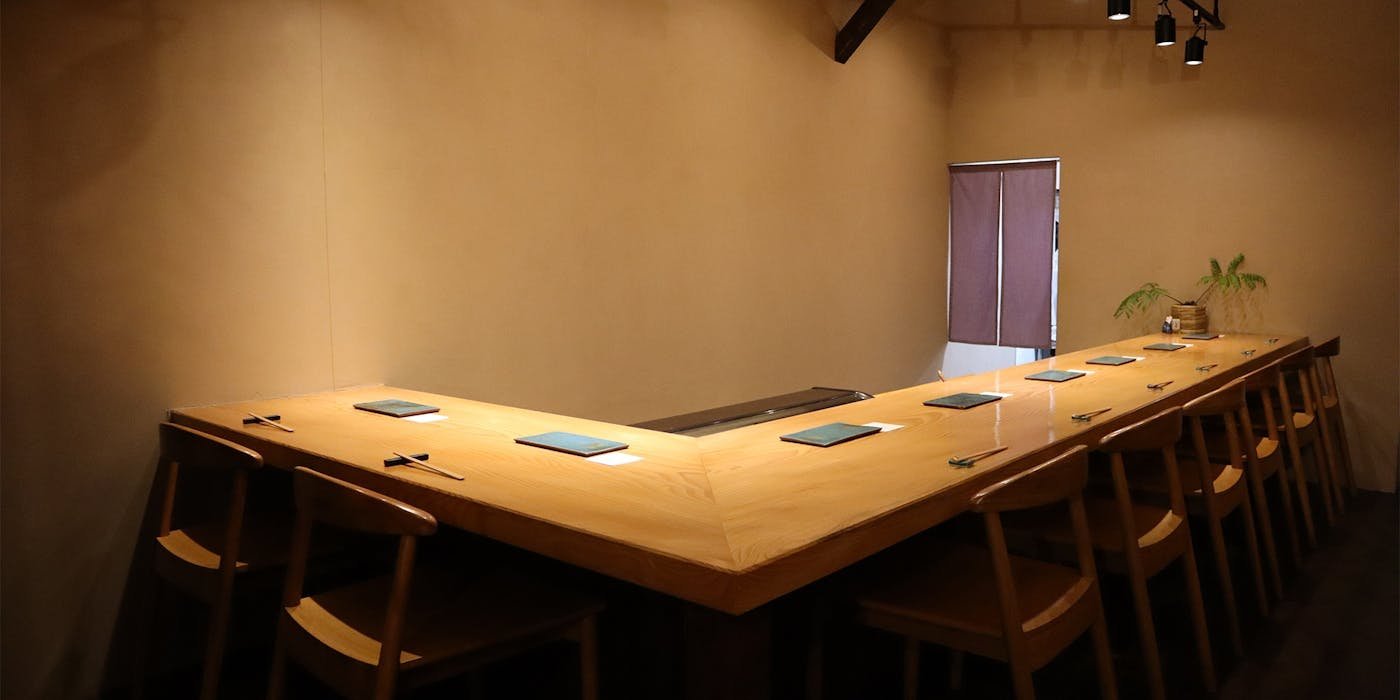
Kanazawa's Quiet South: What Dining in Shiragikucho Signals
Kanazawa occupies a particular position in Japan's regional dining hierarchy. Unlike Kyoto, which has codified its kaiseki tradition into an internationally legible luxury product, or Osaka, where restaurants like HAJIME have pushed innovation toward global recognition, Kanazawa's most interesting addresses often operate below the radar of the international food press. The city's food culture is shaped by proximity to the Japan Sea, the legacy of the Kaga domain's patronage of craft and cuisine, and a residential dining culture that favours discretion over spectacle. Our full Kanazawa restaurants guide maps this scene in detail, but the short version is this: the city rewards explorers willing to move beyond the Higashi Chaya and Omicho Market circuit.
Shiragikucho, where くら竹 holds its address at 3-25, sits south of the main tourist corridor. It is the kind of neighbourhood where the dining room is more likely to be a converted townhouse than a purpose-built restaurant space, where the clientele skews local and repeat, and where the absence of a website or listed phone number is less an oversight than a considered position. In Kanazawa's dining culture, that posture carries its own credibility. Contrast this with the city's more internationally visible venues: Budoonomori Les Tonnelles maintains a French-language identity that signals outward-facing ambition, while Dokkan operates with a profile accessible to visitors arriving with English-language research. くら竹's comparative opacity places it in a different register entirely.
The Lunch vs. Dinner Question in Kanazawa's Traditional Dining
Across Japan's traditional restaurant formats, the gap between lunch and dinner service is rarely just a matter of price. In kaiseki and kappo contexts, evening service typically carries the full expression of a kitchen's intentions: extended courses, premium seasonal ingredients, sake pairings, and the kind of unhurried pacing that assumes guests have cleared their evening. Lunch, by contrast, tends toward compression — shorter course counts, broader ingredient sourcing, and a price point that makes the format accessible to a wider bracket of diners. At venues like Gion Sasaki in Kyoto, this distinction is formalised and well-documented. At Harutaka in Tokyo, the omakase format collapses the divide differently — fewer services, higher concentration at each sitting.
For くら竹, the specific lunch-dinner format is not confirmed in available records. But the Shiragikucho address and the venue's minimal public presence suggest a kitchen operating on its own terms rather than adapting to tourist patterns. In Kanazawa, that often means lunch service, if offered, functions as a neighbourhood fixture, regular office workers and local families rather than out-of-town visitors managing itineraries. Evening service in this register tends to be more invitation-adjacent: guests who know someone, or who have been before. This is not exclusivity as a marketing strategy; it is simply how certain traditional Japanese dining formats have always self-selected their clientele.
Elsewhere in the city, the lunch-dinner divide plays out more visibly. Amanatto Kawamura operates within confectionery traditions where the daytime visit is the primary mode. Go! Go! Curry inverts the calculus entirely, a lunch-anchored format where the point is speed and familiarity. Hakuichi spans both registers as a craft retail and dining destination. くら竹's positioning, read against these peers, suggests a kitchen that has not optimised for throughput at either service.
Reading the Venue Against Kanazawa's Wider Scene
Kanazawa's dining scene in 2024 and into 2025 is marked by two parallel tendencies. The first is a growing international awareness of the city as a serious food destination, driven partly by the March 2024 extension of the Hokuriku Shinkansen to Tsuruga, which positioned Kanazawa as a more accessible node in the Kyoto-Osaka-Fukuoka corridor. Venues like Goh in Fukuoka and akordu in Nara illustrate how regional cities outside Tokyo are attracting sophisticated dining attention; Kanazawa is increasingly part of that conversation. The second tendency is a counter-movement: a subset of Kanazawa kitchens actively resisting the infrastructure of international food tourism, no English menus, no online booking, no social media presence, as a way of maintaining the dining culture they were built around.
くら竹 reads as part of that second group. Its comparison set within the city includes venues like the kaiseki-format Kataori and Zeniya, where traditional Kaga ryori provides the culinary framework, and yakitori-oriented operations like Hamagurizaka Maekawa, which occupy a more casual register. What unites these venues with くら竹 is a shared indifference to the mechanics of discoverability. For diners who have navigated this kind of opacity before, perhaps at venues in nearby Nanao or at addresses like those in Takashima, the lack of a listed website is a familiar feature of serious regional Japanese dining, not a red flag.
Internationally, the parallel is to addresses like Atomix in New York, which operates at the opposite end of the visibility spectrum, highly documented, award-laden, globally discussed, or to Le Bernardin, where decades of institutional recognition have made opacity impossible. くら竹 represents the structural opposite: a venue whose profile is shaped by deliberate withdrawal from the documentation economy. Whether that withdrawal reflects a fully-formed kitchen operating at serious depth, or simply a neighbourhood restaurant without the infrastructure for online presence, cannot be determined from available records. The honest answer is that the venue requires direct, in-person investigation.
Planning a Visit: What the Address Tells You
The 3-25 Shiragikucho address in Ishikawa 921-8024 places くら竹 in a residential zone south of Kanazawa's central attractions. Getting there from the city centre involves either a local bus or a short taxi ride; the neighbourhood is not walkable from Kanazawa Station in comfortable time. Given the absence of a listed phone number or website, contacting the venue requires either showing up directly or working through a hotel concierge in Kanazawa, the latter approach is standard practice for opaque local restaurants in Japanese cities, and a good concierge at a Kanazawa ryokan or city hotel will often have direct lines to venues that maintain no public contact information. Walk-in attempts are higher-risk here than at the city's more visitor-oriented dining addresses, particularly during peak seasons: late spring cherry blossom periods and autumn foliage months draw significant domestic tourism to Kanazawa, which compresses availability across the city's smaller restaurants. For context on the broader dining geography, see EP Club's Kanazawa city guide, which maps the full range of options across price tiers and cuisine types, including venues in nearby Sapporo and Nishikawa Machi for those extending their Hokuriku itinerary. Similarly, Birdland in Sakai offers a point of comparison for how serious yakitori-adjacent formats operate in a regional Japanese context outside the major cities.
Continue exploring
More in Kanazawa
Restaurants in Kanazawa
Browse all →
Bars in Kanazawa
Browse all →
Hotels in Kanazawa
Browse all →
Wineries in Kanazawa
Browse all →
At a Glance
- Cozy
- Intimate
- Elegant
- Date Night
- Business Dinner
- Special Occasion
- Chefs Counter
- Sake Program
- Local Sourcing
Current opening hours
- Monday
- 12–2 PM, 5–10 PM
- Tuesday
- 12–2 PM, 5–10 PM
- Wednesday
- 12–2 PM, 5–10 PM
- Thursday
- 12–2 PM, 5–10 PM
- Friday
- 12–2 PM, 5–10 PM
- Saturday
- 12–2 PM, 5–10 PM
- Sunday
- 12–2 PM, 5–10 PM
Hours can change for holidays and private events. Last verified .
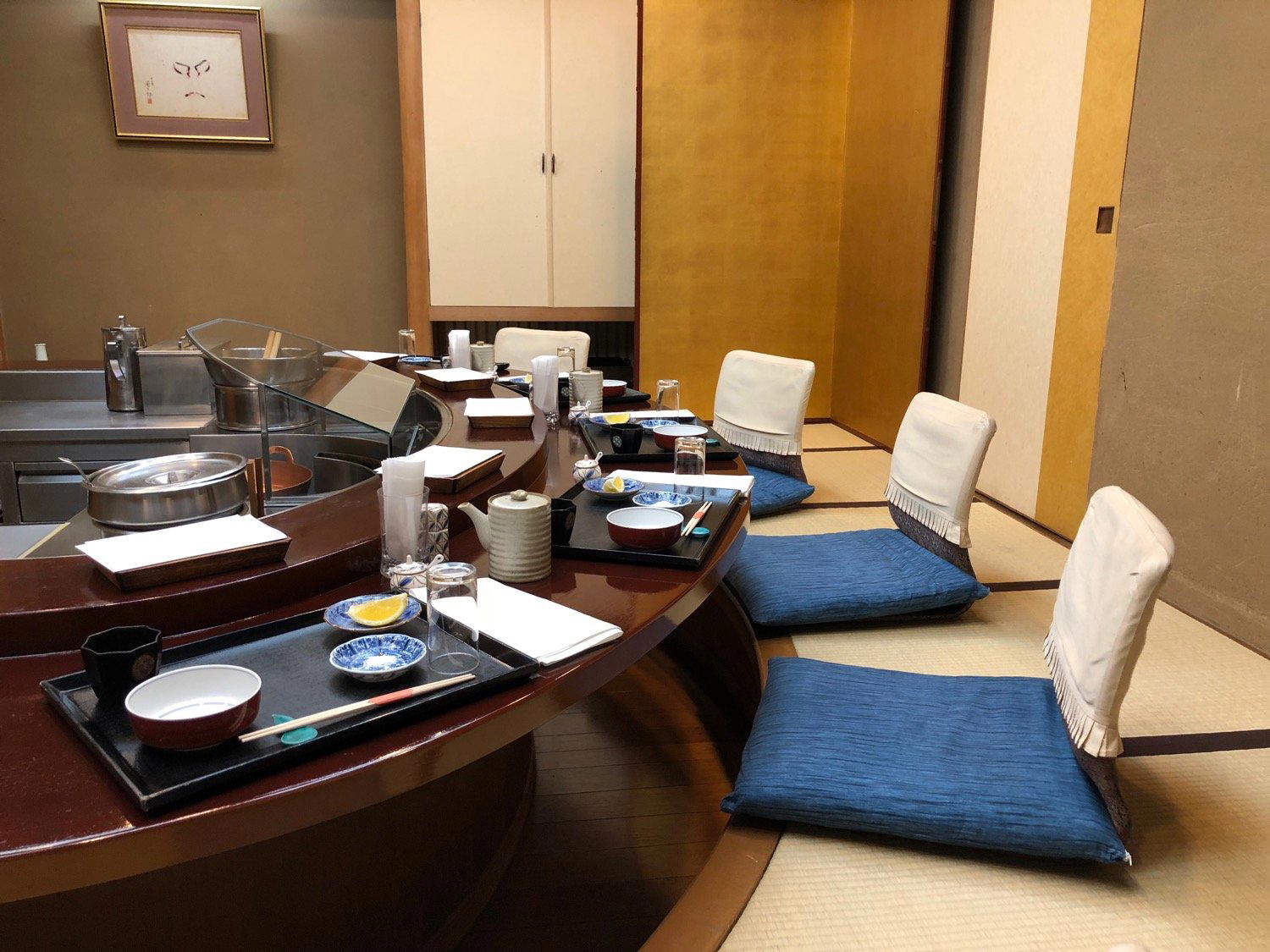
Cozy and refined counter-only space offering a live view of the chef's skilled sushi preparation in a quiet, welcoming atmosphere.
Know Before You Go
- Getting there
- 3-25 Shiragikucho, Kanazawa, Ishikawa 921-8024, Japan