Our verdict
ミル occupies a quiet address in Hiroshima's Naka Ward, operating within a city that has built a serious fine-dining tier well beyond its oyster-and-okonomiyaki reputation. The venue sits in Nishihakushimacho, a district where several of Hiroshima's more considered restaurants have taken root, and positions itself toward an audience that approaches dinner as a structured, sequential experience rather than a casual meal.

Pearl is the En Primeur Club membership app — saves, bookings, and concierge access live there. Same editors, same standards.
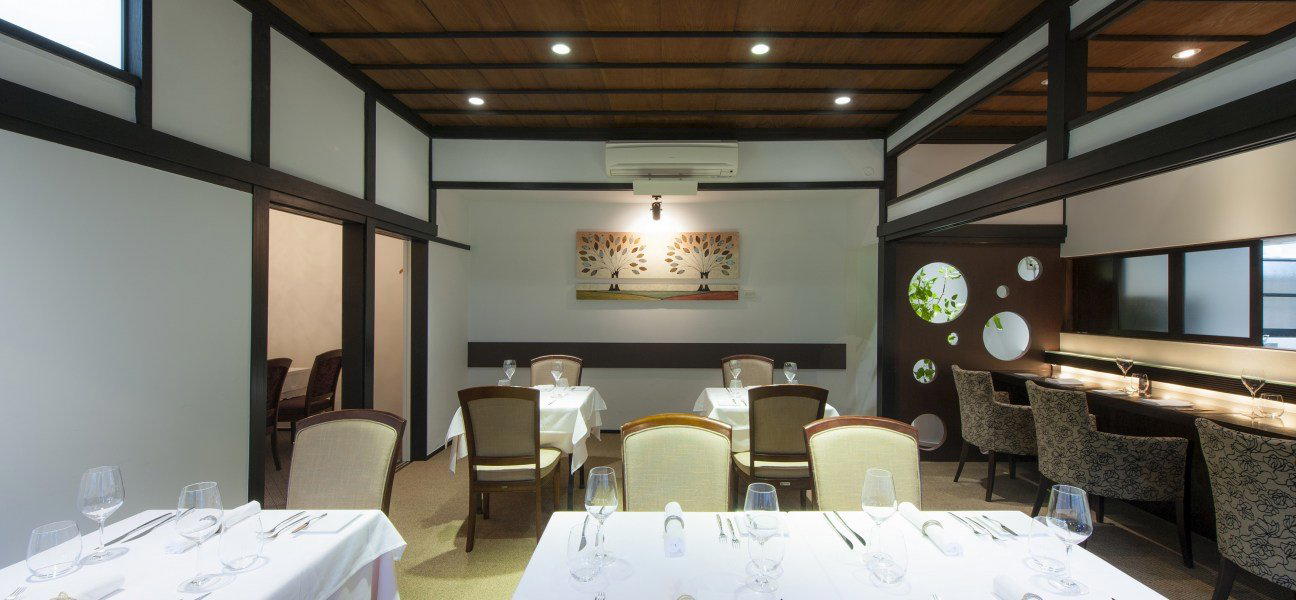
A Hiroshima Address Where the Meal Has a Shape
Naka Ward in Hiroshima is not the part of the city that most visitors photograph. It sits away from the Peace Memorial's gravity and the late-night okonomiyaki counters of Nagarekawa, occupying a quieter register. That quietness is, in part, the point. The neighbourhood around Nishihakushimacho has become a location where Hiroshima's more deliberate restaurants settle, placing themselves at a remove from the tourist circuit without fully retreating from the city's centre. ミル, at 12-16 MILLE on that street, fits that pattern. You approach through a block that signals intention rather than footfall.
This matters for how you read a meal here. In Japanese dining cities, the surrounding neighbourhood is often a legible part of the restaurant's positioning. Ginza communicates one set of expectations; a backstreet in Naka Ward communicates another, more introverted kind of seriousness. Hiroshima has, over the past decade, developed a fine-dining tier that operates largely on local reputation and word-of-mouth rather than international press cycles, placing venues like ミル in a category that rewards the traveller willing to do more than skim the surface of a city. For a broader survey of where that tier sits, our full Hiroshima restaurants guide maps the scene across cuisine types and price points.
The Architecture of the Meal
Across Japan's serious dining rooms, the meal is increasingly understood as a progression with its own internal logic, a movement from delicate to substantial, from raw to cooked, from restraint to depth. This is not unique to any single city. You find the same structural thinking at Harutaka in Tokyo and at Gion Sasaki in Kyoto, where the sequencing of courses functions as editorial: each dish comments on the one before and sets up the one after. In Osaka, HAJIME takes this structural approach into a more explicitly creative register. What varies city to city is not the principle but the pace, the local ingredient vocabulary, and the degree of formality the room imposes on the progression.
Hiroshima's geography gives its serious kitchens a particular ingredient logic. The Seto Inland Sea sits at the city's edge, producing oysters, sea bream, and a range of shellfish that appear in local menus across price brackets. The mountain interior to the north contributes seasonal produce, game, and the kind of wild ingredients that kaiseki tradition has long structured its middle courses around. A meal that follows the tasting-progression format in this city should, in principle, move through those registers: something from the sea at the opening, something from the land in the middle, and a close that draws the two together or steps back entirely into something clean and composed. Whether ミル follows that specific arc is best confirmed at booking, but the structural expectation is well-established in Hiroshima's upper dining tier.
For comparison, Chiso Sottakuito and Eizan both operate in Hiroshima's considered dining bracket, each with their own approach to sequencing and local produce. CHILAN represents a different point on the spectrum, while MASUKI, priced in the JPY 20,000–29,999 range, signals where Hiroshima's Chinese-inflected fine dining sits as a peer reference. These are the counters against which a meal at ミル is implicitly priced and assessed by local diners.
Placing ミル in a Wider Japanese Context
Japan's regional fine-dining scene has matured considerably outside Tokyo and Kyoto. Cities like Fukuoka (where Goh operates), Nara (where akordu has carved a European-Japanese niche), and smaller cities further afield have all developed venues that treat the tasting format as a primary mode rather than a weekend offering. This is partly a function of how Michelin's Japan guides expanded beyond the capital, legitimising regional ambition and creating a new layer of dining infrastructure in cities that previously exported their leading chefs to Tokyo. Hiroshima sits within that story. The city's dining tier is now substantial enough to anchor a two-day visit structured around meals, rather than fitting restaurants around sightseeing.
Farther afield, Japan's regional depth continues. 一本杉 川島酒造 in Nanao and 古仁屋山乃 in Sapporo are both examples of that regional seriousness operating in contexts far from the major dining capitals. 湖畔荘 in Takashima and 広羽屋 in Nishikawa Machi represent smaller-scale hospitality built around local produce and a structural approach to the guest experience. Birdland in Sakai sits in a different culinary tradition entirely. Internationally, the parallel to a focused tasting-format restaurant in a mid-tier city might be drawn with Le Bernardin in New York City, where rigorous course sequencing defines the dining contract, or with Atomix, where the progression is as conceptual as it is culinary.
Planning a Visit
ミル is located at 12-16 MILLE, Nishihakushimacho, Naka Ward, Hiroshima. Naka Ward is accessible from Hiroshima Station by tram or taxi; journey time is short, and the neighbourhood is walkable once you arrive. Dress expectations at this tier in Japan skew toward smart-casual at minimum, with many diners opting for a degree above that, particularly for omakase or multi-course formats. Confirming current hours, format, and availability before travel is advisable; small restaurants at this level sometimes operate on limited seatings per evening.
Frequently asked questions
What part of town is ミル in?
ミル is located at Japan, 〒730-0005 Hiroshima, Naka Ward, Nishihakushimacho, 12−16 MILLE, Hiroshima.
How does ミル fit into Hiroshima's broader fine-dining scene compared to other Japanese regional cities?
Hiroshima's serious dining room count has grown alongside regional scenes in Fukuoka and Nara, and ミル at 12-16 MILLE, Naka Ward, represents the strand of that growth oriented toward considered, progression-based meals rather than traditional kaiseki formality. The address in Nishihakushimacho places it away from the city's tourist concentration, which is consistent with how Japan's stronger regional restaurants tend to position themselves.
What do people recommend at ミル?
Based on the dining context of Naka Ward and Japan's broader progressive fine-dining tradition, the meal is understood as a structured sequence rather than à la carte selection. Visiting with an open approach to whatever the kitchen is presenting on the day is the practical recommendation.
Can I walk in to ミル?
At addresses in this category across Japan's regional fine-dining scene, walk-ins are rarely possible. Reaching out through the building management at 12-16 MILLE, Nishihakushimacho or via local concierge networks is the most reliable path.
What's the standout thing about ミル?
ミル operates at a Hiroshima address — 12-16 MILLE, Nishihakushimacho, Naka Ward — that sits outside the city's tourist circuit, which keeps the room focused on the meal itself rather than the surroundings. Japan's regional fine-dining scene has developed considerable depth in cities like Hiroshima, and ミル sits within that maturation rather than trading on location alone.
Is ミル good for vegetarians?
In the context of structured Japanese fine-dining menus, vegetarian adaptation varies widely by kitchen and requires direct confirmation before booking. Contact through local concierge channels is advisable for anyone with dietary requirements.
Is ミル worth the price?
In Japan's regional fine-dining tier, comparable progression-format meals typically sit between ¥15,000 and ¥35,000 per person, though ミル's specific position within that range requires direct verification before visiting.
Recognition Snapshot
Comparable venues nearby, for context on price, style, and recognition.
| Venue | Cuisine | Price | Awards | Notes |
|---|---|---|---|---|
| ミルThis venue (the venue you are viewing) | 古民家フレンチ | $50–100 | Not listed | Not listed |
| シェモモ | Hidden Gem French Bistro | $30–50 | Not listed | Naka |
| レストラン シャンボール | Refined French with Local Hiroshima Ingredients | $100–150 | Not listed | Naka |
| タムスープ | Casual French Bistro | $20–30 | Not listed | Naka |
| Shinya Teki Chuka Shokudo | Late‑night Chinese (Sichuan‑influenced) | $50–100 | Tabelog 100 #2 | Naka |
| ブルッティ エ ブォーニ | Hidden Gem Italian Pasta | $30–50 | Not listed | Higashi |
Continue exploring
More in Hiroshima
Restaurants in Hiroshima
All restaurants in Hiroshima →
Bars in Hiroshima
All bars in Hiroshima →
Details
- Cozy
- Elegant
- Rustic
- Intimate
- Date Night
- Special Occasion
- Historic Building
- Sake Program
- A La Carte
Current opening hours
- Monday
- 11:30 AM–1:30 PM, 6–8 PM
- Tuesday
- 11:30 AM–1:30 PM, 6–8 PM
- Wednesday
- Closed
- Thursday
- 11:30 AM–1:30 PM, 6–8 PM
- Friday
- 11:30 AM–1:30 PM, 6–8 PM
- Saturday
- 11:30 AM–1:30 PM, 6–8 PM
- Sunday
- 11:30 AM–1:30 PM, 6–8 PM
Hours can change for holidays and private events. Last verified .
古民家改装の温かみある落ち着いた雰囲気