Itsukushima Iroha

Michelin Selected
Selected by the Michelin Hotels guide for 2025, Itsukushima Iroha sits at 589-4 Miyajimacho in Hatsukaichi, the gateway town to one of Japan's most celebrated Shinto shrines. The property occupies a position where sacred geography and traditional Japanese hospitality converge, placing it among a small tier of ryokan-style stays that trade on proximity to Miyajima rather than urban convenience.

Pearl is the En Primeur Club membership app — saves, bookings, and concierge access live there. Same editors, same standards.
- Address
- 589-4 Miyajimacho, Hatsukaichi, Hiroshima 739-0559, Japan
- Phone
- +81 829-44-0168
- Website
- i-iroha.jp
- Directions
- Get directions
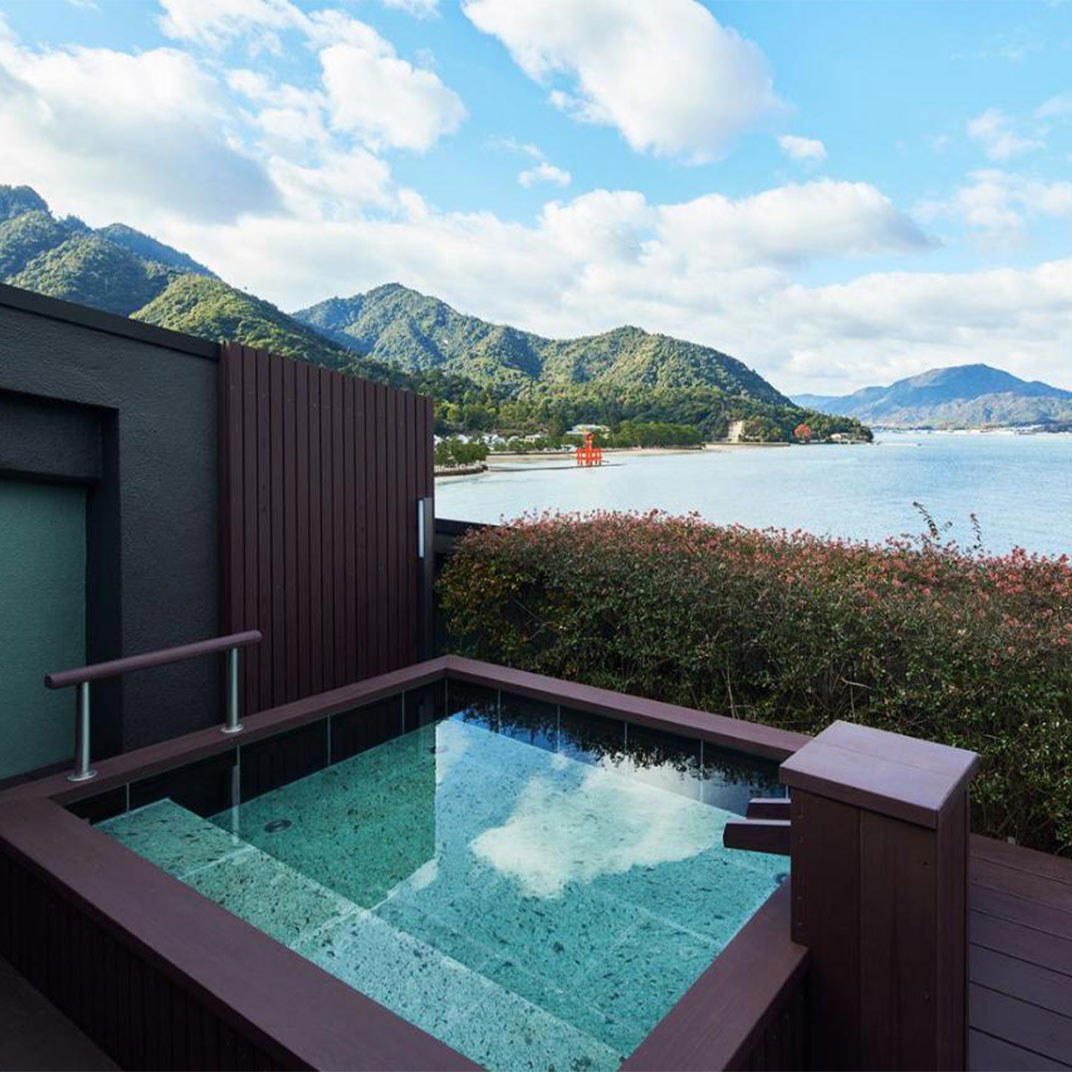
Where Sacred Geography Shapes the Architecture
The approach to Miyajima Island from the Hatsukaichi waterfront has conditioned the design sensibility of every serious lodging property in this corridor for decades. When a structure sits within sight of a floating torii gate that has marked Itsukushima Shrine since the sixth century, the architectural response tends toward restraint rather than assertion. Itsukushima Iroha, addressed at 589-4 Miyajimacho, follows that logic. The property's positioning in this landscape is not incidental to its identity; it is the primary editorial fact about the place.
The Michelin Hotels selection for 2025 places Itsukushima Iroha in a verified tier of Japanese accommodation that earns recognition on the basis of hospitality quality, physical environment, and cultural coherence. The Michelin Selected designation, appearing in the 2025 guide, signals a property that cleared a meaningful editorial threshold without necessarily competing in the same bracket as Michelin-starred dining properties. Among Hatsukaichi's lodging options, this distinction matters as a sorting mechanism for travellers weighing where to stay when the island itself is the destination.
The Spatial Logic of a Miyajima Property
Japanese inn architecture in sacred-site contexts follows a set of conventions refined over centuries. Sightlines are managed carefully. Natural materials carry most of the design work. Scale is kept human rather than monumental, in deliberate deference to the landscape beyond the window rather than the building itself. Properties that ignore these conventions tend to feel misaligned with the surrounding context, regardless of their other qualities. Itsukushima Iroha's location on Miyajima puts it inside a planning and aesthetic tradition that imposes those constraints by cultural expectation as much as regulation.
The most analytically useful comparison for placing Itsukushima Iroha in its competitive set is the cluster of small, design-conscious Japanese properties that use proximity to World Heritage sites as a primary asset rather than a marketing afterthought. Properties like Sekitei in Hatsukaichi-shi and Gora Kadan in Hakone operate within analogous frameworks: limited key counts, a design vocabulary drawn from regional materials and craft traditions, and an implicit argument that location discipline is itself a form of luxury. Amanemu in Mie makes a similar case within the Shinto range of the Ise Peninsula.
Ryokan Tradition and the Architecture of Removal
Traditional Japanese inn design is fundamentally about what is withheld rather than what is provided. The aesthetic of ma, the productive use of negative space, runs through everything from room proportions to the arrangement of garden views. This is a different architectural ambition than what drives the landmark urban properties in Tokyo or Kyoto, where the design gesture tends to be demonstrative. At a site like Miyajima, where the surrounding environment already delivers substantial visual weight, the lodging that performs leading is typically the one that has the confidence to recede.
This places Itsukushima Iroha in a different conceptual conversation than, say, Bvlgari Hotel Tokyo, where the architectural identity is explicitly assertive and metropolitan, or HOTEL THE MITSUI KYOTO, which deploys historic Kyoto as backdrop for a contemporary luxury proposition. Both of those represent a different tier of design ambition and price positioning. The ryokan-influenced model that Itsukushima Iroha appears to follow prioritises a different set of values: material honesty, ritual hospitality, and spatial quiet over architectural spectacle.
Other properties in the Japanese archipelago that have navigated this tension with particular clarity include Zaborin in Kutchan, which uses Hokkaido's forest and snowscape as its design anchor, and Asaba in Izu, one of the more documented examples of a traditional inn maintaining design coherence across a long operating history. The Nishimuraya Honkan in Kinosaki-cho represents the same archetype in the onsen town context. In each case, the building's relationship to its surrounding environment is the primary design statement.
Positioning Within Japan's Premium Inn Tier
A property on Miyajima, one of the three classically designated views of Japan alongside Matsushima and Amanohashidate, benefits from a cultural status that cannot be replicated by design investment alone.
Properties like Fufu Nikko, Fufu Kawaguchiko, and Fufu Kyu-Karuizawa Restful Forest have used proximity to nationally recognised natural or cultural landmarks as their central positioning argument. The Fufu group's approach of pairing destination significance with consistent hospitality standards maps onto a model that Itsukushima Iroha appears to share by geography if not by affiliation. Kamenoi Besso in Yufu and Satoyama-Jujo in Niigata occupy related positions in their respective regions, where landscape and local food culture do the primary editorial work.
Further afield, properties like Benesse House in Naoshima demonstrate how deeply a lodging property can integrate with a specific cultural geography, in that case contemporary art rather than Shinto heritage. Jusandi in Ishigaki and Halekulani Okinawa represent the southern archipelago's version of the same logic: landscape-led positioning within a premium hospitality tier.
Planning a Stay
Miyajima is accessible by JR ferry from the Miyajimacho pier, with the crossing taking roughly ten minutes. The island operates under strict environmental protections, which constrain development and limit vehicular access in ways that reinforce the sense of separation from the mainland. Booking well in advance is advisable for stays that coincide with the spring cherry blossom season or autumn foliage period, when the shrine grounds draw significantly higher visitor density. The 2025 Michelin Selected status provides a useful signal for travellers calibrating their options, though detailed booking procedures, pricing, and room configurations are best confirmed directly with the property. For context on the wider hospitality options in the area, our full Hatsukaichi guide covers the regional picture.
Travellers building a longer Japan itinerary around Itsukushima Iroha might consider pairing it with a Kyoto stay at a property like HOTEL THE MITSUI KYOTO, or extending west to a coastal Mie property such as Amanemu. For travellers approaching from international gateways and benchmarking against global luxury hotel standards, reference properties like Badrutt's Palace in St. Moritz or Hôtel de Paris Monte-Carlo share the same logic of place-identity as the primary asset, even if the architectural and cultural registers differ entirely.
Fast Comparison
Comparable venues nearby, for context on price, style, and recognition.
| Venue | Cuisine | Price | Awards | Notes |
|---|---|---|---|---|
| Itsukushima IrohaThis venue — the venue you are viewing | Modern interpretation of traditional Japanese ryokan with contemporary hotel conveniences | $200–300 | Michelin Selected | Not listed |
| Gora Kadan | Contemporary ryokan blending traditional Japanese architecture with modern luxury, set within a historic Imperial retreat. | Not listed | 3 Michelin Keys · La Liste Top Hotels | Gora, Hakone-machi |
| Hotel Toranomon Hills (ホテル虎ノ門ヒルズ) | Luxury design hotel positioned as a cosmopolitan retreat for business travelers and experienced guests seeking Japanese-Scandinavian aesthetic fusion. | $300–500 | Not listed | Toranomon |
| The Atta Terrace Club Towers | luxury adults-only resort perched on coastal highlands | $200–300 | Michelin Selected | Afuso |
| Izumo Hotel The Cliff | Cliffside luxury retreat carved into natural rock | $300–500 | 1 Michelin Key | Kumura |
| Gekkoju Yufuin (月洸樹 由布院) | Ultra-luxury all-suite resort ryokan with modern Western furnishings and Japanese design elements. | $500–750 | Michelin Selected | Yufuin Onsen |
Recognition history
Dated appearances from independent guides and award organizations, with the underlying list record or original source where available.
Michelin Selected
Michelin
Continue exploring
More in Hatsukaichi
Hotels in Hatsukaichi
Browse all →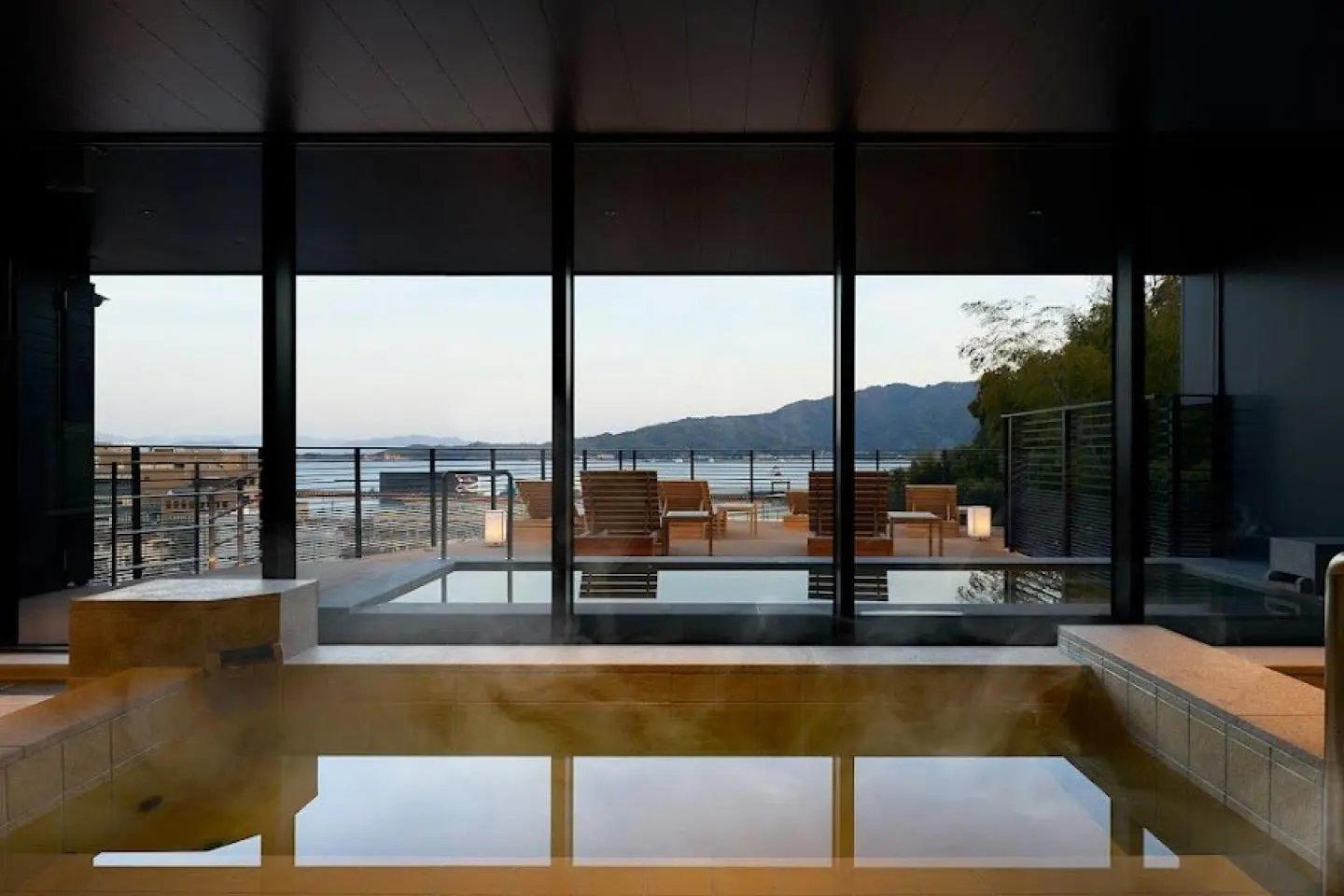
Bars in Hatsukaichi
Browse all →
Details
- Modern
- Scenic
- Elegant
- Quiet
- Intimate
- Romantic Getaway
- Honeymoon
- Anniversary
- Weekend Escape
- Waterfront
- Historic Building
- Panoramic View
- Terrace
- Wi Fi
- Room Service
- Concierge
- Public Bath
- Waterfront
- Mountain
- Wheelchair Accessible
- Elevator
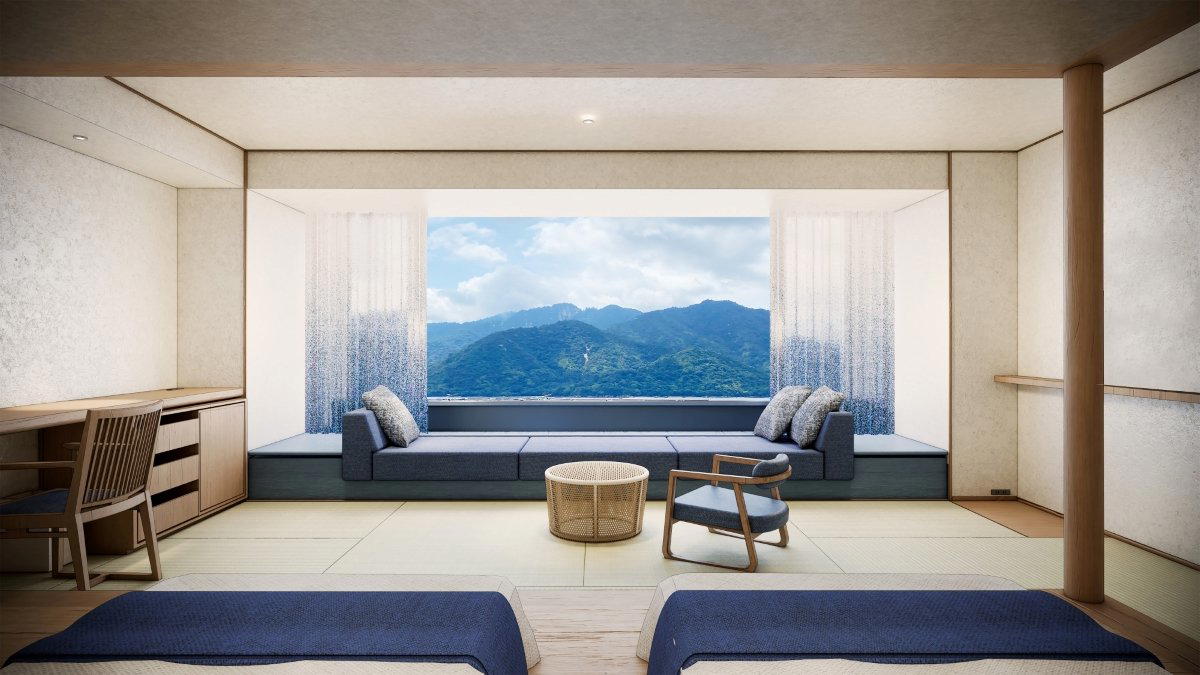
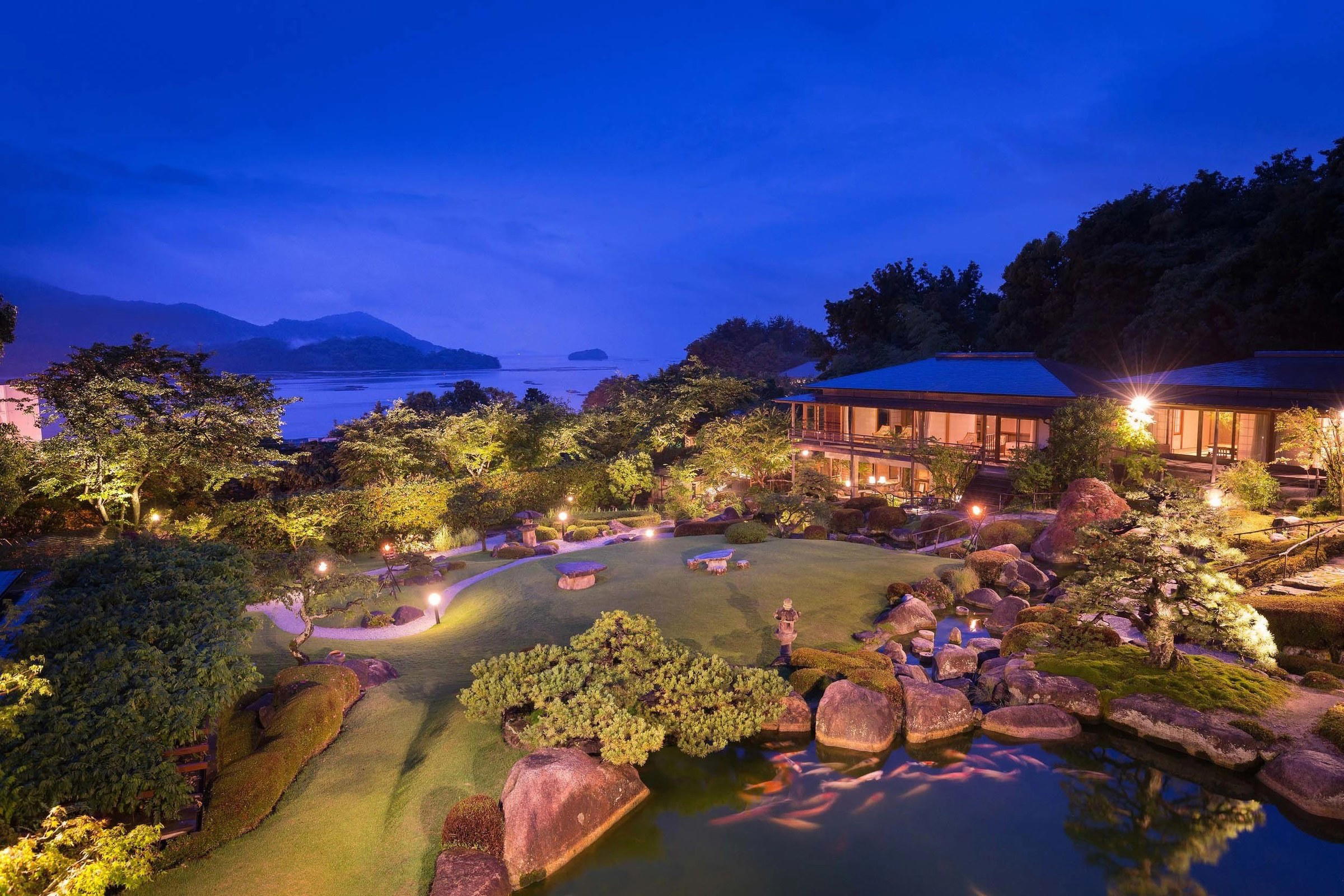
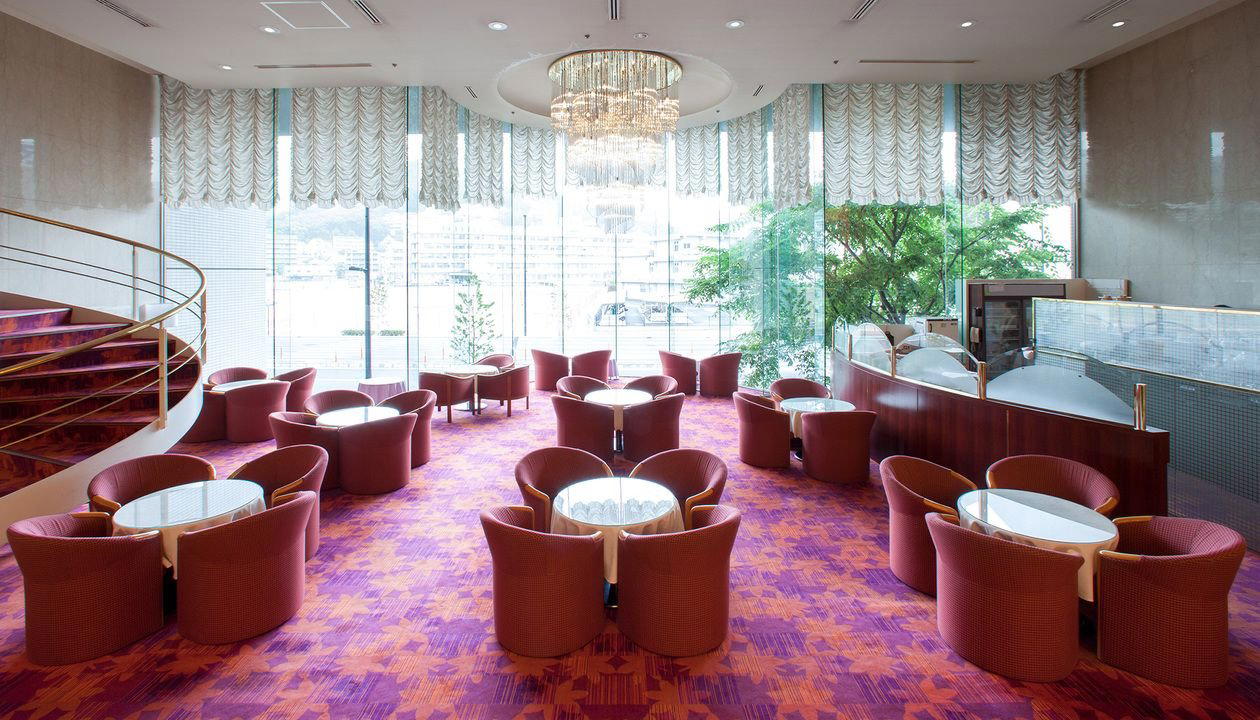
Calm and peaceful atmosphere blending classic Japanese tranquility with minimalist modern design, featuring soft natural light through shoji screens and serene ocean panoramas.