
LOPEZ brings Hiroshima okonomiyaki into a compact counter format in Yokogawa, with teppanyaki structure and a Latin American category note that separates it from standard station-area grill rooms. Recognition on Tabelog’s Okonomiyaki 100 list in 2025, a 17-seat setup, and moderate pricing place it in the city’s serious but casual okonomiyaki tier.
Pearl is the En Primeur Club membership app — saves, bookings, and concierge access live there. Same editors, same standards.
- Address
- 広島県広島市西区楠木町1-7-13
- Phone
- +81822325277
- Website
- tabelog.com
 Saves & bookings on Pearl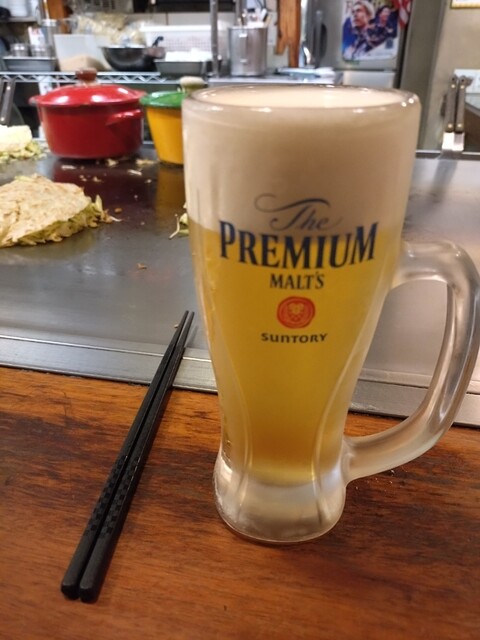
Yokogawa is not the ceremonial face of Hiroshima dining. It is a working station district where counter restaurants, tram routes, and weeknight regulars matter more than polished formality. That setting suits Hiroshima okonomiyaki, a dish built on repetition, heat control, and the public rhythm of the griddle. In a city where visitors often reduce the genre to a single famous food, the better lesson is comparative: Hiroshima-style okonomiyaki is not Osaka’s mixed batter pancake. It is layered, noodle-driven, cooked in stages, and judged as much by timing as by ingredients.
LOPEZ belongs in that conversation because it keeps the meal close to the teppan rather than turning it into a souvenir performance. The category listing reads okonomiyaki, teppanyaki, and Latin American, an unusual combination in Hiroshima’s grill culture, but the broader point is format. This is the kind of room where counter seating makes technique visible and where the city’s everyday food culture carries more authority than luxury cues. Its selection for Tabelog’s Okonomiyaki 100 in 2025 gives the address a useful external marker without changing the essential register: casual, compact, and centered on the plate.
Hiroshima okonomiyaki, read through the counter
Hiroshima’s version of okonomiyaki is civic food, not just comfort food. The postwar association is well known, but the dish’s current power comes from how many formats it can occupy: neighborhood counters, late-evening grill rooms, station-adjacent shops, and specialist venues that make small distinctions matter. A 17-seat counter puts those distinctions under pressure. There is less room for theatre and more dependence on sequence, heat, and pace.
That is why awards in this category should be read differently from fine-dining stars. Tabelog’s Okonomiyaki 100 is a genre-specific signal, not a luxury ranking. It identifies shops that Japanese diners discuss within a narrow field where small differences in griddle work, noodle handling, and saucing can define loyalty. LOPEZ, with repeat selections listed across 2019, 2022, 2023, 2024, and 2025, sits inside that specialist circuit rather than the broader destination-restaurant economy.
The price band also matters. Hiroshima has higher-spend casual dining around Yokogawa and beyond, from NIKUTAMA Yokogawa hiroshima honten at JPY 4,000 to JPY 4,999 to MINOYA around JPY 3,000 to JPY 3,999 at dinner. Against that local frame, this counter reads as a lower-to-mid spend choice, closer to the everyday grammar of okonomiyaki than to a long evening built around courses. For a wider look at where it fits, Our full Hiroshima restaurants guide maps the city beyond the familiar okonomiyaki shorthand.
Why Yokogawa changes the meal
Hiroshima’s central dining districts often pull visitors toward obvious clusters, but Yokogawa gives the dish a different context. The neighborhood is connected, practical, and less staged for the first-time diner. That changes expectations. A counter meal here is less about ticking off a regional specialty and more about seeing how a local format survives in ordinary urban life.
That ordinary quality is not a weakness. In Japan, serious casual food often lives in rooms that do not announce their ambition. Counter seating, no private rooms, a non-smoking setup, and take-out service point to a direct mode of hospitality. Children are welcomed, which places the restaurant closer to Hiroshima’s family-and-friends dining culture than to reservation-only tasting rooms. The useful comparison is not with luxury kitchens, but with other tightly defined specialists: Akai (Creative Cuisine) operates in another register, while Bishu Bikou Hamai, CHILAN, and ANDERSEN show how varied Hiroshima’s dining identity becomes once the city is not reduced to one dish.
There is also a useful caution for travelers. Hiroshima okonomiyaki is often treated as a quick meal, but a small counter with recognized status can make timing matter. The better plan is to treat it as a focused stop rather than a backup after a long itinerary. Pairing it with neighborhood exploration makes more sense than forcing it between formal reservations, especially when the room’s scale favors diners who are ready to eat, not linger through a multi-course evening.
A casual specialist in a city that rewards focus
The broader Hiroshima table is more diverse than its most exported dish suggests. Butter cake, sake-led izakaya culture, creative restaurants, bakery cafés, and hotel dining all shape the city’s food map. For sweet stops, Butter Cake no Nagasaki Do belongs to a different local habit entirely. For trip planning around meals, Our full Hiroshima hotels guide, Our full Hiroshima bars guide, Our full Hiroshima wineries guide, and Our full Hiroshima experiences guide help place dinner within a larger stay.
LOPEZ is compelling because it does not ask okonomiyaki to become fine dining. It keeps the genre where it is strongest: close to the griddle, socially relaxed, and specific to Hiroshima’s urban appetite. Diners looking for a formal tasting menu should choose elsewhere. Diners trying to understand why Hiroshima okonomiyaki remains a living local form rather than a postcard dish get a clearer answer from a small counter with national category recognition.
For readers building a broader Japan file, the comparison is instructive beyond Hiroshima. Regional casual specialists can carry as much cultural information as expensive rooms, whether the subject is sukiyaki at -Grilled beef Sukiyaki- KAMAKURA TANUKIAN 鎌倉 たぬき庵 in Kamakura, tuna and charcoal grilling at. 鮪と炭火焼き うお炭 秋葉原店 in Tokyo, café culture at.cafe in Osaka, contemporary dining at.know in Kumamoto, Vietnamese cooking at (Shoku) Vietnam in Kawasaki, curry specialization at [Curry Senmon Ten] Maruyama Kyoju. in Sapporo, sake-bar translation at Jōdo Saké Bar in Los Angeles, or rice-ball minimalism at Onigiri Time in Pasadena. The lesson is the same: format tells the story before luxury does.
Price Lens
Nearby venues at a similar price tier for orientation.
| Venue | Cuisine | Price | Awards |
|---|---|---|---|
| LOPEZThis venue — the venue you are viewing | $$ | , | |
| Denko Sekka | Minami-ku, Hiroshima-Style Okonomiyaki | $$ | , |
| Bishu Bikou Hamai | Naka, Traditional Japanese Izakaya | $$ | , |
| ハナワイン | Naka, Japanese Wine Bar | $$ | , |
| Non Non | Minami, Hiroshima Okonomiyaki | $$ | , |
| Soraya | Naka, Japanese Standing Bar | $$ | , |
Continue exploring
More in Hiroshima
Restaurants in Hiroshima
Browse all →
Bars in Hiroshima
Browse all →
At a Glance
- Lively
- Cozy
- Hidden Gem
- Iconic
- Solo
- Family
- Casual Hangout
- After Work
- Late Night
- Chefs Counter
- Open Kitchen
- Standalone
- Sake Program
- Beer Program
A small, no-frills neighborhood spot with counter seating around the teppan, where guests watch okonomiyaki cooked right in front of them in a casual, bustling, and friendly atmosphere popular with locals and visiting food lovers.