
Michelin Selected
A Michelin Selected ryokan-style property on Etajima Island, accessed by ferry from Hiroshima's Ujina Port, Etajimasou Hotel & SPA Hiroshima sits outside the city's main hotel corridor in a quieter register of the Seto Inland Sea. The property earned its 2025 Michelin Selected distinction through a combination of setting, spa provision, and the kind of removed coastal atmosphere that urban Hiroshima hotels cannot replicate.

Pearl is the En Primeur Club membership app — saves, bookings, and concierge access live there. Same editors, same standards.
- Address
- 4718 Nomicho Nakamachi, Etajima, Hiroshima 737-2301, Japan
- Phone
- +81 823-27-7755
- Website
- etajimasou.jp
- Directions
- Get directions
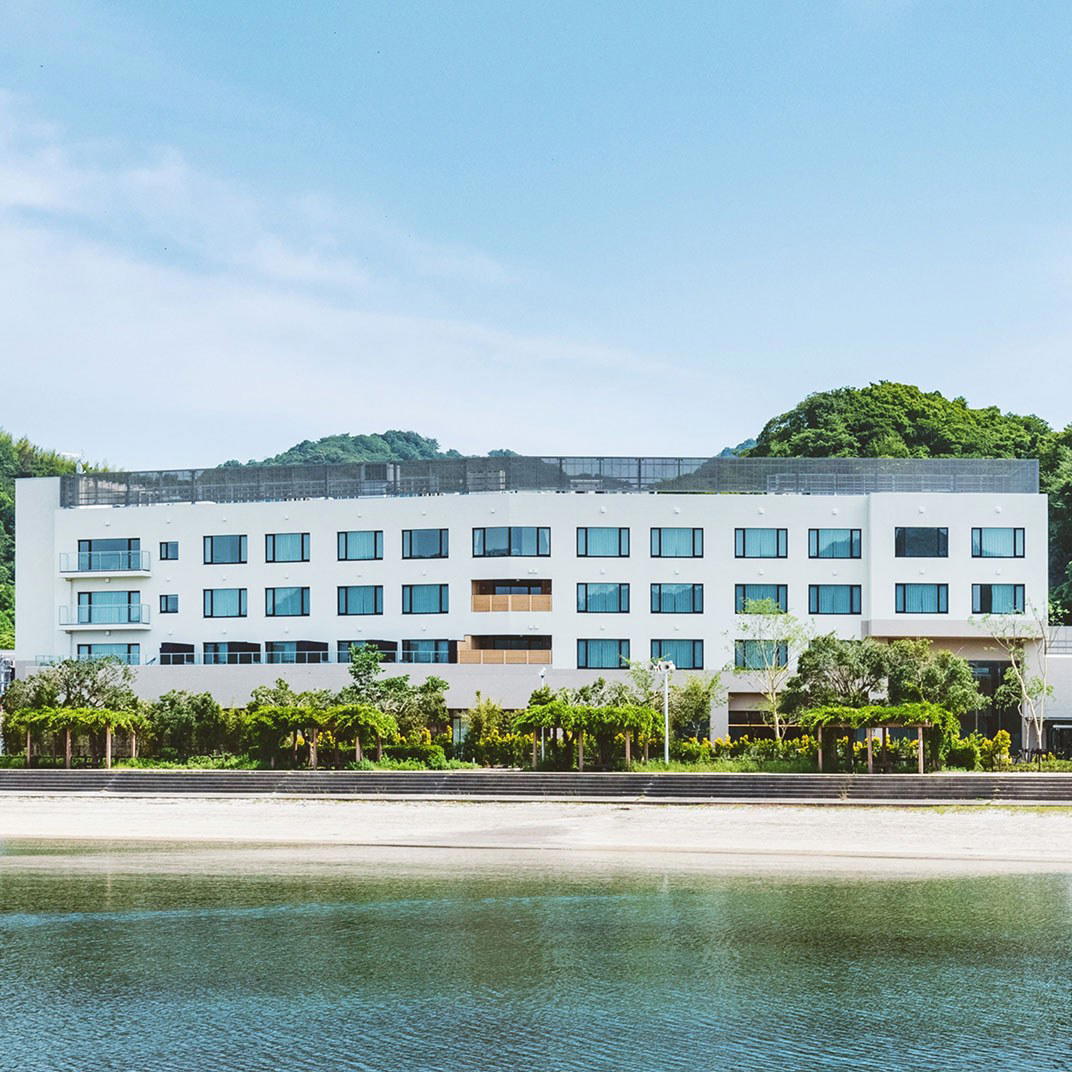
Island Positioning and What It Changes
The Seto Inland Sea has long operated as a counterweight to Japan's urban hotel density. Where properties like Hilton Hiroshima or KIRO Hiroshima by THE SHARE HOTELS compete within the city's central accommodation tier, Etajimasou Hotel & SPA Hiroshima operates on a different premise entirely: the ferry crossing to Etajima Island is not an inconvenience to be minimised but the de facto check-in ritual, the moment when city noise falls behind and the property's logic begins to make sense.
Etajima sits roughly 20 kilometres south of Hiroshima's city centre, reachable from Ujina Port in under 30 minutes. The crossing frames what kind of property this is: one where physical separation from the city is itself part of the offer. Guests who understand this arrive differently than those who treat the ferry as a logistical problem. That shift in expectation matters more than almost any detail about the rooms themselves.
Michelin's 2025 Selected designation — part of the Michelin Guide Hotels & Stays programme — confirms the property's standing within a curated tier of Japanese accommodation that prioritises character and context over standardised luxury. Within the broader cohort of Michelin Selected properties across western Japan, Etajimasou occupies a quieter, more geographically specific niche than peers like Sekitei in Hatsukaichi-shi, which sits closer to the Hiroshima mainland and targets a slightly different proximity-to-city calculus.
The Dining Register of an Island Ryokan
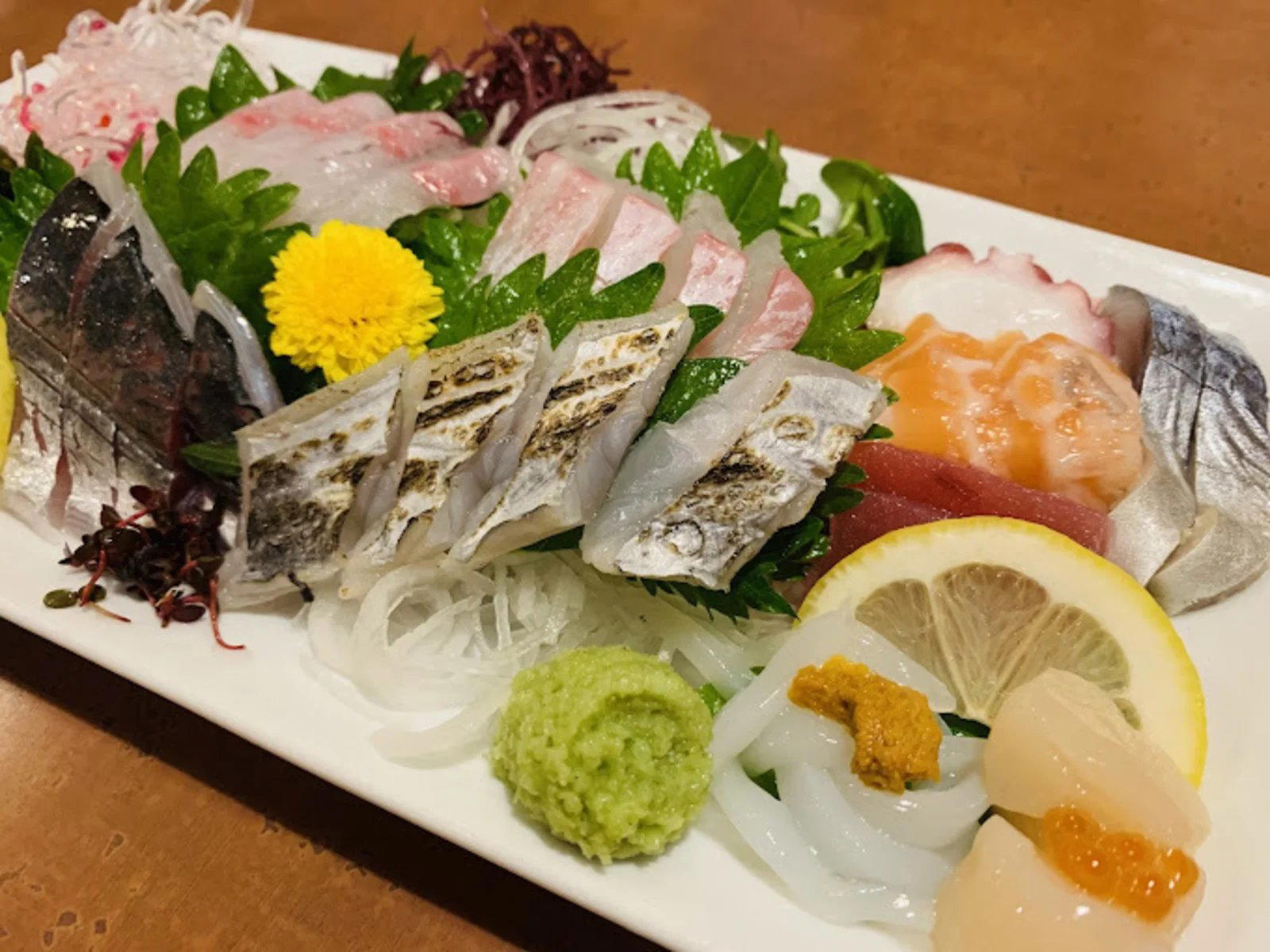
Japan's Michelin Selected hotel tier skews toward properties where dining is integral to the stay rather than ancillary. The pattern holds across the archipelago: at Gora Kadan in Hakone, or at Asaba in Izu, the kaiseki programme functions as a primary reason guests return. Etajima Island, surrounded by the Seto Inland Sea, sits within one of Japan's most productive seafood corridors: oysters from Hiroshima Bay, sea bream from the adjacent channels, and seasonal shellfish that reflect both the water temperature and the tidal patterns of the inland sea.
Ryokan-adjacent properties in this region typically anchor their dining around set-course evening meals drawing on the day's catch and locally foraged ingredients. The format removes the restaurant-reservation variable that complicates urban hotel stays: guests eat at the property, the kitchen shapes the rhythm of the evening, and the meal becomes the event rather than a precursor to one. This is the dining register in which Etajimasou operates, even if specific menu compositions and current chef details are not available here. For readers researching comparable dining-integrated formats across Japan, the Fufu Nikko in Nikko and Kamenoi Besso in Yufu offer instructive parallels in how seasonal procurement shapes the guest experience at properties of this type.
The Seto Inland Sea designation matters here not as scenery but as provenance. Hiroshima Prefecture produces around 60 percent of Japan's oyster output, and properties in this sub-region carry access to that supply chain in ways that urban hotels cannot match. A restaurant operating 20 kilometres offshore in Etajima has a shorter distance between fishing boat and kitchen than almost any comparable setup in central Hiroshima. Whether that translates into a memorable meal depends on how the kitchen uses it, but the structural advantage is real.
Spa and Setting as the Core Offer
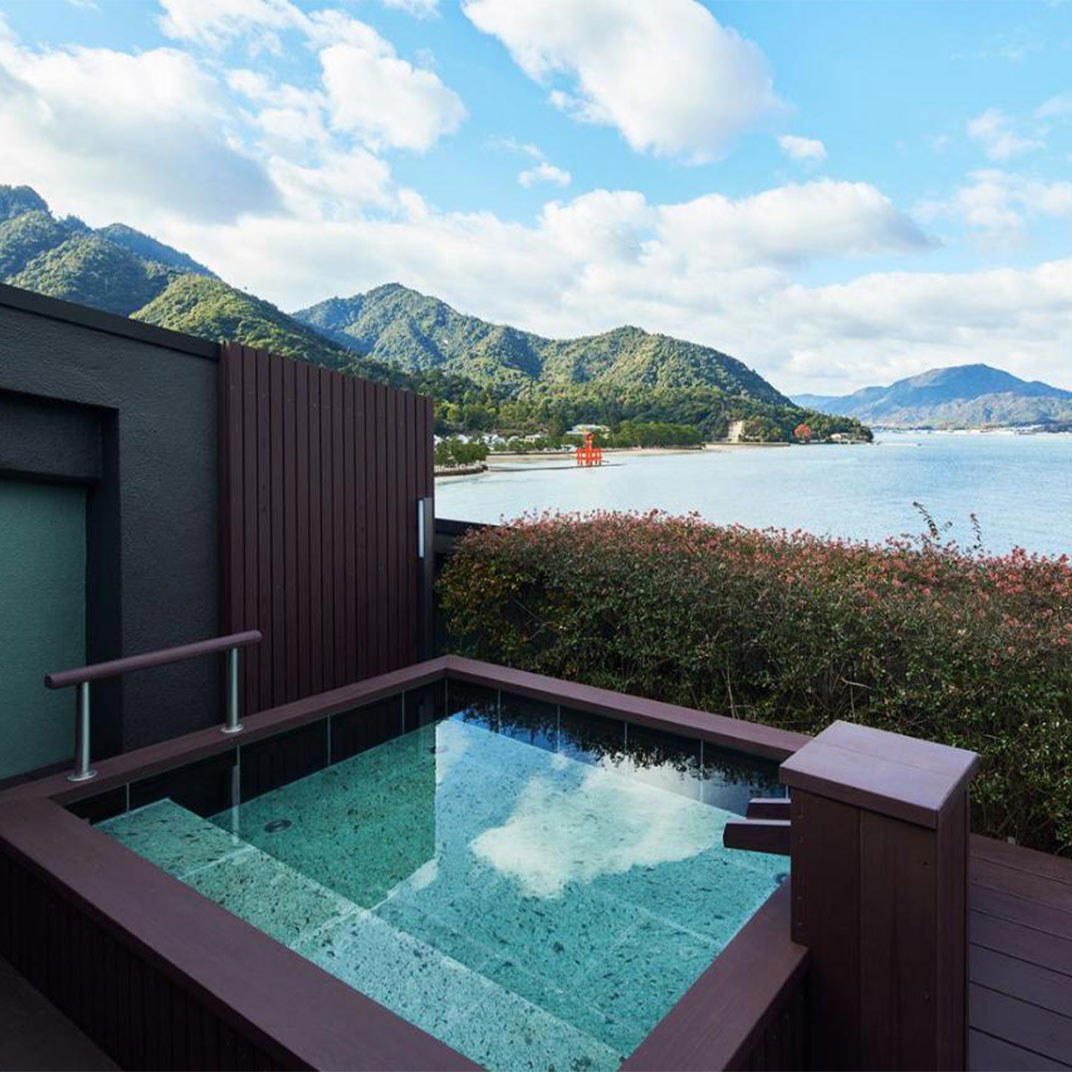
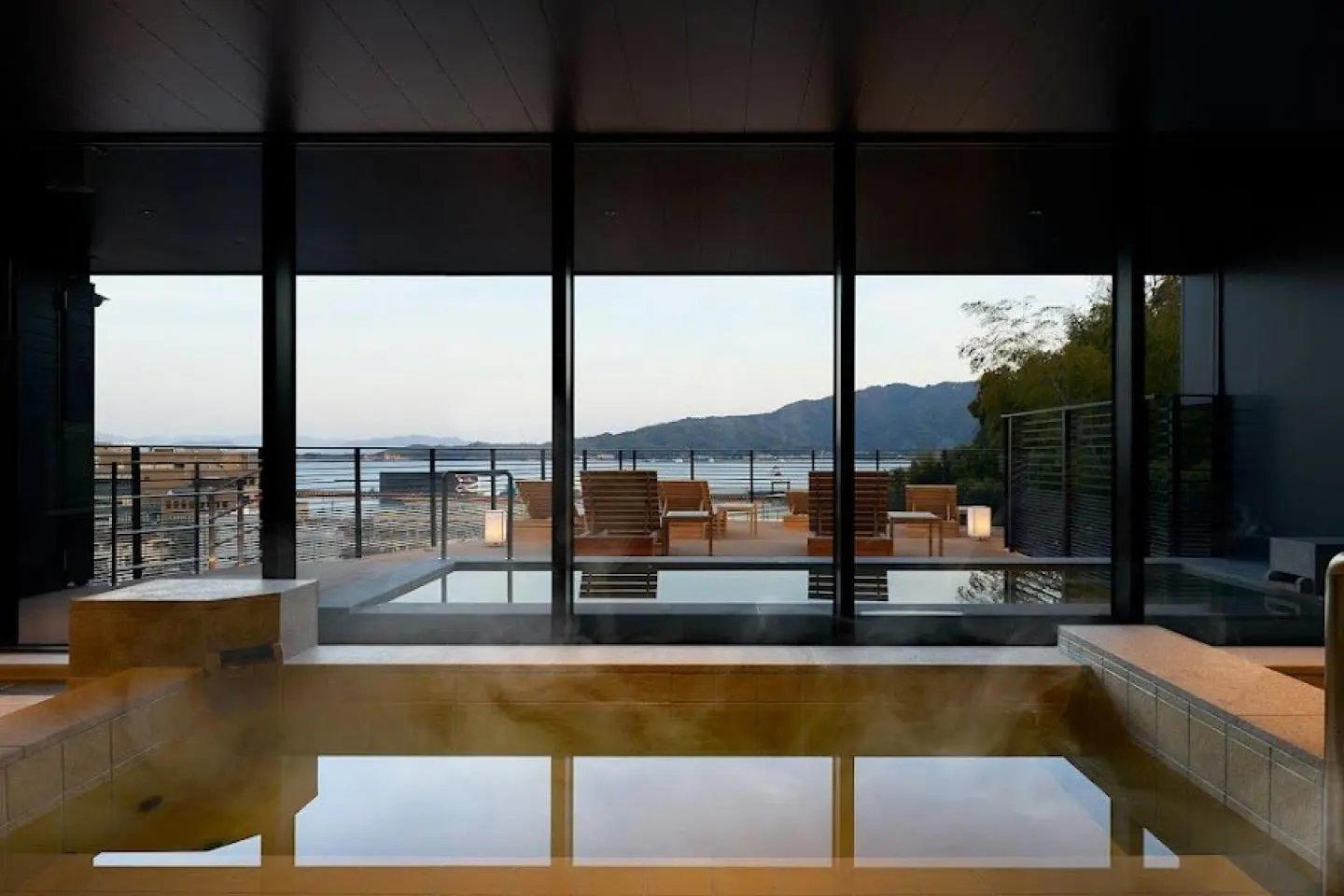
Across Japan's ryokan and resort tier, the onsen or spa component frequently determines whether a property justifies a multi-night stay rather than a single overnight. The Etajimasou name includes SPA in its title, which signals deliberate positioning: this is not a property where the thermal or wellness element is incidental. Properties that anchor around water-based wellness in coastal rather than mountain settings occupy a specific sub-category in Japan, one where the visual connection between indoor bathing spaces and open water is the primary spatial experience. Halekulani Okinawa and Jusandi in Ishigaki both work within coastal wellness frameworks, though with different resort scales and price tiers.
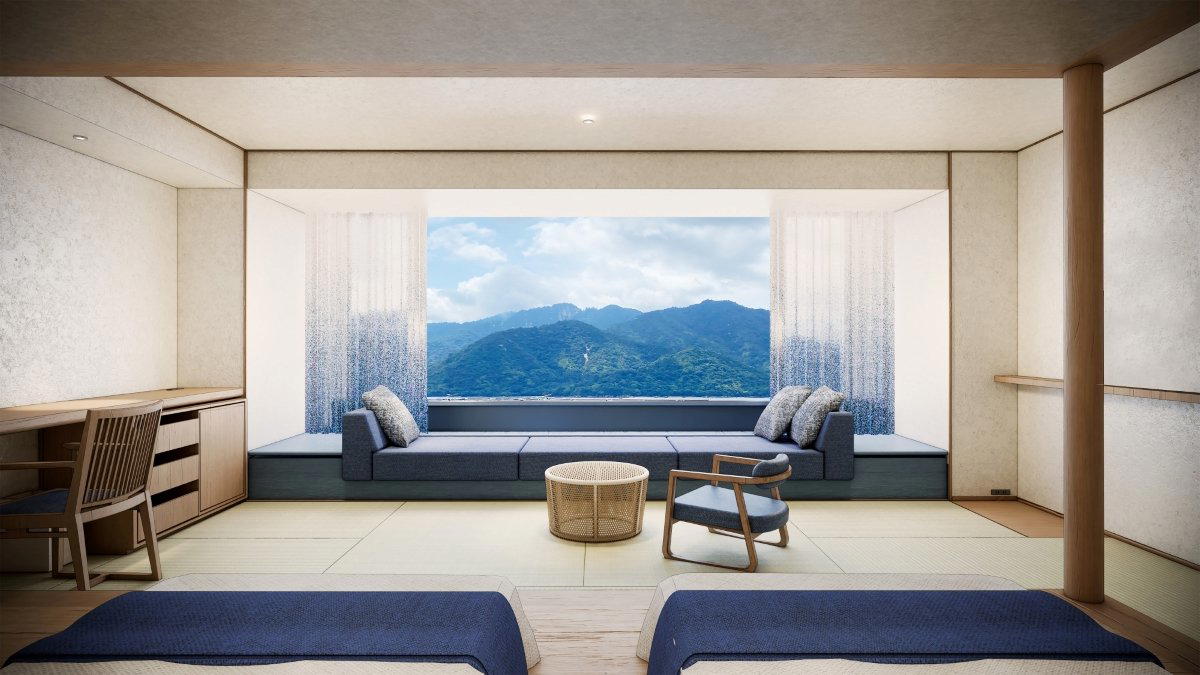
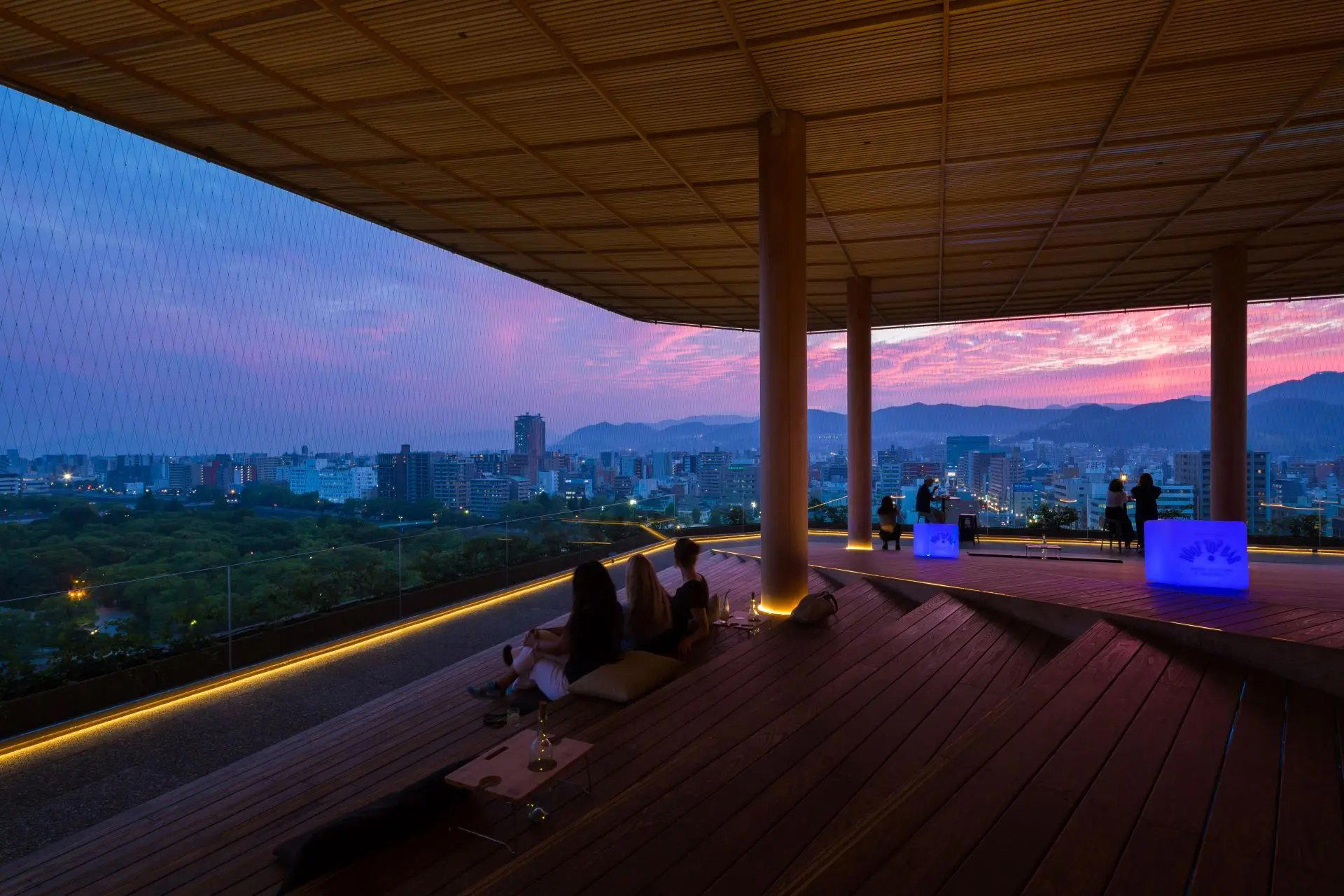
The Inland Sea view, depending on room orientation, delivers a kind of low-key visual drama that mountain-facing properties cannot: slow-moving tankers, fishing boats at dawn, the silhouettes of adjacent islands in weather that ranges from crystalline winter clarity to summer haze. This is not dramatic scenery in the Hakone or Nikko sense, but it rewards the kind of attention that a two-night stay without an overloaded itinerary allows. For readers who find the Aman format instructive, Amanemu in Mie shows how a Japanese coastal spa property can operate at the upper end of the scale; Etajimasou represents a quieter, less internationally profiled version of the same instinct.
Placing Etajimasou in the Hiroshima Region's Accommodation Tier
Hiroshima's hotel market concentrates in two clusters: the city centre, where business travellers and Peace Memorial visitors anchor demand, and the islands and coastal towns of the Seto Inland Sea, where a smaller, experience-led accommodation segment operates. Etajimasou belongs firmly to the second cluster.
Across Japan's broader ryokan circuit, the template for properties like this was established by older houses: Nishimuraya Honkan in Kinosaki-cho remains a reference point for how a traditional onsen property sustains character across generations. Etajimasou sits within that tradition without being reducible to it. The SPA designation and the Michelin 2025 recognition suggest a property that has updated its physical offer beyond the standard ryokan template while retaining the isolation-as-asset logic that defines island accommodation in western Japan.
For context on how Japan's premium ryokan tier is positioned internationally, both Zaborin in Kutchan and Satoyama-Jujo in Niigata illustrate how regional properties build distinct identities around local agriculture, landscape, and seasonal rhythm. The model transfers to western Japan's coastal zone: the inland sea's seasonal fish, the mild Setouchi climate, and the unhurried pace of island life give Etajimasou its editorial logic even before you account for the spa or the dining. See our full Hiroshima restaurants guide for the broader regional picture.
Planning the Stay
The ferry from Hiroshima's Ujina Port to Etajima runs regularly and the crossing takes under 30 minutes, but the scheduling means arriving in Hiroshima with time to spare rather than rushing from Shinkansen to ferry. For comparable planning logistics on Japanese island and remote properties, the approaches used by guests at Fufu Kawaguchiko in Fujikawaguchiko or Nasu Mukunone in Nasu apply: book the accommodation first, then work backwards to the transport. Etajima is not a day-trip destination with an overnight attached, it rewards at least two nights for the spa rhythm and the dining programme to feel like a stay rather than a transit.
Budget Reality Check
| Venue | Price | Awards |
|---|---|---|
| Etajimasou Hotel & SPA HiroshimaThis venue — the venue you are viewing | $200–300 | Michelin Selected |
| Bvlgari Hotel Tokyo | Not listed | 3 Michelin Keys · World's 50 Best #24 |
| Aman Kyoto | Not listed | 2 Michelin Keys · World's 50 Best #74 |
| Aman Tokyo | Not listed | 2 Michelin Keys · World's 50 Best #11 |
| Palace Hotel Tokyo | Not listed | 3 Michelin Keys · World's 50 Best #73 |
| Amanemu | Not listed | 3 Michelin Keys · La Liste Top Hotels |
Recognition history
Dated appearances from independent guides and award organizations, with the underlying list record or original source where available.
Michelin Selected
Michelin
Details
- Quiet
- Modern
- Scenic
- Elegant
- Romantic Getaway
- Wellness Retreat
- Weekend Escape
- Panoramic View
- Wi Fi
- Spa
- Massage
- Restaurant
- Concierge
- Bicycle Rental
- Waterfront
- Mountain
- Garden
Peaceful and relaxing atmosphere with natural beauty views, modern design, and serene hot spring bathing experiences.