

Tabelog Silver #15
Our verdict
Chiso Sottakuito is a nine-seat counter for Japanese cuisine in Hiroshima’s Naka Ward, priced in the JPY 20,000–29,999 dinner tier and recognized with Tabelog Silver in 2026. The format is reservation-only, counter-led, cash-only, and built around fish, dashi, sake, shochu, and wine rather than spectacle.

Pearl is the En Primeur Club membership app, where members save venues, book tables and use the concierge.
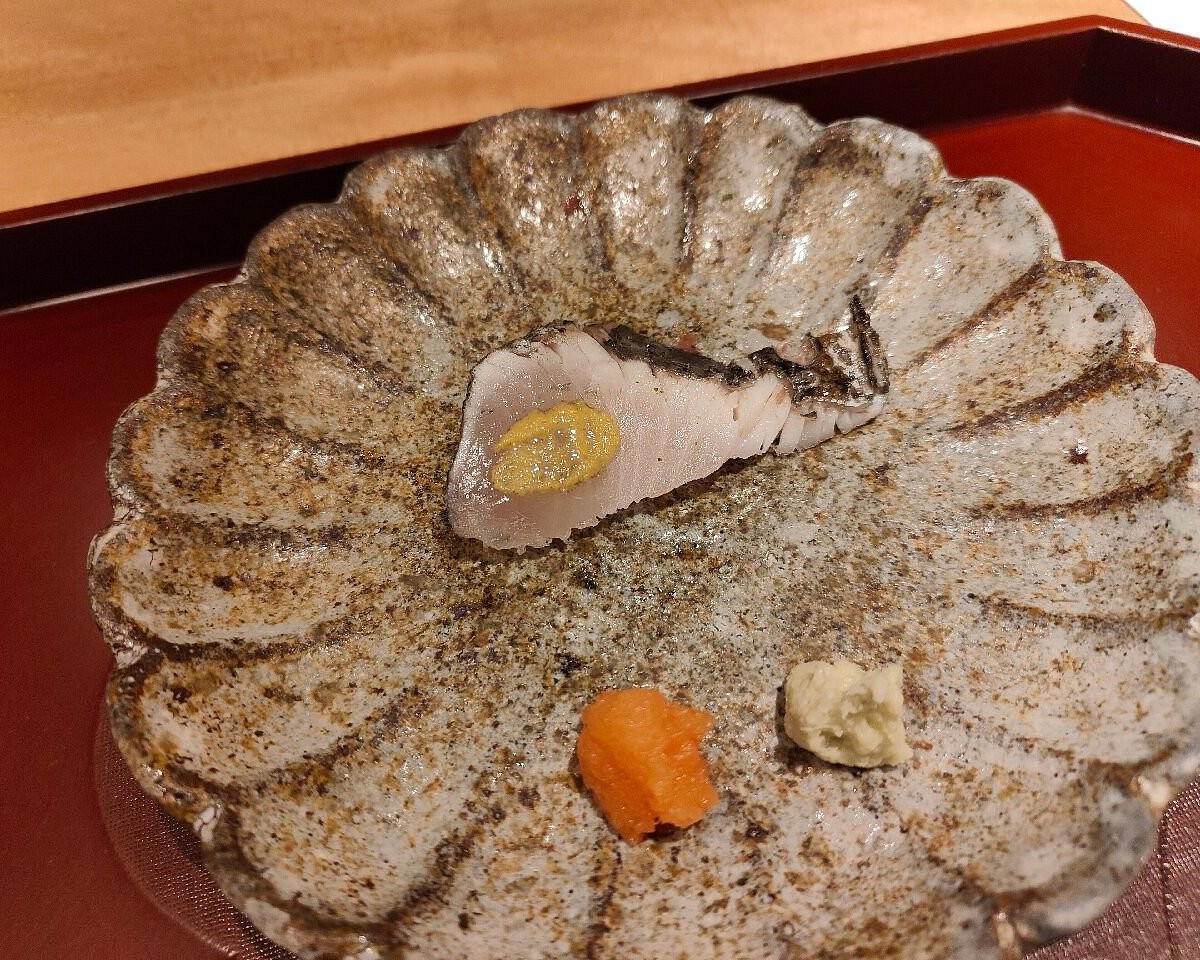
The menu
What to order
- Simmered Abalone
- Grilled Akamutsu
- Takamori Wagyu Shabu-Shabu
Fujimicho is not the theatrical face of Hiroshima dining. The appeal is quieter: side streets, small buildings, and counters where the room does not need to announce its ambition. In that setting, Chiso Sottakuito belongs to a compact strand of Japanese restaurants where the counter is the whole argument. Nine seats, no private rooms, and a reservation-only format make the experience closer to a focused exchange than a conventional night out.
Hiroshima’s serious Japanese cooking often reads through water, fish, stock, and season rather than through visual excess. That matters here. The city sits between the Seto Inland Sea and mountain-fed rivers, so the local dining culture has long treated seafood and clean broth as foundations rather than flourishes. In a national restaurant culture increasingly dominated by Tokyo and Kyoto narratives, a Hiroshima counter with sustained recognition is not a provincial footnote. It is evidence that regional Japanese cuisine can operate at a high level without copying the capital’s codes.
A nine-seat counter built around dashi, fish, and Hiroshima restraint
The category is Japanese cuisine, but that label carries more weight in this context than it does on a booking platform. At this tier, the meal is less about choosing dishes than submitting to a sequence: temperature, pacing, broth, fish handling, and drink pairing all do the work. Chiso Sottakuito’s stated focus on fish, sake, shochu, wine, and a sommelier-supported drinks program places it in the contemporary washoku counter lane, where the beverage side is not an afterthought.
The Tabelog score of 4.55 and The Tabelog Award Silver recognition in 2026 put the restaurant in a rarefied Japanese user-review environment, particularly outside the country’s larger dining capitals. Its repeated award history matters more than any single badge: Silver recognition from 2022 through 2026, preceded by Bronze in 2020 and 2021, signals continuity rather than a short burst of attention. Selection for Tabelog Japanese Cuisine WEST 100 in 2021, 2023, and 2025 adds another useful marker, because the list groups serious Kansai and western Japan restaurants into a competitive regional frame.
That regional frame is important. Hiroshima has high-spend Japanese counters in the same dinner band, including DIRETTO and hiroto, both listed in the JPY 20,000–29,999 range. Against that set, the distinction is not price escalation. It is format discipline: a nine-seat counter, no private-room buffer, and a course structure strict enough that late arrival can affect what is served. This is the kind of restaurant where punctuality is part of the cuisine, not a courtesy tacked onto the confirmation email.
Why this kind of Hiroshima meal matters
Japanese fine dining has become an international shorthand for omakase, but Hiroshima’s strongest counters often work from a different emotional register than Ginza sushi or Kyoto kaiseki. The cooking tends to draw authority from clarity: stock, seafood, rice, pickles, and sake culture, with the meal’s rhythm built through accumulation rather than declaration. Chiso Sottakuito’s emphasis on dashi made with Hiroshima spring water, as publicly described, fits that regional reading. It also explains why the restaurant’s appeal travels poorly in shorthand. The point is not a named dish; it is the calibration of a sequence.
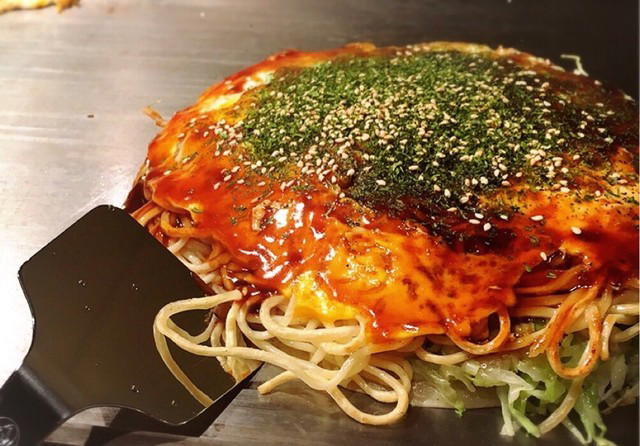
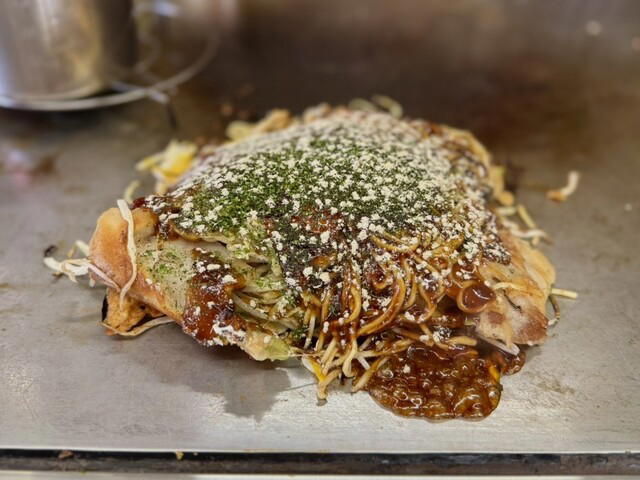
For visitors, this is where Hiroshima becomes more interesting than a single-dish city. Okonomiyaki may dominate the casual-food image, and oysters carry the obvious coastal association, but the city’s higher register is broader: Japanese counters, creative cuisine rooms, old bakeries, specialist sweets, and sake-aware dining all coexist within a relatively tight urban radius.
The counter also changes the social contract. With nine seats, the room has little tolerance for indecision or casual lateness. Cash-only payment, no card or QR code acceptance, and a no-smoking policy sharpen the sense that the format is designed for diners who understand Japan’s smaller high-end restaurants. English menu support and English-speaking staff are useful signals for international guests, but they do not turn the meal into a relaxed tourist format. The better reading is narrower: this is accessible enough for prepared travelers, but still governed by the habits of a local Japanese counter.
How to place it in a wider Hiroshima itinerary
The restaurant works strongest as the anchor of a food-led Hiroshima stay rather than as a spontaneous add-on. The cancellation terms are strict, with fees applying well before the day of dining, and the counter capacity leaves little room for casual reshuffling. That rigidity is not unusual in small Japanese restaurants, where ingredients, prep, and seating economics are tied closely to confirmed covers. In practical terms, the reservation should shape the evening around it, not the other way around.
Travelers building a broader city plan should treat Hiroshima as a layered dining destination, not only a stop between Kansai and Kyushu. The full city edit is useful here: Our full Hiroshima restaurants guide for dining, Our full Hiroshima hotels guide for where to stay, Our full Hiroshima bars guide for after-dinner drinking, Our full Hiroshima wineries guide for regional wine context, and Our full Hiroshima experiences guide for cultural planning around the meal.
For readers comparing Japanese dining across regions, the useful lesson is contrast. A Hiroshima counter of this scale has little in common with casual Japanese addresses elsewhere, from -Grilled beef Sukiyaki- KAMAKURA TANUKIAN 鎌倉 たぬき庵 in Kamakura to. 鮪と炭火焼き うお炭 秋葉原店 in Tokyo.cafe in Osaka.know in Kumamoto, (Shoku) Vietnam in Kawasaki, and [Curry Senmon Ten] Maruyama Kyoju. in Sapporo. Even Japanese food abroad, such as Jōdo Saké Bar in Los Angeles or Onigiri Time in Pasadena, shows how much format changes meaning. Chiso Sottakuito is for the diner who wants the Hiroshima version of precision: small scale, firm rules, and a meal where dashi and fish carry the argument.
Frequently asked questions
How do I find Chiso Sottakuito?
Chiso Sottakuito is located in Hiroshima.
What are the opening hours for Chiso Sottakuito?
Hours at Chiso Sottakuito: Mon, Tue, Wed, Thu, Fri, Sat 17:00 - 23:00.
What's the signature at Chiso Sottakuito?
The house point of reference is its dashi and fish-led Japanese cuisine, shaped around a nine-seat counter in Hiroshima. Tabelog named it a 2026 Silver winner, which makes the kitchen’s reputation easy to place in context.
What is Chiso Sottakuito known for?
Chiso Sottakuito is primarily known for its core concept and execution in Hiroshima.
Budget Reality Check
Side-by-side context: comparable cuisine and price.
| Venue | Cuisine | Price | Awards | Notes |
|---|---|---|---|---|
| Chiso SottakuitoThis venue (the venue you are viewing) | Modern Japanese Omakase | $200–300 | Tabelog Silver #15 | Not listed |
| Teppanyaki Atago | Modern Japanese Teppanyaki & Wagyu | $100–150 | Tabelog 100 #36 | Naka, Modern Japanese Teppanyaki & Wagyu |
| Sobiki | Traditional Seasonal Kaiseki | $150–200 | Tabelog Bronze #416 | Saijo, Traditional Seasonal Kaiseki |
| Nakashima | Traditional Japanese Kaiseki | $50–100 | Tabelog Bronze #308 | Naka, Traditional Japanese Kaiseki |
| Akai | Modern Japanese-French Fusion Kappo | Not listed | Not listed | Miyajimaguchi, Hatsukaichi, Innovative Japanese-French Omakase (“AKAI cuisine”) |
| Teppan Ryori Kaeru | High‑end Teppanyaki in Hiroshima | $100–150 | Tabelog 100 #23 | Naka, High‑end Teppanyaki in Hiroshima |
Recognition history
Dated appearances from independent guides and award organizations, with the underlying list record or original source where available.
Opinionated About Dining Top Restaurants in Japan Ranked #150
Opinionated About Dining
Tabelog Silver #15
Tabelog
Full recognition history (4 entries)
Tabelog 100 #74 · No. 74
Tabelog · Tabelog 100 - Japanese cuisine - WEST - 2025
Tabelog Silver
Tabelog
Continue exploring
More in Hiroshima
Restaurants in Hiroshima
All restaurants in Hiroshima →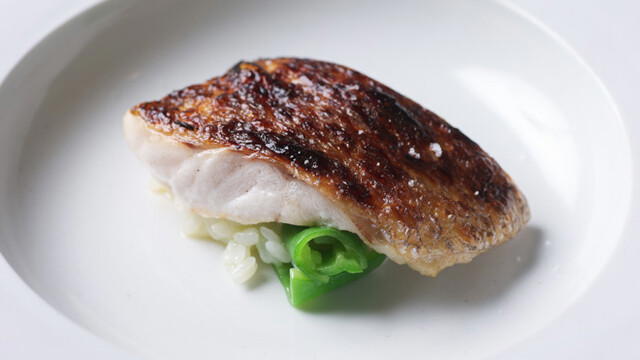
Bars in Hiroshima
All bars in Hiroshima →
Details
- Intimate
- Elegant
- Sophisticated
- Quiet
- Special Occasion
- Date Night
- Chefs Counter
- Open Kitchen
- Sake Program
- Sommelier Led
- Local Sourcing
- Omakase
- Counter Dining
- Sake
Current opening hours
- Monday
- 5–11 PM
- Tuesday
- 5–11 PM
- Wednesday
- 5–11 PM
- Thursday
- 5–11 PM
- Friday
- 5–11 PM
- Saturday
- 5–11 PM
- Sunday
- Closed
Hours can change for holidays and private events. Hours as of .
Quietly refined counter seating with practical warm lighting focused on the kitchen, creating an intimate, calming atmosphere centered on the meal.