Our verdict
Tucked into the basement level of an Otemachi address in Hiroshima's Naka Ward, シェモモ operates in a part of the city where serious dining rooms tend to announce themselves quietly. The venue sits within walking distance of the civic and commercial core, placing it in easy reach of the city's most concentrated stretch of notable restaurants. Specific details on cuisine, format, and booking are best confirmed directly with the venue.

Pearl is the En Primeur Club membership app — saves, bookings, and concierge access live there. Same editors, same standards.
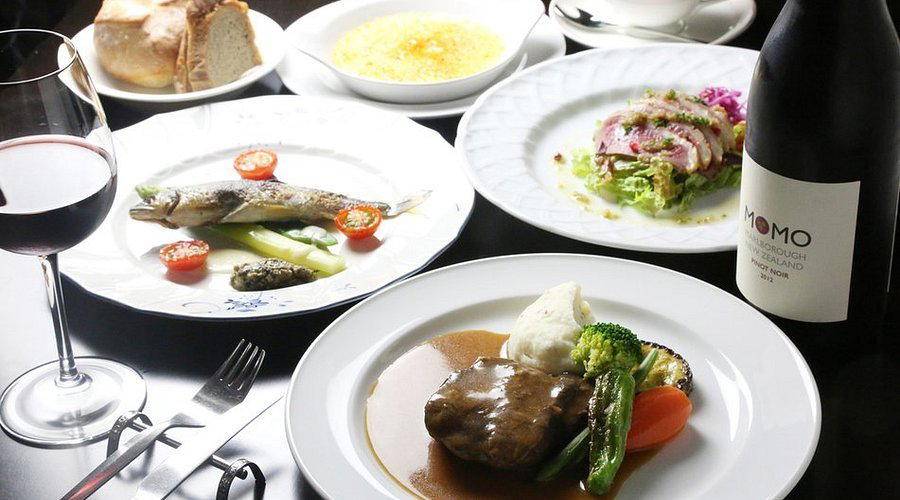
The menu
What to order
- 自家製スモークサーモン
- 鯛のパイ包み焼き
Below Street Level in Otemachi: What Hiroshima's Basement Dining Culture Tells You
Hiroshima's most considered dining rooms have a habit of not advertising themselves from the pavement. The basement addresses along Naka Ward's central corridors, particularly around Otemachi, follow a pattern common to Japan's mid-tier cities: the more serious the kitchen, the less visible it tends to be from the street. Chiso Sottakuito and Eizan both occupy spaces that reward the visitor who has done the research beforehand rather than the one who stumbles in. シェモモ, sitting at B1 of a building on Otemachi 1-chome, belongs to that same register of address: a location that signals intention rather than footfall.
That choice of position matters in Hiroshima more than in, say, Osaka or Tokyo, where basement restaurants cluster so densely they become their own category. In Hiroshima, the B1 dining room is still something of a statement. It assumes the diner already knows. The approach down a staircase into a contained, lower-ground space changes the acoustic character of a meal entirely. Street noise drops away. The room's own temperature, scent, and ambient sound become the dominant sensory environment. Whether a kitchen uses that insulation to create something austere or intimate is a distinct editorial choice, and it is one that shapes the entire experience before a dish arrives.
The Otemachi Address in Context
The 1-chome block of Otemachi sits within easy reach of Hiroshima's Peace Memorial Park and the main civic axis that runs through Naka Ward. This is not a neighbourhood defined by casual dining or tourist throughput. The surrounding blocks contain financial institutions, mid-scale business hotels, and a handful of restaurants that serve the city's professional class at lunch and its more deliberate diners in the evening. CHILAN, MASUKI, and Denko Sekka all operate within the broader Naka Ward dining corridor, each anchoring a distinct position in the local hierarchy. シェモモ's Otemachi placement puts it in that company without mapping cleanly onto any single category.
For the visitor arriving from outside Hiroshima, this part of the city is accessible by tram from Hiroshima Station, with stops along the Otemachi line reducing what would otherwise be a fifteen-minute walk to a short, covered transit leg. The central location also positions the restaurant as a reasonable first-night booking for travellers using the city as a base rather than a transit point on the Shinkansen corridor between Osaka and Fukuoka.
What Sensory Framing a B1 Room Creates
Basement dining rooms in Japan tend to operate on a different register than their street-level equivalents, and Hiroshima's better examples demonstrate this consistently. The descent creates a threshold effect: the diner crosses from one environment into another with a physical cue, not just an architectural one. Lighting decisions become more consequential when there is no natural light to fall back on. Acoustic design has to do more work when traffic noise is already filtered out. The scent of a kitchen carries differently in a sealed, lower-ground space than it would in an open-fronted ground-floor room.
These are not incidental details. For kitchens that want to control atmosphere with any precision, the basement format offers tools that street-level rooms do not. The question, always, is whether the kitchen uses those tools deliberately or simply inherits a space. Japan's serious dining culture, from the counter-format kaiseki rooms in Kyoto to the more European-influenced kitchens in Osaka, tends to treat the physical environment as part of the proposition rather than its backdrop. Gion Sasaki in Kyoto and HAJIME in Osaka both demonstrate how rigorously the dining environment can be orchestrated when the kitchen has a clear point of view.
Hiroshima's Dining Scene: Where シェモモ Sits
Hiroshima's restaurant culture occupies an interesting middle position in Japan's dining hierarchy. It does not carry the institutional weight of Kyoto's kaiseki tradition or the density of Osaka's dining infrastructure, but it is no longer the secondary city it was sometimes treated as by Tokyo-focused food media a decade ago. The city has developed a genuine cluster of kitchens worth travelling for, and Naka Ward functions as the gravitational centre of that cluster. Comparison restaurants in the area range from the kaiseki-adjacent formalism of Nakashima through to the Chinese-influenced register of MASUKI, which operates at a price point of JPY 20,000 to JPY 29,999 per person, suggesting a local benchmark for serious evening dining in the ¥20,000-plus range.
Across Japan's regional cities, this bracket increasingly competes directly with comparable spending in Tokyo, not on volume of restaurants but on depth within specific categories. Harutaka in Tokyo and Goh in Fukuoka both illustrate how regional and national-tier restaurants have converged in ambition, if not always in recognition. akordu in Nara offers a further reference point for what European-influenced cooking looks like when transplanted into a Japanese regional city context.
Travellers planning a broader regional itinerary might also note that Hiroshima connects efficiently to destinations covered by the EP Club network across the San'in and Hokuriku corridors, including 一本木 布川製 in Nanao, 湖畔庵 in Takashima, and 庄羽屋 in Nishikawa Machi, each anchoring a distinct regional food culture worth building an itinerary around. For a full picture of where シェモモ sits among Hiroshima's better dining options, the EP Club Hiroshima restaurants guide provides comparative context across the city's key addresses.
Planning a Visit
Given the address format and the venue's position in a building basement on Otemachi 1-chome, the most reliable approach is to confirm arrangements through a hotel concierge or by visiting in person during daytime hours, a method that remains practical for Naka Ward restaurants where phone bookings are not always the primary intake channel. Price range and cuisine format are also unconfirmed, so arriving with flexible expectations is sensible. The Otemachi tram line provides the most direct transit link from central Hiroshima, making access direct for visitors based near the station corridor. For context on how シェモモ compares to other venues in the city, including 夕佳亭 in Sapporo and Birdland in Sakai as reference points for serious dining in Japan's regional cities, the EP Club regional network provides the broader comparative frame. For international benchmarks, Le Bernardin in New York City and Atomix in New York City represent the kind of formal dining register that serious regional Japanese kitchens increasingly reference, if rarely replicate in format.
Frequently asked questions
What's the address for シェモモ?
シェモモ is located at Japan, 〒730-0051 Hiroshima, Naka Ward, Otemachi, 1 Chome−1−23 B1, Hiroshima.
Is シェモモ worth visiting if I'm already near Hiroshima's Peace Memorial Park?
シェモモ's address at Otemachi 1-chome in Naka Ward places it within the same compact civic corridor as the Peace Memorial Park area, making a visit logistically straightforward if you are already in that part of Hiroshima. The B1 format is consistent with a category of Hiroshima dining rooms that prioritise focused, room-led experiences over street-facing visibility. Confirm hours and booking availability locally before planning around it.
What should I eat at シェモモ?
The Otemachi 1-chome address in Hiroshima's Naka Ward places it near a corridor of restaurants known for focused, considered cooking rather than broad menus. check the venue's official channels or check locally before visiting to confirm what is being served.
Do they take walk-ins at シェモモ?
Basement restaurants at this type of Hiroshima address — a B1 space in a compact 1-chome block — frequently run on reservations rather than walk-in traffic, simply due to limited seating. Calling ahead or checking locally before arriving in Naka Ward is advisable.
What's the signature at シェモモ?
No signature dish or defining menu format has been confirmed in the available record for シェモモ. Hiroshima's more focused basement restaurants in Naka Ward tend toward a single-format approach — counter omakase, set-course kaiseki, or a tight à la carte — though which applies here is unverified.
Is シェモモ good for vegetarians?
Without confirmed menu format, it is not possible to assess vegetarian options with any accuracy. Confirming directly with the restaurant before dining in Otemachi is the only reliable approach.
Comparable Options
Comparable venues nearby, for context on price, style, and recognition.
| Venue | Cuisine | Price | Awards | Notes |
|---|---|---|---|---|
| シェモモThis venue (the venue you are viewing) | Hidden Gem French Bistro | $30–50 | Not listed | Not listed |
| ミル | 古民家フレンチ | $50–100 | Not listed | Naka |
| MINOYA | Western-style hamburger & French-influenced bistro | $20–30 | Tabelog 100 #77 | Nishi |
| Takotsubo (割烹 たこつぼ) | Traditional Japanese Kappo | $100–150 | Not listed | Naka-ku |
| Shusai Takenoshita | Traditional Japanese Izakaya & Seafood | $50–100 | Tabelog 100 #29 | Naka |
| Shinya Teki Chuka Shokudo | Late‑night Chinese (Sichuan‑influenced) | $50–100 | Tabelog 100 #2 | Naka |
Continue exploring
More in Hiroshima
Restaurants in Hiroshima
All restaurants in Hiroshima →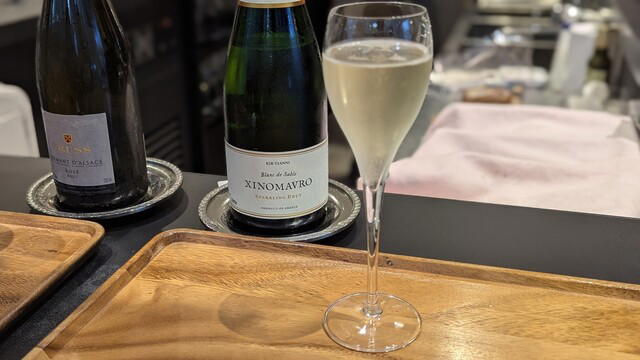
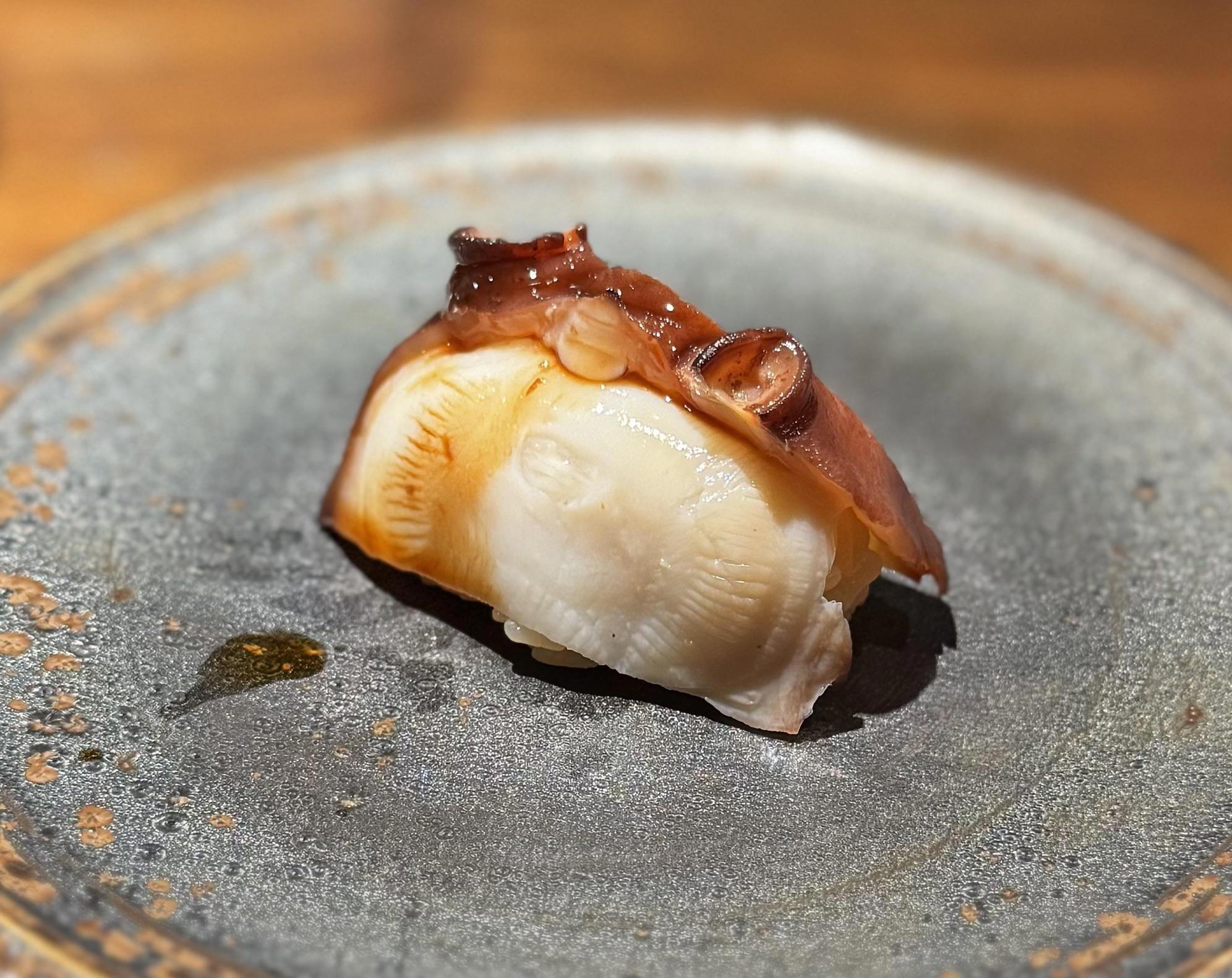
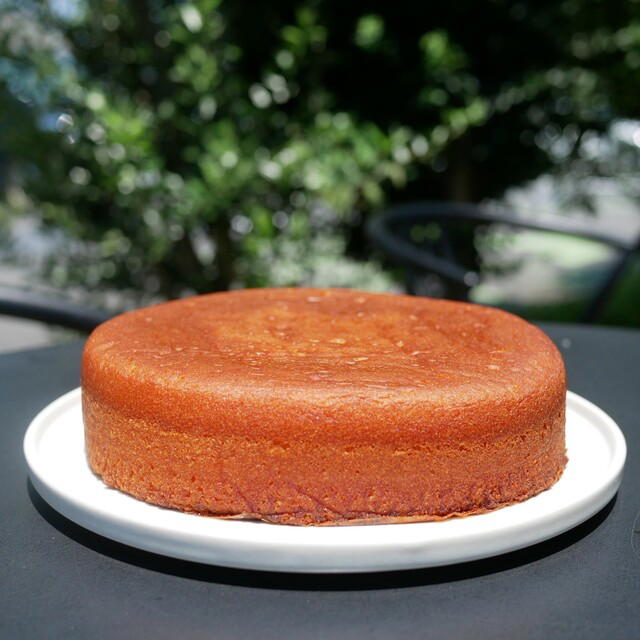
Bars in Hiroshima
All bars in Hiroshima →
Details
- Cozy
- Intimate
- Elegant
- Date Night
- Special Occasion
- Sake Program
- A La Carte
- Prix Fixe
Current opening hours
- Monday
- 11:30 AM–2:30 PM, 5:30–9 PM
- Tuesday
- 11:30 AM–2:30 PM, 5:30–9 PM
- Wednesday
- 11:30 AM–2:30 PM, 5:30–9 PM
- Thursday
- 11:30 AM–2:30 PM, 5:30–9 PM
- Friday
- 11:30 AM–2:30 PM, 5:30–9 PM
- Saturday
- 11:30 AM–2:30 PM, 5:30–9 PM
- Sunday
- Closed
Hours can change for holidays and private events. Last verified .
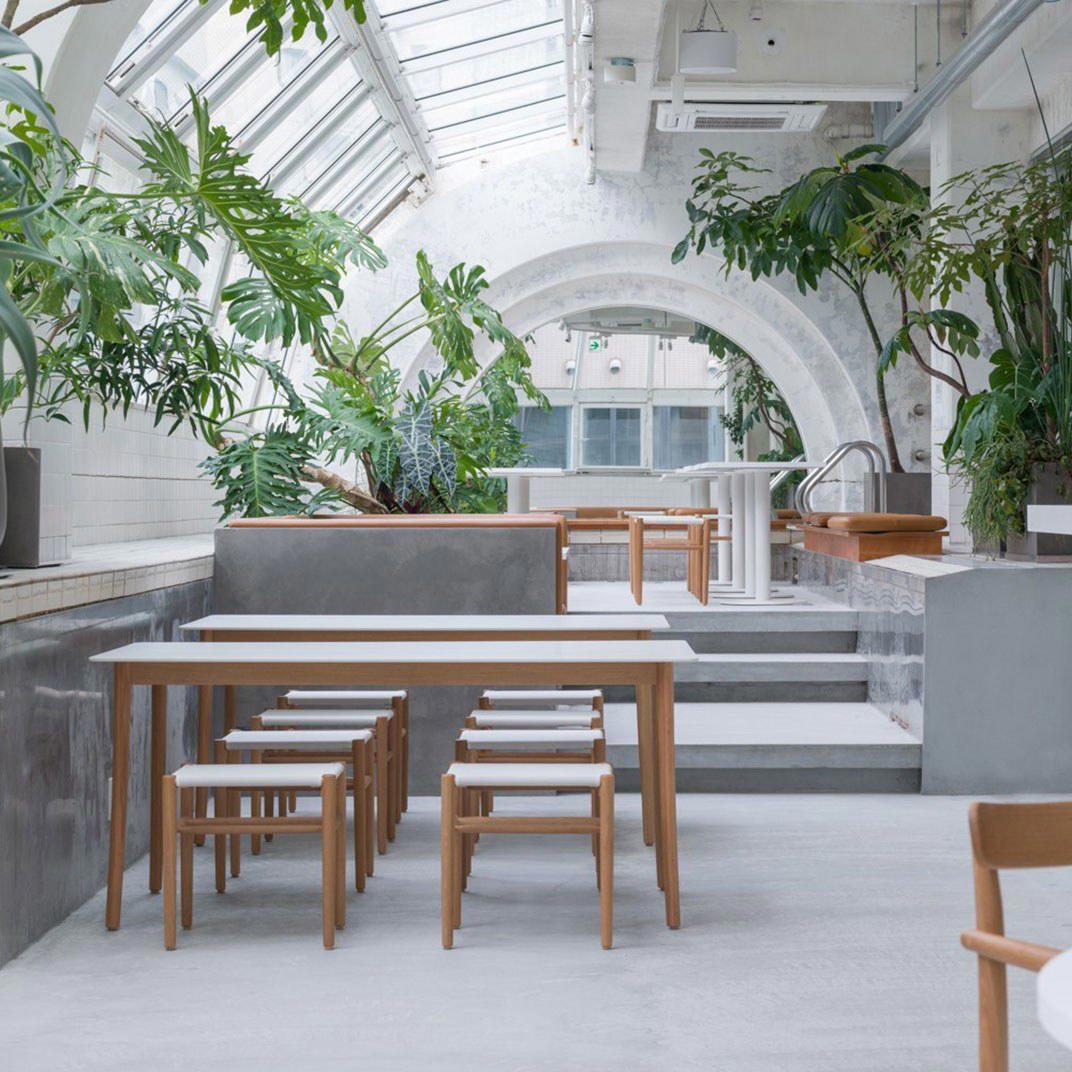
Calm and refined underground space with an unpretentious yet elegant atmosphere, praised for its cozy hideaway feel.